

Húsavík Area Travel Guide - Free Web & App
Your ultimate guide to Húsavík Area. Discover top landmarks, proposed trips, and local tips. Free on the web or via the Evendo companion app.


Húsavík Area in Iceland offers whale watching, Skjálfandi Bay, volcanic landscapes, GeoSea baths, museums and northern coastal adventures.
Skjálfandi Bay and the North Coast
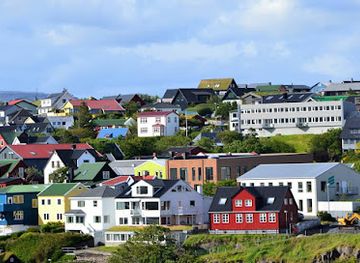
Húsavík Area occupies a dramatic section of Iceland’s north coast, centred on Húsavík at the eastern edge of Skjálfandi Bay. The town faces a broad sweep of water backed by mountains, while the wider area extends towards the Tjörnes Peninsula, the valleys south of the bay and the rural shoreline communities that give the region its spacious, elemental character. Offshore, nutrient-rich waters attract several whale species, making Húsavík one of Iceland’s principal bases for marine wildlife excursions.Read more about Húsavík Area
A Town Shaped by Sea and Geology
Outdoor Experiences and Local Character
When is the best time to visit Húsavík Area?
Best: June–August · 17–18°C| Month | High (°C) | Rainfall (mm) |
|---|---|---|
| January | 3 | 50 |
| February | 4 | 40 |
| March | 5 | 40 |
| April | 8 | 30 |
| May | 12 | 30 |
| June (best) | 17 | 20 |
| July (best) | 18 | 20 |
| August (best) | 17 | 30 |
| September | 14 | 40 |
| October | 10 | 50 |
| November | 5 | 50 |
| December | 4 | 50 |
Getting to and around Húsavík Area
How to get there
Transportation
Best attractions in Húsavík Area
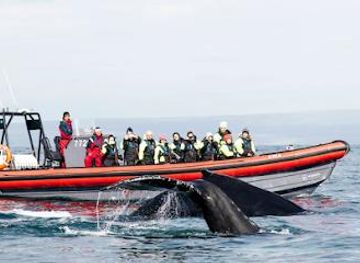
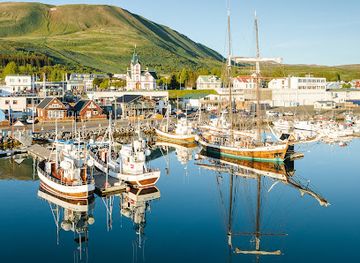
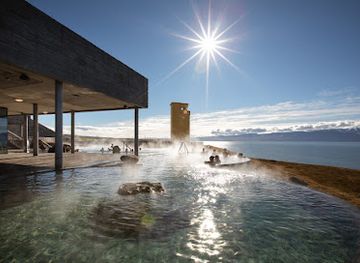
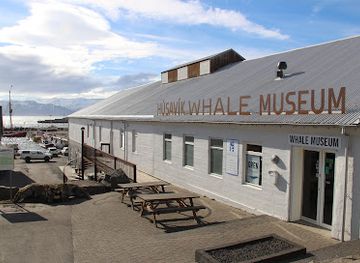
Húsavík’s harbour is the starting point for boat excursions across Skjálfandi Bay, where minke whales, humpback whales, dolphins and sometimes larger cetaceans may be encountered, although sightings are never guaranteed. The Húsavík Whale Museum provides context on whale biology, marine history and the changing relationship between people and the sea. On the waterfront, Húsavíkurkirkja and the town’s older buildings give the compact settlement architectural character, while GeoSea offers geothermal seawater bathing with views across the bay. The Tjörnes Peninsula, north of Húsavík, combines coastal scenery, bird habitats and fossil-bearing marine strata, though access to particular sites should be checked locally. Inland roads lead towards the broader volcanic landscapes of northern Iceland, including the Lake Mývatn region outside the Húsavík Area, making the town a practical base for wider day excursions as well as a destination in its own right.
-
Tour operator
Husavik Adventures
Discover the breathtaking experience of whale watching in Husavik with Husavik Adventures, where nature and adventure meet in Iceland's stunning landscapes.
-
Tour operator
Husavik Adventures
Experience the thrill of whale watching and explore Iceland's stunning landscapes with Husavik Adventures.
-
Tourist attraction
Húsavík Wooden Church
Explore the enchanting Húsavík Wooden Church, a stunning Lutheran gem surrounded by Iceland's breathtaking landscapes and rich maritime heritage.
-
Museum
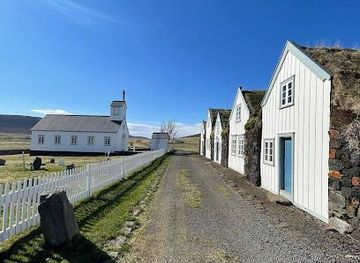
Grenjaðarstaður - the Old Turfhouse
Discover the charm of Icelandic heritage at Grenjaðarstaður, the Old Turfhouse, a captivating museum in Húsavík.
Best landmarks in Húsavík Area
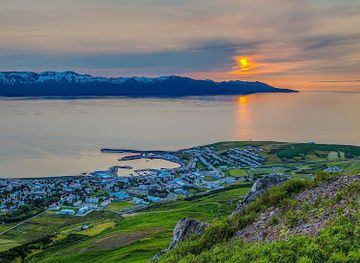
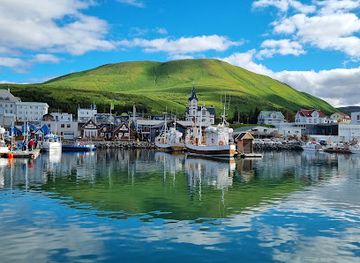
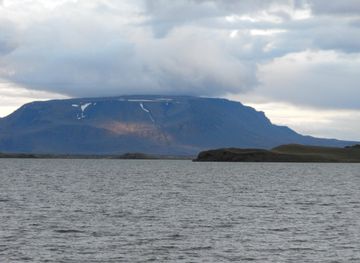
The defining natural landmark of the Húsavík Area is Skjálfandi Bay, a wide, mountain-framed inlet whose productive waters support the region’s celebrated whale-watching tradition. Húsavíkurkirkja, completed in 1907, is a prominent town landmark, while the harbour expresses the settlement’s continuing maritime identity. North of the town, the Tjörnes Peninsula is significant for its fossil-rich marine sediments, which preserve evidence of changing environments over geological time and help explain the area’s importance to earth-science visitors. The Kinnarfjöll mountains create a strong inland backdrop, their snow and changing colours visible across the bay. GeoSea is a modern cultural and recreational landmark built around geothermal seawater, but it also reflects the wider geological setting of northern Iceland. These features are distinct from better-known attractions near Lake Mývatn or Jökulsárgljúfur, which lie outside the immediate Húsavík Area.
-
Whale watching tour agency
North Sailing - Húsavík Whale Watching
Embark on an unforgettable whale watching tour with North Sailing in Húsavík, Iceland's stunning marine wonderland.
-
Whale watching tour agency
Gentle Giants - Husavik Whale Watching
Explore the majestic beauty of Iceland’s marine life with Gentle Giants in Husavik—an unparalleled whale watching adventure awaits you.
-
Outdoor bath
Geosea - Geothermal Sea Baths
Experience the rejuvenating bliss of Geosea, Húsavík's premier geothermal sea baths, surrounded by stunning ocean views and serene landscapes.
-
Natural history museum
Húsavík Whale Museum
Explore the Húsavík Whale Museum, where marine history meets conservation in Iceland's picturesque whale watching capital.
Explore Húsavík Area on the map
Plan your trip on one map. See where the top attractions, landmarks, restaurants and hotels are, and book hotels and experiences in a few clicks.
Best hotels in Húsavík Area
Best restaurants in Húsavík Area
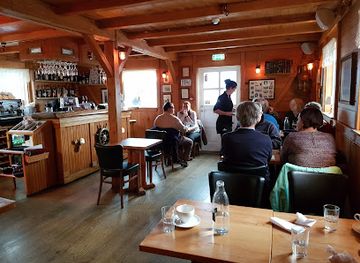
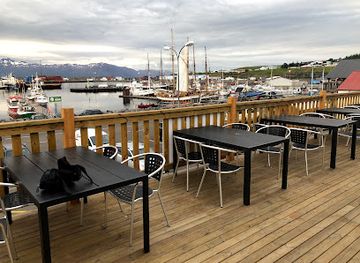
Dining in the Húsavík Area is concentrated in Húsavík, where harbour-side and town-centre restaurants, cafés and casual venues reflect the settlement’s connection with the sea. Fish and seafood feature naturally in local cooking, supported by Icelandic lamb, dairy products, potatoes, rye bread and other ingredients used throughout the country. A traditional Icelandic speciality visitors may encounter is plokkfiskur, a comforting preparation of fish and potatoes, while soups and baked goods are practical choices in cool coastal weather. Outside Húsavík, options become sparse and may be limited to facilities attached to accommodation or farms, so rural journeys require planning. Local menus can vary seasonally, and the availability of particular seafood depends on supply rather than a guaranteed regional speciality. The town is the main place to combine a meal with harbour views, coffee or provisions for a day on the road.
-
Seafood
Naustið
Discover Naustið in Húsavík – where fresh Icelandic seafood meets stunning coastal views for an unforgettable dining experience.
-
Restaurant
Salka Restaurant
Experience authentic Icelandic cuisine at Salka Restaurant in Húsavík - where local flavors meet warm hospitality.
-
Restaurant
Gamli Baukur
Discover authentic Icelandic cuisine at Gamli Baukur in Húsavík - a culinary gem with stunning harbor views.
-
Restaurant
Fish and Chips
Discover Húsavík's best fish and chips - a culinary delight that brings you closer to Iceland's vibrant seafood heritage.


Best bars in Húsavík Area
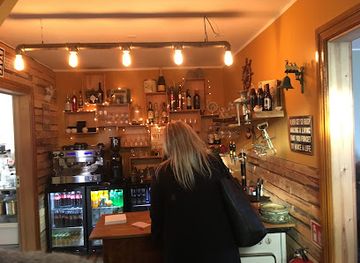
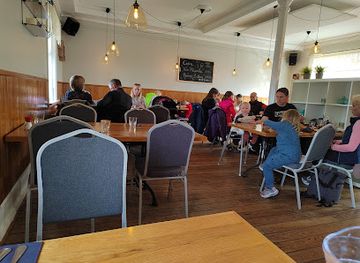
Húsavík has a restrained evening scene shaped by its small population, seasonal tourism and working harbour rather than by nightclubs or a dedicated nightlife district. Visitors can generally find a quiet drink, informal conversation and Icelandic hospitality in established town restaurants, cafés or pub-like venues, while some accommodation providers offer evening refreshments. The waterfront and central streets are often more atmospheric than busy after dark, particularly outside the summer high season. Evening entertainment may also take the form of museum visits, geothermal bathing or simply watching changing light over Skjálfandi Bay, depending on seasonal opening arrangements. Smaller communities around the bay have very limited nightlife, and travellers staying outside Húsavík should not expect regular late-night transport or a broad choice of venues.
-
Seafood
Naustið
Discover the finest seafood in Húsavík at Naustið, where local flavors and stunning views create an unforgettable dining experience.
-
Restaurant
Salka Restaurant
Experience the best of Icelandic cuisine at Salka Restaurant, a must-visit culinary destination in Húsavík, offering fresh local ingredients and stunning views.
-
Restaurant
Gamli Baukur
Discover the flavors of Iceland at Gamli Baukur, a cozy restaurant in Húsavík offering fresh seafood and breathtaking harbor views.
-
Restaurant
Fish and Chips
Experience authentic Icelandic fish and chips in Húsavík, where fresh seafood meets stunning coastal views.


Best nightclubs in Húsavík Area
Húsavík has a restrained evening scene shaped by its small population, seasonal tourism and working harbour rather than by nightclubs or a dedicated nightlife district. Visitors can generally find a quiet drink, informal conversation and Icelandic hospitality in established town restaurants, cafés or pub-like venues, while some accommodation providers offer evening refreshments. The waterfront and central streets are often more atmospheric than busy after dark, particularly outside the summer high season. Evening entertainment may also take the form of museum visits, geothermal bathing or simply watching changing light over Skjálfandi Bay, depending on seasonal opening arrangements. Smaller communities around the bay have very limited nightlife, and travellers staying outside Húsavík should not expect regular late-night transport or a broad choice of venues.
-
Seafood
Naustið
Discover Naustið in Húsavík, a seafood gem offering fresh, locally-sourced dishes in a warm, nautical-inspired setting with stunning ocean views.
-
Restaurant
Salka Restaurant
Experience the rich flavors of Icelandic cuisine at Salka Restaurant in beautiful Húsavík, known for its fresh ingredients and warm hospitality.
-
Bar
Fosshotel Húsavík
Discover the beauty of Húsavík with a stay at Fosshotel, where comfort meets adventure in Iceland's whale watching capital.
-
Bar
Jaja Ding Dong Húsavík
Discover the vibrant essence of Húsavík at Jaja Ding Dong, where local culture, music, and delightful cuisine come together in one unforgettable venue.
Best shops in Húsavík Area
Shopping in the Húsavík Area is modest and practical, with most everyday retail found in Húsavík rather than at isolated coastal attractions. Visitors may find locally made woollen goods, Icelandic design items, books, artwork, food products and souvenirs connected with whales, the sea and northern Iceland through town shops, museums and visitor-oriented businesses. Groceries and basic outdoor supplies are also easier to obtain in Húsavík before travelling around the bay. The area does not have a large commercial shopping district, and villages and rural roads offer few opportunities for browsing. Regional food products, knitted Icelandic wool and small-scale craft items make more meaningful purchases than generic imports, although stock varies by season and individual business. Travellers heading towards the Tjörnes Peninsula or inland attractions should obtain provisions in Húsavík rather than expecting regular shops along rural routes.
-
Natural history museum
Húsavík Whale Museum
Visit the Húsavík Whale Museum to explore Iceland's rich marine heritage through engaging exhibits and a unique souvenir store.
-
Restaurant
Fish and Chips
Discover the authentic taste of Icelandic seafood at Fish and Chips in Húsavík, a must-visit restaurant for tourists seeking delicious and fresh fish and chips.
-
Tourist attraction
Húsavík Harbor
Experience the breathtaking beauty of Húsavík Harbor, the heart of Iceland's whale-watching adventures and a hub of local culture.
-
Supermarket
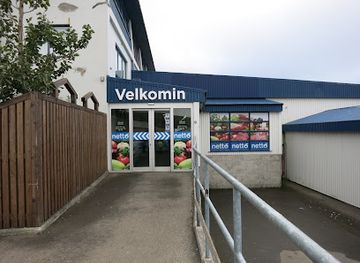
Nettó
Explore Húsavík with ease by shopping at Nettó, your go-to supermarket for local products, snacks, and essential groceries.
Get your free copy of our complete guide to Húsavík Area, delivered straight to you.
Everything on this page, from attractions and restaurants to essentials and local phrases, in one PDF you can read offline, print or share.
Already have an account? Sign in
Your Húsavík Area guide is ready.
We'll send it to · Not you? Sign out

Getting your guide ready…
We are putting together a fresh copy of the Húsavík Area guide. This can take up to a minute.
This can take a few moments. If your browser asks, choose Allow so the download can start. You'll find the guide in your Downloads folder.
Nothing happened? Download it again
Sorry, the guide is taking longer than usual. Please try again in a minute, or get it by email instead.
Húsavík Area essentials
Currency and Payment
Safety
Emergency Situations
Do's and Don'ts
Local Tips
From Eve
Local phrases worth knowing
You don't need to get them perfect. A few words go a long way, and locals appreciate the effort.
Basics
| English | Local | Say it |
|---|---|---|
| Hello | Halló | [HAH-loh] |
| Goodbye | Bless | [bless] |
| Yes | Já | [YA] |
| No | Nei | [nay] |
| Please/You're welcome | Takk fyrir | [tahk FEE-rir] |
| Thank you | Takk | [tahk] |
| Excuse me/Sorry | Afsakið | [AHF-sah-kith] |
| How are you? | Hvað segir þú? | [kvath SEY-ir tho] |
| Fine. And you? | Í góðu. Og þú? | [ee GOH-thoo. ogh tho?] |
| Do you speak English? | Talar þú ensku? | [TAH-lahr tho ENS-koo?] |
| I don't understand | Ég skil ekki | [yeh shkil EK-ki] |
Eating & Drinking
| English | Local | Say it |
|---|---|---|
| I'd like to see the menu, please | Ég ætla að skoða matseðilinn, takk | [yeh EHT-lah ath SKOH-tha MATH-se-thil-inn, tahk] |
| I don't eat meat | Ég borða ekki kjöt | [yeh BOR-tha EK-ki chyut] |
| Cheers! | Skál! | [skowl] |
| I would like to pay, please | Ég vildi greiða, takk | [yeh VIL-thi gray-tha, tahk] |
Emergencies
| English | Local | Say it |
|---|---|---|
| Help! | Hjálp! | [HYOWLP] |
| Go away! | Farðu í burtu! | [FAR-thoo ee BUR-too] |
| Call the Police! | Hringdu í lögregluna! | [HRING-thoo ee LOH-greh-kloo-nah] |
| Call a doctor! | Hringdu í lækninn! | [HRING-thoo ee LIK-nin] |
| I'm lost | Ég er týndur | [yeh air TEEN-thur] |
| I'm ill | Ég er veikur | [yeh air VAY-kur] |
Shopping
| English | Local | Say it |
|---|---|---|
| I'd like to buy... | Ég ætla að kaupa... | [yeh EHT-lah ath KOW-pa...] |
| I'm just looking | Ég er bara að skoða | [yeh air BA-ra ath SKOH-tha] |
| How much is it? | Hvað kostar það? | [kvath KOS-tar thah] |
| That's too expensive | Það er of dýrt | [thath air ohf DEERT] |
| Can you lower the price? | Getur þú lækkat verðið? | [GETH-thur tho LAI-kat VER-thith] |
Time & Numbers
| English | Local | Say it |
|---|---|---|
| What time is it? | Hvað er klukkan? | [kvath air KLUTH-kahn] |
| It's one o'clock | Klukkan er eitt | [KLUTH-kahn air ayth] |
| Half past (10) | Hálf tíu | [howlf tee-oo] |
| Morning | Morgunn | [MOR-gunn] |
| Afternoon | Eftir hádegi | [EF-thir HOW-deh-ye] |
| Evening | Kvöld | [kwuhlt] |
| Yesterday | Í gær | [ee gire] |
| Today | Í dag | [ee dahg] |
| Tomorrow | Á morgun | [ow MOR-gun] |
| 1 | Eitt | [ayth] |
| 2 | Tvö | [tvo] |
| 3 | Þrjú | [thryoo] |
| 4 | Fjórir | [fyoh-reer] |
| 5 | Fimm | [fim] |
| 6 | Sex | [sehx] |
| 7 | Sjö | [syoh] |
| 8 | Átta | [ow-thah] |
| 9 | Níu | [nee-uh] |
| 10 | Tíu | [tee-oo] |
Transport & Directions
| English | Local | Say it |
|---|---|---|
| Where's a/the...? | Hvar er... | [kvar air] |
| What's the address? | Hvað er heimilisfangið? | [kvath air HAY-me-lis-fan-yeeth] |
| Can you show me (on the map)? | Getur þú sýnt mér (á kortinu)? | [GETH-thur tho seent mair (ow KOR-tinoo)] |
| When's the next (bus)? | Hvenær kemur næsta (strætisvagn)? | [KVEN-aihr KEH-mur NIGH-stah (stra-tee-svahn)] |
| A ticket (to ....) | Miða (til ....) | [MEE-tha (teel ....)] |
History of Húsavík Area
A Settlement of Saga Tradition
Húsavík’s early history is associated with the account of Garðar Svavarsson, a Swedish seafarer who is said to have overwintered in the area during the ninth century after circumnavigating Iceland. The town’s name, commonly translated as “bay of houses”, is linked to this settlement tradition. The precise details belong partly to saga literature and later historical interpretation, but Húsavík is widely regarded as one of Iceland’s earliest settlement sites. Its sheltered position on Skjálfandi Bay helped make the location useful for seafaring, seasonal activity and later permanent habitation.
Farming, Fishing and Coastal Life
For centuries, life around Húsavík combined farming with the resources of the sea. The bay supported fishing and boat activity, while inland communities depended on livestock and haymaking in a climate where agriculture required careful adaptation. Húsavík developed as a local service and trading centre for the surrounding farms, with the harbour forming the practical focus of work and communication. The settlement remained modest in scale, but its position on the north coast gave it a significance beyond its population, linking rural districts with maritime routes and regional commerce.
The Church and the Townscape
Húsavík’s historic identity is visible in its church and older buildings, which reflect the development of an Icelandic coastal settlement rather than a grand urban centre. Húsavíkurkirkja, completed in 1907, is one of the town’s best-known architectural landmarks, while surviving timber structures help convey the character of earlier domestic and commercial life. The town’s institutions also grew as Húsavík became a centre for education, administration, trade and fishing in the surrounding part of Þingeyjarsýsla, the historic district of north-eastern Iceland.
Whaling and Changing Marine Economies
Whaling has been part of the history of Skjálfandi Bay, but its place in local life has changed substantially over time. Earlier forms of hunting and later commercial whaling left a marine legacy that is now interpreted through museums and public debate. In the late twentieth and early twenty-first centuries, whale watching became increasingly important to Húsavík’s economy and international identity. The shift illustrates a wider change in coastal tourism, in which observing marine wildlife has increasingly complemented or replaced extractive uses of the sea.
Heritage, Tourism and Conservation
Modern Húsavík has built a distinctive visitor economy around its harbour, the Húsavík Whale Museum, marine excursions and geothermal bathing at GeoSea. Tourism has brought new attention to the bay’s whales, seabirds and geological setting, while also making responsible wildlife practice important to the area’s future. The town remains connected to fishing and everyday local services, so its tourism identity sits alongside a functioning northern community rather than replacing it. Weather, marine conditions and the seasonal rhythm of travel continue to shape how the area is experienced.
Húsavík Area in Photos
Browse through our photo collection highlighting the charm and character of the destination.
Cities in Húsavík Area
The towns and cities of Húsavík Area, and the easiest places to base yourself.

Swipe for more cities
Neighbouring destination travel guides
The closest destinations to Húsavík Area, if you have time for more than one.
-

-

-

-

-


Swipe for more destinations
Explore more
Explore more of Northeastern Region
Explore the Northeastern Region of Iceland: A land of dramatic landscapes, geothermal wonders, and unforgettable natural beauty. Perfect for nature lovers and adventure seekers.
Explore Northeastern Region
Explore more of Iceland
Discover Iceland, where glaciers meet volcanoes, Northern Lights dance in the skies, and natural wonders await at every turn.
Explore Iceland