

Free Egilsstadir Travel Guide & Mobile App
Plan your Egilsstadir trip with Evendo. Get free guides to top attractions, restaurants, hotels, and bars. Web access or download the mobile app.


Egilsstaðir reveals East Iceland through Lagarfljót, forest trails, waterfalls, geothermal baths, local history and easy access to fjords and highlands.
A Strategic East Iceland Setting
Egilsstaðir is the principal service town of East Iceland, positioned beside the broad waters of Lagarfljót and surrounded by the mountains, valleys and long fjords of the region. Although its modern settlement is relatively young, its location makes it an important base for exploring eastern Iceland, with Route 1 passing through the town and Egilsstaðir Airport providing domestic connections. The surrounding landscape changes quickly from open, treeless highlands to birch woodland, waterfalls and sheltered lakeshores.Read more about Egilsstadir
Town Life and Local Landscapes
When is the best time to visit Egilsstadir?
Best: June–August · 16–18°C| Month | High (°C) | Rainfall (mm) |
|---|---|---|
| January | 1 | 48 |
| February | 1 | 38 |
| March | 3 | 40 |
| April | 7 | 37 |
| May | 12 | 35 |
| June (best) | 16 | 31 |
| July (best) | 18 | 28 |
| August (best) | 18 | 30 |
| September | 13 | 32 |
| October | 7 | 39 |
| November | 4 | 45 |
| December | 2 | 50 |
Getting to and around Egilsstadir
How to get there
Transportation
Best attractions in Egilsstadir
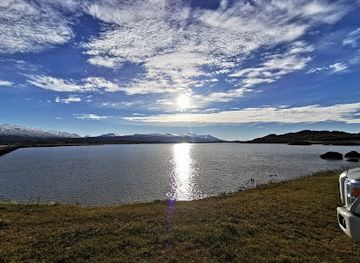
Egilsstaðir’s attractions are closely bound to the surrounding landscape and the town’s role as East Iceland’s service centre. The East Iceland Heritage Museum introduces regional settlement, farming traditions and natural history, making it a useful starting point for understanding the area. Along Lagarfljót, visitors can take in broad water views and the folklore surrounding the Lagarfljót wyrm, Iceland’s famous lake monster. Fardagafoss, reached by a trail from the town’s eastern side, drops through a steep green valley and offers a rewarding short walk when conditions are suitable. Across the lake, Hallormsstaðaskógur provides walking paths through Iceland’s best-known woodland, with a very different atmosphere from the treeless highlands. Vök Baths, built in Lake Urriðavatn, combines geothermal bathing with open views across the water. The town itself is compact, with cafés, services and local institutions rather than a dense historic centre.
-
Park
Selskógur
Explore Selskógur Park in Egilsstaðir, a serene escape into nature with lush landscapes and scenic walking paths perfect for all ages.
6 min drive · 2.1 km from city centre
-
Tourist attraction
Gálgaklettur
Explore Gálgaklettur, a stunning geological wonder in Egilsstaðir, Iceland, perfect for nature lovers and adventure seekers alike.
6 min drive · 2.1 km from city centre


Best landmarks in Egilsstadir
Egilsstaðir has few monumental buildings, but several places express the town’s regional identity. Egilsstaðakirkja is a modern parish church serving the local community, while the East Iceland Heritage Museum is an important cultural landmark for its interpretation of settlement, rural life and the natural environment. Lagarfljót itself is the defining geographical landmark: its long, dark waters shape the town’s setting and are linked to enduring stories of the Lagarfljót wyrm. Fardagafoss provides a natural landmark immediately associated with the town, descending through the hillside above the valley. Further along the lake, Hallormsstaðaskógur is significant as a national forest and as a symbol of Iceland’s modern forestry efforts. These landmarks are less a formal urban ensemble than a chain of cultural and natural reference points spread through the Egilsstaðir area.
-
Hotel
Hotel Eyvindará
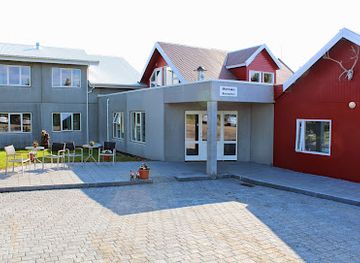
Discover the perfect blend of comfort and adventure at Hotel Eyvindará in Egilsstaðir, your gateway to East Iceland's stunning landscapes.
10 min walk · 0.8 km from city centre
-
Coffee shop
Bókakaffi Hlöðum
Discover the cozy charm of Bókakaffi Hlöðum, a delightful coffee shop in Fellabær, where local flavors and warm hospitality await you.
6 min drive · 2.0 km from city centre
-
 Hotel
HotelHótel Edda
Experience the charm of Egilsstaðir with exceptional comfort and hospitality at Hôtel Edda, your gateway to Iceland's breathtaking Eastfjords.
6 min drive · 1.9 km from city centre
-
Horse rental service
Finnsstaðir Horse Rental
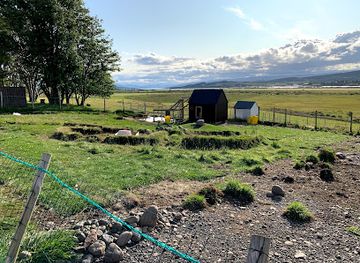
Discover the breathtaking landscapes of East Iceland on horseback at Finnsstaðir Horse Rental, where adventure meets Icelandic culture.
8 min walk · 0.6 km from city centre
Explore Egilsstadir on the map
Plan your Egilsstadir trip on one map. See where the top attractions, landmarks, restaurants, bars and hotels are, find what's near where you're staying, and book hotels and experiences in a few clicks.
Best hotels in Egilsstadir
Best restaurants in Egilsstadir
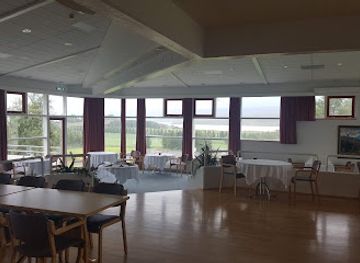
Dining in Egilsstaðir reflects the practical character of an East Iceland service town, with restaurants, cafés, bakeries and hotel dining rooms serving residents, road travellers and visitors exploring the region. Menus commonly draw on Icelandic staples such as lamb, fish, dairy products, rye bread and seasonal vegetables, while contemporary kitchens adapt these ingredients to modern Nordic cooking. Breakfast cafés and bakeries are useful for provisions before driving towards the fjords or highlands, and supermarkets provide supplies for self-catering, particularly on longer road journeys. Local food is shaped by the surrounding farms, freshwater lakes and fishing communities along the Eastfjords, although the town is not primarily a destination for a specialised regional cuisine. Dining options are more concentrated and seasonal than in Reykjavík, so travellers should expect a quieter evening rhythm and check current service arrangements locally.
-
Restaurant
Restaurant Edda Egilsstaðir
Discover authentic Icelandic cuisine at Restaurant Edda in Egilsstaðir - where local flavors meet warm hospitality.
6 min drive · 1.9 km from city centre
Best bars in Egilsstadir
Egilsstaðir has a modest evening scene centred on hotel bars, cafés and restaurants rather than dedicated nightclubs or a large entertainment quarter. After dark, the town is generally quiet, with social life shaped by local residents, road travellers and seasonal visitors. A drink with dinner or a relaxed conversation in a hotel lounge is more characteristic than late-night clubbing. Cultural evenings may include events at local community venues, although programmes change and should be checked locally. The lack of urban light makes the surrounding area appealing for observing clear night skies and, in the darker months, potentially the northern lights, subject to weather and solar conditions. Visitors should remember that rural services may close earlier than expected and that driving after drinking is not compatible with Icelandic road safety.
-
Restaurant
Restaurant Edda Egilsstaðir
Experience the rich flavors of Icelandic cuisine at Restaurant Edda in Egilsstaðir, where local ingredients meet warm hospitality.
6 min drive · 1.9 km from city centre
Best shops in Egilsstadir
Shopping in Egilsstaðir is functional and locally oriented, serving a large rural hinterland rather than operating as a specialist retail destination. The town centre and main-road commercial areas contain supermarkets, convenience shops, outdoor suppliers, pharmacies and practical services useful for a journey through East Iceland. Local food products, woollen goods, knitted garments and small craft items may appear in shops, museums or seasonal sales, while regional souvenirs often reflect Icelandic nature, sheep farming and folklore. The East Iceland Heritage Museum provides a more meaningful cultural context than a conventional shopping street, particularly for visitors interested in local crafts and rural history. Travellers should stock up on food, fuel and essential outdoor supplies before heading into sparsely populated valleys or along the Eastfjords, where retail choice becomes limited.
-
Coffee shop
Bókakaffi Hlöðum
Discover Bókakaffi Hlöðum, the ultimate coffee shop experience in Fellabær, where literature meets the perfect brew for an unforgettable visit.
6 min drive · 2.0 km from city centre
-
Furniture store
Bara snilld ehf
Explore Bara Snilld ehf in Egilsstaðir for unique furniture and home décor items that embody Icelandic charm and craftsmanship.
6 min drive · 2.0 km from city centre
-
Hunting store
Krossdal Gunstock
Discover Krossdal Gunstock in Egilsstaðir - your ultimate hunting store for top-quality gear and expert advice in Iceland's breathtaking landscapes.
6 min drive · 1.9 km from city centre


Get your free copy of our complete guide to Egilsstadir, delivered straight to you.
Everything on this page, from attractions and restaurants to essentials and local phrases, in one PDF you can read offline, print or share.
Already have an account? Sign in
Your Egilsstadir guide is ready.
We'll send it to · Not you? Sign out

Getting your guide ready…
We are putting together a fresh copy of the Egilsstadir guide. This can take up to a minute.
This can take a few moments. If your browser asks, choose Allow so the download can start. You'll find the guide in your Downloads folder.
Nothing happened? Download it again
Sorry, the guide is taking longer than usual. Please try again in a minute, or get it by email instead.
Egilsstadir essentials
Currency and Payment
Safety
Emergency Situations
Do's and Don'ts
Local Tips
From Eve
Local phrases worth knowing
You don't need to get them perfect. A few words go a long way, and locals appreciate the effort.
Basics
| English | Local | Say it |
|---|---|---|
| Hello | Halló | [Ha-loh] |
| Goodbye | Bless | [Bless] |
| Yes | Já | [Yow] |
| No | Nei | [Nay] |
| Please/You're welcome | Takk fyrir | [Tahk fi-rir] |
| Thank you | Takk | [Tahk] |
| Excuse me/Sorry | Afsakið | [Afsa-kið] |
| How are you? | Hvernig hefurðu það? | [Kver-nig hev-ur-thu thað] |
| Fine. And you? | Fínt. En þú? | [Feent. En thu] |
| Do you speak English? | Talarðu ensku? | [Ta-lar-thu en-skoo] |
| I don't understand | Ég skil ekki | [Yeh shkil e-kki] |
Eating & Drinking
| English | Local | Say it |
|---|---|---|
| I'd like to see the menu, please | Ég vil sjá matsedilinn, takk | [Yeh vil syow mat-se-thil-inn, tahk] |
| I don't eat meat | Ég borða ekki kjöt | [Yeh bor-tha e-kki chyot] |
| Cheers! | Skál! | [Skowl] |
| I would like to pay, please | Ég vil greiða, takk | [Yeh vil gray-tha, tahk] |
Emergencies
| English | Local | Say it |
|---|---|---|
| Help! | Hjálp! | [Hyowlp] |
| Go away! | Farðu í burtu! | [Far-thu i burtu] |
| Call the Police! | Hringdu í lögregluna! | [Hring-thu i lo-gre-gluna] |
| Call a doctor! | Hringdu í læknin! | [Hring-thu i laik-nin] |
| I'm lost | Ég er viljandi | [Yeh er vil-yan-di] |
| I'm ill | Ég er veikur | [Yeh er vei-kur] |
Shopping
| English | Local | Say it |
|---|---|---|
| I'd like to buy... | Ég vil kaupa... | [Yeh vil koy-pa] |
| I'm just looking | Ég er bara að skoða | [Yeh er ba-ra ath sko-tha] |
| How much is it? | Hvað kostar það? | [Kvath kost-ar thað] |
| That's too expensive | Það er of dýrt | [Thath er of di-rt] |
| Can you lower the price? | Geturðu lækkat verðið? | [Ge-thur-thu lai-kat ver-thith] |
Time & Numbers
| English | Local | Say it |
|---|---|---|
| What time is it? | Hvað er klukkan? | [Kvath er klu-kkan] |
| It's one o'clock | Klukkan er eitt | [Klu-kkan er ait] |
| Half past (10) | Hálftíu (10) | [Hawlf-tyu (10)] |
| Morning | Morgunn | [Mor-gun] |
| Afternoon | Eftir hádegi | [Ef-thir haw-de-yi] |
| Evening | Kvöld | [Kvulth] |
| Yesterday | Í gær | [Ee gair] |
| Today | Í dag | [Ee thak] |
| Tomorrow | Á morgun | [Ow mor-gun] |
| 1 | Eitt | [Ait] |
| 2 | Tveir | [T-vayr] |
| 3 | Þrír | [Thrir] |
| 4 | Fjórir | [F-yowr-ir] |
| 5 | Fimm | [Fimm] |
| 6 | Sex | [Seks] |
| 7 | Sjö | [S-yow] |
| 8 | Átta | [Ow-tha] |
| 9 | Níu | [N-yow] |
| 10 | Tíu | [T-yu] |
Transport & Directions
| English | Local | Say it |
|---|---|---|
| Where's a/the...? | Hvar er...? | [Kvar er] |
| What's the address? | Hvað er heimilisfangið? | [Kvath er hay-mil-is-fan-gith] |
| Can you show me (on the map)? | Geturðu sýnt mér (á kortinu)? | [Ge-thur-thu seent meer (au kort-inu)] |
| When's the next (bus)? | Hvenær kemur næsti (strætisvagn)? | [Kver-nair kem-ur nais-thi (strait-is-vagn)] |
| A ticket (to ....) | Miði (til ...) | [Mith-i til] |
History of Egilsstadir
Settlement in the Eastfjords Region
The wider Egilsstaðir area forms part of Iceland’s eastern settlement landscape, shaped by Norse colonists and the farms established during the Settlement Age, traditionally dated to the late ninth and early tenth centuries. Lagarfljót and the surrounding valleys provided routes, pasture and access to the coast, while nearby farms developed along the fertile lowlands. As elsewhere in Iceland, early community life was organised around farms, seasonal work and local assemblies rather than towns. The region’s history is also connected with the saga tradition, including stories associated with the Eastfjords and the inland valleys. Modern Egilsstaðir, however, did not emerge as one of these medieval farm settlements; its growth belongs chiefly to the twentieth century.
Farms, Forests and Rural Society
For centuries, the economy around present-day Egilsstaðir rested on sheep farming, cattle rearing and the management of scattered rural holdings. Lagarfljót served as a prominent geographical reference, while Hallormsstaður became associated with Iceland’s long-running experiments in forestry. Tree planting at Hallormsstaður began in the early twentieth century, helping establish Hallormsstaðaskógur as Iceland’s largest national forest. The woodland carries significance beyond recreation: it reflects Icelandic efforts to restore and expand forests in a country where natural tree cover is limited. Rural traditions, craft practices and the changing relationship between people and the land are documented today at the East Iceland Heritage Museum.
The Rise of a Modern Service Town
Egilsstaðir developed as a modern service centre during the twentieth century, as improved roads, public administration, commerce and communications strengthened its role in East Iceland. Its position near the head of Lagarfljót and at the meeting point of routes through the interior and towards the fjords made it a natural location for services that had previously been dispersed among farms and smaller settlements. The construction and development of Egilsstaðir Airport further connected the area with Reykjavík and other parts of Iceland. Rather than growing from an ancient urban core, the town reflects the modern reorganisation of Icelandic rural regions around accessible transport and central services.
Transport Links and Regional Development
The completion and gradual improvement of road connections changed Egilsstaðir’s importance within eastern Iceland. Route 1 made the town a key stopping point on the national road network, while routes towards Seyðisfjörður, Reyðarfjörður, the northern interior and the Eastfjords reinforced its regional role. These links supported trade, tourism, public services and movement between coastal communities and the interior. The town’s location also became significant during the development of the Kárahnjúkar hydropower project and Alcoa’s aluminium plant at Reyðarfjörður in the early twenty-first century, although the industrial facilities lie outside Egilsstaðir. Its present identity combines regional administration, commerce and access to a large, sparsely populated landscape.
Contemporary East Iceland Identity
Today Egilsstaðir is recognised as East Iceland’s principal inland centre, serving residents, travellers and communities spread across a wide geographical area. Its cultural identity remains closely tied to the lake, surrounding farms, forestry and the history of settlement, while tourism has broadened attention towards hiking, birdlife, geology and geothermal bathing. The town’s modest scale is part of its character: there is no dense historic centre, but there are institutions and landscapes that explain how people have adapted to eastern Iceland’s climate and terrain. Modern Egilsstaðir therefore represents a continuing regional story, linking rural traditions with transport, public services and nature-based travel.
Travel experiences inspired by this city
-
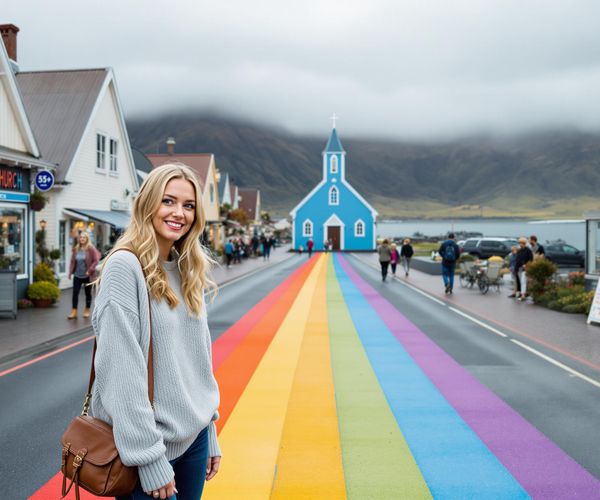 7 Day Trip
Solo Adventure in Seydisfjordur, Iceland
Explore the breathtaking fjords and vibrant culture of Seydisfjordur, Iceland, on a solo adventure filled with scenic hikes and local experiences.
7 Day Trip
Solo Adventure in Seydisfjordur, Iceland
Explore the breathtaking fjords and vibrant culture of Seydisfjordur, Iceland, on a solo adventure filled with scenic hikes and local experiences.
 10 Jul 2025
By Elin Karlsson -
 10 Day Trip
Solo Adventure in Seydisfjordur: Exploring Iceland's Hidden Gem
Discover the serene beauty and vibrant culture of Seydisfjordur on a solo 10-day journey, staying at Hótel Snæfell for the ultimate Icelandic experience.
10 Day Trip
Solo Adventure in Seydisfjordur: Exploring Iceland's Hidden Gem
Discover the serene beauty and vibrant culture of Seydisfjordur on a solo 10-day journey, staying at Hótel Snæfell for the ultimate Icelandic experience.
 10 Jul 2025
By Patricia Smith -
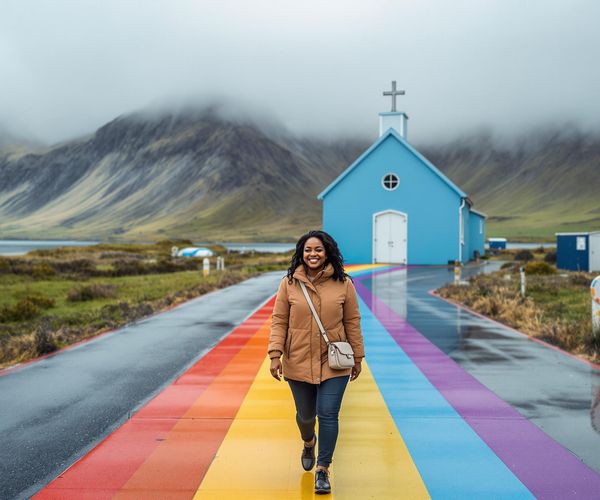 11 Day Trip
Solo Adventure in Seydisfjordur: Exploring Icelandic Beauty
Join me on an 11-day solo journey to Seydisfjordur, Iceland, where nature's beauty meets cultural wonders. Discover hiking trails, local cuisine, and more!
11 Day Trip
Solo Adventure in Seydisfjordur: Exploring Icelandic Beauty
Join me on an 11-day solo journey to Seydisfjordur, Iceland, where nature's beauty meets cultural wonders. Discover hiking trails, local cuisine, and more!
 5 Jul 2025
By Marie Rakotomalala -
Upcoming trip11 Day Trip Solo Adventure in Seydisfjordur: Exploring Iceland's Hidden Gem Embark on a solo journey to Seydisfjordur, Iceland, exploring breathtaking landscapes and vibrant culture, while staying at the cozy Hótel Snæfell.
 5 Jul 2025
By Mohamed Hassan -
 9 Day Trip
Family Adventure in Seydisfjordur, Iceland
Discover the magic of Seydisfjordur with family-friendly adventures, stunning fjords, and cultural experiences in Iceland's hidden gem.
9 Day Trip
Family Adventure in Seydisfjordur, Iceland
Discover the magic of Seydisfjordur with family-friendly adventures, stunning fjords, and cultural experiences in Iceland's hidden gem.
 15 Jun 2025
By Jose Martinez -
 7 Day Trip
Solo Adventure Through the Serene Seydisfjordur
Discover the tranquil beauty of Seydisfjordur, Iceland, on a solo adventure filled with breathtaking landscapes and vibrant culture.
7 Day Trip
Solo Adventure Through the Serene Seydisfjordur
Discover the tranquil beauty of Seydisfjordur, Iceland, on a solo adventure filled with breathtaking landscapes and vibrant culture.
 15 May 2025
By Joao Langa
Swipe for more travel diaries
Egilsstadir in Photos
Browse through our photo collection highlighting the charm and character of the destination.
Cities near Egilsstadir
The closest cities to Egilsstadir, if you have time for more than one stop.
-

-

-

-

-


Swipe for more cities
Explore more

Explore more of Iceland
Discover Iceland, where glaciers meet volcanoes, Northern Lights dance in the skies, and natural wonders await at every turn.
Explore Iceland