

Hveragerdi Area Travel Guide - Free Web & App
Your ultimate guide to Hveragerdi Area. Discover top landmarks, proposed trips, and local tips. Free on the web or via the Evendo companion app.


Hveragerði Area in Iceland pairs geothermal gardens, hot springs, Reykjadalur hikes, greenhouse culture and volcanic landscapes near Reykjavík and the South Coast.
Geothermal Landscapes
Hveragerði lies in south-west Iceland, about 45 kilometres east of Reykjavík on the main Route 1, where active geothermal forces shape both the landscape and everyday life. The town stands near the foothills of the Hengill volcanic region, an area of steaming ground, warm springs, mossy valleys and mountain walking routes. Its name refers to hot-spring gardens, an apt description of a settlement where geothermal heat has long supported horticulture in a country with a cool climate and limited daylight.Read more about Hveragerdi Area
Reykjadalur and the Hills
Town Life and Local Character
When is the best time to visit Hveragerdi Area?
Best: June–August · 15–16°C| Month | High (°C) | Rainfall (mm) |
|---|---|---|
| January | 3 | 50 |
| February | 3 | 40 |
| March | 4 | 40 |
| April | 7 | 30 |
| May | 11 | 30 |
| June (best) | 15 | 30 |
| July (best) | 16 | 30 |
| August (best) | 15 | 30 |
| September | 12 | 30 |
| October | 7 | 40 |
| November | 4 | 50 |
| December | 2 | 50 |
Getting to and around Hveragerdi Area
How to get there
Transportation
Best attractions in Hveragerdi Area
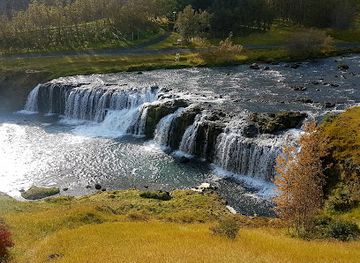
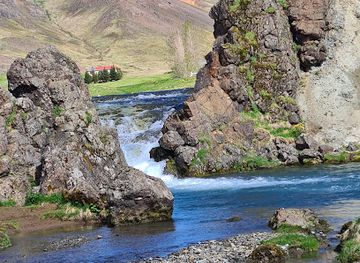
Hveragerði’s principal attraction is Reykjadalur, a geothermal valley reached by a walking route from the town, where visitors can see steaming hillsides and bathe in a warm river in the appropriate designated area. Within the town, geothermal features, gardens and greenhouse culture reveal how heat from below the surface supports horticulture in Iceland’s cool climate. The surrounding Hengill foothills provide open walking terrain and broad views across the Ölfus lowlands, although routes vary in difficulty and conditions. Hveragerði’s compact centre contains cafés, small galleries and local businesses that add cultural interest to a natural excursion. The town is also a useful base for journeys to the wider South Iceland region, including Selfoss, the Golden Circle and the coast, but these are separate destinations rather than attractions within Hveragerði itself.
-
Visitor center
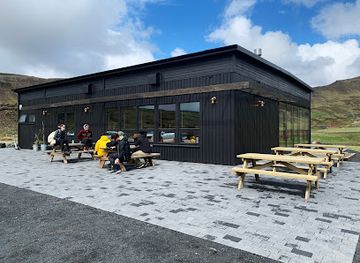
Reykjadalur Skáli/Lodge
Explore the breathtaking geothermal landscapes of Reykjadalur Skáli/Lodge, a visitor center in Hveragerði, Iceland offering adventure and relaxation.
-
Hiking area
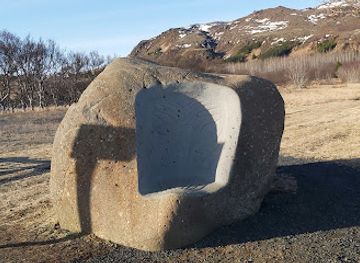
Þetta líður hjá
Discover the breathtaking hiking trails and geothermal wonders at Þetta líður hjá in Hveragerði, a haven for nature lovers and adventurers.
Best landmarks in Hveragerdi Area
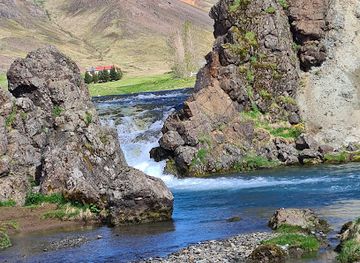
Reykjadalur is the defining natural landmark of the Hveragerði area, a valley where geothermal activity appears through steaming ground, warm water and mineral-coloured slopes. The surrounding Hengill volcanic region gives the town its mountainous backdrop and links its landscape to Iceland’s active tectonic setting. Within Hveragerði, geothermal greenhouses and cultivated gardens are cultural landmarks as much as working features, expressing the town’s long relationship with underground heat. The town’s location on the route between Reykjavík and South Iceland is also part of its identity, placing a compact settlement beside open volcanic uplands and fertile lowland farms. Earthquake history is visible less through a single monument than through local awareness of the active South Iceland Seismic Zone and the way the community has adapted to living with geological change.
-
Tourist attraction
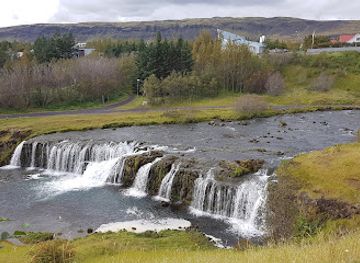
The Geothermal Park Hveragerði / Hveragarðurinn
Explore the geothermal wonders of Hveragerði, where nature and education converge in Iceland's stunning landscapes.
-
Hotel
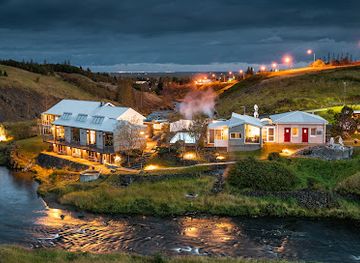
Frost & Fire Boutique Hotel
Discover the perfect blend of luxury and nature at Frost & Fire Boutique Hotel, a serene retreat amidst Iceland's breathtaking landscapes and geothermal wonders.
-
Restaurant
Skyrgerðin Restaurant
Savor the flavors of Iceland at Skyrgerðin Restaurant, where innovative skyr dishes meet fresh, local ingredients in a cozy setting.
-
Restaurant
Hofland Eatery
Discover Hofland Eatery in Hveragerði for a taste of authentic Icelandic cuisine made with fresh, locally-sourced ingredients in a cozy atmosphere.
Explore Hveragerdi Area on the map
Plan your trip on one map. See where the top attractions, landmarks, restaurants and hotels are, and book hotels and experiences in a few clicks.
Best hotels in Hveragerdi Area
Best restaurants in Hveragerdi Area
Dining in Hveragerði is closely connected with its role as a small horticultural town and a stopping point on Route 1. Cafés and restaurants in the centre provide convenient meals before or after walking in Reykjadalur, while local produce, greenhouse-grown vegetables and Icelandic dairy products reflect the practical use of geothermal heat. Visitors can expect a modest selection rather than a large restaurant district, with more extensive choice available in nearby Selfoss. Traditional Icelandic ingredients such as lamb, fish, rye bread, skyr and root vegetables may appear alongside familiar international dishes, while coffee and cake are an important part of the café culture. In rural surroundings, provisions should be bought in a properly supplied settlement rather than assumed to be available at a trailhead or geothermal site.
-
Restaurant
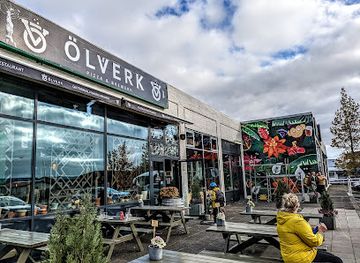
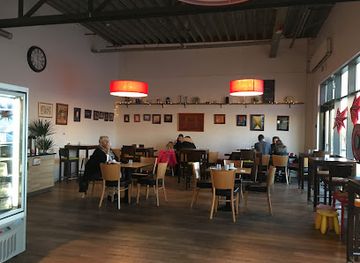
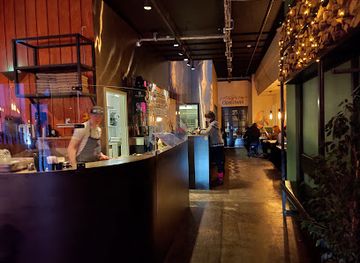
Ölverk Pizza & Brewery
Discover Ölverk Pizza & Brewery in Hveragerði for authentic Icelandic craft beer and delicious wood-fired pizzas amidst stunning natural beauty.
-
 Restaurant
Frost & Fire Boutique Hotel
Discover luxury and nature at Frost & Fire Boutique Hotel in Hveragerði – where stunning landscapes meet exceptional dining and geothermal relaxation.
-
Bakery
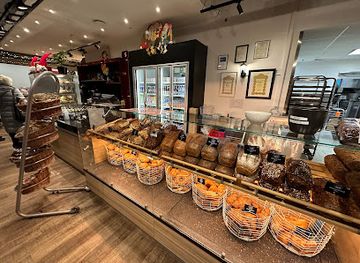
Almar Bakari
Experience the authentic taste of Iceland at Almar Bakari - a charming bakery offering delicious pastries and hearty breakfasts.
-
Restaurant
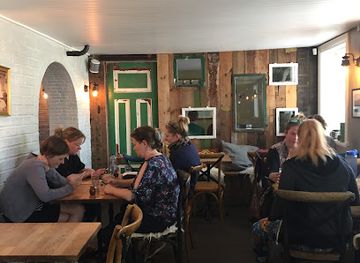
Skyrgerðin Restaurant
Experience authentic Icelandic cuisine at Skyrgerðin Restaurant in Hveragerði – where tradition meets taste in a cozy setting.
Best bars in Hveragerdi Area
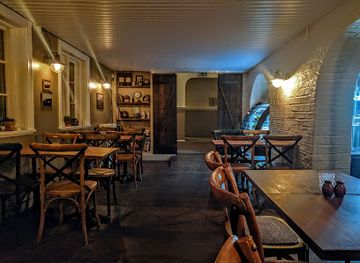
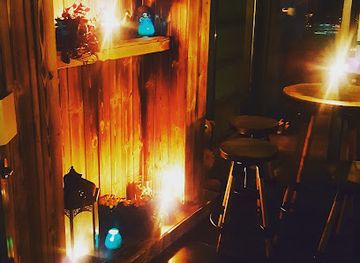
Hveragerði is a quiet small town rather than a nightlife destination, and evening entertainment is centred on local cafés, restaurants and the relaxed atmosphere of established pubs or accommodation venues when open. The town’s evenings suit visitors returning from the hills, with conversation, Icelandic food and views of the surrounding landscape more characteristic than late-night clubs or a concentrated bar scene. Seasonal cultural activity may add occasional events, but schedules vary and should not be assumed. Visitors seeking a broader choice of bars, live entertainment or late-night venues generally need to travel to Reykjavík, while Selfoss provides a nearer regional service centre but is outside the immediate Hveragerði area.
-
Restaurant
Ölverk Pizza & Brewery
Experience the finest in Icelandic cuisine and craft beer at Ölverk Pizza & Brewery, where every bite and sip tells a story.
-
Hotel
Frost & Fire Boutique Hotel
Discover the charm of Iceland at Frost & Fire Boutique Hotel, where luxury meets nature in a breathtaking geothermal paradise.
-
Restaurant
Skyrgerðin Restaurant
Savor Icelandic flavors at Skyrgerðin Restaurant in Hveragerði, where local ingredients meet a cozy dining experience.
-
Restaurant
Hofland Eatery
Experience the best of Icelandic cuisine at Hofland Eatery, where local flavors meet exceptional dining in the heart of Hveragerði.
Best nightclubs in Hveragerdi Area
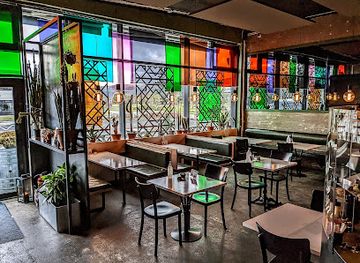
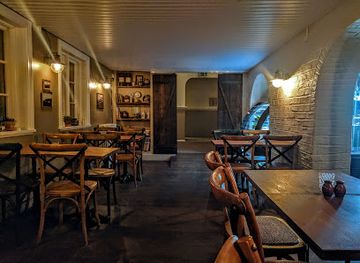
Hveragerði is a quiet small town rather than a nightlife destination, and evening entertainment is centred on local cafés, restaurants and the relaxed atmosphere of established pubs or accommodation venues when open. The town’s evenings suit visitors returning from the hills, with conversation, Icelandic food and views of the surrounding landscape more characteristic than late-night clubs or a concentrated bar scene. Seasonal cultural activity may add occasional events, but schedules vary and should not be assumed. Visitors seeking a broader choice of bars, live entertainment or late-night venues generally need to travel to Reykjavík, while Selfoss provides a nearer regional service centre but is outside the immediate Hveragerði area.
-
Restaurant
Ölverk Pizza & Brewery
Experience the Best of Icelandic Cuisine at Ölverk Pizza & Brewery in Hveragerði - Handcrafted Pizzas & Local Brews Await!
-
Restaurant
Skyrgerðin Restaurant
Discover the flavors of Iceland at Skyrgerðin Restaurant, a delightful dining spot in Hveragerði known for its unique skyr dishes and cozy atmosphere.
-
Restaurant
Hofland Eatery
Experience the best of Icelandic cuisine at Hofland Eatery, where fresh local ingredients meet a warm and inviting atmosphere.
-
Grill
Rósakaffi
Experience the flavors of Iceland at Rósakaffi, a charming grill and cafe in Hveragerði offering local dishes and a cozy atmosphere.

Best shops in Hveragerdi Area
Shopping in Hveragerði is small-scale and locally focused, with essentials, outdoor supplies, food and souvenirs available through town businesses rather than a major retail district. The most characteristic purchases are likely to be connected with Icelandic food production, horticulture, local art and craft, or the wider country’s wool, skincare and design traditions. Greenhouse culture gives the town a distinctive retail identity, although individual products and opening arrangements vary. Visitors can also look for regional food in shops and farm-related outlets around the South Iceland lowlands, while Selfoss offers a wider range of everyday retail and services. Remote areas around Reykjadalur have no shopping facilities, so food, water and walking essentials should be obtained in Hveragerði or another established settlement before departure.
-
Supermarket
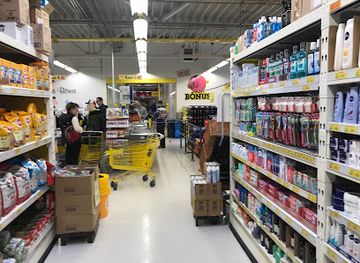
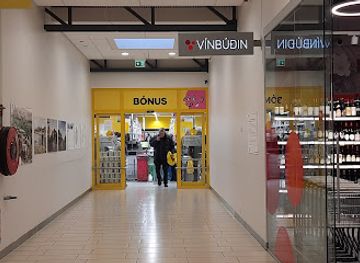
Bónus
Discover Bónus in Hveragerði for affordable groceries and authentic Icelandic products, ensuring a delightful culinary experience during your travels.
-
Bakery
Almar Bakari
Discover the warmth of Icelandic hospitality at Almar Bakari, a charming bakery in Hveragerði offering delicious baked goods and breakfast options.
-
Ice Cream
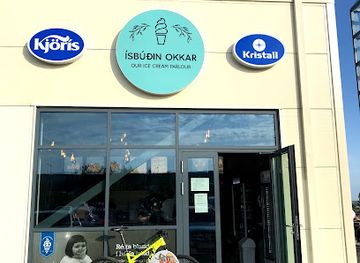
Ísbúðin Okkar
Experience the best homemade ice cream and delightful treats at Ísbúðin Okkar in Hveragerði, Iceland - a must-visit for dessert lovers.
-
Shopping mall
Sunnumörk
Experience the best of Icelandic shopping and dining at Sunnumörk, Hveragerði's vibrant shopping mall with unique local goods.
Get your free copy of our complete guide to Hveragerdi Area, delivered straight to you.
Everything on this page, from attractions and restaurants to essentials and local phrases, in one PDF you can read offline, print or share.
Already have an account? Sign in
Your Hveragerdi Area guide is ready.
We'll send it to · Not you? Sign out

Getting your guide ready…
We are putting together a fresh copy of the Hveragerdi Area guide. This can take up to a minute.
This can take a few moments. If your browser asks, choose Allow so the download can start. You'll find the guide in your Downloads folder.
Nothing happened? Download it again
Sorry, the guide is taking longer than usual. Please try again in a minute, or get it by email instead.
Hveragerdi Area essentials
Currency and Payment
Safety
Emergency Situations
Do's and Don'ts
Local Tips
From Eve
Local phrases worth knowing
You don't need to get them perfect. A few words go a long way, and locals appreciate the effort.
Basics
| English | Local | Say it |
|---|---|---|
| Hello | Halló | [ha-tlo] |
| Goodbye | Bless | [bles] |
| Yes | Já | [ya] |
| No | Nei | [nay] |
| Please/You're welcome | Gjörðu svo vel | [gyor-thu s-vo vel] |
| Thank you | Takk fyrir | [tahk f-ir-ir] |
| Excuse me/Sorry | Afsakið | [ap-sah-kith] |
| How are you? | Hvernig hefur þú það? | [k-ver-nik he-r thoo thahth] |
| Fine. And you? | Fínt. Og þú? | [feent oh thoo] |
| Do you speak English? | Talar þú ensku? | [tah-lar thoo ens-ku] |
| I don't understand | Ég skil ekki | [yeh skil ek-ki] |
Eating & Drinking
| English | Local | Say it |
|---|---|---|
| I'd like to see the menu, please | Ég væri til í að sjá matsedilinn, takk | [yeh vair-ri til ee ath sy-ow mat-se-thil-inn tahk] |
| I don't eat meat | Ég borða ekki kjöt | [yeh bor-tha ek-ki chyo-th] |
| Cheers! | Skál! | [skowl] |
| I would like to pay, please | Ég myndi vilja greiða, takk | [yeh min-di vil-ya gray-tha tahk] |
Emergencies
| English | Local | Say it |
|---|---|---|
| Help! | Hjálp! | [hyowlp] |
| Go away! | Farðu í burtu! | [far-thu ee bur-tu] |
| Call the Police! | Hringdu í lögregluna! | [hring-thu ee luh-gre-gluna] |
| Call a doctor! | Hringdu í lækninn! | [hring-thu ee laik-nin] |
| I'm lost | Ég er týndur | [yeh air tith-nthur] |
| I'm ill | Ég er veikur | [yeh air vay-kur] |
Shopping
| English | Local | Say it |
|---|---|---|
| I'd like to buy... | Ég ætla að kaupa... | [yeh ai-thla ath koy-pa] |
| I'm just looking | Ég er bara að skoða | [yeh air bah-ra ath sko-tha] |
| How much is it? | Hvað kostar það? | [kwa-th kos-tar thahth] |
| That's too expensive | Þetta er of dýrt | [thet-ta air ov deert] |
| Can you lower the price? | Getur þú lækkat verðið? | [geth-ur thoo lai-kat ver-thid] |
Time & Numbers
| English | Local | Say it |
|---|---|---|
| What time is it? | Hvað er klukkan? | [kwa-th air kloo-kun] |
| It's one o'clock | Klukkan er eitt | [kloo-kun air ayt] |
| Half past (10) | Hálf tíu | [howlf tee-oo] |
| Morning | Morgunn | [mohr-guthn] |
| Afternoon | Síðdegis | [seeth-de-yis] |
| Evening | Kvöld | [kvulth] |
| Yesterday | Í gær | [ee gayer] |
| Today | Í dag | [ee thahk] |
| Tomorrow | Á morgun | [ow mor-guhn] |
| 1 | Eitt | [ayt] |
| 2 | Tvö | [tvo] |
| 3 | Þrjú | [thryoo] |
| 4 | Fjögur | [fy-thur] |
| 5 | Fimm | [fim] |
| 6 | Sex | [seks] |
| 7 | Sjö | [syow] |
| 8 | Átta | [ow-tha] |
| 9 | Níu | [nee-oo] |
| 10 | Tíu | [tee-oo] |
Transport & Directions
| English | Local | Say it |
|---|---|---|
| Where's a/the...? | Hvar er... | [kvar air] |
| What's the address? | Hvað er heimilisfangið? | [kwa-th air hay-mil-is-fang-ith] |
| Can you show me (on the map)? | Getur þú sýnt mér (á korti)? | [geth-ur thoo seent meer ow kort-ith] |
| When's the next (bus)? | Hvenær kemur næsti (strætisvagn)? | [k-ver-nayr kem-ur n-yst-ee strait-is-vagn] |
| A ticket (to ....) | Miða (til ...) | [mee-tha til] |
History of Hveragerdi Area
Volcanic Foundations
Hveragerði’s setting is defined by Iceland’s position on the Mid-Atlantic Ridge, where geological activity has created volcanic formations, earthquake zones and geothermal heat. The town lies close to the Hengill volcanic system, whose underground heat warms water and provides the basis for the area’s hot springs and greenhouse cultivation. This geological history is not a single human-era event but an ongoing process, visible in steam, warm ground and mineral-rich water around the town and its surrounding valleys.
Settlement and Rural Land Use
The wider Ölfus area was settled during Iceland’s early settlement period, with farms occupying the fertile lowlands south of the Hengill hills. For centuries, the landscape supported livestock farming and haymaking, while natural routes connected the inland valleys with communities along the coast and in the Þingvellir region. Hveragerði developed later than many traditional farm settlements, emerging as a distinct community in a landscape where agriculture, geothermal water and access between south-west Icelandic districts overlapped.
The Rise of Horticulture
Geothermal heat transformed Hveragerði’s economic character during the twentieth century. Heated greenhouses made it possible to grow vegetables, flowers and other plants despite Iceland’s cool conditions, and horticulture became central to the town’s identity. The industry demonstrated how local communities could use a natural resource for food production and employment rather than treating hot springs only as curiosities. Greenhouses and garden culture remain among the most recognisable features of Hveragerði.
Earthquakes and Adaptation
Hveragerði lies in an active earthquake region, and the South Iceland Seismic Zone has periodically affected the town and surrounding settlements. The strong earthquake sequence of 2008 caused substantial damage in parts of south-west Iceland and remains an important reference point in local memory. Earthquake awareness, building practices and public information are part of life in the region, where the same tectonic forces that produce geothermal energy also create natural hazards.
Geothermal Tourism and Conservation
As Iceland’s roads and tourism networks expanded, Hveragerði became an established stopping point between Reykjavík and the South Coast, with Reykjadalur developing into a popular walking and bathing destination. Tourism has added a new layer to the town’s older agricultural and horticultural economy, while increased footfall has made responsible access important in fragile geothermal and upland environments. Visitors are expected to remain on appropriate paths, use designated bathing areas and avoid damaging hot ground, vegetation and watercourses.
Hveragerdi Area in Photos
Browse through our photo collection highlighting the charm and character of the destination.
Cities in Hveragerdi Area
The towns and cities of Hveragerdi Area, and the easiest places to base yourself.

Swipe for more cities
Neighbouring destination travel guides
The closest destinations to Hveragerdi Area, if you have time for more than one.
-

-

-

-

-


Swipe for more destinations
Explore more
Explore more of Southern Region
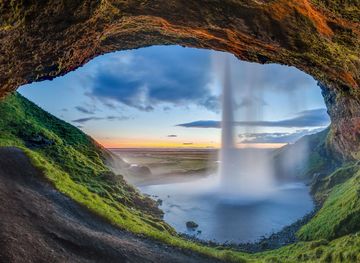
Explore the Southern Region of Iceland: From majestic waterfalls to black sand beaches, glaciers, and geothermal wonders, this is a land of dramatic contrasts and natural beauty.
Explore Southern Region
Explore more of Iceland
Discover Iceland, where glaciers meet volcanoes, Northern Lights dance in the skies, and natural wonders await at every turn.
Explore Iceland