

Kerlingarfjöll Travel Guide - Free Web & App
Your ultimate guide to Kerlingarfjöll. Discover top landmarks, proposed trips, and local tips. Free on the web or via the Evendo companion app.


Kerlingarfjöll, Iceland: explore colourful rhyolite mountains, steaming geothermal valleys, glacier views, hiking routes and the remote Kjölur highlands.
Rhyolite Mountains and Geothermal Valleys
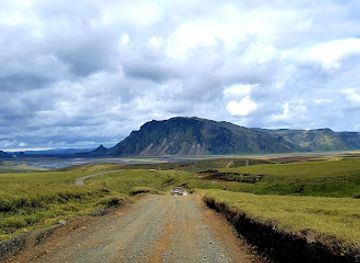
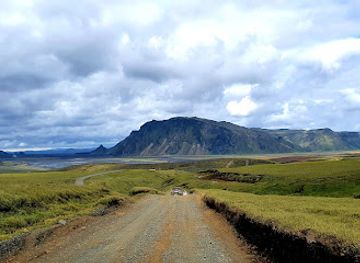
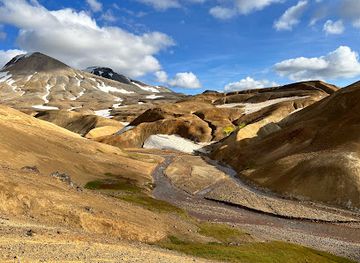
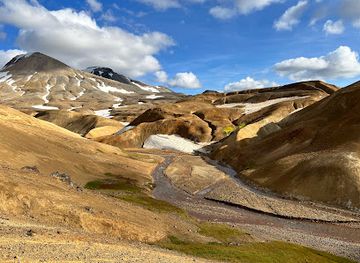
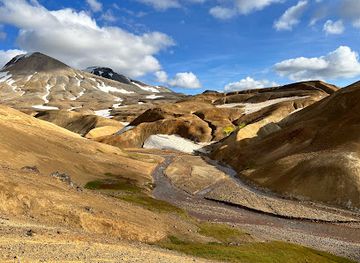
Kerlingarfjöll is a remote mountain range in Iceland’s central Highlands, reached from the Kjölur route between the country’s south and north. Its rust-red, ochre and yellow rhyolite peaks rise around snowfields, glacial valleys and steaming geothermal ground, creating a landscape that feels markedly different from Iceland’s better-known black-sand coasts and mossy lava fields. The range is especially associated with Hveradalir, a high valley where hot springs, fumaroles and mineral-stained slopes sit among sharply folded mountains.Read more about Kerlingarfjöll
A High-Altitude Landscape
Exploring Kerlingarfjöll
When is the best time to visit Kerlingarfjöll?
Best: June–August · 15–17°C| Month | High (°C) | Rainfall (mm) |
|---|---|---|
| January | 0 | 34 |
| February | 0 | 30 |
| March | 3 | 29 |
| April | 8 | 26 |
| May | 10 | 20 |
| June (best) | 15 | 23 |
| July (best) | 17 | 28 |
| August (best) | 15 | 27 |
| September | 11 | 24 |
| October | 7 | 26 |
| November | 2 | 32 |
| December | 0 | 35 |
Getting to and around Kerlingarfjöll
How to get there
Transportation
Best attractions in Kerlingarfjöll
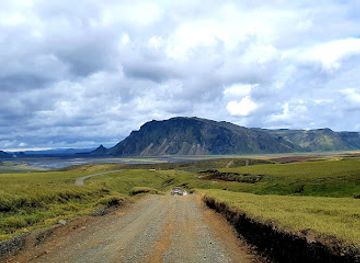
Kerlingarfjöll’s principal attraction is Hveradalir, a high geothermal valley where steaming vents, hot springs and mineral colours spread between ochre, red and pale rhyolite ridges. Marked walking routes lead through a dramatic mountain setting, with views towards snowfields, glacial landscapes and the isolated summits of the range. Snækollur, the highest peak in Kerlingarfjöll, is a prominent objective for experienced hikers when conditions allow, while the wider Ásgarður area provides the main starting point for shorter excursions and longer mountain walks. The journey along the Kjölur route is part of the experience, crossing a broad and sparsely settled interior between Iceland’s south and north. Visitors should distinguish the range itself from nearby attractions such as Gullfoss and the Geysir area, which lie outside Kerlingarfjöll and are commonly visited on the southern approach.
-
Tourist attraction
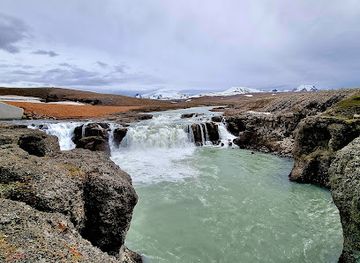
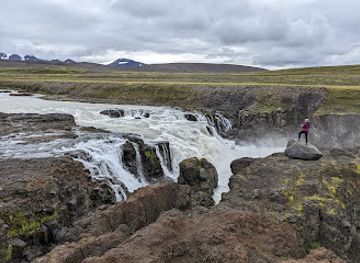
Gýgjarfoss waterfall
Explore the enchanting Gýgjarfoss Waterfall, a breathtaking natural attraction in Iceland showcasing stunning cascades and serene landscapes.
-
Ravine
Kerlingardalur
Explore the stunning Kerlingardalur Ravine, where vibrant geothermal features meet breathtaking landscapes in the heart of Iceland's highlands.
Best landmarks in Kerlingarfjöll
Hveradalir is Kerlingarfjöll’s defining natural landmark, recognised for its steaming geothermal ground and vividly mineral-stained rhyolite slopes. The surrounding mountain silhouettes, including Snækollur, give the range its distinctive highland profile, while snowfields and nearby glacial landscapes emphasise the area’s elevation and exposure. The route through Ásgarður provides the principal human landmark: a small mountain base established to support travel and hiking in an otherwise uninhabited interior. Kerlingarfjöll is also closely associated with the historic Kjölur crossing, whose modern road continues to connect Iceland’s southern and northern regions. These features are not monumental in an urban sense; their importance lies in the interaction of volcanic geology, geothermal heat, high-altitude weather and the long history of movement across Iceland’s central plateau.
-
Tourist attraction
Gýgjarfoss waterfall
Discover the breathtaking beauty of Gýgjarfoss Waterfall, a serene gem in Iceland's stunning highlands, perfect for nature lovers and adventurers.
-
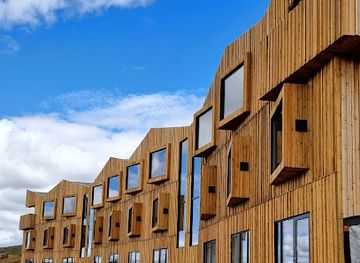
 Resort hotel
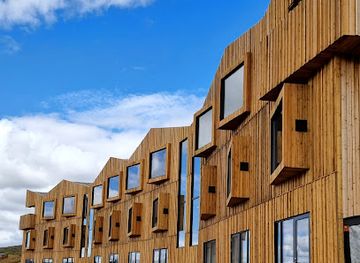
Highland Base at Kerlingarfjöll
Experience Iceland's breathtaking highlands at Highland Base at Kerlingarfjöll, a cozy resort hotel surrounded by stunning landscapes and outdoor adventures.
-
Indoor lodging
Ásgarður (Kerlingarfjöll)
Explore the stunning geothermal landscapes and cozy accommodations at Ásgarður (Kerlingarfjöll), a must-visit destination in Iceland's breathtaking nature.
-
Ravine
Kerlingardalur
Discover the mesmerizing beauty of Kerlingardalur, Iceland's enchanting ravine filled with geothermal wonders and breathtaking landscapes.

Explore Kerlingarfjöll on the map
Plan your trip on one map. See where the top attractions, landmarks, restaurants and hotels are, and book hotels and experiences in a few clicks.
Best hotels in Kerlingarfjöll
Best restaurants in Kerlingarfjöll
Dining in Kerlingarfjöll is concentrated at Kerlingarfjöll Mountain Resort in Ásgarður, rather than spread among independent villages or restaurants. Meals and refreshments may be available to guests and visitors according to the resort’s seasonal arrangements, so advance confirmation is sensible. The food culture is practical and suited to highland travel, with filling meals and provisions more important than an extensive restaurant scene. Travellers approaching from the south can find broader choice around the Golden Circle, while those coming from the north should stock up in a larger town before entering the Kjölur route. There are no ordinary supermarkets, cafés or farm shops within the mountain range, making packed food, water and emergency supplies important for day excursions and journeys through the interior.
-
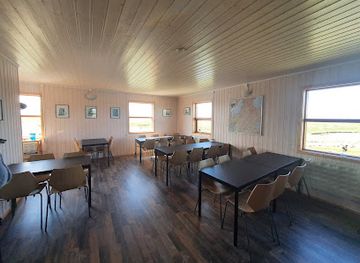
Indoor lodging
Ásgarður (Kerlingarfjöll)
Experience breathtaking landscapes and cozy accommodations at Ásgarður in Kerlingarfjöll – an unforgettable Icelandic getaway.
Best bars in Kerlingarfjöll
Kerlingarfjöll has no nightclub district or developed evening entertainment scene. After walking, evenings centre on the quiet atmosphere of the mountain resort and the surrounding highland landscape, with social time shaped by shared meals, changing light and the contrast between geothermal steam and open mountain silence. Any bar or licensed refreshments are dependent on the resort’s current seasonal facilities rather than a permanent local nightlife culture. Visitors seeking pubs, live music or a wider choice of evening venues should use a town outside the destination, such as a settlement in the Golden Circle area or northern Iceland, before travelling into the Highlands. Night-time walks require particular care because weather, darkness and geothermal hazards remain present beyond daylight hours.
-
Mountain peak
Kerlingarfjöll
Explore the breathtaking beauty of Kerlingarfjöll, Iceland's stunning mountain range with vibrant geothermal landscapes and adventure-filled trails.
-
Fast Food
Arbudir
Experience the essence of Icelandic fast food at Arbudir, where local flavors meet quick service in a stunning landscape.
-
Resort hotel
Highland Base at Kerlingarfjöll
Experience the breathtaking beauty and adventure at Highland Base in Iceland's stunning highlands, where nature meets comfort.
-
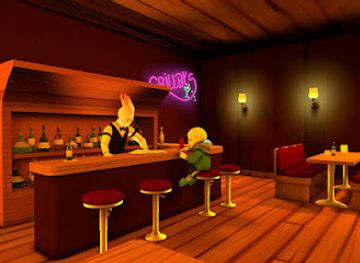
Bar
Grillby’s
Discover Grillby’s, a quirky bar in Iceland offering a unique atmosphere and a wide selection of beverages for a delightful night out.
Best nightclubs in Kerlingarfjöll
Kerlingarfjöll has no nightclub district or developed evening entertainment scene. After walking, evenings centre on the quiet atmosphere of the mountain resort and the surrounding highland landscape, with social time shaped by shared meals, changing light and the contrast between geothermal steam and open mountain silence. Any bar or licensed refreshments are dependent on the resort’s current seasonal facilities rather than a permanent local nightlife culture. Visitors seeking pubs, live music or a wider choice of evening venues should use a town outside the destination, such as a settlement in the Golden Circle area or northern Iceland, before travelling into the Highlands. Night-time walks require particular care because weather, darkness and geothermal hazards remain present beyond daylight hours.
-
Mountain peak
Kerlingarfjöll
Discover the stunning beauty of Kerlingarfjöll, a vibrant mountain peak in Iceland, with its geothermal wonders and breathtaking landscapes.
-
Resort hotel
Highland Base at Kerlingarfjöll
Discover the breathtaking highlands at Highland Base, a serene resort hotel surrounded by stunning landscapes and geothermal wonders in Iceland.
-
Bar
Grillby’s
Experience the vibrant atmosphere of Grillby’s, a must-visit bar in Iceland for locals and tourists alike, offering a diverse drink menu and lively events.
-
Indoor lodging
Ásgarður (Kerlingarfjöll)
Explore the stunning landscapes and cozy accommodations of Ásgarður in Kerlingarfjöll, where nature and comfort meet for a unique travel experience.

Best shops in Kerlingarfjöll
Shopping opportunities within Kerlingarfjöll are extremely limited and are primarily connected with practical provisions at the mountain resort, subject to its seasonal services. There is no permanent shopping street, market or cluster of craft shops in the range. Visitors should purchase fuel, groceries, outdoor supplies and any specialist equipment in a larger settlement before entering the Kjölur Highlands. Souvenirs, Icelandic woollen goods, design products and regional food items are more readily found in towns and established tourist areas outside Kerlingarfjöll, including places along the southern approach or in northern Iceland. The most useful preparation is therefore logistical rather than retail: carry enough food, water, clothing and navigation equipment for the planned route and do not expect to resupply once deep in the interior.
-
Mountain peak
Kerlingarfjöll
Discover the breathtaking beauty of Kerlingarfjöll, a mountain paradise in Iceland known for its stunning landscapes and geothermal wonders.
-
Resort hotel
Highland Base at Kerlingarfjöll
Experience the beauty of Iceland's highlands at the Highland Base at Kerlingarfjöll, your ultimate resort hotel for adventure and relaxation.
-
Indoor lodging
Ásgarður (Kerlingarfjöll)
Experience the fusion of comfort and adventure at Ásgarður (Kerlingarfjöll) – Iceland's hidden gem for nature lovers and food enthusiasts.
-
Ravine
Kerlingardalur
Explore the breathtaking ravine of Kerlingardalur, a hidden gem in Iceland featuring stunning geothermal landscapes and serene natural beauty.

Get your free copy of our complete guide to Kerlingarfjöll, delivered straight to you.
Everything on this page, from attractions and restaurants to essentials and local phrases, in one PDF you can read offline, print or share.
Already have an account? Sign in
Your Kerlingarfjöll guide is ready.
We'll send it to · Not you? Sign out

Getting your guide ready…
We are putting together a fresh copy of the Kerlingarfjöll guide. This can take up to a minute.
This can take a few moments. If your browser asks, choose Allow so the download can start. You'll find the guide in your Downloads folder.
Nothing happened? Download it again
Sorry, the guide is taking longer than usual. Please try again in a minute, or get it by email instead.
Kerlingarfjöll essentials
Currency and Payment
Safety
Emergency Situations
Do's and Don'ts
Local Tips
From Eve
Local phrases worth knowing
You don't need to get them perfect. A few words go a long way, and locals appreciate the effort.
Basics
| English | Local | Say it |
|---|---|---|
| Hello | Halló | [HA-loh] |
| Goodbye | Bless | [bles] |
| Yes | Já | [ya] |
| No | Nei | [nay] |
| Please/You're welcome | Gjörðu svo vel | [GYOR-thu sva vel] |
| Thank you | Takk fyrir | [tahk fi-rir] |
| Excuse me/Sorry | Fyrirgefðu | [FI-rir-gef-thu] |
| How are you? | Hvernig hefur þú það? | [KVER-nig HEY-vur thoo thahd] |
| Fine. And you? | Í lagi. En þú? | [EE lah-ghi. En thoo] |
| Do you speak English? | Talar þú ensku? | [TAH-lar thoo ENS-koo] |
| I don't understand | Ég skil ekki | [yeh skil EH-kki] |
Eating & Drinking
| English | Local | Say it |
|---|---|---|
| I'd like to see the menu, please | Ég ætla að sjá matsedilinn, takk | [yeh EHT-la ath syah MAHT-seh-dil-inn, tahk] |
| I don't eat meat | Ég borða ekki kjöt | [yeh BOR-tha EH-kki k-yot] |
| Cheers! | Skál! | [skowl] |
| I would like to pay, please | Ég ætla að greiða, takk | [yeh EHT-la ath gray-tha, tahk] |
Emergencies
| English | Local | Say it |
|---|---|---|
| Help! | Hjálp! | [HYOWLP] |
| Go away! | Farðu í burtu! | [far-thoo ee BUR-too] |
| Call the Police! | Hringdu í lögregluna! | [hring-thu ee LUR-eg-loo-na] |
| Call a doctor! | Hringdu til læknis! | [hring-thu til LAIK-nis] |
| I'm lost | Ég er týndur | [yeh air TEEN-thur] |
| I'm ill | Mér er illt | [mair air IL-lt] |
Shopping
| English | Local | Say it |
|---|---|---|
| I'd like to buy... | Ég vildi kaupa... | [yeh VIL-thi KOW-pa] |
| I'm just looking | Ég er bara að skoða | [yeh air BA-ra ath SKO-tha] |
| How much is it? | Hvað kostar það? | [kvath KOS-tar thahd] |
| That's too expensive | Það er of dýrt | [thath air ov DEER-t] |
| Can you lower the price? | Getur þú lækkat verðið? | [GHE-tur thoo ligh-KAHT verth-ith] |
Time & Numbers
| English | Local | Say it |
|---|---|---|
| What time is it? | Hvað er klukkan? | [kvath air KLOO-kan] |
| It's one o'clock | Klukkan er eitt | [KLOO-kan air ayt] |
| Half past (10) | Hálftíu (10) | [HOWL-ftee-oo (10)] |
| Morning | Morgunn | [MOR-gun] |
| Afternoon | Síðdegis | [SEETH-de-yis] |
| Evening | Kvöld | [kvuhld] |
| Yesterday | Í gær | [ee gyer] |
| Today | Í dag | [ee dahg] |
| Tomorrow | Á morgun | [ow MOR-gun] |
| 1 | Eitt | [ayt] |
| 2 | Tveir | [t-vayr] |
| 3 | Þrír | [threer] |
| 4 | Fjórir | [fyoh-reer] |
| 5 | Fimm | [feem] |
| 6 | Sex | [sehx] |
| 7 | Sjö | [syoh] |
| 8 | Átta | [ow-tah] |
| 9 | Níu | [nee-oo] |
| 10 | Tíu | [tee-oo] |
Transport & Directions
| English | Local | Say it |
|---|---|---|
| Where's a/the...? | Hvar er... | [kvar air] |
| What's the address? | Hvað er heimilisfangið? | [kvath air HAY-mil-is-fang-ith] |
| Can you show me (on the map)? | Getur þú sýnt mér (á kortinu)? | [GHE-tur thoo seent mair (ow kawr-tee-noo)] |
| When's the next (bus)? | Hvenær kemur næsta (strætisvagn)? | [KVER-nair KAY-mur NY-sta (strayt-is-vagn)] |
| A ticket (to ....) | Miði (til ...) | [MEE-thee (til)] |
History of Kerlingarfjöll
Volcanic Origins and Rhyolite Formation
Kerlingarfjöll was shaped by Iceland’s volcanic forces beneath the central Highlands. The range is composed largely of rhyolite, a silica-rich volcanic rock whose mineral composition produces the pale, red, orange and yellow colours visible on the mountainsides. Geothermal activity remains active in valleys such as Hveradalir, where heat from below the surface emerges through springs, fumaroles and steaming ground. Glacial erosion, snowfields and seasonal meltwater have subsequently carved and softened the volcanic terrain, producing the overlapping ridges and deeply incised valleys that define the modern landscape.
The Kjölur Route and Highland Travel
Kerlingarfjöll lies beside the historic Kjölur route, one of the traditional north–south crossings of Iceland’s interior. Travellers, farmers and trading parties used routes across the high plateau long before modern roads were constructed, although journeys were difficult and dependent on weather, river conditions and local knowledge. The route connected communities on opposite sides of the island while largely bypassing the central mountain range itself. Modern Route 35 follows the broad line of this passage, bringing visitors towards the turn-off for Kerlingarfjöll while retaining the area’s sense of remoteness.
Early Tourism in the Highlands
As Iceland’s interior became more accessible to organised travel, Kerlingarfjöll developed a modest tourism presence centred on hiking, mountain scenery and geothermal landscapes. The establishment of facilities at Ásgarður provided a practical base in an otherwise uninhabited area and helped make the range accessible to visitors travelling the Kjölur corridor. Tourism here has remained closely tied to summer conditions and outdoor exploration rather than large-scale settlement. The rough approach roads, exposed climate and limited services continue to shape the experience.
Contemporary Access and Conservation
Modern interest in Kerlingarfjöll reflects the wider growth of highland tourism in Iceland, alongside increasing concern about fragile volcanic soils, geothermal ground and vegetation that recovers slowly from disturbance. Roads and walking routes concentrate access, while responsible visitors are expected to follow signs, avoid hot ground and leave no trace. The area’s value lies not only in its scenery but also in its geological processes and relative quiet. Seasonal access, infrastructure limits and changing travel guidance remain important parts of managing visitation in the central Highlands.
Kerlingarfjöll in Photos
Browse through our photo collection highlighting the charm and character of the destination.
Neighbouring destination travel guides
The closest destinations to Kerlingarfjöll, if you have time for more than one.
-

-

-

-

-


Swipe for more destinations
Explore more

Explore more of Highlands
Explore the untamed beauty of Iceland's Highlands, where volcanic landscapes, colorful mountains, and hidden hot springs await adventurous travelers.
Explore Highlands
Explore more of Iceland
Discover Iceland, where glaciers meet volcanoes, Northern Lights dance in the skies, and natural wonders await at every turn.
Explore Iceland