

Snaefellsnes Peninsula Travel Guide - Free Web & App
Your ultimate guide to Snaefellsnes Peninsula. Discover top landmarks, proposed trips, and local tips. Free on the web or via the Evendo companion app.


Snaefellsnes Peninsula, Iceland, combines Snæfellsjökull, lava fields, black beaches, fishing villages, Kirkjufell and scenic seal-rich coasts.
Volcanic Landscapes and Coastal Horizons
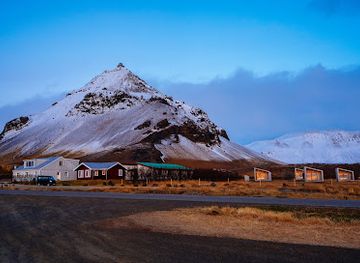
Snaefellsnes Peninsula projects westwards into the Atlantic from western Iceland, a varied region of lava fields, sea cliffs, black-sand beaches, fishing villages and open countryside. At its western tip, Snæfellsjökull rises above the peninsula: a glacier-capped volcano within Snæfellsjökull National Park and the dominant landmark of the region. Its distinctive profile has long shaped local identity and helped inspire Jules Verne's Journey to the Centre of the Earth.Read more about Snaefellsnes Peninsula
Villages, Wildlife and Heritage
Exploring the Peninsula
When is the best time to visit Snaefellsnes Peninsula?
Best: June–August · 14–16°C| Month | High (°C) | Rainfall (mm) |
|---|---|---|
| January | 2 | 75 |
| February | 2 | 60 |
| March | 3 | 60 |
| April | 7 | 45 |
| May | 11 | 30 |
| June (best) | 14 | 30 |
| July (best) | 16 | 30 |
| August (best) | 15 | 45 |
| September | 12 | 60 |
| October | 9 | 75 |
| November | 5 | 75 |
| December | 3 | 75 |
Getting to and around Snaefellsnes Peninsula
How to get there
Transportation
Best attractions in Snaefellsnes Peninsula
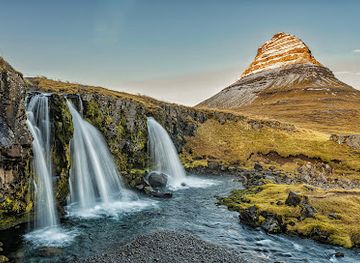
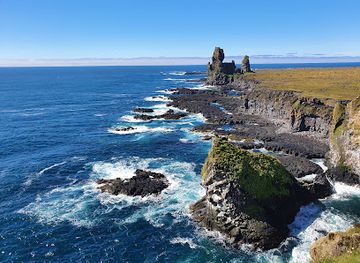
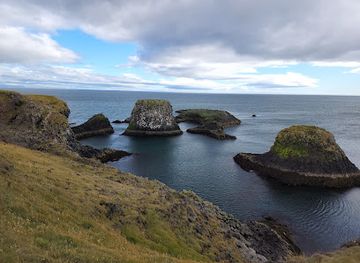
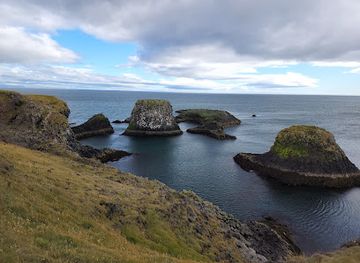
Snaefellsnes offers a concentrated succession of volcanic and coastal sights. At the western tip, Snæfellsjökull National Park includes lava fields, the Saxhóll volcanic crater, the black-pebble shore of Djúpalónssandur and the cave at Vatnshellir, visited with a guide. The cliff-lined coast between Arnarstapi and Hellnar is known for rock arches, sea stacks and bird life, while nearby Búðir combines open lava country with its small black-painted church. On the north coast, Kirkjufell rises above Grundarfjörður and is often photographed with the Kirkjufellsfoss waterfalls. Ytri Tunga is a recognised place for observing harbour seals from land, and Stykkishólmur provides a contrasting cultural attraction with its historic harbour and views over Breiðafjörður. Fishing communities including Ólafsvík, Rif and Hellissandur add a human dimension to the route, while the peninsula's farms, beaches and changing ocean horizons reward slower exploration.
-
Tourist attraction
Stone Bridge
Explore the breathtaking Stone Bridge in Arnarstapi, a stunning natural wonder and a must-visit tourist attraction in Iceland's captivating landscapes.
-
Tourist attraction
Súgandisey Island Lighthouse
Experience the breathtaking views and serene atmosphere at Súgandisey Island Lighthouse, a must-visit attraction in Stykkishólmur, Iceland.
-
Observation deck
Arnarstapi Cliff Viewpoint
Discover the stunning vistas of Arnarstapi Cliff Viewpoint, where rugged cliffs meet the North Atlantic, offering unforgettable views and natural beauty.
-
Peninsula
Snæfellsnes
Discover the stunning landscapes and rich culture of Snæfellsnes Peninsula, Iceland's miniature marvel filled with adventure and breathtaking views.


Best landmarks in Snaefellsnes Peninsula
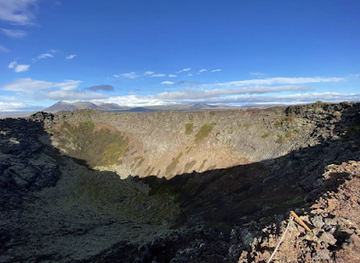
Snæfellsjökull is Snaefellsnes's defining natural landmark, a glacier-capped volcano whose summit dominates views across the western peninsula and whose literary association with Jules Verne has made it internationally recognisable. Kirkjufell, near Grundarfjörður, is another boldly shaped mountain, commonly viewed with the adjacent Kirkjufellsfoss waterfalls. Along the southern coast, the basalt cliffs and arches of Arnarstapi and Hellnar demonstrate the force of the Atlantic against volcanic rock, while Djúpalónssandur is marked by a dark shoreline and historic lifting stones associated with local fishing life. Búðakirkja, the small black church at Búðir, is an important cultural and architectural landmark in an otherwise open lava landscape. The Saxhóll crater, Vatnshellir cave and the protected lava formations of Snæfellsjökull National Park complete a landscape in which geology, folklore, maritime history and settlement remain closely connected.
-
Tourist attraction
Kirkjufellsfossar
Discover the breathtaking beauty of Kirkjufellsfossar, an iconic waterfall nestled in the heart of Iceland, perfect for nature lovers and photography enthusiasts.
-
National park
Snæfellsjökull National Park
Explore the stunning landscapes and rich biodiversity of Snæfellsjökull National Park, a jewel of Iceland's natural heritage.
-
Tourist attraction
Rauðfeldsgjá Gorge
Explore the stunning Rauðfeldsgjá Gorge—an Icelandic gem filled with dramatic landscapes, folklore, and unforgettable hiking experiences.
-
Museum
Bjarnarhöfn Shark Museum
Explore the Bjarnarhön Shark Museum, a unique Icelandic attraction dedicated to the fascinating world of sharks and their significance in maritime culture.
Explore Snaefellsnes Peninsula on the map
Plan your trip on one map. See where the top attractions, landmarks, restaurants and hotels are, and book hotels and experiences in a few clicks.
Best hotels in Snaefellsnes Peninsula
Best restaurants in Snaefellsnes Peninsula
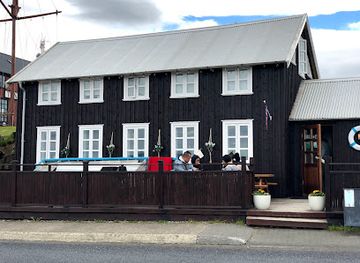
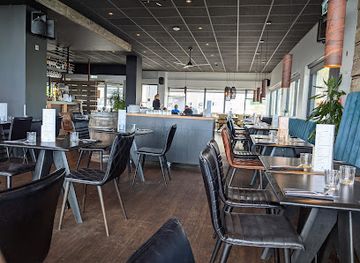
Dining on Snaefellsnes is concentrated in villages and visitor bases rather than at isolated natural attractions. Stykkishólmur, Grundarfjörður and Ólafsvík provide the broadest choice of cafés, restaurants and everyday provisions, while smaller settlements and country accommodation may offer limited meals or breakfast rather than a full dining scene. Seafood naturally features in the regional food culture, reflecting the peninsula's fishing communities and the waters of Faxaflói and Breiðafjörður; fish, shellfish and simple Icelandic preparations are common themes, alongside lamb, dairy products and rye bread. Farm shops and local producers may offer regional ingredients, although availability varies by season. Travellers touring the western tip should plan meals and supplies in advance, as there may be long stretches between dependable food services and opening arrangements can change outside the main season.
-
Restaurant
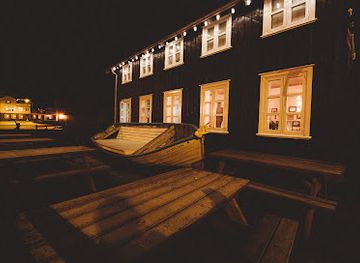
Bjargarsteinn Mathús
Discover Bjargarsteinn Mathús: A delightful dining experience showcasing local flavors amidst breathtaking views in Grundarfjörður, Iceland.
-
Restaurant
Sjávarpakkhúsið
Discover authentic Icelandic cuisine at Sjávarpakkhúsið in Stykkishólmur - where fresh seafood meets local tradition.
-
 Hotel
HotelHótel Snaefellsnes
Experience unparalleled comfort at Hótel Snaefellsnes while exploring the breathtaking beauty of Iceland’s Snæfellsnes Peninsula.
-
Restaurant
Stapinn
Experience authentic Icelandic cuisine at Stapinn in Arnarstapi - where local flavors meet stunning coastal views.

Best bars in Snaefellsnes Peninsula
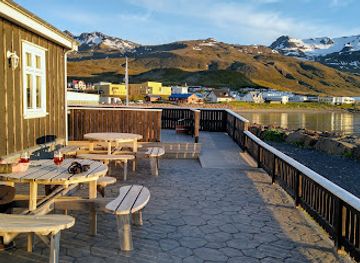
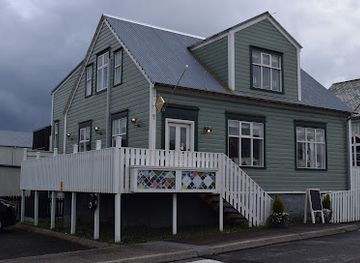
Snaefellsnes has a quiet evening culture rather than a nightclub scene. Traditional pubs, hotel bars and casual venues in Stykkishólmur, Grundarfjörður and Ólafsvík provide places to meet locally and have a drink, while cafés and restaurants often form the main focus of an evening in smaller settlements. Seasonal community events, cultural performances and music may occur, but they should not be assumed to run on every visit. Around the national park and the peninsula's rural coast, evenings are shaped more by darkness, weather, bird calls and open views than by organised entertainment. Visitors staying in farm accommodation, guesthouses or country hotels should expect a calm atmosphere, with entertainment facilities and late-night transport limited outside the principal villages.
-
Restaurant
Bjargarsteinn Mathús
Discover Bjargarsteinn Mathús in Grundarfjörður, where stunning views meet exquisite Icelandic cuisine for an unforgettable dining experience.
-
Restaurant
Narfeyrarstofa
Experience authentic Icelandic flavors at Narfeyrarstofa, a charming restaurant in Stykkishólmur, known for its fresh seafood and local ingredients.
-
Restaurant
Sjávarpakkhúsið
Experience the best of Icelandic seafood at Sjávarpakkhúsið, a top-rated restaurant in Stykkishólmur offering fresh, local cuisine with stunning coastal views.
-
Restaurant
Sker Restaurant
Experience authentic Icelandic flavors at Sker Restaurant in Ólafsvík, where fresh ingredients meet stunning coastal views for an unforgettable dining experience.
Best nightclubs in Snaefellsnes Peninsula
Snaefellsnes has a quiet evening culture rather than a nightclub scene. Traditional pubs, hotel bars and casual venues in Stykkishólmur, Grundarfjörður and Ólafsvík provide places to meet locally and have a drink, while cafés and restaurants often form the main focus of an evening in smaller settlements. Seasonal community events, cultural performances and music may occur, but they should not be assumed to run on every visit. Around the national park and the peninsula's rural coast, evenings are shaped more by darkness, weather, bird calls and open views than by organised entertainment. Visitors staying in farm accommodation, guesthouses or country hotels should expect a calm atmosphere, with entertainment facilities and late-night transport limited outside the principal villages.
-
Tourist attraction
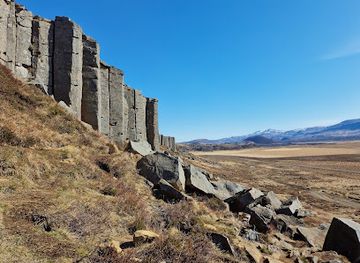
Gerðuberg Cliffs
Discover the breathtaking beauty of Gerðuberg Cliffs, Iceland’s stunning natural attraction featuring unique basalt columns and picturesque landscapes.
-
Peninsula
Snæfellsnes
Experience the stunning landscapes and rich culture of Snæfellsnes Peninsula, a true Icelandic treasure with breathtaking views and charming villages.
-
Restaurant
Kaffi 59
Discover the flavors of Iceland at Kaffi 59, a charming restaurant in Grundarfjörður offering delightful dishes made from local ingredients.
-
Hiking area
Eldborg Crater Trailhead
Discover the breathtaking Eldborg Crater in West Iceland, a perfect hiking destination showcasing stunning volcanic landscapes and rich natural beauty.

Best shops in Snaefellsnes Peninsula
Shopping on Snaefellsnes is modest and dispersed, with everyday supplies and locally made goods concentrated in Stykkishólmur, Grundarfjörður and Ólafsvík rather than in a dedicated retail district. Independent shops, galleries, craft outlets and small food businesses may offer Icelandic wool, knitwear, ceramics, artworks, books, preserves or other regional products, although the range and opening arrangements vary with season. Stykkishólmur is particularly associated with historic buildings, harbour activity and visitor-oriented services, while farm shops and small producers elsewhere on the peninsula can provide a more direct connection with rural life when open. Groceries and fuel should be purchased before travelling into the western national-park area, where commercial facilities are sparse. Visitors should distinguish genuinely local products from general Icelandic souvenirs and respect the limited stock carried by small businesses.
-
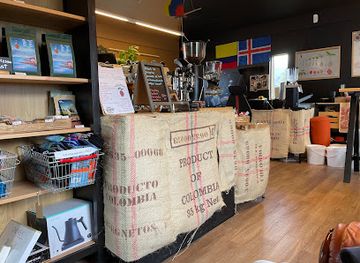
Coffee roasters
Valeria Specialty Coffee & souvenirs
Discover the warmth of Icelandic culture at Valeria Specialty Coffee & Souvenirs, where exceptional coffee meets unique local craftsmanship.
-
Peninsula
Snæfellsnes
Experience the stunning diversity of Snæfellsnes Peninsula, where majestic mountains meet dramatic coastlines and charming villages await exploration.
-
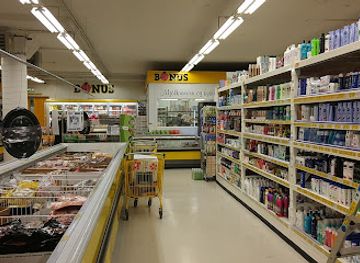
Supermarket
Bónus
Shop at Bónus in Stykkishólmur for budget-friendly groceries and local flavors to enhance your Icelandic travel experience.
-
Coffee shop
RJÚK ANDI
Experience the comforting ambiance and exceptional coffee at RJÚK ANDI, a cozy haven in Hjardharfell, Iceland.
Get your free copy of our complete guide to Snaefellsnes Peninsula, delivered straight to you.
Everything on this page, from attractions and restaurants to essentials and local phrases, in one PDF you can read offline, print or share.
Already have an account? Sign in
Your Snaefellsnes Peninsula guide is ready.
We'll send it to · Not you? Sign out

Getting your guide ready…
We are putting together a fresh copy of the Snaefellsnes Peninsula guide. This can take up to a minute.
This can take a few moments. If your browser asks, choose Allow so the download can start. You'll find the guide in your Downloads folder.
Nothing happened? Download it again
Sorry, the guide is taking longer than usual. Please try again in a minute, or get it by email instead.
Snaefellsnes Peninsula essentials
Currency and Payment
Safety
Emergency Situations
Do's and Don'ts
Local Tips
From Eve
Local phrases worth knowing
You don't need to get them perfect. A few words go a long way, and locals appreciate the effort.
Basics
| English | Local | Say it |
|---|---|---|
| Hello | Halló | [ha-tloh] |
| Goodbye | Bless | [blehs] |
| Yes | Já | [ya] |
| No | Nei | [nay] |
| Please/You're welcome | Takk fyrir | [tahk feer-ir] |
| Thank you | Takk | [tahk] |
| Excuse me/Sorry | Fyrirgefðu | [feer-ir-gef-thu] |
| How are you? | Hvernig hefur þú það? | [kver-nig heh-ur thoo thah-th] |
| Fine. And you? | Í lagi. En þú? | [ee lah-gi. en thoo] |
| Do you speak English? | Talar þú ensku? | [tah-lar thoo ens-koo] |
| I don't understand | Ég skil ekki | [yeh skil ek-ki] |
Eating & Drinking
| English | Local | Say it |
|---|---|---|
| I'd like to see the menu, please | Ég væri með að sjá matseðilinn, vinsamlegast | [yeh vair-ee meh ath syah maht-seh-thil-inn, vin-sahm-leh-gahst] |
| I don't eat meat | Ég borða ekki kjöt | [yeh bor-tha ek-ki chyut] |
| Cheers! | Skál! | [skowl] |
| I would like to pay, please | Ég myndi vilja greiða, vinsamlegast | [yeh min-dee vil-ya gray-tha, vin-sahm-leh-gahst] |
Emergencies
| English | Local | Say it |
|---|---|---|
| Help! | Hjálp! | [hyowp] |
| Go away! | Farðu í burtu! | [far-thu ee bur-thu] |
| Call the Police! | Hringdu í lögregluna! | [hring-thu ee luhg-reh-gluna] |
| Call a doctor! | Hringdu í lækninn! | [hring-thu ee liek-nin] |
| I'm lost | Ég er týndur | [yeh air touth-nur] |
| I'm ill | Ég er veikur | [yeh air vike-ur] |
Shopping
| English | Local | Say it |
|---|---|---|
| I'd like to buy... | Ég vildi kaupa... | [yeh vil-thi cow-pa] |
| I'm just looking | Ég er bara að skoða | [yeh air bah-rah ath skoth-ah] |
| How much is it? | Hvað kostar það? | [kvath kost-ar thah] |
| That's too expensive | Það er of dyrt | [thath air ov durt] |
| Can you lower the price? | Getur þú lækkað verðið? | [geth-ur thoo lai-kath ver-thith] |
Time & Numbers
| English | Local | Say it |
|---|---|---|
| What time is it? | Hvað er klukkan? | [kvath air kloo-kahn] |
| It's one o'clock | Klukkan er eitt | [kloo-kahn air ayt] |
| Half past (10) | Hálftíu | [howl-ftee-oo] |
| Morning | Morgunn | [mor-gun] |
| Afternoon | Síðdegis | [seeth-deh-gis] |
| Evening | Kvöld | [kvuh-ld] |
| Yesterday | Í gær | [ee gair] |
| Today | Í dag | [ee dahg] |
| Tomorrow | Á morgun | [ow mor-gun] |
| 1 | Einn | [ayt-n] |
| 2 | Tveir | [tayr] |
| 3 | Þrír | [threer] |
| 4 | Fjórir | [fyoh-reer] |
| 5 | Fimm | [fim] |
| 6 | Sex | [sehx] |
| 7 | Sjö | [syow] |
| 8 | Átta | [ow-tha] |
| 9 | Níu | [nee-oo] |
| 10 | Tíu | [tee-oo] |
Transport & Directions
| English | Local | Say it |
|---|---|---|
| Where's a/the...? | Hvar er... | [kvar air] |
| What's the address? | Hvað er heimilisfangið? | [kvath air hay-mil-iss-fang-ith] |
| Can you show me (on the map)? | Getur þú sýnt mér (á kortinu)? | [geth-ur thoo seent mair (ow korth-inn-oo)] |
| When's the next (bus)? | Hvenær kemur næsti (strætisvagn)? | [kver-nair keh-mur nay-sti (strayt-is-vagn)] |
| A ticket (to ....) | Einn miða (til ....) | [ayt-n mee-tha (til ...)] |
History of Snaefellsnes Peninsula
Volcanic Foundations
Snaefellsnes is shaped by volcanic activity and repeated eruptions over geological time, leaving a peninsula of lava fields, volcanic cones, tuff formations and rugged coastal cliffs. Snæfellsjökull is the most recognisable expression of this geology, a stratovolcano capped by an icefield whose appearance changes with season and weather. The peninsula's beaches and headlands also reflect the continuing work of Atlantic waves on volcanic rock. This geological history is not separate from the region's human story: lava, limited soils, exposed coastlines and access to sheltered bays have all influenced where people settled, farmed and fished.
Settlement and Coastal Livelihoods
Norse settlement brought farming and new communities to Snaefellsnes during Iceland's early history, with life organised around small farms, seasonal fishing and the resources of the surrounding sea. Breiðafjörður, north of the peninsula, supported fishing, gathering and travel between coastal communities, while the western and southern shores faced the more exposed Atlantic. Harbours such as Arnarstapi developed as places of landing and exchange, and later settlements, including Ólafsvík, Grundarfjörður, Rif and Hellissandur, grew through fishing and maritime trade. Churches, farmsteads and surviving harbour landscapes preserve fragments of this long relationship with land and sea.
Trading Towns and Maritime Change
Stykkishólmur became an important commercial centre on the northern side of the peninsula, benefiting from its sheltered harbour and position beside Breiðafjörður. Its older buildings and trading history reflect the period when Icelandic commerce was regulated through Danish-controlled trade and selected coastal trading places. Across Snaefellsnes, fishing remained central as boats, harbours and preservation methods changed, linking local communities to wider markets. The settlements that developed around these industries still provide much of the peninsula's practical infrastructure, while abandoned or altered fishing sites illustrate the changing scale of coastal work.
From Romantic Volcano to Protected Landscape
Snæfellsjökull acquired an international literary association through Jules Verne's Journey to the Centre of the Earth, in which the volcano serves as the fictional entrance to the subterranean world. Local folklore and spiritual interpretations have also added to its cultural presence, although the mountain remains first and foremost a real volcanic landscape shaped by ice, lava and sea. Snæfellsjökull National Park was established in 2001 to protect the western tip's geological formations, coastal habitats and cultural remains. Conservation and carefully managed tourism now sit alongside farming, fishing and village life as defining forces in the peninsula's modern history.
Snaefellsnes Peninsula in Photos
Browse through our photo collection highlighting the charm and character of the destination.
Cities in Snaefellsnes Peninsula
The towns and cities of Snaefellsnes Peninsula, and the easiest places to base yourself.
-

-


Swipe for more cities
Neighbouring destination travel guides
The closest destinations to Snaefellsnes Peninsula, if you have time for more than one.
-

-

-

-

-


Swipe for more destinations
Explore more

Explore more of Western Region
Discover the captivating beauty and rich history of Iceland's Western Region – where rugged landscapes meet serene fjords and charming towns.
Explore Western Region
Explore more of Iceland
Discover Iceland, where glaciers meet volcanoes, Northern Lights dance in the skies, and natural wonders await at every turn.
Explore Iceland