

Snæfellsbær Area Travel Guide - Free Web & App
Your ultimate guide to Snæfellsbær Area. Discover top landmarks, proposed trips, and local tips. Free on the web or via the Evendo companion app.


Snæfellsbær Area, Iceland, brings together Snæfellsjökull, lava fields, sea cliffs, fishing villages, black beaches and memorable coastal walks.
A Peninsula Shaped by Fire and Sea
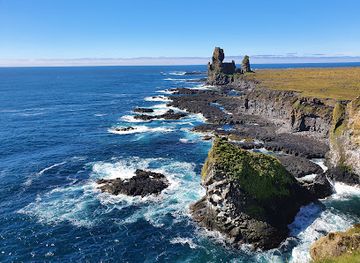
Snæfellsbær Area occupies the western end of Iceland’s Snæfellsnes Peninsula, where the ice-capped Snæfellsjökull volcano rises above lava fields, black beaches and a deeply indented Atlantic coast. The municipality stretches from the fishing towns of Ólafsvík, Rif and Hellissandur around the peninsula’s northern and western shores to the small settlements and coastal landscapes of Arnarstapi, Hellnar and Búðir on the south coast. Much of the area’s character comes from the close relationship between volcanic terrain and the sea: moss-covered lava, basalt cliffs, sea stacks and long beaches create a landscape that changes markedly with weather and light.Read more about Snæfellsbær Area
Snæfellsjökull National Park
Fishing Heritage and Rural Exploration
When is the best time to visit Snæfellsbær Area?
Best: June–August · 13–15°C| Month | High (°C) | Rainfall (mm) |
|---|---|---|
| January | 1 | 70 |
| February | 1 | 60 |
| March | 2 | 60 |
| April | 6 | 50 |
| May | 10 | 40 |
| June (best) | 13 | 30 |
| July (best) | 15 | 30 |
| August (best) | 15 | 40 |
| September | 11 | 50 |
| October | 8 | 60 |
| November | 6 | 70 |
| December | 3 | 80 |
Getting to and around Snæfellsbær Area
How to get there
Transportation
Best attractions in Snæfellsbær Area
Snæfellsjökull National Park is the area’s principal attraction, combining the glacier-capped volcano with lava fields, caves, craters and a varied coastline. On the south coast, the walking route between Arnarstapi and Hellnar passes basalt cliffs, sea arches and rock formations shaped by the Atlantic, while nearby Búðir is known for its isolated black church and open coastal setting. Djúpalónssandur is a distinctive black-pebble beach with lifting stones and the remains of an old fishing station, and nearby Dritvík offers a more remote coastal landscape reached on foot. Along the northern shore, Ólafsvík, Hellissandur and Rif provide harbours, maritime character and access to excursions on the surrounding fishing grounds. Saxhóll crater, west of the peninsula’s central road network, offers a compact geological stop, while beaches such as Skarðsvík show the contrast between pale sand and the region’s darker volcanic terrain.
-
Tourist attraction
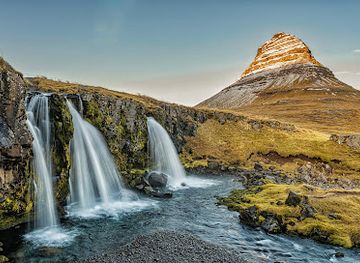
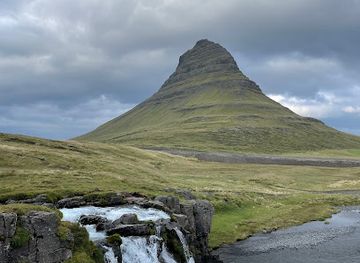
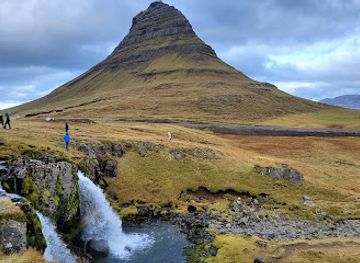
Kirkjufellsfossar
Explore the enchanting Kirkjufellsfossar Waterfalls, a natural gem near Grundarfjörður, Iceland, where beauty meets tranquility amidst stunning landscapes.
-
Tourist attraction
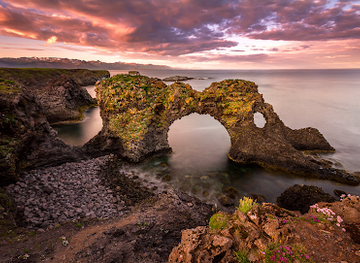
Gatklettur
Discover Gatklettur, the breathtaking rock arch in Arnarstapi, Iceland, where stunning coastal views meet diverse wildlife and unforgettable adventures.
-
Tourist attraction
Stone Bridge
Explore the iconic Stone Bridge in Arnarstapi, a stunning natural wonder surrounded by breathtaking coastal landscapes and rich birdlife.
-
Tourist attraction
Bjarnarfoss
Experience the breathtaking beauty of Bjarnarfoss Waterfall, a hidden gem in Iceland's stunning landscapes, perfect for nature lovers and photographers.


Best landmarks in Snæfellsbær Area
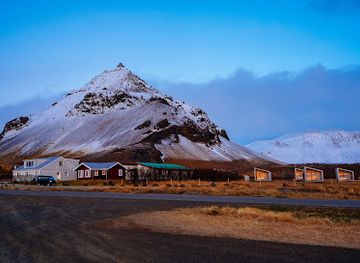
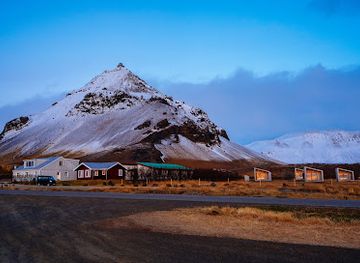
Snæfellsjökull is the defining natural landmark, a prominent stratovolcano whose ice-covered summit rises above the western end of Snæfellsnes and serves as both a geographical reference point and a cultural symbol. The surrounding national park protects lava landscapes, volcanic craters and coastal formations, including the cliffs and sea arches between Arnarstapi and Hellnar. Djúpalónssandur is significant for its former fishing community, black pebbles and traditional lifting stones, while Dritvík preserves the atmosphere of an isolated historic fishing shore. Búðakirkja, the small black church at Búðir, is one of the area’s most recognisable built landmarks, set against lava and open coastal scenery. In the north, the harbours of Ólafsvík, Hellissandur and Rif express the continuing maritime importance of the district.
-
Tourist attraction
Kirkjufellsfossar
Discover the breathtaking beauty of Kirkjufellsfossar, an iconic waterfall in Iceland offering stunning views and unforgettable experiences for nature lovers.
-
National park
Snæfellsjökull National Park
Experience the enchanting landscapes and rich geology of Snæfellsjökull National Park, Iceland's iconic destination for nature lovers and adventure seekers.
-
Tourist attraction
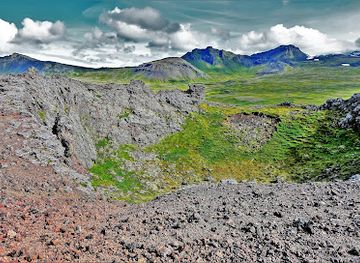
Saxhóll Crater
Explore the breathtaking Saxhóll Crater for stunning views and an unforgettable hiking experience on the Snæfellsnes Peninsula in Iceland.
-
Tourist attraction
Gatklettur
Discover the breathtaking rock arch of Gatklettur on the Snæfellsnes Peninsula, a must-visit for nature lovers and photographers alike.
Explore Snæfellsbær Area on the map
Plan your trip on one map. See where the top attractions, landmarks, restaurants and hotels are, and book hotels and experiences in a few clicks.
Best hotels in Snæfellsbær Area
Best restaurants in Snæfellsbær Area
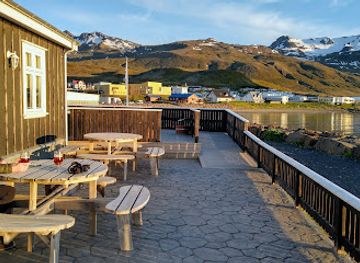
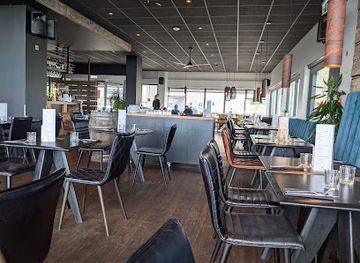
Dining in the Snæfellsbær Area is concentrated in Ólafsvík, Hellissandur, Rif and a small number of rural visitor businesses rather than spread continuously through the national park. Local menus commonly reflect Iceland’s maritime setting, with fish and other seafood alongside lamb, dairy produce, soups, bread and familiar international dishes suited to travellers. Cafés, guesthouse kitchens and seasonal food services can be found in the main settlements, while farm shops and small producers may offer regional provisions when operating. Visitors staying in cottages or rural accommodation often prepare some meals themselves, particularly before travelling around the western tip or south coast. Choice and opening patterns can vary outside the main season, so it is sensible to check locally and carry provisions when spending a full day among remote beaches, lava fields and coastal paths.
-
Restaurant
Bjargarsteinn Mathús
Experience authentic Icelandic cuisine at Bjargarsteinn Mathús in Grundarfjörður—where local flavors meet stunning landscapes.
-
Restaurant
Sker Restaurant
Discover authentic Icelandic flavors at Sker Restaurant in Ólafsvík - where fresh ingredients meet culinary excellence.
-
Restaurant
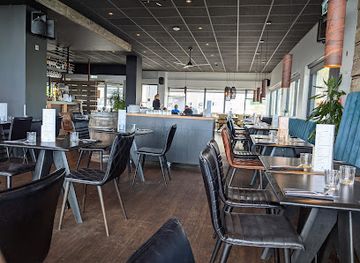
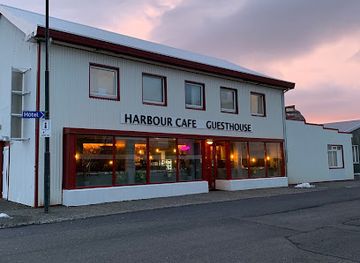
Harbour Cafe
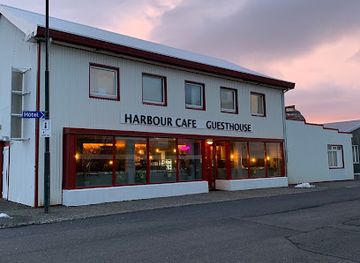
Experience delightful cuisine with breathtaking views at Harbour Cafe in Grundarfjörður - where every meal tells a story.
-
Restaurant
Stapinn
Discover Stapinn in Arnarstapi: A delightful restaurant offering local flavors and stunning coastal views.
Best bars in Snæfellsbær Area
The Snæfellsbær Area does not have a conventional nightlife district or a concentration of nightclubs. Evening life is centred on the pubs, restaurants and communal spaces of Ólafsvík, Hellissandur and other settlements, where the atmosphere is generally quiet and connected to local hospitality rather than late-night entertainment. Some accommodation businesses may provide a bar or evening meal, while seasonal cultural programmes and community events can add occasional music or social activity, but availability varies. After dark, the principal experience is often the rural environment itself: long twilight in summer, clear skies when conditions allow and the sound of the surrounding coast. Travellers should not rely on finding late food, drinks or transport in remote parts of the national park.
-
Restaurant
Sker Restaurant
Discover the rich flavors of Iceland at Sker Restaurant in Ólafsvík, where fresh ingredients meet stunning coastal views.
-
Restaurant
Harbour Cafe
Experience the best of Icelandic cuisine at Harbour Cafe in Grundarfjörður, where every meal comes with breathtaking views and local flavors.
-
Restaurant
Stapinn
Discover the flavors of Iceland at Stapinn, a cozy restaurant in Arnarstapi offering local cuisine and stunning coastal views.
-
 Hotel
HotelHotel Langaholt & Restaurant
Experience the ultimate blend of comfort and nature at Hotel Langaholt, a premier retreat in the stunning landscapes of Snæfellsbær, Iceland.
Best nightclubs in Snæfellsbær Area
The Snæfellsbær Area does not have a conventional nightlife district or a concentration of nightclubs. Evening life is centred on the pubs, restaurants and communal spaces of Ólafsvík, Hellissandur and other settlements, where the atmosphere is generally quiet and connected to local hospitality rather than late-night entertainment. Some accommodation businesses may provide a bar or evening meal, while seasonal cultural programmes and community events can add occasional music or social activity, but availability varies. After dark, the principal experience is often the rural environment itself: long twilight in summer, clear skies when conditions allow and the sound of the surrounding coast. Travellers should not rely on finding late food, drinks or transport in remote parts of the national park.
-
Bar
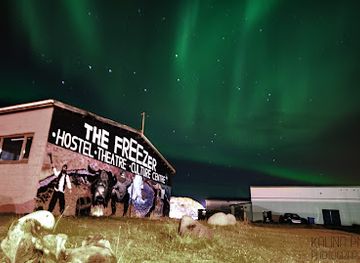
The Freezer Hostel, Apartments & Culture Centre
Experience the heart of Icelandic culture and hospitality at The Freezer Hostel, your gateway to adventure and artistry.
-
Restaurant
Kaffi 59
Discover the flavors of Iceland at Kaffi 59, where local cuisine meets stunning views in Grundarfjörður.
-
Store
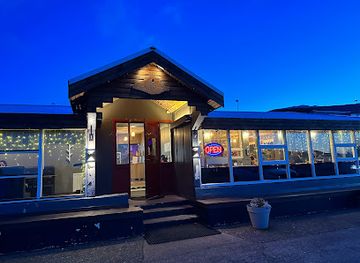
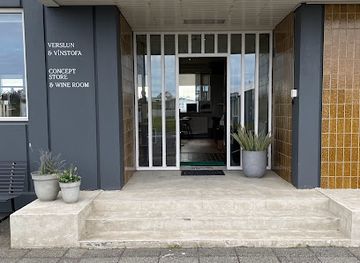
Útgerðin - Concept Store & Wine Room
Explore the charm of Útgerðin - a concept store and wine room offering local art, delicious coffee, and exquisite wines in the heart of Hellissandur.
Best shops in Snæfellsbær Area
Shopping is modest and practical, with the widest choice in Ólafsvík and smaller provisions available in Hellissandur, Rif and other settlements when local shops are open. Visitors may find Icelandic woollen goods, outdoor clothing, souvenirs, books, locally made crafts and food supplies, while farm shops and small producers can offer regional provisions on a seasonal basis. The area’s strongest shopping identity comes from its fishing and rural setting rather than from a dedicated retail district: locally sourced food, handmade items and products associated with Icelandic wool are more characteristic than luxury goods. Because the national park and western coast have few commercial facilities, stock up on snacks, fuel and essentials before heading into remote areas, and treat craft and food outlets as independent local businesses rather than guaranteed daily services.
-
Coffee roasters
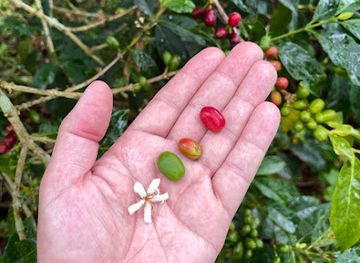
Valeria Specialty Coffee & souvenirs
Discover the rich flavors of Iceland at Valeria Specialty Coffee, a cozy haven for coffee enthusiasts and souvenir seekers alike.
-
Coffee shop
Græna kompaníið
Discover the charm of Græna kompaníið in Grundarfjörður, where coffee and books blend in a cozy Icelandic nook.
-
Grocery store
Samkaup
Discover local flavors and essentials at Samkaup, your go-to grocery store in Grundarfjörður, Iceland.
-
Supermarket
Kassinn
Discover the convenience and local flavors at Kassinn, Ólafsvík's premier supermarket for quality groceries and Icelandic delicacies.
Get your free copy of our complete guide to Snæfellsbær Area, delivered straight to you.
Everything on this page, from attractions and restaurants to essentials and local phrases, in one PDF you can read offline, print or share.
Already have an account? Sign in
Your Snæfellsbær Area guide is ready.
We'll send it to · Not you? Sign out

Getting your guide ready…
We are putting together a fresh copy of the Snæfellsbær Area guide. This can take up to a minute.
This can take a few moments. If your browser asks, choose Allow so the download can start. You'll find the guide in your Downloads folder.
Nothing happened? Download it again
Sorry, the guide is taking longer than usual. Please try again in a minute, or get it by email instead.
Snæfellsbær Area essentials
Currency and Payment
Safety
Emergency Situations
Do's and Don'ts
Local Tips
From Eve
Local phrases worth knowing
You don't need to get them perfect. A few words go a long way, and locals appreciate the effort.
Basics
| English | Local | Say it |
|---|---|---|
| Hello | Halló | [HAH-loh] |
| Goodbye | Bless | [bless] |
| Yes | Já | [yow] |
| No | Nei | [nay] |
| Please/You're welcome | Takk fyrir | [tahk FIH-rir] |
| Thank you | Takk | [tahk] |
| Excuse me/Sorry | Afsakið | [ahf-SAH-kit] |
| How are you? | Hvernig hefur þú það? | [KVER-nik HEV-ur thoo thahd] |
| Fine. And you? | Fínt. En þú? | [feent. en thoo] |
| Do you speak English? | Talar þú ensku? | [TAH-lahr thoo ENS-koo] |
| I don't understand | Ég skil ekki | [yeh skil EHK-ee] |
Eating & Drinking
| English | Local | Say it |
|---|---|---|
| I'd like to see the menu, please | Ég væri til í að sjá matseðilinn, takk | [yeh VYEH-ri til ee ath shah MAHTH-se-thil-inn, tahk] |
| I don't eat meat | Ég borða ekki kjöt | [yeh BOHR-thah EHK-ee chyot] |
| Cheers! | Skál! | [skowl] |
| I would like to pay, please | Ég væri til í að greiða, takk | [yeh VYEH-ri til ee ath gray-tha, tahk] |
Emergencies
| English | Local | Say it |
|---|---|---|
| Help! | Hjálp! | [HYOWLP] |
| Go away! | Farðu í burtu! | [FAHR-thoo ee BUHR-too] |
| Call the Police! | Hringdu í lögregluna! | [HRING-doo ee luh-GREH-gluna] |
| Call a doctor! | Hringdu eftir lækni! | [HRING-doo EHF-teer LAIK-nee] |
| I'm lost | Ég er villtur | [yeh err VIHLT-ur] |
| I'm ill | Ég er veikur | [yeh err VAY-kur] |
Shopping
| English | Local | Say it |
|---|---|---|
| I'd like to buy... | Mér væri til í að kaupa... | [mair VYEH-ri til ee ath KOW-pah] |
| I'm just looking | Ég er bara að skoða | [yeh err BAH-rah ath SKOH-tha] |
| How much is it? | Hvað kostar það? | [kvath KOH-stahr thahd] |
| That's too expensive | Það er of dýrt | [thahd err ohf DEER-t] |
| Can you lower the price? | Getur þú lækkar verðið? | [GEH-tur thoo LAY-kahr vair-theeth] |
Time & Numbers
| English | Local | Say it |
|---|---|---|
| What time is it? | Hvað er klukkan? | [kvath err KLOO-kahn] |
| It's one o'clock | Klukkan er eitt | [KLOO-kahn err ayth] |
| Half past (10) | Hálf tíu | [howlf tee-oo] |
| Morning | Morgunn | [MOR-gunn] |
| Afternoon | Eftirmiðdagur | [EFF-teer-MITH-tah-gur] |
| Evening | Kvöld | [kvuhlt] |
| Yesterday | Í gær | [ee gire] |
| Today | Í dag | [ee dahg] |
| Tomorrow | Á morgun | [ow MOR-gun] |
| 1 | Einn | [ayth-n] |
| 2 | Tveir | [t-vayr] |
| 3 | Þrír | [threer] |
| 4 | Fjórir | [fyoh-reer] |
| 5 | Fimm | [fimm] |
| 6 | Sex | [sehx] |
| 7 | Sjö | [syoh] |
| 8 | Átta | [ow-tha] |
| 9 | Níu | [nee-uh] |
| 10 | Tíu | [tee-oo] |
Transport & Directions
| English | Local | Say it |
|---|---|---|
| Where's a/the...? | Hvar er...? | [kvar err] |
| What's the address? | Hvað er heimilisfangið? | [kvath err HAY-mil-is-fahn-gith] |
| Can you show me (on the map)? | Getur þú sýnt mér (á kortinu)? | [GEH-tur thoo seent mair (ow KOR-tih-nu)] |
| When's the next (bus)? | Hvenær fer næsta (strætisvagn)? | [KVER-ni-ur fayr NEH-stah (strait-iss-vahgn)] |
| A ticket (to ....) | Einn miða (til ....) | [ayth-n MEETH-a (til)] |
History of Snæfellsbær Area
Volcanic Foundations
The landscapes of Snæfellsbær were built by volcanic activity over a very long geological timescale, with Snæfellsjökull forming the area’s most recognisable volcanic centre. Lava flows spread towards the coast and later weathered into dark, rugged fields now partly covered by moss. Along the shoreline, waves have sculpted basalt cliffs, arches and sea stacks, while glacial and marine processes have continued to modify the peninsula. This geological inheritance explains the region’s contrasts: a snow-streaked volcano stands above lava caves, pasture and fishing harbours, and the coast alternates between cliffs and broad black beaches.
Settlement and Medieval Communities
People have lived around Snæfellsnes since Iceland’s settlement period, relying on a combination of farming, fishing and seasonal use of the coast. Medieval written sources connect the peninsula with local chieftains, farms and churches, while the area around Snæfellsjökull became associated with stories, place-names and supernatural traditions. Búðir developed as a historic trading and church site, and the south-coast settlements grew around farms and fishing stations. The harsh climate and limited agricultural land meant that access to the sea was central to the survival and identity of communities on the western peninsula.
Fishing Stations and Coastal Trade
For centuries, the waters around Snæfellsnes supported seasonal fishing, with workers gathering at coastal stations during the main fishing periods. Djúpalónssandur preserves physical reminders of this past, including the lifting stones traditionally associated with testing fishermen’s strength and the remains of a former fishing settlement. Harbours at Ólafsvík, Hellissandur and Rif later gave the local fishing economy more permanent bases. Fishing, fish processing and maritime trade shaped settlement patterns, household life and regional prosperity, while dangerous weather and exposed waters remained a constant part of the coastal experience.
Churches, Farms and Local Identity
The area’s cultural landscape was formed not only by fishing but also by dispersed farms, parish churches and routes linking the northern and southern coasts. Búðakirkja, the small black church at Búðir, represents the continuing importance of rural religious sites in Icelandic communities, although the present building belongs to a later period than the earliest church on the site. In the west, Hellissandur and Rif retained strong maritime identities, while Ólafsvík developed as a more substantial service and fishing centre. These settlements remain useful gateways for understanding the relationship between the sea, farms and the national park.
Protection and Modern Visiting
Snæfellsjökull National Park was established in 2001 to protect the distinctive volcanic and coastal environment from the shoreline to the glacier summit. Its creation formalised conservation of lava landscapes, caves, beaches, cliffs, archaeological traces and wildlife habitats while maintaining carefully managed opportunities for walking and interpretation. Modern tourism has added scenic driving, guided glacier and lava experiences, birdwatching and whale watching to the older pattern of fishing and farming. Visitor pressure is concentrated at recognised viewpoints and coastal paths, making responsible access important in an area where vegetation can be slow to recover.
Snæfellsbær Area in Photos
Browse through our photo collection highlighting the charm and character of the destination.
Cities in Snæfellsbær Area
The towns and cities of Snæfellsbær Area, and the easiest places to base yourself.

Swipe for more cities
Neighbouring destination travel guides
The closest destinations to Snæfellsbær Area, if you have time for more than one.
-

-

-

-

-


Swipe for more destinations
Explore more

Explore more of Western Region
Discover the captivating beauty and rich history of Iceland's Western Region – where rugged landscapes meet serene fjords and charming towns.
Explore Western Region
Explore more of Iceland
Discover Iceland, where glaciers meet volcanoes, Northern Lights dance in the skies, and natural wonders await at every turn.
Explore Iceland