

Millennium Park (Chicago) Travel Guide - Free
Explore Millennium Park in Chicago with Evendo's free guide. Find the best shops, historic streets, restaurants, and gems on web or mobile.


Millennium Park in Chicago blends Cloud Gate, gardens, architecture, free concerts and lakefront walks in the Loop, with museums and dining nearby.
A Park Built Above the City
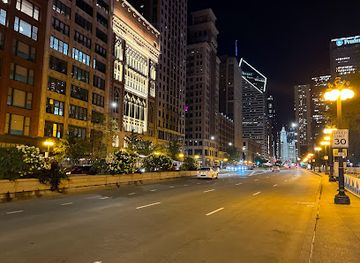
Millennium Park occupies 24.5 acres in the northeast corner of Chicago’s Loop, between Michigan Avenue and the lakefront. Although it is more accurately a major civic park than a traditional residential neighbourhood, the name identifies one of the city’s most visited public spaces and the surrounding cultural quarter. Its lawns, plazas and gardens were built above active railway tracks and former parking areas, creating an elevated landscape where architecture, public art and performance share the same stage.Read more about Millennium Park
Architecture and Public Art
Everyday City Life
Best attractions in Millennium Park
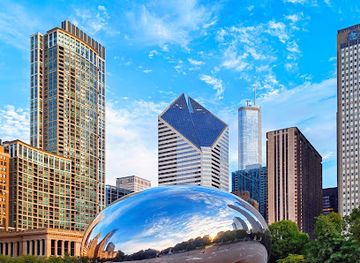
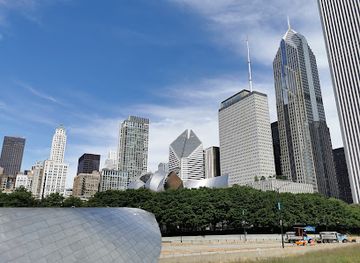
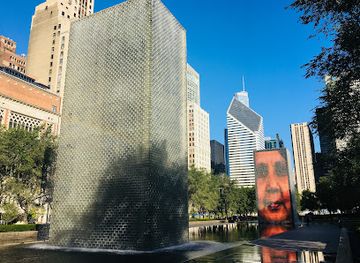
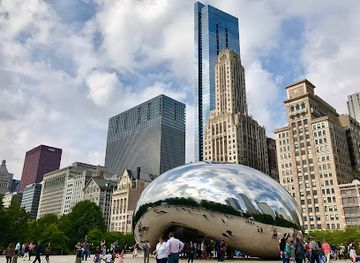
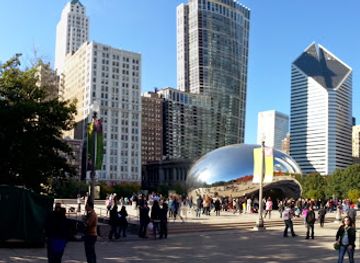
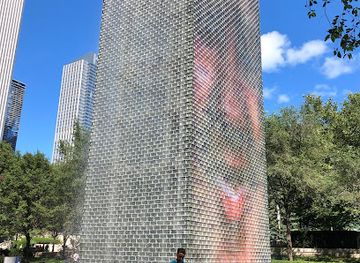
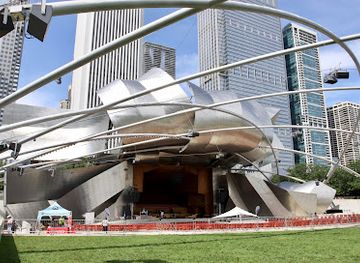
Millennium Park’s attractions are concentrated within a compact civic landscape. Cloud Gate, popularly known as ‘The Bean’, reflects visitors and the surrounding skyline in a seamless stainless-steel surface, while Crown Fountain combines large-scale video portraits with shallow water and open plaza space. The Jay Pritzker Pavilion is both an architectural landmark and an outdoor performance venue, with a sweeping steel canopy over the Great Lawn. Lurie Garden introduces native-inspired planting, seasonal colour and a distinct sense of enclosure amid the downtown towers. BP Bridge provides a pedestrian connection towards Maggie Daley Park and the lakefront, and McCormick Tribune Plaza becomes an ice-skating setting in winter. The park’s immediate southern neighbour, the Art Institute of Chicago, is outside Millennium Park itself but makes a natural combined visit, particularly for those interested in modern art, design and architecture.
-
Sculpture
Cloud Gate
Explore Cloud Gate, the iconic 'Bean' sculpture in Millennium Park, reflecting Chicago's skyline and offering a unique artistic experience.
1 min walk · 0.1 km from neighbourhood centre
-
Park
Maggie Daley Park
Discover the beauty and excitement of Maggie Daley Park, a stunning green space in Chicago featuring gardens, play areas, and seasonal activities for everyone.
4 min walk · 0.3 km from neighbourhood centre
-
Fountain
Crown Fountain
Discover the Crown Fountain in Millennium Park, where art and play converge in a spectacular display of light and water, reflecting Chicago's vibrant culture.
2 min walk · 0.2 km from neighbourhood centre
-
Monument
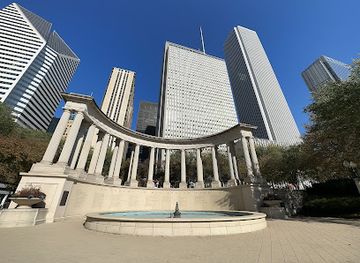
Millennium Monument
Explore the iconic Millennium Monument in Chicago, an architectural marvel that reflects the city's vibrant culture and stunning skyline.
2 min walk · 0.1 km from neighbourhood centre
Best landmarks in Millennium Park
The defining landmarks of Millennium Park are modern works integrated into the city’s infrastructure. Cloud Gate forms a highly recognisable public sculpture whose curved surface mirrors Chicago’s buildings and visitors, while Crown Fountain uses two glass-brick towers and digital portraits to create a changing civic meeting place. Frank Gehry’s Jay Pritzker Pavilion is distinguished by its stainless-steel bands and open-air stage, and the BP Bridge carries the same expressive language across Columbus Drive. Lurie Garden softens the park’s monumental spaces through planted beds and a living screen, while the elevated site itself is an important engineering achievement above railway tracks. The Art Institute of Chicago, immediately south across Monroe Street, is a major nearby landmark rather than part of Millennium Park; its Beaux-Arts Michigan Avenue building and Modern Wing form a significant architectural continuation of the cultural setting.
-
Park
Millennium Park
Explore Millennium Park: Chicago's vibrant urban oasis featuring iconic art, stunning architecture, and year-round cultural experiences.
1 min walk · 0.1 km from neighbourhood centre
-
Sculpture
Cloud Gate
Discover Cloud Gate, the stunning 'Bean' sculpture in Millennium Park, reflecting Chicago's skyline and offering a unique artistic experience.
1 min walk · 0.1 km from neighbourhood centre
-
Amphitheater
Jay Pritzker Pavilion
Discover the Jay Pritzker Pavilion in Chicago's Millennium Park, a stunning amphitheater hosting free concerts and cultural events in a breathtaking setting.
2 min walk · 0.1 km from neighbourhood centre
Explore Millennium Park on the map
A handpicked selection of must-see spots in Millennium Park, mapped for you.
Best hotels in Millennium Park
Best restaurants in Millennium Park
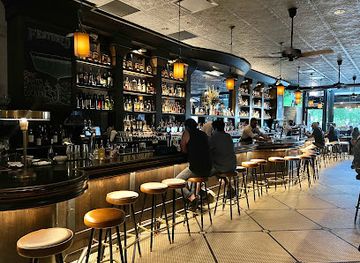
Millennium Park does not have a separate restaurant district within its lawns, but its position in the eastern Loop places visitors close to a broad range of dining. Michigan Avenue and the streets south towards Monroe Street contain cafés, hotel restaurants, casual lunch counters and more formal dining rooms, while the wider Loop offers food from fast service to contemporary American cooking. The park is well suited to a picnic-style pause, although visitors should follow current rules about food, drink and event areas rather than treating every lawn as an eating space. Around the Art Institute and the cultural institutions along South Michigan Avenue, dining tends to serve museum visitors, office workers and theatre audiences. For a broader choice, nearby sections of the Loop and River North are more restaurant-dense, but they should be described as adjacent areas rather than part of Millennium Park.
-
American
The Gage
Discover The Gage: An upscale gastropub offering seasonal American cuisine and craft cocktails in the heart of Chicago's Loop.
2 min walk · 0.2 km from neighbourhood centre
-
American
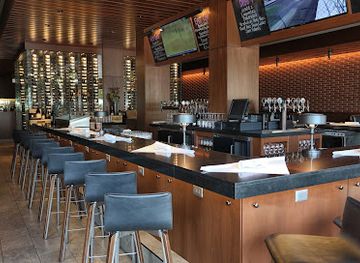
Remington's
Experience Chicago's vibrant culinary scene at Remington's – where American classics meet fine dining in an inviting atmosphere.
1 min walk · 0.1 km from neighbourhood centre
-
Asian
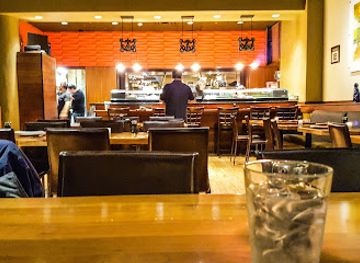
Hot Woks Cool Sushi
Experience culinary bliss at Hot Woks Cool Sushi in Chicago's Millennium Park – where fresh sushi meets vibrant Asian flavors.
3 min walk · 0.2 km from neighbourhood centre
-
American
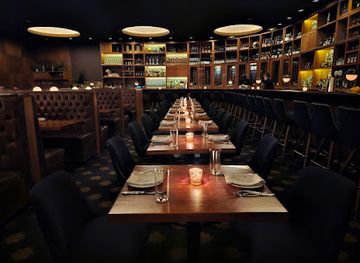
Cherry Circle Room
Experience fine American dining at Cherry Circle Room in Chicago's Loop - where elegance meets culinary excellence.
2 min walk · 0.2 km from neighbourhood centre
Best bars in Millennium Park
Evenings around Millennium Park are shaped more by concerts, cultural events and hotel lounges than by a concentrated nightclub scene. The Jay Pritzker Pavilion brings outdoor music to the park during programmed performances, while the nearby Harris Theater for Music and Dance and Chicago Cultural Center add formal evening entertainment just beyond the park’s edges. Michigan Avenue and the eastern Loop have hotel bars, cocktail lounges and restaurants where visitors can continue an evening, although the atmosphere is generally more polished and workday-oriented than that of Chicago’s dedicated nightlife districts. After large events, crowds disperse towards the Loop, River North and the theatre district, where the selection becomes broader. Visitors should check venue and park information for current performances and remember that event access, late-night transport and surrounding foot traffic can change considerably.
-
Bar
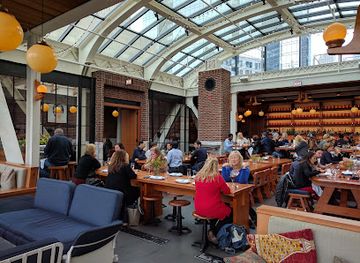
Cindy's Rooftop
Discover stunning skyline views and exquisite dining at Cindy's Rooftop, Chicago's premier spot for rooftop experiences.
2 min walk · 0.2 km from neighbourhood centre
-
American
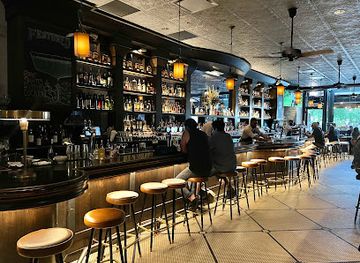
The Gage
Experience the best of American cuisine and innovative cocktails at The Gage, a premier gastropub in Chicago's vibrant Loop area.
2 min walk · 0.2 km from neighbourhood centre
-
Bar
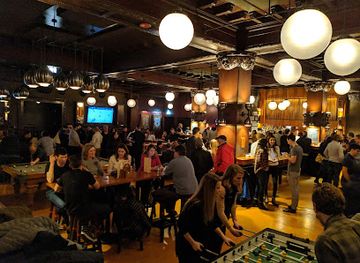
The Game Room
Experience the vibrant nightlife of Chicago at The Game Room, where great drinks and games create unforgettable moments.
2 min walk · 0.2 km from neighbourhood centre
-
Lounge
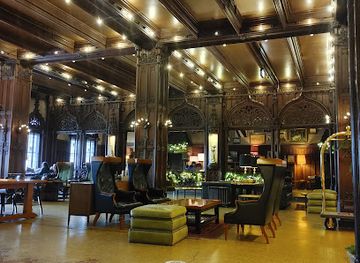
Drawing Room
Experience the chic charm of Drawing Room, a stylish lounge in Chicago offering exquisite American cuisine and artisan cocktails in a vibrant atmosphere.
2 min walk · 0.2 km from neighbourhood centre
Best nightclubs in Millennium Park
Evenings around Millennium Park are shaped more by concerts, cultural events and hotel lounges than by a concentrated nightclub scene. The Jay Pritzker Pavilion brings outdoor music to the park during programmed performances, while the nearby Harris Theater for Music and Dance and Chicago Cultural Center add formal evening entertainment just beyond the park’s edges. Michigan Avenue and the eastern Loop have hotel bars, cocktail lounges and restaurants where visitors can continue an evening, although the atmosphere is generally more polished and workday-oriented than that of Chicago’s dedicated nightlife districts. After large events, crowds disperse towards the Loop, River North and the theatre district, where the selection becomes broader. Visitors should check venue and park information for current performances and remember that event access, late-night transport and surrounding foot traffic can change considerably.
-
 Night club
Braceria Se nni mondo esistesse un po' di bene
Experience the vibrant nightlife of Chicago at Braceria Se nni mondo esistesse un po' di bene, where great food, drinks, and music come together.
4 min walk · 0.3 km from neighbourhood centre
Best shops in Millennium Park
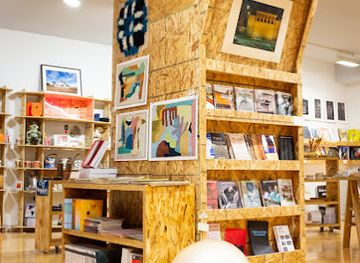
Shopping within Millennium Park is limited because the site is principally a public park, but the surrounding Michigan Avenue frontage provides access to one of central Chicago’s established retail corridors. Visitors will find department-store and fashion retail, specialist shops, cafés and hotel-based outlets in the blocks around the park, while the cultural institutions nearby offer museum shops with books, design objects, art reproductions and exhibition-related gifts. The park itself is better suited to browsing public art and seasonal programming than to independent retail. For a wider selection of boutiques and specialist stores, visitors need to continue into adjacent parts of the Loop, the historic shopping areas along State Street or other central districts. These areas are close and convenient, but they have distinct commercial identities and should not be presented as shops inside Millennium Park.
-
Clothing store
My Chicago!
Explore a unique collection of Chicago-themed souvenirs and apparel at My Chicago! - a delightful destination for every traveler.
2 min walk · 0.2 km from neighbourhood centre
-
Gift shop
After School Matters Gift Shop
Explore the After School Matters Gift Shop: A unique Chicago destination for handcrafted gifts that support local youth programs.
4 min walk · 0.3 km from neighbourhood centre
-
Boutique
Buddy
Explore Buddy Gallery in Chicago Loop – a unique boutique and art gallery showcasing local craftsmanship and creativity.
2 min walk · 0.2 km from neighbourhood centre
-
Gift shop
Chicago Athletic Association Gift Shop
Discover unique Chicago souvenirs at the Chicago Athletic Association Gift Shop, where local culture meets exquisite gifting.
2 min walk · 0.2 km from neighbourhood centre
Millennium Park essentials
Getting There
Getting Around
Safety
Emergency Situations
Do's and Don'ts
Local Tips

From Eve
Local phrases worth knowing
You don't need to get them perfect. A few words go a long way, and locals appreciate the effort.
Basics
| English | Local | Say it |
|---|---|---|
| Hello | Hey | [Hey] |
| Goodbye | Later | [Lay-ter] |
| Yes | Yeah | [Yeh] |
| No | Nah | [Nah] |
| Please/You're welcome | Please/No problem | [Pleez/No pah-bluhm] |
| Thank you | Thanks | [Thanks] |
| Excuse me/Sorry | Excuse me/Sorry | [Ex-cuse me/Sor-ee] |
| How are you? | How are ya? | [How are ya?] |
| Fine. And you? | Good. You? | [Gud. You?] |
| Do you speak English? | Speak English? | [Speak Ing-lish?] |
| I don't understand | I don't get it | [I don't get it] |
Eating & Drinking
| English | Local | Say it |
|---|---|---|
| I'd like to see the menu, please | Menu, please | [Men-yoo, please] |
| I don't eat meat | No meat for me | [No meat for me] |
| Cheers! | Cheers! | [Cheers!] |
| I would like to pay, please | Check, please | [Check, please] |
Emergencies
| English | Local | Say it |
|---|---|---|
| Help! | Help! | [Help!] |
| Go away! | Leave me alone! | [Leave me alone!] |
| Call the Police! | Police! | [Police!] |
| Call a doctor! | Doctor! | [Doctor!] |
| I'm lost | Lost | [Lost] |
| I'm ill | Sick | [Sick] |
Shopping
| English | Local | Say it |
|---|---|---|
| I'd like to buy... | I wanna buy... | [I wanna buy...] |
| I'm just looking | Just looking | [Just looking] |
| How much is it? | How much? | [How much?] |
| That's too expensive | Too pricey | [Too pricey] |
| Can you lower the price? | Lower the price? | [Lower the price?] |
Time & Numbers
| English | Local | Say it |
|---|---|---|
| What time is it? | What time? | [What time?] |
| It's one o'clock | It's one | [It's one] |
| Half past (10) | Half ten | [Half ten] |
| Morning | Morning | [Morning] |
| Afternoon | Afternoon | [Afternoon] |
| Evening | Evening | [Evening] |
| Yesterday | Yesterday | [Yesterday] |
| Today | Today | [Today] |
| Tomorrow | Tomorrow | [Tomorrow] |
| 1 | One | [One] |
| 2 | Two | [Two] |
| 3 | Three | [Three] |
| 4 | Four | [Four] |
| 5 | Five | [Five] |
| 6 | Six | [Six] |
| 7 | Seven | [Seven] |
| 8 | Eight | [Eight] |
| 9 | Nine | [Nine] |
| 10 | Ten | [Ten] |
Transport & Directions
| English | Local | Say it |
|---|---|---|
| Where's a/the...? | Where's the...? | [Where's the...?] |
| What's the address? | Address? | [Address?] |
| Can you show me (on the map)? | Map? | [Map?] |
| When's the next (bus)? | Next bus? | [Next bus?] |
| A ticket (to ....) | Ticket (to ...) | [Ticket (to ...)] |
History of Millennium Park
Railways, Industry and the Lakefront
The land now associated with Millennium Park formed part of Chicago’s eastern Loop edge, an area shaped for generations by railway infrastructure, freight activity and the city’s lakefront development. Tracks and railway rights-of-way occupied land that separated the central business district from the water, while the surrounding streets acquired the dense commercial and cultural character familiar today. The site was not historically a settled neighbourhood in the conventional sense; its importance came from its position within the evolving transportation and civic landscape of downtown Chicago.
A Civic Park for the New Millennium
Plans for a major new park emerged in the 1990s as Chicago sought to transform the underused rail and parking area east of Michigan Avenue into a public cultural destination. The project was conceived as part of a broader lakefront and central-city improvement programme, with an emphasis on landscape, architecture, art and performance. Building above active railway tracks required substantial engineering, while the involvement of internationally recognised designers gave the scheme an unusually ambitious architectural character. The park was named Millennium Park in recognition of its intended role as a landmark project for the new century.
From Delayed Project to Public Opening
Millennium Park opened to the public in July 2004, several years later than originally planned and after significant expansion of the project’s scope and cost. Its principal elements included the Jay Pritzker Pavilion, Cloud Gate, Crown Fountain, Lurie Garden, BP Bridge and McCormick Tribune Plaza. The opening established a new civic focus in the northeastern Loop, creating a place where major outdoor events could take place alongside everyday recreation. The park’s combination of permanent artworks and accessible public space quickly made it a defining part of Chicago’s contemporary cultural identity.
A Contemporary Cultural Quarter
Since its opening, Millennium Park has functioned as more than a collection of individual attractions. Concerts, public art, seasonal skating and festivals have integrated it into Chicago’s civic calendar, while its links to the Art Institute, Maggie Daley Park and the lakefront have strengthened the cultural connections of the surrounding area. The park also contributed to the continuing transformation of the eastern Loop, where office development, hospitality, retail and cultural institutions now meet. Its significance lies in this daily mixture of tourism, public programming, workday movement and informal recreation.
Millennium Park in Photos
Browse through our photo collection highlighting the charm and character of the destination.
Neighbourhoods near Millennium Park
The closest neighbourhoods to Millennium Park, if you have time for more than one stop.
-

-

-

-

-


Swipe for more neighbourhoods
Explore more

Explore more of Chicago
Chicago combines Lake Michigan vistas, bold architecture, celebrated museums, neighbourhood food and blues, jazz and theatre across a layered American city.
Explore Chicago