

Free Indianapolis Travel Guide & Mobile App
Plan your Indianapolis trip with Evendo. Get free guides to top attractions, restaurants, hotels, and bars. Web access or download the mobile app.


Indianapolis combines racing heritage, world-class museums, civic landmarks, lively neighbourhoods and Midwest culture with accessible urban sightseeing.
A Planned Capital with a Broad Urban Canvas
Indianapolis, the capital of Indiana, occupies a largely level plain in the centre of the state, where a compact downtown opens into leafy neighbourhoods, cultural districts and extensive parkland. The city was founded in 1821 as a purpose-built state capital, and its orderly central layout still shapes the visitor experience. At its core, Monument Circle is surrounded by civic buildings, hotels, restaurants and the Indiana Soldiers and Sailors Monument, while the Indiana State Museum, Eiteljorg Museum and Indianapolis Indians baseball park help define the nearby White River State Park area.Read more about Indianapolis
Culture, Sport and Neighbourhood Life
Museums, Parks and the Canal
When is the best time to visit Indianapolis?
Best: May–June, September · 24–28°C| Month | High (°C) | Rainfall (mm) |
|---|---|---|
| January | 3 | 71 |
| February | 6 | 66 |
| March | 12 | 90 |
| April | 18 | 99 |
| May (best) | 24 | 118 |
| June (best) | 28 | 107 |
| July | 30 | 112 |
| August | 29 | 95 |
| September (best) | 25 | 87 |
| October | 18 | 86 |
| November | 11 | 82 |
| December | 6 | 76 |
Getting to and around Indianapolis
How to get there
Transportation
Best attractions in Indianapolis
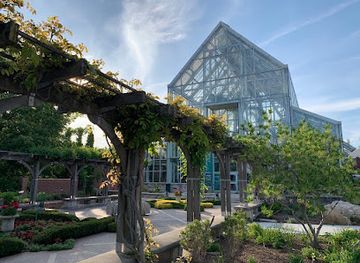
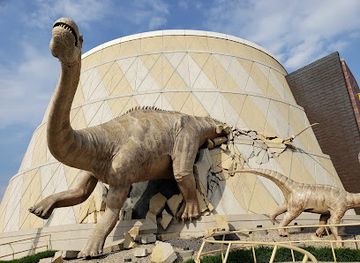
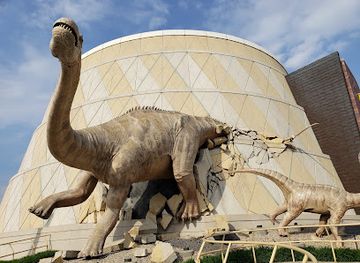
Indianapolis offers a varied sightseeing circuit anchored by the Indiana State Museum and Eiteljorg Museum in White River State Park, where Indiana's natural history, art and Indigenous cultures are presented alongside a riverside park setting. The Children's Museum of Indianapolis is a major family attraction, with extensive science, history and hands-on exhibits. Downtown, the Central Canal and Indianapolis Cultural Trail create accessible routes between civic spaces, museums and neighbourhoods, while the Indiana State Capitol provides a window into the state's government and architecture. Newfields combines the Indianapolis Museum of Art with gardens, woodland and Lilly House north of the centre. Sports enthusiasts can explore the Indianapolis Motor Speedway Museum in Speedway, separate from the city but closely associated with its identity. Monument Circle, the Indiana War Memorials and the Indianapolis Zoo add further variety, ranging from public history and architecture to wildlife and outdoor recreation.
-
Zoo
Indianapolis Zoo
Explore the Indianapolis Zoo, where wildlife meets adventure in a breathtaking setting filled with fun and educational experiences for everyone.
9 min drive · 3.1 km from city centre
-
Zoo
Indianapolis Zoo
Explore the Indianapolis Zoo: A vibrant hub of wildlife, education, and conservation in the heart of Indianapolis.
9 min drive · 3.1 km from city centre
-
Children's museum
The Children's Museum of Indianapolis
Discover a world of adventure and learning at the Children's Museum of Indianapolis, where imagination comes to life through interactive exhibits and exploration.
11 min drive · 3.8 km from city centre
-
Children's museum
The Children's Museum of Indianapolis
Discover endless fun and learning at The Children's Museum of Indianapolis, the world's largest children's museum perfect for families.
11 min drive · 3.8 km from city centre


Best landmarks in Indianapolis
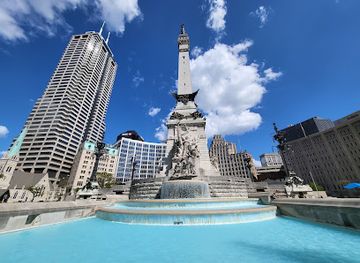
The Indiana Soldiers and Sailors Monument is Indianapolis's defining civic landmark, rising from the centre of Monument Circle as a memorial to Indiana's military service and a focal point for the original downtown plan. Nearby, the Indiana State Capitol represents the state's government in a late nineteenth-century building whose interior includes Indiana limestone and historic legislative spaces. The Indiana World War Memorial Plaza forms a major ensemble of memorial architecture, including the Indiana World War Memorial and American Legion Mall. The Old National Centre, originally the Murat Shrine, is a distinctive historic performing-arts building in the Mass Ave area. The Scottish Rite Cathedral adds another notable architectural presence near downtown, while the Central Canal reflects the city's early transportation ambitions and later civic redevelopment. Together these buildings and public spaces chart Indianapolis's evolution from planned capital to modern cultural centre.
-
Children's museum
The Children's Museum of Indianapolis
Explore endless fun and learning at The Children's Museum of Indianapolis, the world's largest children's museum, perfect for families and young explorers.
11 min drive · 3.8 km from city centre
-
Monument
Soldiers & Sailors Monument
Discover the Soldiers & Sailors Monument, a stunning historical landmark in downtown Indianapolis, honoring those who served in American conflicts.
18 min walk · 1.5 km from city centre
-
Hotel
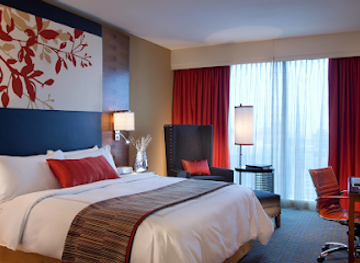
JW Marriott Indianapolis
Experience luxury and convenience in downtown Indianapolis at JW Marriott, an ideal hub for leisure and business travelers alike.
7 min drive · 2.3 km from city centre
-
Art museum
Newfields
Explore Newfields, Indianapolis' premier art museum and park, where art and nature converge for an unforgettable experience.
19 min drive · 6.3 km from city centre
Explore Indianapolis on the map
Plan your Indianapolis trip on one map. See where the top attractions, landmarks, restaurants, bars and hotels are, find what's near where you're staying, and book hotels and experiences in a few clicks.
Neighbourhoods in Indianapolis
-

-

-

-


Swipe for more neighbourhoods
Best hotels in Indianapolis
Best restaurants in Indianapolis
Indianapolis's food culture reflects Indiana's Midwestern roots while drawing on immigration, university life and a growing independent restaurant scene. The pork tenderloin sandwich, usually a broad, breaded cutlet served in an oversized bun, is a local staple, while Indiana sweet corn, farm produce and sugar cream pie appear in regional cooking. Mass Ave, Fountain Square, Broad Ripple and the Fletcher Place area around Virginia Avenue offer concentrations of restaurants, cafés, breweries and casual dining, with international cuisines alongside contemporary American menus. The historic City Market provides a central setting for varied food stalls and local vendors, while the Bottleworks District adds restaurants and food-focused businesses in a former industrial complex. Breakfast diners, craft breweries and bakeries are part of the city's everyday dining character, and large event weekends can make popular districts considerably busier.
-
Chicken
The Eagle Mass Ave
Experience the best of Indianapolis dining at The Eagle Mass Ave - renowned for its flavorful chicken dishes and lively bar atmosphere.
12 min walk · 1.0 km from city centre
-
American
Sugar Factory - Indianapolis
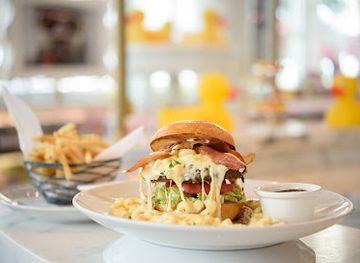
Discover the whimsical world of Sugar Factory in Indianapolis, where American cuisine meets extravagant desserts for an unforgettable dining experience.
5 min drive · 1.8 km from city centre
-
German
The Rathskeller
Discover the rich flavors and festive atmosphere at The Rathskeller, Indianapolis' premier German restaurant and bar.
8 min walk · 0.6 km from city centre
-
Italian
The Old Spaghetti Factory
Experience the essence of Italy at The Old Spaghetti Factory in Indianapolis – where authentic flavors meet warm hospitality.
6 min drive · 1.9 km from city centre
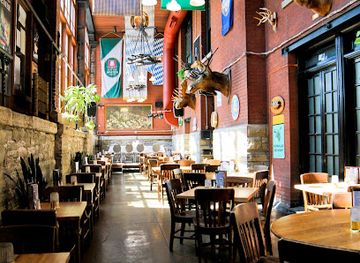
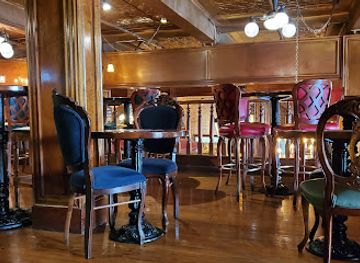
Best bars in Indianapolis
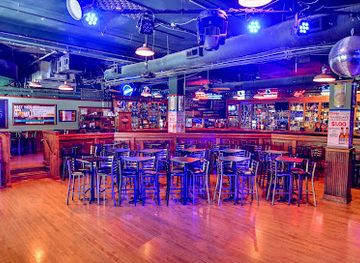
Indianapolis's evening scene is concentrated in a handful of distinct districts rather than spread evenly across the metropolitan area. Mass Ave combines cocktail bars, breweries, live music and theatre audiences, with a sociable atmosphere that changes from early evening dining to later nightlife. Fountain Square has an arts-led character, independent bars, music venues and occasional performances, while Broad Ripple offers long-established pubs, bars and smaller entertainment spaces near the Monon Trail. The Wholesale District around Gainbridge Fieldhouse and Lucas Oil Stadium becomes especially active before and after basketball, football and concert events. Downtown also includes theatres and performance venues for visitors seeking arts rather than clubs. Nightlife varies with the sporting calendar, and alcohol service, entry requirements and closing practices follow Indiana law and individual venue policies.
-
Grill
Kilroy's Bar & Grill
Experience the vibrant atmosphere and delicious American grill cuisine at Kilroy's Bar & Grill in Indianapolis, a perfect spot for food lovers and sports fans alike.
6 min drive · 1.9 km from city centre
-
Restaurant
Slippery Noodle Inn
Discover the historic Slippery Noodle Inn in Indianapolis, where great food meets live blues music in a lively atmosphere.
6 min drive · 2.1 km from city centre
-
Bar
Howl at the Moon Indianapolis
Dive into the energetic nightlife of Howl at the Moon Indianapolis, where live music and vibrant cocktails create an unforgettable experience.
5 min drive · 1.8 km from city centre
-
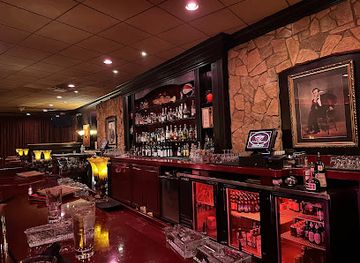
Cocktail bar
Nicky Blaine's Cocktail Lounge
Experience the elegance of Nicky Blaine's Cocktail Lounge, where exceptional cocktails meet a vibrant atmosphere and fine cigars in the heart of Indianapolis.
5 min drive · 1.5 km from city centre
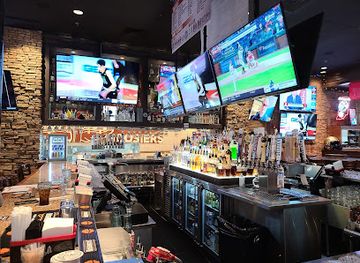
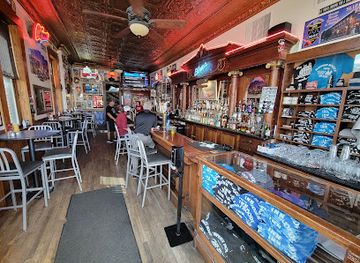
Best nightclubs in Indianapolis
Indianapolis's evening scene is concentrated in a handful of distinct districts rather than spread evenly across the metropolitan area. Mass Ave combines cocktail bars, breweries, live music and theatre audiences, with a sociable atmosphere that changes from early evening dining to later nightlife. Fountain Square has an arts-led character, independent bars, music venues and occasional performances, while Broad Ripple offers long-established pubs, bars and smaller entertainment spaces near the Monon Trail. The Wholesale District around Gainbridge Fieldhouse and Lucas Oil Stadium becomes especially active before and after basketball, football and concert events. Downtown also includes theatres and performance venues for visitors seeking arts rather than clubs. Nightlife varies with the sporting calendar, and alcohol service, entry requirements and closing practices follow Indiana law and individual venue policies.
-
Lounge
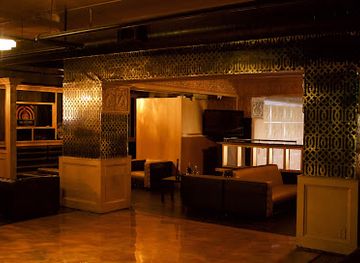
ICON Lounge
Discover the pulse of Indianapolis nightlife at ICON Lounge, where vibrant energy meets refined relaxation.
16 min walk · 1.3 km from city centre
-
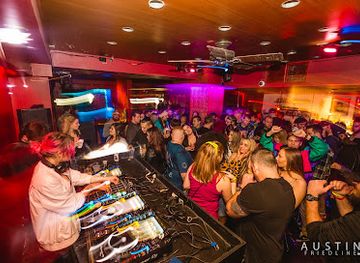
Night club
The Red Room
Experience the vibrant nightlife at The Red Room in Indianapolis, where every night is an unforgettable celebration of music, dance, and socializing.
30 min drive · 10 km from city centre
-
Night club
Metro Nightclub & Restaurant
Experience the vibrant nightlife at Metro Nightclub & Restaurant in Indianapolis, where live music and delicious dining create unforgettable moments.
2 min walk · 0.2 km from city centre
-
Night club
The Patron Saint
Discover the vibrant nightlife of Indianapolis at The Patron Saint, where electrifying music and an energetic crowd create unforgettable nights.
6 min drive · 2.0 km from city centre


Best shops in Indianapolis
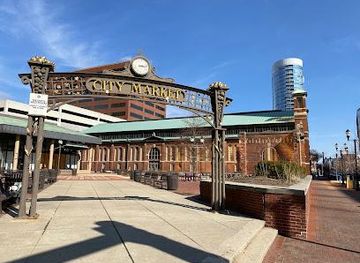
Shopping in Indianapolis ranges from independent urban retail to large suburban commercial areas, with the strongest visitor-oriented clusters in the central neighbourhoods. Mass Ave is known for independent clothing shops, books, gifts, galleries and design-led businesses set among restaurants and theatres. Fountain Square and nearby Fletcher Place contain smaller boutiques, vintage retailers, studios and locally made goods, while Broad Ripple combines cafés and neighbourhood shops with art, clothing and speciality retail. The historic City Market is more closely associated with food and local vendors than conventional shopping, but it can be useful for Indiana-made products and edible gifts. Downtown's Circle Centre serves as a conventional shopping centre, and the former Coca-Cola bottling plant at Bottleworks has been adapted into a dining, entertainment and retail district. Sports merchandise and racing-related souvenirs are particularly visible around major events.
-
Market
Indianapolis City Market
Experience the vibrant culture of Indianapolis at the City Market, a lively destination for food, shopping, and local craftsmanship.
15 min walk · 1.2 km from city centre
-
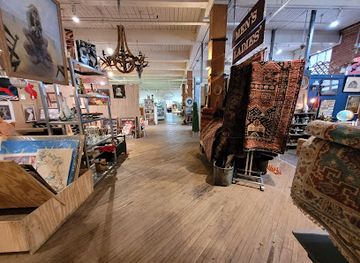
Antique store
Midland Arts & Antiques Market
Explore a unique blend of history and charm at Midland Arts & Antiques Market, where every corner reveals a new treasure waiting to be discovered.
8 min walk · 0.6 km from city centre
-
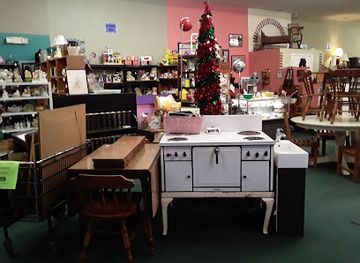
Antique store
Southport Antique Mall
Explore Southport Antique Mall in Indianapolis, where history meets treasure hunting with a myriad of unique antiques and collectibles.
33 min drive · 13 km from city centre
-
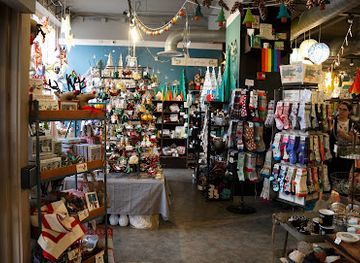
Gift shop
Silver In the City
Explore the heart of Indianapolis at Silver In the City, where unique jewelry, home goods, and souvenirs await to enrich your travel experience.
9 min walk · 0.7 km from city centre
Get your free copy of our complete guide to Indianapolis, delivered straight to you.
Everything on this page, from attractions and restaurants to essentials and local phrases, in one PDF you can read offline, print or share.
Already have an account? Sign in
Your Indianapolis guide is ready.
We'll send it to · Not you? Sign out

Getting your guide ready…
We are putting together a fresh copy of the Indianapolis guide. This can take up to a minute.
This can take a few moments. If your browser asks, choose Allow so the download can start. You'll find the guide in your Downloads folder.
Nothing happened? Download it again
Sorry, the guide is taking longer than usual. Please try again in a minute, or get it by email instead.
Indianapolis essentials
Currency and Payment
Safety
Emergency Situations
Do's and Don'ts
Local Tips
From Eve
Local phrases worth knowing
You don't need to get them perfect. A few words go a long way, and locals appreciate the effort.
Basics
| English | Local | Say it |
|---|---|---|
| Hello | Howdy | [haw-dee] |
| Goodbye | See ya | [see yah] |
| Yes | Yep | [yep] |
| No | Nah | [nah] |
| Please/You're welcome | Please/No problem | [pleez/no problem] |
| Thank you | Thanks | [thanks] |
| Excuse me/Sorry | Pardon me/My bad | [pahr-dun me/my bad] |
| How are you? | How ya doin'? | [haw yuh doo-in] |
| Fine. And you? | Good. And you? | [good. and yuh] |
| Do you speak English? | Ya speak English? | [yah speak ing-glish] |
| I don't understand | I don't get it | [eye don't get it] |
Eating & Drinking
| English | Local | Say it |
|---|---|---|
| I'd like to see the menu, please | Can I see the menu? | [kan eye see the menu?] |
| I don't eat meat | I don't eat meat | [eye don't eat meet] |
| Cheers! | Cheers! | [cheers] |
| I would like to pay, please | I'd like the check, please | [eye'd like the check, please] |
Emergencies
| English | Local | Say it |
|---|---|---|
| Help! | Help! | [help] |
| Go away! | Get lost! | [get lost] |
| Call the Police! | Call the cops! | [call the cops] |
| Call a doctor! | Get me a doc! | [get me a doc] |
| I'm lost | I'm lost | [eye'm lost] |
| I'm ill | I'm sick | [eye'm sick] |
Shopping
| English | Local | Say it |
|---|---|---|
| I'd like to buy... | I wanna buy... | [eye wanna buy] |
| I'm just looking | Just browsing | [just brows-ing] |
| How much is it? | How much does it cost? | [how much duz it cost] |
| That's too expensive | That's pricey | [that's prahy-see] |
| Can you lower the price? | Can you give me a deal? | [kan yuh giv me a deal] |
Time & Numbers
| English | Local | Say it |
|---|---|---|
| What time is it? | What's the time? | [whats the time] |
| It's one o'clock | It's one | [its one] |
| Half past (10) | Ten-thirty | [ten-thur-tee] |
| Morning | Morning | [morn-ing] |
| Afternoon | Afternoon | [after-noon] |
| Evening | Evening | [ee-ven-ing] |
| Yesterday | Yesterday | [yes-ter-day] |
| Today | Today | [to-day] |
| Tomorrow | Tomorrow | [to-mor-row] |
| 1 | One | [wun] |
| 2 | Two | [too] |
| 3 | Three | [three] |
| 4 | Four | [four] |
| 5 | Five | [five] |
| 6 | Six | [siks] |
| 7 | Seven | [sev-en] |
| 8 | Eight | [ate] |
| 9 | Nine | [nine] |
| 10 | Ten | [ten] |
Transport & Directions
| English | Local | Say it |
|---|---|---|
| Where's a/the...? | Where's the...? | [wheres the] |
| What's the address? | What's the address? | [whats the address] |
| Can you show me (on the map)? | Can you show me (on the map)? | [kan yuh show me (on the map)] |
| When's the next (bus)? | When's the next (bus)? | [whens the next (bus)] |
| A ticket (to ....) | A ticket (to ....) | [a ticket (to)] |
History of Indianapolis
Indigenous Lands and a New Capital
Before Indianapolis was founded, central Indiana was home to Indigenous peoples including the Miami, Delaware, Potawatomi and Shawnee, whose histories remain part of the region's deeper story. The United States acquired much of the land through treaties, including the Treaty of St Mary's in 1818, after which settlement expanded rapidly. Indiana became a state in 1816, and legislators selected a central site for a new capital. Indianapolis was laid out in 1821 by Alexander Ralston, whose plan placed streets around a central circle. The location was intended to be accessible from across the young state, although the settlement initially remained small and dependent on improving roads and waterways.
Canals, Railways and Early Growth
During the nineteenth century, Indianapolis developed from a modest political centre into a regional marketplace. The Central Canal was planned as part of a statewide canal system, but only a short section was completed before railways became the more important means of transport. Rail lines reached the city in the 1840s, connecting it with surrounding agricultural districts and larger Midwestern markets. Grain, livestock and manufactured goods moved through the growing capital, while hotels, warehouses and commercial buildings gathered around the centre. The city's transport advantages encouraged immigration, business formation and steady population growth, establishing Indianapolis as a major inland hub.
Civil War and Civic Monument Building
Indianapolis became strategically important during the American Civil War as a Union supply and training centre. Camp Morton, established north of the city, served first as a military camp and later as a prisoner-of-war camp for Confederate soldiers. After the war, Indianapolis expanded its civic institutions and memorial landscape. The Soldiers and Sailors Monument, dedicated on Monument Circle in 1902, commemorated Indiana's military service in the Civil War and later conflicts. Its presence helped give the downtown core a powerful symbolic focus, while state government, commerce and transport continued to draw people and investment into the capital.
Industry, Reform and Urban Expansion
At the turn of the twentieth century, Indianapolis was shaped by manufacturing, railways, printing, wholesale trade and political reform. Industrial growth attracted workers from many parts of the United States and from overseas, while African American communities built churches, businesses and civic institutions despite segregation and discrimination. The city expanded beyond its original centre through annexation and suburban development. Architecturally, the period produced commercial blocks, grand civic buildings and residential streets that remain visible in districts such as Lockerbie Square and Old Northside. Progressive-era improvements in public health, parks and municipal administration also reflected the changing expectations placed on a modern state capital.
The Rise of the Motor Speedway
Indianapolis's international sporting identity began with the construction of the Indianapolis Motor Speedway in 1909 in what is now the separate town of Speedway, surrounded by the city on three sides. The first Indianapolis 500 took place in 1911, and the race gradually became one of the defining events in American motor sport. Its traditions, technical innovation and enormous annual crowd linked the city to the wider history of automobile culture. Although the circuit lies outside Indianapolis's municipal boundary, its economic and cultural influence is inseparable from the region and forms a major part of the capital's public image.
A Modern Cultural Capital
After the Second World War, Indianapolis experienced suburbanisation, highway construction and periods of downtown decline, followed by sustained efforts to renew the central city. The opening and later development of White River State Park, the growth of major museums, the return of professional sports and the creation of the Indianapolis Cultural Trail helped strengthen the centre as a civic and visitor destination. Neighbourhoods including Mass Ave, Fountain Square and Broad Ripple developed distinct cultural identities, while new public spaces and converted industrial buildings added variety to the urban fabric. Contemporary Indianapolis continues to balance its role as a government and business centre with a growing reputation for museums, events and neighbourhood-based culture.
Indianapolis in Photos
Browse through our photo collection highlighting the charm and character of the destination.
Cities near Indianapolis
The closest cities to Indianapolis, if you have time for more than one stop.
-

-

-

-

-


Swipe for more cities
Explore more

Explore more of Indiana
Explore Indiana: From the bustling streets of Indianapolis to the serene beauty of Indiana Dunes, discover the diverse experiences that make Indiana the Crossroads of America.
Explore Indiana