

Centro (Monterrey) Travel Guide - Free
Explore Centro in Monterrey with Evendo's free guide. Find the best shops, historic streets, restaurants, and gems on web or mobile.


Centro de Monterrey brings together colonial streets, major museums, Barrio Antiguo, Macroplaza, local food and Paseo Santa Lucía in northern Mexico.
A Central District of Contrasts
Centro is Monterrey’s civic, cultural and commercial core, extending across a dense grid of streets between the Santa Catarina River and the older quarters east of the city centre. Its character is defined by contrasts: monumental public buildings stand beside modest shops, polished museums share streets with long-established markets, and contemporary towers rise beyond low historic façades. The district is busy during the day, particularly around the Macroplaza, but its atmosphere changes from square to square and street to street.Read more about Centro
History in the Urban Fabric
Museums, Public Spaces and Evening Life
Explore Centro on the map
A handpicked selection of must-see spots in Centro, mapped for you.
Best hotels in Centro
Centro essentials
Getting There
Getting Around
Safety
Emergency Situations
Do's and Don'ts
Local Tips

From Eve
Local phrases worth knowing
You don't need to get them perfect. A few words go a long way, and locals appreciate the effort.
Basics
| English | Local | Say it |
|---|---|---|
| Hello | Hola | [oh-lah] |
| Goodbye | Adiós | [ah-dee-ohs] |
| Yes | Sí | [see] |
| No | No | [noh] |
| Please/You're welcome | Por favor/De nada | [por fah-vor/deh nah-dah] |
| Thank you | Gracias | [grah-syahs] |
| Excuse me/Sorry | Perdón/Lo siento | [pair-dohn/loh see-en-toh] |
| How are you? | ¿Cómo estás? | [koh-moh ehs-tahs] |
| Fine. And you? | Bien. ¿Y tú? | [bee-ehn. ee too] |
| Do you speak English? | ¿Hablas inglés? | [ah-blahs een-glehs] |
| I don't understand | No entiendo | [noh ehn-tee-ehn-doh] |
Eating & Drinking
| English | Local | Say it |
|---|---|---|
| I'd like to see the menu, please | Me gustaría ver el menú, por favor | [meh goos-tah-ree-ah ver ehl meh-noo, por fah-vor] |
| I don't eat meat | No como carne | [noh koh-moh kahr-neh] |
| Cheers! | ¡Salud! | [sah-lood] |
| I would like to pay, please | Me gustaría pagar, por favor | [meh goos-tah-ree-ah pah-gahr, por fah-vor] |
Emergencies
| English | Local | Say it |
|---|---|---|
| Help! | ¡Ayuda! | [ah-yoo-dah] |
| Go away! | ¡Vete! | [veh-teh] |
| Call the Police! | ¡Llama a la Policía! | [yah-mah ah lah poh-lee-see-ah] |
| Call a doctor! | ¡Llama a un doctor! | [yah-mah ah oon dohk-tohr] |
| I'm lost | Estoy perdido | [ehs-toy pair-dee-doh] |
| I'm ill | Estoy enfermo | [ehs-toy ehn-fehr-moh] |
Shopping
| English | Local | Say it |
|---|---|---|
| I'd like to buy... | Me gustaría comprar... | [meh goos-tah-ree-ah kohm-prahr] |
| I'm just looking | Sólo estoy mirando | [soh-loh ehs-toy mee-rahn-doh] |
| How much is it? | ¿Cuánto cuesta? | [kwahn-toh kwehs-tah] |
| That's too expensive | Esto es demasiado caro | [ehs-toh ehs deh-mah-see-ah-doh kah-roh] |
| Can you lower the price? | ¿Puedes bajar el precio? | [pweh-dehs bah-hahr ehl preh-syoh] |
Time & Numbers
| English | Local | Say it |
|---|---|---|
| What time is it? | ¿Qué hora es? | [keh oh-rah ehs] |
| It's one o'clock | Es la una | [ehs lah oo-nah] |
| Half past (10) | Y media | [ee meh-dee-ah] |
| Morning | Mañana | [mah-nyah-nah] |
| Afternoon | Tarde | [tahr-deh] |
| Evening | Noche | [noh-cheh] |
| Yesterday | Ayer | [ah-yehr] |
| Today | Hoy | [oy] |
| Tomorrow | Mañana | [mah-nyah-nah] |
| 1 | Uno | [oo-noh] |
| 2 | Dos | [dohs] |
| 3 | Tres | [trehs] |
| 4 | Cuatro | [kwah-troh] |
| 5 | Cinco | [seen-koh] |
| 6 | Seis | [says] |
| 7 | Siete | [syeh-teh] |
| 8 | Ocho | [oh-choh] |
| 9 | Nueve | [nweh-veh] |
| 10 | Diez | [dyehs] |
Transport & Directions
| English | Local | Say it |
|---|---|---|
| Where's a/the...? | ¿Dónde está...? | [dohn-deh ehs-tah] |
| What's the address? | ¿Cuál es la dirección? | [kwahl ehs lah dee-rehk-syohn] |
| Can you show me (on the map)? | ¿Puedes mostrarme (en el mapa)? | [pweh-dehs mohs-trar-meh (ehn ehl mah-pah)] |
| When's the next (bus)? | ¿Cuándo es el próximo (autobús)? | [kwahn-doh ehs ehl proh-ksee-moh (ow-toh-boos)] |
| A ticket (to ....) | Un boleto (a ...) | [oon boh-leh-toh (ah ...)] |
History of Centro
Founding beside the Santa Catarina
Monterrey was founded in 1596 by Diego de Montemayor, and the settlement that developed around the Santa Catarina River established the urban core from which today’s Centro grew. Early Monterrey remained relatively small, with homes, religious buildings and civic functions concentrated around a central plaza and the routes linking the river plain with the surrounding valleys. Flooding, isolation and limited economic resources shaped the pace of growth, but the central area retained its role as the town’s administrative and religious focus. The Metropolitan Cathedral and the historic street pattern reflect this long transition from a modest colonial settlement into the regional capital of northeastern Mexico.
Civic and Commercial Expansion
During the nineteenth century, Monterrey’s centre gained greater political and commercial importance as the city became a major regional market. Civic buildings, churches, shops and houses occupied the increasingly dense blocks around the main plaza, while trade connected the city with northern Mexico and the United States. The area also experienced disruption during the Mexican Revolution, when Monterrey’s strategic position brought wider political conflict close to its streets. The surviving religious and civic buildings, together with the older houses of Barrio Antiguo, preserve traces of this period of urban consolidation, even though later redevelopment altered much of the surrounding fabric.
Industry Transforms the City Centre
Monterrey’s industrial expansion from the late nineteenth century and into the twentieth century changed the central district’s scale and social life. Manufacturing wealth supported banks, offices, public institutions, department stores and improved transport connections, while workers and merchants helped make the centre a regional commercial hub. The wider city spread rapidly beyond the historic core, yet Centro remained the principal location for government, retail, worship and public gathering. Older residential buildings were frequently adapted or replaced, creating the mixture of historic façades, utilitarian commercial premises and later modern structures visible today.
The Macroplaza and Cultural Renewal
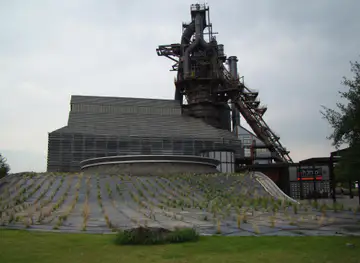
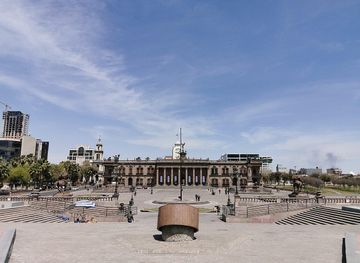
One of the most consequential changes came in the late twentieth century, when the creation of the Macroplaza reshaped the centre through the consolidation of a large civic and cultural space. The project introduced landscaped areas, fountains, public artworks and major institutions while removing or altering parts of the earlier urban fabric. Museums followed as the centre developed a stronger cultural role, and Barrio Antiguo became a focus for heritage conservation, restaurants, bars and creative activity. The opening of Paseo Santa Lucía in 2007 strengthened connections between central Monterrey and the former industrial landscape now associated with Fundidora Park.
Centro in Photos
Browse through our photo collection highlighting the charm and character of the destination.
Neighbourhoods near Centro
The closest neighbourhoods to Centro, if you have time for more than one stop.
-

-

-
-


Swipe for more neighbourhoods
Explore more
Explore more of Monterrey
Monterrey, Mexico pairs Sierra Madre landscapes with industrial heritage, Macroplaza landmarks, museums, northern cuisine and lively cultural experiences.
Explore Monterrey