

Free South Holland Travel Guide & Mobile App
Explore South Holland with free travel guides. Discover regional history, expert tips, proposed trips, and audio guides on web or mobile app.


Explore South Holland for Rotterdam's modern energy, The Hague's heritage, historic canals, North Sea beaches, windmills and rich Dutch food traditions.
When is the best time to visit South Holland?
Best: June–August · 20–22°C| Month | High (°C) | Rainfall (mm) |
|---|---|---|
| January | 6 | 70 |
| February | 7 | 54 |
| March | 10 | 60 |
| April | 14 | 47 |
| May | 18 | 61 |
| June (best) | 20 | 68 |
| July (best) | 22 | 76 |
| August (best) | 22 | 81 |
| September | 19 | 80 |
| October | 15 | 82 |
| November | 11 | 81 |
| December | 7 | 79 |
Getting to and around South Holland
How to get there
Transportation
Top city travel guides in South Holland
The cities of South Holland, and the easiest places to base yourself.
-

-

-

-

-

-


Swipe for more cities
Destinations in South Holland
Resorts, valleys and scenic spots worth a trip of their own.
-

-

-

-
-


Swipe for more destinations
Best attractions in South Holland
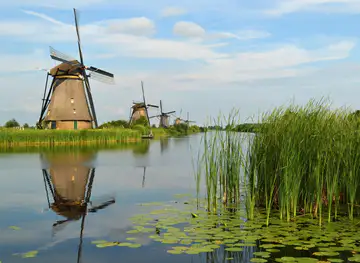
South Holland's attractions range from major urban museums and architectural districts to working landscapes shaped by water. Rotterdam offers maritime history, modern buildings, harbour views and cultural institutions, while The Hague combines art collections, governmental heritage and access to the coast at Scheveningen. Delft and Leiden provide compact historic centres with canals, museums and university traditions; Dordrecht adds riverfront streets and a long mercantile history. Kinderdijk is the province's defining water-management landscape, with windmills, dykes and drainage channels explaining how low-lying land is inhabited. Along the coast, beaches and dune reserves support walking, cycling and wildlife observation around Scheveningen, Katwijk, Noordwijk and other settlements. Inland, the Groene Hart and the river districts offer polder scenery, farm lanes and quieter cycling routes, while Gouda is an important stop for historic architecture and food culture. Seasonal horticulture around the western greenhouse belt and bulb-growing districts provides another perspective on the relationship between land, cultivation and trade. Because the province is densely connected, visitors can combine galleries, historic houses, churches and archaeological museums with open-air landscapes without travelling vast distances, although rural excursions require more careful transport planning than city sightseeing.
-
Tourist attraction
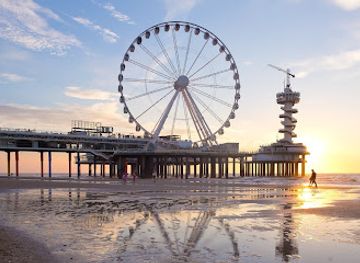
De Pier
Explore De Pier in Scheveningen: A breathtaking seaside destination combining dining, shopping, and adventure for an unforgettable experience.
-
Stadium
Feyenoord Stadium
Explore the legendary Feyenoord Stadium in Rotterdam, home to thrilling soccer matches and a vibrant sporting culture that captivates fans and tourists alike.
-
Museum
Kijk-Kubus Museum-house
Discover the architectural wonder of Kijk-Kubus Museum-house in Rotterdam, a unique fusion of art and innovative living design.
-
Art museum
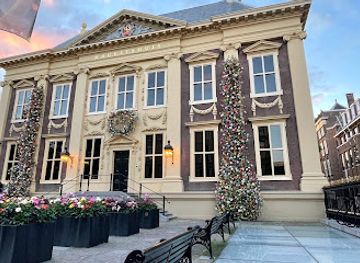
Mauritshuis
Explore the grandeur of Dutch art at Mauritshuis, home to Vermeer and Rembrandt's masterpieces in the heart of The Hague.


Best landmarks in South Holland
The Erasmus Bridge in Rotterdam is South Holland's most recognisable modern landmark, spanning the Nieuwe Maas with a white asymmetrical pylon that reflects the city's relationship with its river and port. Rotterdam's post-war centre also includes distinctive high-rise and experimental architecture, while its surviving historic districts provide a counterpoint to the rebuilt core. In The Hague, the Binnenhof complex has been a major centre of Dutch political life for centuries, and the Peace Palace represents the city's modern international role; access arrangements and restoration work can change. Delft's Oude Kerk and Nieuwe Kerk punctuate a canal-lined historic centre associated with Dutch art and civic history. Leiden's Pieterskerk and old waterways convey the importance of religion, scholarship and trade. Kinderdijk's aligned windmills are a landmark of hydraulic engineering rather than a decorative rural scene. Along the coast, the dunes and broad beaches near Scheveningen, Katwijk and Noordwijk form a natural landmark system, while Dordrecht's historic riverfront and Gouda's Markt square preserve the visual character of former trading towns.
-
Botanical garden
Keukenhof
Discover the breathtaking beauty of Keukenhof, a floral paradise in the Netherlands, showcasing millions of vibrant blooms each spring.
-
Theme park
Madurodam
Discover Madurodam: A miniature wonderland showcasing the iconic landmarks and rich culture of the Netherlands in The Hague.
-
Castle
Castle De Haar
Explore the majestic Castle De Haar, a stunning historical landmark with enchanting gardens and rich cultural heritage in the heart of Utrecht.
-
Art museum
Mauritshuis
Discover the masterpieces of Dutch art at Mauritshuis, a stunning museum in The Hague showcasing iconic works in an exquisite setting.


Explore South Holland on the map
Plan your trip on one map. See where the top cities, national parks and sights are, and book hotels and experiences in a few clicks.
Best hotels in South Holland
Best restaurants in South Holland
Dining in South Holland reflects both its maritime setting and its position at the centre of the Netherlands' most international urban corridor. Rotterdam and The Hague have broad choices of contemporary, Indonesian, Surinamese, Turkish, Middle Eastern and other global cuisines, alongside Dutch cafés, bakeries and restaurants. Seafood, herring, eel and mussels appear in coastal and harbour settings, while market stalls and fish shops provide more informal options. Gouda cheese is strongly associated with the historic market town of Gouda, although the wider Dutch cheese tradition extends beyond the province. Polders and horticultural districts supply vegetables, dairy products and seasonal produce, and farmers' markets offer a way to encounter local products directly. Delft, Leiden and smaller towns have cafés and brown cafés suited to a lighter meal, while rural inns and restaurants serve regional Dutch fare in a quieter setting. Expect pancakes, apple-based baking, pastries and speciality breads as well as modern interpretations of familiar ingredients; menus vary considerably between cosmopolitan city centres, beach resorts and villages in the river country.
-
Brewpub
Fenix Food Factory
Rotterdam's waterfront warehouse reborn as a lively food hall with craft brews, local bites, and harbor views—perfect for grazing, events, and dockside vibes.
-
Cookies
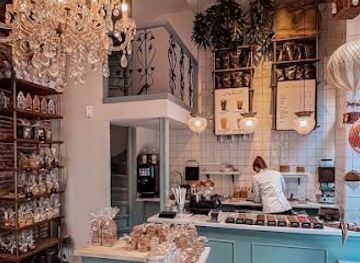
van Wonderen Stroopwafels
Amsterdam's premier stroopwafel boutique on Kalverstraat, crafting custom, colorful Dutch delights with caramel hearts and endless toppings for unforgettable sweet escapes.
-
Restaurant
Lake House Rotterdam
Discover Lake House Rotterdam: A scenic dining destination offering exquisite cuisine and stunning lakeside views perfect for any occasion.
-
Restaurant
MY Bathhouse
Discover culinary delights and vibrant events at MY Bathhouse in Hook of Holland - where relaxation meets exceptional service.



Best bars in South Holland
Evening life in South Holland is concentrated in Rotterdam, The Hague, Leiden and Delft, with a more seasonal and relaxed pattern along the coast. Rotterdam has the province's broadest range of cocktail bars, breweries, live-music venues, restaurants and late-night clubs, especially around its central districts and former harbour areas. The Hague combines city-centre bars and cultural venues with a separate evening scene around Scheveningen, where activity is more dependent on the season and the seafront calendar. Leiden and Delft appeal to students and local residents with pubs, cafés, music venues and late-opening restaurants, though their scale is smaller. In Gouda, Dordrecht and rural South Holland, evenings generally centre on traditional pubs, cafés, restaurants and occasional live performances rather than large clubs. Dutch breweries and modern beer bars are increasingly visible, but drinking is only one part of the region's nightlife; theatres, cinemas, galleries and evening walks through historic centres offer alternatives.
-
Pub
The Fiddler
Experience the vibrant atmosphere at The Fiddler, a lively pub and sports bar in the heart of The Hague, perfect for drinks and entertainment.
-
Cocktail bar
Lost in Amsterdam Lounge Cafe & Cocktail Bar
Experience the vibrant nightlife of Amsterdam at Lost in Amsterdam Lounge Cafe & Cocktail Bar, where cocktails and live music create unforgettable moments.
-
Irish pub
Paddy Murphy's Irish Pub
Discover the vibrant atmosphere of Paddy Murphy's Irish Pub, where authentic Irish hospitality meets the heart of Rotterdam's nightlife.
-
Leisure centre
Hollywood Event Center
Discover the ultimate leisure experience at Hollywood Event Center, your go-to destination for dining, entertainment, and sports in Rotterdam.


Best nightclubs in South Holland
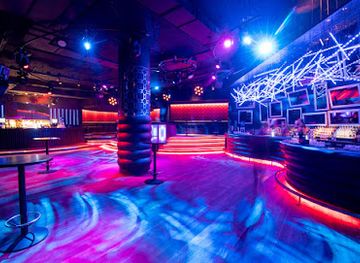
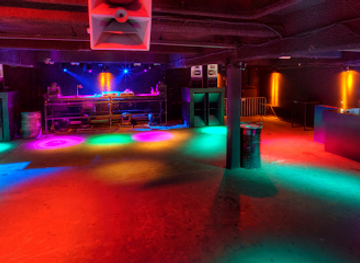
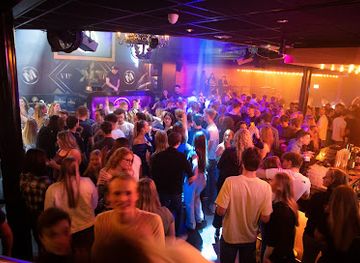
Evening life in South Holland is concentrated in Rotterdam, The Hague, Leiden and Delft, with a more seasonal and relaxed pattern along the coast. Rotterdam has the province's broadest range of cocktail bars, breweries, live-music venues, restaurants and late-night clubs, especially around its central districts and former harbour areas. The Hague combines city-centre bars and cultural venues with a separate evening scene around Scheveningen, where activity is more dependent on the season and the seafront calendar. Leiden and Delft appeal to students and local residents with pubs, cafés, music venues and late-opening restaurants, though their scale is smaller. In Gouda, Dordrecht and rural South Holland, evenings generally centre on traditional pubs, cafés, restaurants and occasional live performances rather than large clubs. Dutch breweries and modern beer bars are increasingly visible, but drinking is only one part of the region's nightlife; theatres, cinemas, galleries and evening walks through historic centres offer alternatives.
-
Disco club
Munch
Discover the vibrant nightlife at Munch, Rotterdam's premier disco club, where stunning river views and electrifying music create unforgettable nights.
-
Club
Cultuurpodium Perron
Dive into Rotterdam's vibrant nightlife at Cultuurpodium Perron, where electrifying music and an energetic crowd create unforgettable nights.
-
Night club
NEXT Leiden
Discover the energetic nightlife at NEXT Leiden, where music, dance, and vibrant social scenes come together for an unforgettable experience.
-
Disco club
HOME Noordwijk
Unleash your nights at HOME Noordwijk, the ultimate disco club where electrifying music meets vibrant nightlife.

Best shops in South Holland
Shopping in South Holland varies sharply between large urban centres, historic market towns and rural districts. Rotterdam offers the widest urban choice, from department stores and mainstream high streets to independent design shops, specialist food retailers, markets and contemporary boutiques. The Hague combines established shopping streets with arcades, international food shops and smaller independent retailers, while Delft and Leiden are known for compact centres containing bookshops, stationery shops, galleries, antiques and craft-oriented businesses. Gouda is a natural place to look for cheese and other Dutch food products, though visitors should distinguish regional produce from generic souvenirs. Dordrecht has independent shops and antiques in streets near its historic centre. Farmers' markets and seasonal produce stalls appear in towns across the province, and horticultural areas may offer direct sales at selected farms or nurseries. Delftware-style ceramics, Dutch design, cycling accessories, local books and packaged foods make more useful souvenirs than mass-produced items, while visitors should check luggage and customs rules before buying plants or fresh produce.
-
Gift shop
Designer Outlet Roermond
Experience the allure of Designer Outlet Roermond, where top brands meet unbeatable prices in a vibrant shopping atmosphere.
-
Shopping mall
Markthal
Explore Markthal, Rotterdam's architectural gem, combining a vibrant food court and diverse shopping in a unique urban experience.
-
Shopping mall
Westfield Mall of the Netherlands
Explore Westfield Mall of the Netherlands: a shopping haven with diverse stores, exquisite dining, and entertainment for all ages.
-
Shopping mall
Alexandrium Shopping Center
Explore Alexandrium Shopping Center in Rotterdam – your ultimate destination for shopping, dining, and entertainment, all under one roof.


Get your free copy of our complete guide to South Holland, delivered straight to you.
Everything on this page, from attractions and restaurants to essentials and local phrases, in one PDF you can read offline, print or share.
Already have an account? Sign in
Your South Holland guide is ready.
We'll send it to · Not you? Sign out

Getting your guide ready…
We are putting together a fresh copy of the South Holland guide. This can take up to a minute.
This can take a few moments. If your browser asks, choose Allow so the download can start. You'll find the guide in your Downloads folder.
Nothing happened? Download it again
Sorry, the guide is taking longer than usual. Please try again in a minute, or get it by email instead.
South Holland essentials
Currency and Payment
Safety
Emergency Situations
Do's and Don'ts
Local Tips
From Eve
Local phrases worth knowing
You don't need to get them perfect. A few words go a long way, and locals appreciate the effort.
Basics
| English | Local | Say it |
|---|---|---|
| Hello | Hallo | [hahl-loh] |
| Goodbye | Tot ziens | [toht zeens] |
| Yes | Ja | [yah] |
| No | Nee | [nay] |
| Please/You're welcome | Alstublieft | [ahl-stu-bleeft] |
| Thank you | Dank u | [dahnk oo] |
| Excuse me/Sorry | Sorry | [soh-ree] |
| How are you? | Hoe gaat het? | [hoo gaat het] |
| Fine. And you? | Goed. En jij? | [khoot. en yay] |
| Do you speak English? | Spreekt u Engels? | [spreekt oo eng-els] |
| I don't understand | Ik begrijp het niet | [ik be-khrai-ft het neet] |
Eating & Drinking
| English | Local | Say it |
|---|---|---|
| I'd like to see the menu, please | Ik zou graag de menukaart willen zien, alstublieft | [ik zow khraakh deh meh-nu-kaart wil-len zeen, ahl-stu-bleeft] |
| I don't eat meat | Ik eet geen vlees | [ik eet ghen vlays] |
| Cheers! | Proost! | [prohst] |
| I would like to pay, please | Ik zou graag willen betalen, alstublieft | [ik zow khraakh wil-len beh-ta-len, ahl-stu-bleeft] |
Emergencies
| English | Local | Say it |
|---|---|---|
| Help! | Help! | [help] |
| Go away! | Ga weg! | [gah vek] |
| Call the Police! | Bel de politie! | [bel deh poh-leet-see] |
| Call a doctor! | Bel een dokter! | [bel ayn dok-ter] |
| I'm lost | Ik ben verdwaald | [ik ben fer-dwaald] |
| I'm ill | Ik ben ziek | [ik ben zeek] |
Shopping
| English | Local | Say it |
|---|---|---|
| I'd like to buy... | Ik zou graag ... willen kopen | [ik zow khraakh ... wil-len koh-pen] |
| I'm just looking | Ik kijk alleen maar rond | [ik kyk ah-layn mahr rond] |
| How much is it? | Hoeveel kost het? | [hoo-veel kost het] |
| That's too expensive | Dat is te duur | [daht is tuh dur] |
| Can you lower the price? | Kunt u de prijs verlagen? | [kunt oo deh prays fer-lah-ghen] |
Time & Numbers
| English | Local | Say it |
|---|---|---|
| What time is it? | Hoe laat is het? | [hoo laht is het] |
| It's one o'clock | Het is één uur | [het is ayn oor] |
| Half past (10) | Half elf | [half elf] |
| Morning | Ochtend | [okh-tend] |
| Afternoon | Middag | [mid-dakh] |
| Evening | Avond | [ah-vond] |
| Yesterday | Gisteren | [ghis-teh-ren] |
| Today | Vandaag | [vahn-dahkh] |
| Tomorrow | Morgen | [mor-ghen] |
| 1 | 1 | [eyn] |
| 2 | 2 | [twee] |
| 3 | 3 | [drie] |
| 4 | 4 | [vier] |
| 5 | 5 | [vijf] |
| 6 | 6 | [zes] |
| 7 | 7 | [zeven] |
| 8 | 8 | [acht] |
| 9 | 9 | [negen] |
| 10 | 10 | [tien] |
Transport & Directions
| English | Local | Say it |
|---|---|---|
| Where's a/the...? | Waar is een/de...? | [vahr is ayn/deh...?] |
| What's the address? | Wat is het adres? | [vaht is het ah-dres] |
| Can you show me (on the map)? | Kunt u me (op de kaart) laten zien? | [kunt oo meh (op deh kaart) lah-ten zeen?] |
| When's the next (bus)? | Wanneer komt de volgende (bus)? | [vah-neer komt deh vol-ghen-deh (bus)?] |
| A ticket (to ....) | Een ticket (naar ...) | [ayn ti-ket (naar ...)] |
History of South Holland
Roman Frontier and Early Medieval Settlement
The Rhine formed the northern frontier of the Roman Empire, and Roman forts and settlements were established along parts of the river system in what is now South Holland. Coastal and riverine communities continued to adapt to shifting channels, peatlands and marine conditions after Roman rule ended. Early medieval settlement gradually expanded on higher ground, former beach ridges and artificially raised dwelling mounds, while waterways became essential routes for communication and trade. The archaeological record is especially important around former Roman sites near Leiden and along the Rhine, where the relationship between military control, river transport and wetland settlement can still be interpreted.
Medieval Counts, Towns and Water Management
From the Middle Ages, the County of Holland encouraged the development of towns, market rights, castles and religious foundations across the region. Leiden, Delft, Dordrecht, Gouda and The Hague grew in different ways: as market centres, river ports, administrative settlements or seats of power. Large-scale peat extraction and agricultural reclamation altered the landscape, but drainage also caused land levels to sink, making organised water management increasingly necessary. Dykes, canals, sluices and local water boards became enduring institutions. The polder landscapes of South Holland are therefore not simply natural wetlands; they are the result of centuries of collective engineering and maintenance.
The Dutch Golden Age and Maritime Commerce
During the seventeenth century, South Holland benefited from the commercial and political strength of the Dutch Republic. Rotterdam and Dordrecht were important ports, Leiden was a major textile centre, Delft developed a reputation for ceramics and printing, and The Hague became a centre of government and diplomacy. Wealth from shipping, trade and manufacturing shaped canal houses, civic buildings, churches and paintings. The period also brought colonial expansion and systems of exploitation whose consequences are increasingly acknowledged in museums and public history. South Holland's historic architecture reflects prosperity, but it also belongs to a wider story of unequal global commerce.
Water Engineering and the Kinderdijk Landscape
The low-lying districts around the Alblasserwaard and the wider river country required increasingly sophisticated drainage. The windmills at Kinderdijk, developed mainly in the eighteenth century as part of a coordinated drainage system, helped move water from polders towards the river. They were not isolated romantic structures but working elements in a hydraulic network involving dykes, reservoirs and pumping technology. The landscape demonstrates how settlements and agriculture were made possible below river and sea levels. Its survival as a coherent ensemble has made Kinderdijk one of the clearest places to understand the practical history of Dutch water management.
Industrialisation, Railways and Port Expansion
Nineteenth-century railways, canals and steam technology transformed South Holland's economy. Rotterdam expanded rapidly as a port, particularly after improved connections to the North Sea made larger-scale shipping possible. Manufacturing, shipbuilding, food processing and trade created new work and drew residents into growing urban areas. Rail links connected Rotterdam, The Hague, Delft, Leiden and other towns, strengthening the province's urban network. Industrial development also changed the character of the riverfront and older port districts, leaving a layered landscape in which historic warehouses and quays stand alongside later infrastructure.
War, Reconstruction and the Modern City
The Second World War left a deep mark on South Holland. Rotterdam's central area was devastated in May 1940, while The Hague, Leiden, the coast and many other communities experienced occupation, requisitioning and hardship. Post-war reconstruction gave Rotterdam a distinctly modern architectural identity, with broad streets, new commercial buildings and later high-rise development. The Hague expanded as a governmental and international centre, while Delft and Leiden retained more of their historic urban fabric. The province's contemporary contrast between modern Rotterdam, administrative The Hague and preserved historic towns is closely connected to the disruption and rebuilding of the twentieth century.
The Randstad and Contemporary South Holland
After 1945, South Holland became a central component of the Randstad, the densely urbanised western Netherlands. Rotterdam's port developed into one of Europe's major logistics complexes, while greenhouse horticulture expanded in the Westland and surrounding areas. Universities, international courts, technology companies, cultural institutions and transport infrastructure reinforced the province's economic importance. At the same time, pressure on land, housing, roads and water systems has made climate adaptation a major contemporary concern. South Holland now combines highly urbanised corridors with protected dunes, agricultural polders and river landscapes, all dependent on careful spatial planning.
South Holland in Photos
Browse through our photo collection highlighting the charm and character of the destination.
Neighbouring regions of South Holland
The closest regions to South Holland, if you have time for more than one.
-

-

-

-
-


Swipe for more regions
Explore more

Explore more of Netherlands
Discover the Netherlands: A blend of historic charm, artistic treasures, and scenic landscapes, perfect for an enriching travel experience.
Explore Netherlands