

Free Gettysburg Travel Guide & Mobile App
Plan your Gettysburg trip with Evendo. Get free guides to top attractions, restaurants, hotels, and bars. Web access or download the mobile app.


Gettysburg, Pennsylvania, brings Civil War history to life through its battlefield, museums, historic streets, monuments and thoughtful local culture.
A Town Shaped by the Civil War
Gettysburg is a small borough in south-central Pennsylvania whose name is inseparable from the pivotal battle fought here from 1 to 3 July 1863. The town’s compact centre, centred on Lincoln Square, retains a traditional streetscape of nineteenth-century buildings, while the surrounding countryside is preserved as Gettysburg National Military Park. Stone walls, open fields, wooded ridges and long avenues of monuments make the battlefield a place for quiet interpretation as much as sightseeing. The National Cemetery, where Abraham Lincoln delivered the Gettysburg Address in November 1863, remains one of the most significant locations in American public memory.Read more about Gettysburg
Beyond the Battlefield
When is the best time to visit Gettysburg?
Best: June, August–September · 23–27°C| Month | High (°C) | Rainfall (mm) |
|---|---|---|
| January | 3 | 73 |
| February | 4 | 68 |
| March | 9 | 79 |
| April | 16 | 84 |
| May | 21 | 93 |
| June (best) | 26 | 94 |
| July | 28 | 101 |
| August (best) | 27 | 99 |
| September (best) | 23 | 89 |
| October | 18 | 79 |
| November | 12 | 77 |
| December | 5 | 75 |
Getting to and around Gettysburg
How to get there
Transportation
Best attractions in Gettysburg
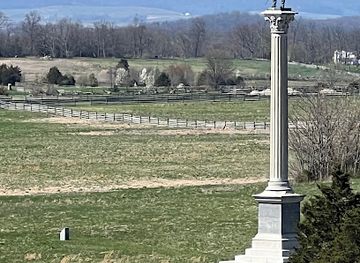
Gettysburg National Military Park is the central attraction, spreading across fields, ridges and roads where the July 1863 battle unfolded; its monuments and preserved terrain reward both guided interpretation and independent exploration. The Gettysburg National Military Park Museum and Visitor Center presents the conflict through artefacts, maps and the Gettysburg Cyclorama, a large nineteenth-century painting of Pickett’s Charge. In town, the Shriver House Museum examines civilian life during the battle, while the Jennie Wade House recalls the only Gettysburg civilian killed during the fighting. The David Wills House, where Lincoln stayed before delivering his address, connects the borough to the cemetery dedication. Historic streets around Lincoln Square and Baltimore Street contain former homes, churches, bookshops and restaurants, and the National Cemetery offers a quieter setting for reflection. For a different perspective, the Gettysburg Seminary Ridge Museum interprets the first day of the battle and the town’s religious and educational history.
-
Visitor center
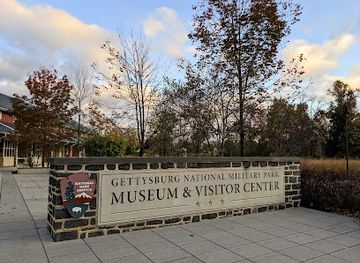
Gettysburg National Military Park Museum & Visitor Center
Immerse yourself in the rich history of the Civil War at the Gettysburg National Military Park Museum & Visitor Center, where the past comes to life.
7 min drive · 2.2 km from city centre
-
Visitor center
Gettysburg National Military Park Museum & Visitor Center
Discover the stories of bravery and sacrifice at Gettysburg National Military Park Museum & Visitor Center, a must-visit for history enthusiasts.
7 min drive · 2.2 km from city centre
-
Tourist attraction
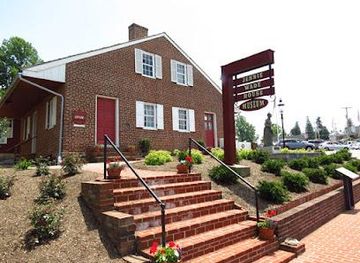
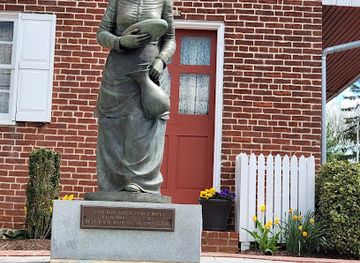
Jennie Wade House
Explore the Jennie Wade House in Gettysburg, a poignant museum and historical landmark showcasing the legacy of the Civil War's only civilian casualty.
10 min walk · 0.8 km from city centre
-
Tourist attraction
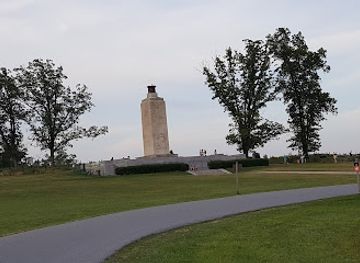
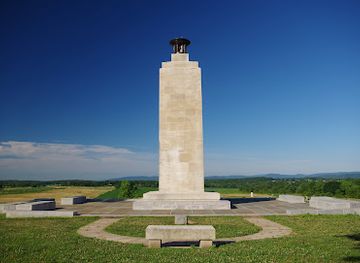
Eternal Light Peace Memorial
Explore the Eternal Light Peace Memorial in Gettysburg, a monument dedicated to peace and reflection amidst the historic battlefield scenery.
7 min drive · 2.2 km from city centre

Best landmarks in Gettysburg
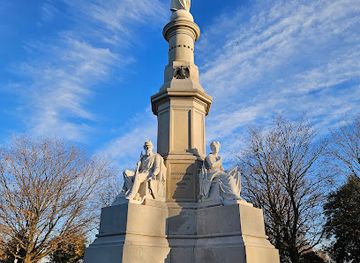
The Gettysburg National Cemetery is the town’s most resonant civic landmark, both as the burial place for Union soldiers and as the setting of Lincoln’s Gettysburg Address. Nearby, the Soldiers’ National Monument rises above the cemetery, while the Gettysburg National Military Park’s landscape is marked by hundreds of state, regimental and commemorative monuments. Cemetery Hill, Little Round Top, Culp’s Hill and Seminary Ridge are significant not only for their memorials but also for the strategic terrain they preserve. In the borough, the David Wills House represents the civic world that hosted Lincoln, and Christ Evangelical Lutheran Church is associated with the town’s wartime history and wartime hospital use. The historic courthouse area around Lincoln Square retains the scale of the nineteenth-century county seat, while the distinctive cupola of the former Adams County Courthouse remains an important feature of the townscape.
-
Visitor center
Gettysburg National Military Park Museum & Visitor Center
Discover the pivotal moments of American history at Gettysburg National Military Park Museum & Visitor Center, where the Civil War comes alive through engaging exhibits.
7 min drive · 2.2 km from city centre
-
Monument
Eternal Light Peace Memorial
Discover the Eternal Light Peace Memorial in Gettysburg, a historical monument symbolizing peace and remembrance of Civil War sacrifices in a tranquil setting.
7 min drive · 2.2 km from city centre
-
Historical place museum
Jennie Wade House
Discover the poignant history of the Jennie Wade House, Gettysburg, where the legacy of the Civil War comes to life in an engaging museum setting.
10 min walk · 0.8 km from city centre
-
Tour operator
Gettysburg Ghost Tours by Civil War Ghosts
Explore the haunted history of Gettysburg with the thrilling Ghost Tours by Civil War Ghosts, where history meets the supernatural.
9 min walk · 0.7 km from city centre
Explore Gettysburg on the map
Plan your Gettysburg trip on one map. See where the top attractions, landmarks, restaurants, bars and hotels are, find what's near where you're staying, and book hotels and experiences in a few clicks.
Best hotels in Gettysburg
Best restaurants in Gettysburg
Gettysburg’s dining scene reflects south-central Pennsylvania’s agricultural setting and its role as a historic visitor town. Menus often draw on Pennsylvania Dutch traditions, with familiar regional flavours including apple-based dishes, baked goods, hearty soups and seasonal produce, while local farms supply fruit and vegetables to cafés, inns and restaurants. The compact centre around Lincoln Square, Baltimore Street and Steinwehr Avenue offers casual diners, coffee shops, taverns and sit-down restaurants within walking distance of museums and historic houses. Farm stands and orchard businesses in Adams County are particularly associated with apples, cider and autumn harvests, and can add a rural dimension to eating outside the borough. Visitors will also find contemporary American cooking and internationally influenced menus alongside traditional fare. Dining is generally informal, but busy periods connected with battlefield events and summer travel can make the central streets considerably livelier than their small-town scale suggests.
-
American
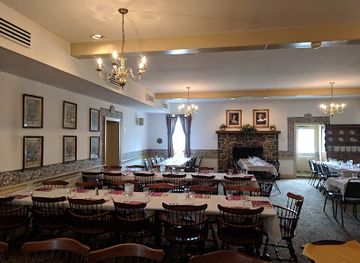
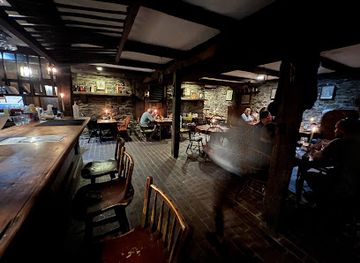
Dobbin House Tavern
Discover the historic Dobbin House Tavern in Gettysburg - where delicious American cuisine meets rich Civil War history.
11 min walk · 0.9 km from city centre
-
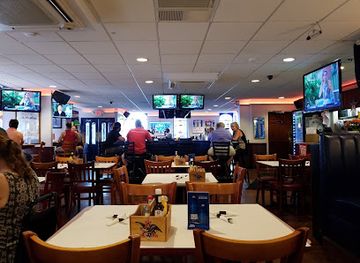
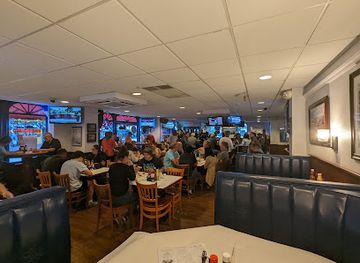
Grill
Blue & Gray Bar & Grill
Experience the best of American cuisine at Blue & Gray Bar & Grill in Gettysburg—where history meets flavor in a vibrant setting.
3 min walk · 0.3 km from city centre
-
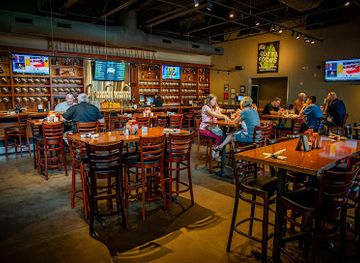
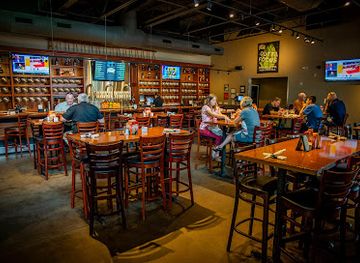
Brewpub
Appalachian Brewing Company of Gettysburg - Battlefield
Savor locally crafted beers and delicious American cuisine at Appalachian Brewing Company in historic Gettysburg.
14 min walk · 1.1 km from city centre
-
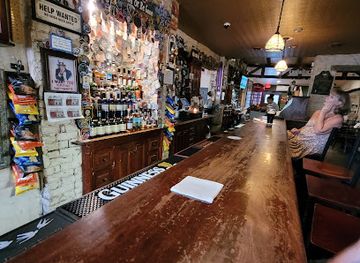
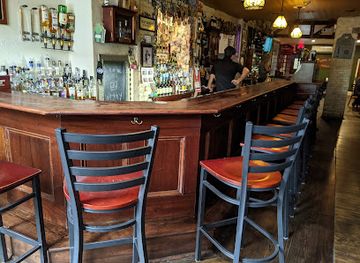
Irish pub
Garryowen Irish Pub
Discover the heart of Ireland in Gettysburg at Garryowen Irish Pub - where great food meets vibrant live music in an inviting atmosphere.
1 min walk · 0.1 km from city centre
Best bars in Gettysburg
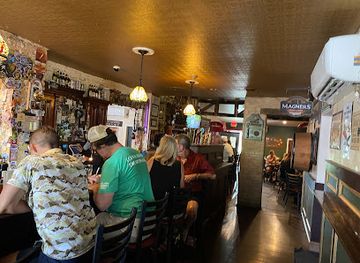
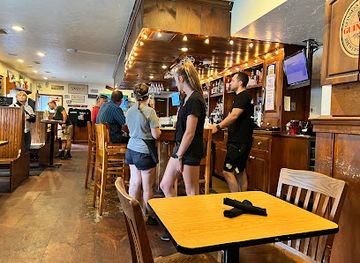
Gettysburg’s evening scene is modest and shaped more by historic tourism than by late-night clubbing. Traditional pubs, taverns, breweries and casual bars around the town centre provide places for a relaxed drink, while some venues incorporate Civil War-era buildings or local history into their atmosphere. The Majestic Theater presents films, concerts and other performances in a restored historic cinema, giving the borough a cultural alternative to bar-based nightlife. Ghost walks and evening history tours use Gettysburg’s battle and hospital stories to explore the town after dark, although their availability varies by season. Restaurants and bars around Lincoln Square, Baltimore Street and Steinwehr Avenue are generally the most convenient areas for an evening out. The atmosphere becomes quieter away from the centre, and visitors should not expect the extensive nightclub districts found in larger American cities.
-
American
Dobbin House Tavern
Discover the flavors of history at Dobbin House Tavern, a historic gem in Gettysburg, offering American cuisine and a unique atmosphere.
11 min walk · 0.9 km from city centre
-
Grill
Blue & Gray Bar & Grill
Discover the flavors of Gettysburg at Blue & Gray Bar & Grill, where American comfort food meets a welcoming atmosphere.
3 min walk · 0.3 km from city centre
-
Brewpub
Appalachian Brewing Company of Gettysburg - Battlefield
Discover the essence of Gettysburg at Appalachian Brewing Company, where handcrafted beers and American cuisine meet historical charm.
14 min walk · 1.1 km from city centre
-
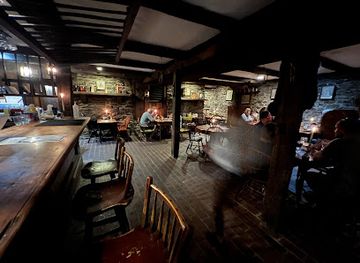
Irish pub
Garryowen Irish Pub
Discover the essence of Irish culture at Garryowen Irish Pub in Gettysburg, where authentic cuisine, live music, and friendly faces await you.
1 min walk · 0.1 km from city centre
Best nightclubs in Gettysburg
Gettysburg’s evening scene is modest and shaped more by historic tourism than by late-night clubbing. Traditional pubs, taverns, breweries and casual bars around the town centre provide places for a relaxed drink, while some venues incorporate Civil War-era buildings or local history into their atmosphere. The Majestic Theater presents films, concerts and other performances in a restored historic cinema, giving the borough a cultural alternative to bar-based nightlife. Ghost walks and evening history tours use Gettysburg’s battle and hospital stories to explore the town after dark, although their availability varies by season. Restaurants and bars around Lincoln Square, Baltimore Street and Steinwehr Avenue are generally the most convenient areas for an evening out. The atmosphere becomes quieter away from the centre, and visitors should not expect the extensive nightclub districts found in larger American cities.
-
American
Dobbin House Tavern
Discover the historic Dobbin House Tavern in Gettysburg, where American cuisine meets rich heritage in a cozy tavern atmosphere.
11 min walk · 0.9 km from city centre
-
Grill
Blue & Gray Bar & Grill
Experience the essence of American dining at Blue & Gray Bar & Grill in Gettysburg, offering hearty meals and a vibrant atmosphere.
3 min walk · 0.3 km from city centre
-
Irish pub
Garryowen Irish Pub
Garryowen Irish Pub: A Taste of Authentic Irish Culture and Cuisine in Gettysburg, PA, Featuring Live Music and a Cozy Atmosphere.
1 min walk · 0.1 km from city centre
-
Pub
O'Rorke's Family Eatery
Discover the perfect blend of American and Irish flavors at O'Rorke's Family Eatery in Gettysburg, PA, where great food meets lively entertainment.
10 min walk · 0.8 km from city centre

Best shops in Gettysburg
Shopping in Gettysburg is concentrated around Lincoln Square, Baltimore Street, Steinwehr Avenue and adjoining historic streets, where independent retailers occupy converted nineteenth-century buildings. Civil War books, maps, prints, replica items and historical gifts are prominent, reflecting the town’s museum and battlefield economy, while galleries and craft shops offer artwork connected with Pennsylvania landscapes and local heritage. Visitors can also find regional foods such as preserves, sweets, apple products and other farm-made goods, particularly in businesses serving the surrounding Adams County orchard country. Antique shops, specialist bookshops and small boutiques provide a more varied experience than souvenir shopping alone. The retail character is primarily independent and visitor-focused rather than dominated by large shopping centres. Seasonal produce stands and farm markets outside the borough offer a useful contrast, linking purchases to the agricultural landscape that surrounds Gettysburg.
-
Candy store
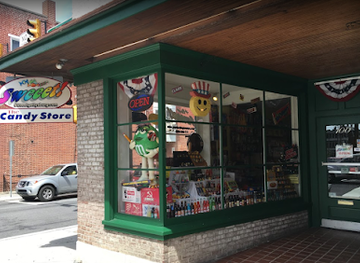
Sweeet! THE Candy Store in Gettysburg, PA!
Discover a nostalgic candy paradise at Sweeet! THE Candy Store in Gettysburg, where classic treats and artisanal sweets await.
3 min walk · 0.3 km from city centre
-
Metaphysical supply store
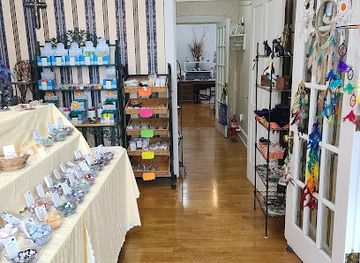
The Crystal Wand
Explore The Crystal Wand in Gettysburg, a premier metaphysical supply store offering crystals, tarot, and holistic wellness tools for every spiritual journey.
9 min walk · 0.7 km from city centre
-
Game store
Nerd Herd Gifts and Games
Discover a treasure trove of games and collectibles at Nerd Herd Gifts and Games in Gettysburg, where gaming culture comes alive!
4 min walk · 0.3 km from city centre
-
Antique store
The Horse Soldier
Discover authentic Civil War memorabilia and military artifacts at The Horse Soldier, a must-visit antique store in Gettysburg, Pennsylvania.
13 min walk · 1.0 km from city centre
Get your free copy of our complete guide to Gettysburg, delivered straight to you.
Everything on this page, from attractions and restaurants to essentials and local phrases, in one PDF you can read offline, print or share.
Already have an account? Sign in
Your Gettysburg guide is ready.
We'll send it to · Not you? Sign out

Getting your guide ready…
We are putting together a fresh copy of the Gettysburg guide. This can take up to a minute.
This can take a few moments. If your browser asks, choose Allow so the download can start. You'll find the guide in your Downloads folder.
Nothing happened? Download it again
Sorry, the guide is taking longer than usual. Please try again in a minute, or get it by email instead.
Gettysburg essentials
Currency and Payment
Safety
Emergency Situations
Do's and Don'ts
Local Tips
From Eve
Local phrases worth knowing
You don't need to get them perfect. A few words go a long way, and locals appreciate the effort.
Basics
| English | Local | Say it |
|---|---|---|
| Hello | Howdy | [haw-dee] |
| Goodbye | See ya | [see yah] |
| Yes | Yep | [yep] |
| No | Nah | [nah] |
| Please/You're welcome | Please/No problem | [pleez / no prob-lem] |
| Thank you | Thanks | [thanks] |
| Excuse me/Sorry | Excuse me/My bad | [ex-kyooz me / my bad] |
| How are you? | How ya doin'? | [how yuh doin] |
| Fine. And you? | Good. You? | [good. yuh?] |
| Do you speak English? | Ya speak English? | [yah speak ing-glish] |
| I don't understand | I ain't gettin' it | [eye ent get-tin it] |
Eating & Drinking
| English | Local | Say it |
|---|---|---|
| I'd like to see the menu, please | Can I check out the menu? | [can eye chek out the menu?] |
| I don't eat meat | I don't do meat | [eye doant do meat] |
| Cheers! | Cheers! | [cheers] |
| I would like to pay, please | I'll settle up now, thanks | [eye-ul set-tul up now, thanks] |
Emergencies
| English | Local | Say it |
|---|---|---|
| Help! | Help! | [help] |
| Go away! | Get lost! | [get lost] |
| Call the Police! | Call the cops! | [call the cops] |
| Call a doctor! | Get me a doc! | [get me a doc] |
| I'm lost | I'm turned around | [eye-em turned a-round] |
| I'm ill | I'm feelin' under the weather | [eye-em feel-in under the weath-er] |
Shopping
| English | Local | Say it |
|---|---|---|
| I'd like to buy... | I'm lookin' to buy... | [eye-em look-in to buy] |
| I'm just looking | Just browsin' | [just brow-zin] |
| How much is it? | What's the damage? | [whats the dam-ij] |
| That's too expensive | That's a bit steep | [thats a bit steep] |
| Can you lower the price? | Can ya do it cheaper? | [can yuh do it chee-per] |
Time & Numbers
| English | Local | Say it |
|---|---|---|
| What time is it? | What's the time? | [whats the time] |
| It's one o'clock | It's one | [its one] |
| Half past (10) | Ten thirty | [ten thur-tee] |
| Morning | Mornin' | [morn-in] |
| Afternoon | Afternoon | [after-noon] |
| Evening | Evening | [even-ing] |
| Yesterday | Yest'day | [yest-day] |
| Today | Today | [to-day] |
| Tomorrow | Tomorrow | [to-mor-row] |
| 1 | One | [wun] |
| 2 | Two | [too] |
| 3 | Three | [three] |
| 4 | Four | [four] |
| 5 | Five | [five] |
| 6 | Six | [six] |
| 7 | Seven | [seven] |
| 8 | Eight | [ate] |
| 9 | Nine | [n-eye-n] |
| 10 | Ten | [ten] |
Transport & Directions
| English | Local | Say it |
|---|---|---|
| Where's a/the...? | Where's the...? | [wheres the] |
| What's the address? | What's the addy? | [whats the add-ee] |
| Can you show me (on the map)? | Can ya show me (on the map)? | [can yuh show me (on the map)] |
| When's the next (bus)? | When's the next (bus)? | [whens the next bus] |
| A ticket (to ....) | A ticket (to ....) | [a ticket (to)] |
History of Gettysburg
The Gettys and a New Pennsylvania Town
Gettysburg developed from a settlement associated with Samuel Gettys, who established a tavern and community in the late eighteenth century. The town was laid out in 1786 and became the county seat of Adams County when the county was created in 1800. Its position between Baltimore, Maryland, and the Susquehanna River supported trade, farming and coach travel, while the surrounding limestone country produced a prosperous agricultural economy. Before the Civil War, Gettysburg was a county town of courts, churches, businesses and homes rather than a major military centre. That pre-war community would later become essential to understanding the battle, since civilians experienced the fighting in their streets, fields and buildings and faced the difficult work of caring for the wounded and restoring everyday life.
A Divided Nation Reaches Gettysburg
Pennsylvania’s location on the Union side of the Mason-Dixon Line placed Gettysburg close to the borderland between the United States and the Confederate states. The town’s residents lived through the political crisis that followed the election of Abraham Lincoln, secession and the outbreak of the Civil War in 1861. Adams County contributed soldiers to Union regiments, while local farms and businesses supported the wider war effort. Gettysburg was not selected as a battlefield in advance; the armies converged there during the Confederate Army of Northern Virginia’s 1863 invasion of Pennsylvania. Roads, ridges and the search for supplies drew both forces towards the town, turning an agricultural landscape and county seat into the setting for the largest battle ever fought in North America.
The Battle of Gettysburg
The Battle of Gettysburg began on 1 July 1863 when Confederate and Union forces met west and north of the town. Union troops withdrew through Gettysburg and established strong defensive positions on Cemetery Hill, Cemetery Ridge and Culp’s Hill. On 2 July, fighting spread across the southern and eastern sectors, including Little Round Top, the Wheatfield and the Peach Orchard. On 3 July, Confederate attacks culminated in Pickett’s Charge against the Union centre, where they were repulsed. The battle produced enormous casualties and ended the Confederate invasion of Pennsylvania, although the war continued for nearly two more years. The preserved ridges, fields and roads around Gettysburg allow the military decisions of those three days to be related directly to the terrain.
The Gettysburg Address and National Memory
More than four months after the battle, Gettysburg National Cemetery was dedicated on 19 November 1863. Abraham Lincoln’s Gettysburg Address, delivered during the ceremony, connected the local battlefield to the broader principles of union and democratic government. The speech helped shape the way the war and the nation’s founding ideals were remembered, even though it lasted only a few minutes. The cemetery became a place of national commemoration, while the battlefield itself remained part of the community’s daily surroundings. Buildings in town were used as hospitals, and civilian accounts recorded the physical and emotional consequences of the fighting. Gettysburg therefore became both a historic event and a powerful site of public remembrance.
Preserving a Battlefield
Efforts to preserve Gettysburg’s landscape began soon after the battle, led by veterans, local residents and supporters of national commemoration. Gettysburg National Military Park was established in 1895, and the federal government gradually acquired land and monuments were erected by states, regiments and veterans’ organisations. Roads, observation towers and memorials shaped early public interpretation, while later conservation work sought to restore important views and historic terrain. The battlefield’s preservation also affected the town, whose economy increasingly served visitors, veterans and educational groups. Historic structures, cemeteries and monuments together created a landscape in which military memory, architecture and tourism became closely linked.
Gettysburg in the Modern Era
During the twentieth and twenty-first centuries, Gettysburg’s historical identity expanded beyond battlefield tourism. Museums, research institutions, interpretive programmes and preservation organisations developed more detailed accounts of soldiers, civilians, African Americans, women and the battle’s aftermath. The Gettysburg National Military Park Museum and Visitor Center, opened in 2008, brought the park’s collections and interpretation together in a modern facility south of the town. Today, the borough remains a working community within a nationally significant historic landscape. Its museums, commemorations and educational programmes continue to examine the Civil War while also addressing the continuing significance of emancipation, citizenship, memory and reconciliation in American history.
Gettysburg in Photos
Browse through our photo collection highlighting the charm and character of the destination.
Cities near Gettysburg
The closest cities to Gettysburg, if you have time for more than one stop.
-
-

-

-

-


Swipe for more cities
Explore more

Explore more of Pennsylvania
Discover Pennsylvania: A blend of rich history, breathtaking nature, and vibrant culture awaits you in the Keystone State.
Explore Pennsylvania