

Whiteface Mountain Travel Guide - Free Web & App
Your ultimate guide to Whiteface Mountain. Discover top landmarks, proposed trips, and local tips. Free on the web or via the Evendo companion app.


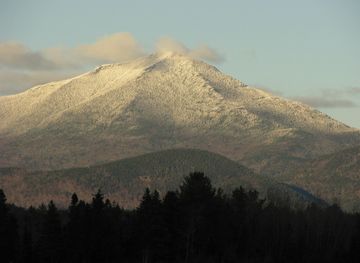
Explore Whiteface Mountain in New York – a year-round destination offering world-class skiing, breathtaking hikes, and a rich Olympic history in the stunning Adirondacks.
Read more about Whiteface Mountain
When is the best time to visit Whiteface Mountain?
Best: June–August · 20–23°C| Month | High (°C) | Rainfall (mm) |
|---|---|---|
| January | -4 | 64 |
| February | -2 | 59 |
| March | 3 | 76 |
| April | 9 | 85 |
| May | 15 | 94 |
| June (best) | 20 | 99 |
| July (best) | 23 | 99 |
| August (best) | 22 | 97 |
| September | 18 | 91 |
| October | 12 | 86 |
| November | 7 | 81 |
| December | 0 | 77 |
Getting to and around Whiteface Mountain
How to get there
Transportation
Best attractions in Whiteface Mountain
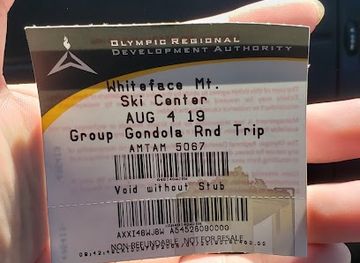
Whiteface Mountain offers visitors a breathtaking experience with its stunning panoramic views of the Adirondack High Peaks, Lake Placid, and Vermont. Visitors can take a scenic gondola ride to the summit, hike the numerous trails, or even ski down the Olympic slopes. The mountain also boasts an informative nature center, where visitors can learn about the unique flora and fauna of the region. For a truly unforgettable experience, visitors can take part in the Cloudsplitter Gondola Ride, which takes them to the top of Little Whiteface for even more spectacular views.
-
Tourist attraction
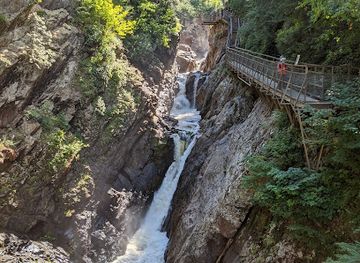
High Falls Gorge
Explore High Falls Gorge: A Stunning Natural Attraction in Wilmington, NY, with Breathtaking Waterfalls, Scenic Trails, and Wildlife Encounters.
-
Tourist attraction
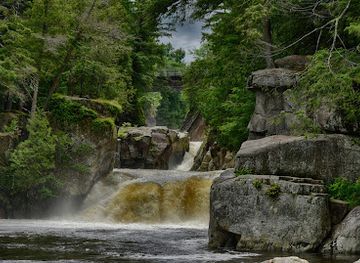
Flume Falls
Explore the breathtaking beauty of Flume Falls in Wilmington, NY, a must-visit natural attraction nestled in the scenic Adirondacks.
-
Tourist attraction
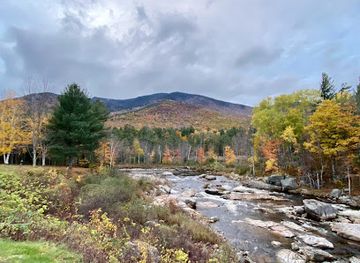
The Flume Trail System
Explore The Flume Trail System: A Hiking Paradise in Wilmington, NY, Offering Scenic Trails and Breathtaking Natural Beauty.
-
Hiking area
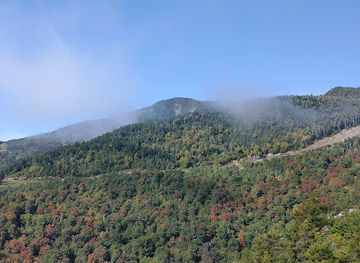
Bear Den Mountain Trailhead
Discover the stunning Bear Den Mountain Trailhead, a hiker's paradise in Wilmington, NY, offering breathtaking views and trails for all skill levels.
Explore Whiteface Mountain on the map
Plan your trip on one map. See where the top attractions, landmarks, restaurants and hotels are, and book hotels and experiences in a few clicks.
Best hotels in Whiteface Mountain
Best restaurants in Whiteface Mountain
The dining scene at Whiteface Mountain offers a delightful mix of cozy cafes, charming bistros, and elegant restaurants, all with stunning views of the surrounding peaks. Visitors can indulge in hearty mountain fare such as locally sourced venison and trout, as well as international cuisine like Italian pasta and French pastries. Whether you're craving a quick bite after hitting the slopes or a leisurely meal to savor the alpine ambiance, Whiteface Mountain has something to satisfy every palate.
-
Barbecue
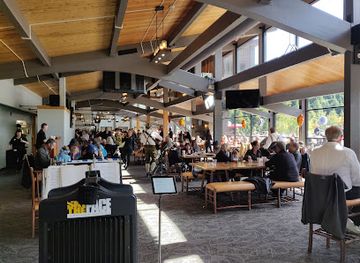
Cloudspin Lounge
Savor mouthwatering barbecue at Cloudspin Lounge in Wilmington - where flavor meets comfort amidst stunning Adirondack scenery.
Best bars in Whiteface Mountain
The nightlife scene of Whiteface Mountain offers a cozy and intimate experience for visitors, with a variety of charming bars and taverns scattered throughout the area. From rustic mountain lodges serving up local craft beers to lively pubs featuring live music and dancing, there is something for everyone to enjoy after a day of outdoor adventures. Whether you're looking to unwind with a cocktail by a crackling fire or mingle with locals and fellow travelers, Whiteface Mountain's nightlife scene provides a welcoming and laid-back atmosphere that will make your evenings just as memorable as your days on the slopes.
-
Pub
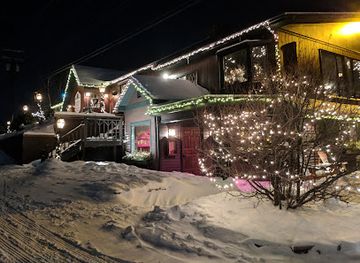
R.F McDougalls Pub
Discover the charm of R.F. McDougalls Pub, a perfect blend of local flavors and cozy ambiance in Wilmington, New York.
-
Barbecue
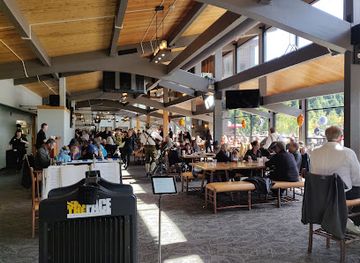
Cloudspin Lounge
Discover the savory delights of Cloudspin Lounge in Wilmington, NY, where barbecue meets a vibrant sports bar atmosphere.
Best shops in Whiteface Mountain
Whiteface Mountain offers a unique shopping experience for visitors, with a variety of charming boutiques, outdoor gear shops, and souvenir stores scattered throughout the area. From local artisan crafts to outdoor adventure gear, visitors can find everything they need to remember their trip to this beautiful mountain region. Whether you're looking for a cozy sweater to keep warm during your outdoor adventures or a one-of-a-kind souvenir to take home, Whiteface Mountain has something for everyone to enjoy.
-
Ski shop
Whiteface Mountain Ski Shop
Explore the ultimate ski shop in Wilmington, NY, for top-notch gear and expert advice for an unforgettable winter experience.
-
 Bakery
Waffle Cabin
Experience the sweet charm of Waffle Cabin in Whiteface, NY, where delicious waffles and a cozy atmosphere create unforgettable memories.
Get your free copy of our complete guide to Whiteface Mountain, delivered straight to you.
Everything on this page, from attractions and restaurants to essentials and local phrases, in one PDF you can read offline, print or share.
Already have an account? Sign in
Your Whiteface Mountain guide is ready.
We'll send it to · Not you? Sign out

Getting your guide ready…
We are putting together a fresh copy of the Whiteface Mountain guide. This can take up to a minute.
This can take a few moments. If your browser asks, choose Allow so the download can start. You'll find the guide in your Downloads folder.
Nothing happened? Download it again
Sorry, the guide is taking longer than usual. Please try again in a minute, or get it by email instead.
Whiteface Mountain essentials
Currency and Payment
Safety
Emergency Situations
Do's and Don'ts
Local Tips
From Eve
Local phrases worth knowing
You don't need to get them perfect. A few words go a long way, and locals appreciate the effort.
Basics
| English | Local | Say it |
|---|---|---|
| Hello | Howdy | [haw-dee] |
| Goodbye | See ya later | [see ya lay-tur] |
| Yes | Yup | [yuhp] |
| No | Nah | [nah] |
| Please/You're welcome | Please | [pleez] |
| Thank you | Thanks | [thaynks] |
| Excuse me/Sorry | Pardon me | [par-dun me] |
| How are you? | How you doin'? | [haw yuh doin'] |
| Fine. And you? | I'm good. How 'bout you? | [ahm good. how 'bout yuh] |
| Do you speak English? | Ya speak English? | [yuh speak ing-glish?] |
| I don't understand | I don't get it | [ah don't get it] |
Eating & Drinking
| English | Local | Say it |
|---|---|---|
| I'd like to see the menu, please | Can I see the menu? | [can ah see the menu?] |
| I don't eat meat | I don't eat meat | [ah don't eat meet] |
| Cheers! | Cheers! | [cheers] |
| I would like to pay, please | I'll pay now | [ahll pay now] |
Emergencies
| English | Local | Say it |
|---|---|---|
| Help! | Help! | [help] |
| Go away! | Git away! | [git away!] |
| Call the Police! | Call the cops! | [call the cops!] |
| Call a doctor! | Call a doc! | [call a doc!] |
| I'm lost | I'm lost | [ahm lost] |
| I'm ill | I'm sick | [ahm sik] |
Shopping
| English | Local | Say it |
|---|---|---|
| I'd like to buy... | I wanna buy... | [ah wanna buy...] |
| I'm just looking | Jus' lookin' | [jus' look-in'] |
| How much is it? | How much? | [how much?] |
| That's too expensive | That's pricey | [that's prahy-see] |
| Can you lower the price? | Can ya lower it? | [can yuh lower it?] |
Time & Numbers
| English | Local | Say it |
|---|---|---|
| What time is it? | What's the time? | [whats the time?] |
| It's one o'clock | It's one | [its one] |
| Half past (10) | Half past ten | [half past ten] |
| Morning | Mornin' | [morn-in'] |
| Afternoon | Afternoon | [afternoon] |
| Evening | Evenin' | [even-in'] |
| Yesterday | Yesterday | [yester-day] |
| Today | Today | [to-day] |
| Tomorrow | Tomorrow | [to-mor-row] |
| 1 | One | [wun] |
| 2 | Two | [too] |
| 3 | Three | [three] |
| 4 | Four | [four] |
| 5 | Five | [five] |
| 6 | Six | [six] |
| 7 | Seven | [sev-en] |
| 8 | Eight | [ate] |
| 9 | Nine | [nine] |
| 10 | Ten | [ten] |
Transport & Directions
| English | Local | Say it |
|---|---|---|
| Where's a/the...? | Where's the...? | [wheres the...?] |
| What's the address? | What's the address? | [whats the address?] |
| Can you show me (on the map)? | Can ya show me (on the map)? | [can yuh show me (on the map)?] |
| When's the next (bus)? | When's the next (bus)? | [whens the next (bus)?] |
| A ticket (to ....) | A ticket to ... | [a ticket to ...] |
History of Whiteface Mountain
Early Indigenous Inhabitants
Before European settlers arrived, the region surrounding Whiteface Mountain was home to various Indigenous tribes, including the Mohawk and the Algonquin. These tribes utilized the abundant natural resources of the Adirondack Mountains for hunting, fishing, and gathering. The mountain held spiritual significance for these communities, and its rugged landscape shaped their way of life.
Exploration and Naming
Whiteface Mountain got its name from early European explorers and settlers who noted its distinct white rock face, which is often visible even from a distance. The first recorded ascent of Whiteface Mountain was in 1836 by a group led by Professor Ebenezer Emmons, a geologist who was conducting surveys in the Adirondack region.
Development of the Whiteface Memorial Highway
In the early 20th century, the idea of constructing a road to the summit of Whiteface Mountain was proposed to boost tourism and make the peak more accessible. The Whiteface Mountain Veterans Memorial Highway was completed in 1935, an engineering marvel of its time, stretching 5 miles from the base to the summit. It was dedicated to the veterans of World War I, with President Franklin D. Roosevelt attending the opening ceremony.
Winter Olympics Venue
Whiteface Mountain played a significant role in the 1932 and 1980 Winter Olympics, hosted by nearby Lake Placid. The mountain's challenging slopes and natural beauty made it an ideal location for alpine skiing events. The 1980 Winter Olympics are particularly memorable for the 'Miracle on Ice' hockey game, but Whiteface's ski slopes also witnessed many thrilling competitions and triumphs.
Environmental Conservation Efforts
Throughout the 20th century, Whiteface Mountain and the surrounding Adirondack Park became focal points for conservation efforts. Activists and environmentalists worked to preserve the natural beauty and ecological integrity of the area, leading to the establishment of protective regulations and the promotion of sustainable tourism practices. Today, Whiteface Mountain is part of the largest protected area in the contiguous United States, balancing recreational use with environmental stewardship.
Modern-Day Recreation and Tourism
Whiteface Mountain is now a year-round destination for outdoor enthusiasts. In the winter, it offers some of the best skiing and snowboarding in the eastern United States, while in summer, visitors can enjoy hiking, mountain biking, and breathtaking views from the summit. The area also hosts various cultural events and festivals, celebrating the rich history and vibrant community spirit that have defined Whiteface Mountain for generations.
Whiteface Mountain in Photos
Browse through our photo collection highlighting the charm and character of the destination.
Neighbouring destination travel guides
The closest destinations to Whiteface Mountain, if you have time for more than one.
-

-

-

-

-


Swipe for more destinations
Explore more
Explore more of Adirondack Mountains
Explore the Adirondack Mountains of New York for High Peaks hiking, Olympic history, forest lakes, paddling, wildlife and Great Camp heritage.
Explore Adirondack Mountains
Explore more of New York
Discover the electrifying energy, iconic landmarks, and diverse cultural experiences of New York City, the ultimate urban playground for travelers from around the world.
Explore New York