

Lysefjord Travel Guide - Free Web & App
Your ultimate guide to Lysefjord. Discover top landmarks, proposed trips, and local tips. Free on the web or via the Evendo companion app.


Lysefjord, Norway’s dramatic fjord, offers Preikestolen, Kjerag, Flørli’s 4,444 steps, scenic cruises, hiking and mountain villages in western Norway.
A Fjord Shaped by Ice and Stone
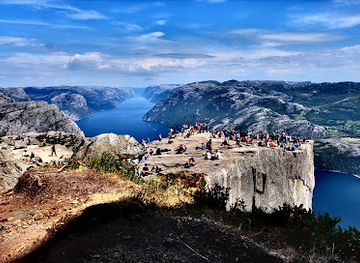
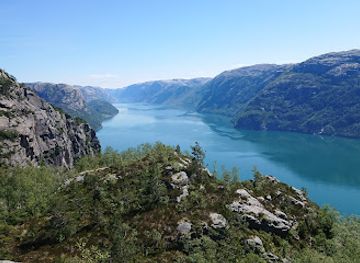
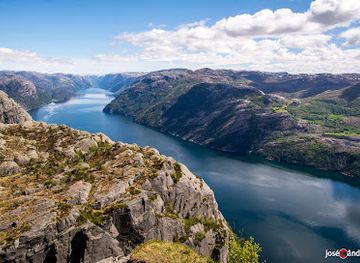
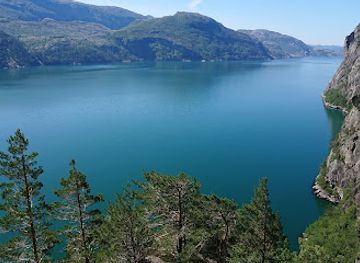
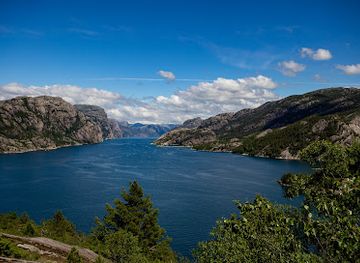
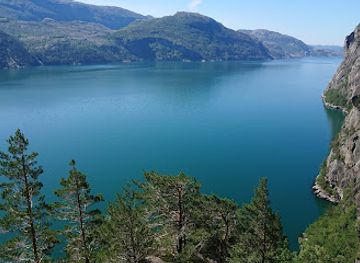
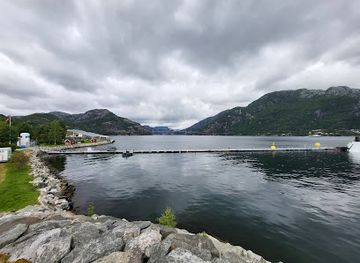
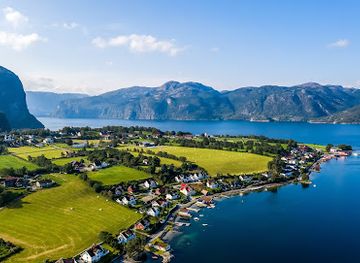
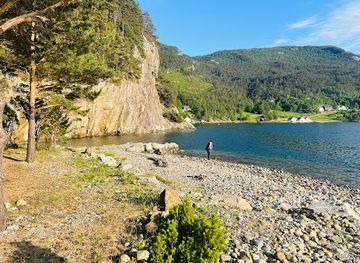
Lysefjord cuts for roughly 42 kilometres through the mountainous landscape of Rogaland in south-western Norway, east of Stavanger. Its dark, steep-sided waters are enclosed by near-vertical cliffs, high plateaux and narrow valleys shaped by glacial erosion. In places, the fjord reaches depths of more than 400 metres, while the surrounding peaks rise sharply from the water. The result is a landscape best understood from several perspectives: on a boat below the cliffs, on foot above them and from the small settlements that occupy the fjord’s scattered shores.Read more about Lysefjord
Iconic Viewpoints and Mountain Settlements
Exploring the Lysefjord
When is the best time to visit Lysefjord?
Best: June–August · 21–22°C| Month | High (°C) | Rainfall (mm) |
|---|---|---|
| January | 4 | 150 |
| February | 4 | 130 |
| March | 8 | 110 |
| April | 13 | 100 |
| May | 19 | 90 |
| June (best) | 22 | 80 |
| July (best) | 22 | 80 |
| August (best) | 21 | 90 |
| September | 16 | 100 |
| October | 11 | 110 |
| November | 7 | 120 |
| December | 5 | 140 |
Getting to and around Lysefjord
How to get there
Transportation
Best attractions in Lysefjord
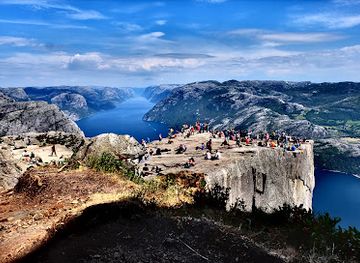
Lysefjord’s principal attractions are distributed between the water, the mountain plateaux and a handful of small settlements. Preikestolen is the signature excursion, reached by a demanding footpath to a broad cliff-top platform above the western fjord. Near the inner end, Kjerag offers a strenuous high-mountain walk, extensive views and the famous Kjeragbolten boulder, while Lysebotn provides access to the fjord’s eastern landscape and its dramatic switchback road. Flørli combines a historic hydroelectric setting with the long stairway of 4,444 steps, one of the area’s most distinctive walking challenges. Boat cruises reveal waterfalls, sheer cliffs and isolated shoreline farms that are difficult to appreciate from land. Forsand serves as a western gateway, with nearby cultural and archaeological attractions forming part of the wider approach rather than the central fjord itself.
-
Tourist attraction
Preikestolen
Explore Preikestolen, Norway's iconic Pulpit Rock, offering breathtaking views and an unforgettable hiking experience in the heart of nature.
-
Tourist attraction
Hengjanefossen waterfall
Experience the breathtaking Hengjanefossen Waterfall in Forsand, Norway, a scenic marvel that showcases the beauty of nature at its finest.
-
Tourist attraction
Preikestolen nødbu
Explore Preikestolen, an iconic cliff offering breathtaking views of Lysefjord, perfect for hiking and experiencing Norway's natural beauty.
-
Tourist attraction
Hengjanenibbå
Discover the enchanting beauty of Hengjanenibba in Songesand, Norway, where nature meets tranquility in a stunning tourist attraction.
Best landmarks in Lysefjord
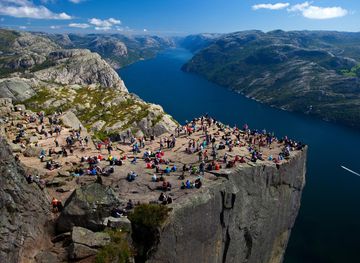
Preikestolen is Lysefjord’s defining natural landmark, a near-horizontal rock platform about 604 metres above the water and one of Norway’s most recognisable viewpoints. Kjerag forms another major landmark at the head of the fjord, rising to around 1,084 metres and known for the Kjeragbolten boulder suspended in a mountain cleft. The fjord itself, with its dark water, near-vertical walls and hanging valleys, is the central geological feature. At Flørli, the 4,444-step stairway and hydroelectric installations form an important industrial landmark, while Lysebotn is associated with the winding road descending through a series of dramatic hairpin bends. Isolated farms and small shore settlements add a human scale to the otherwise monumental landscape.
-
Tourist attraction
Preikestolen
Discover Preikestolen, Norway's breathtaking cliff offering stunning views of the Lysefjord and an unforgettable hiking adventure in nature's embrace.
-
Scenic spot
Høllesli viewpoint
Discover the stunning beauty of Høllesli Viewpoint in Norway, where breathtaking landscapes and serene fjord views await every visitor.
-
Scenic spot
Hengjanefossen waterfall
Discover the breathtaking Hengjanefossen Waterfall in Forsand, Norway—an enchanting destination for nature lovers and adventure seekers alike.
-
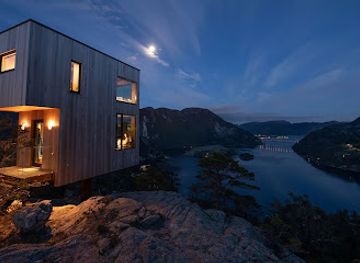
Lodging
The Bolder Skylodge
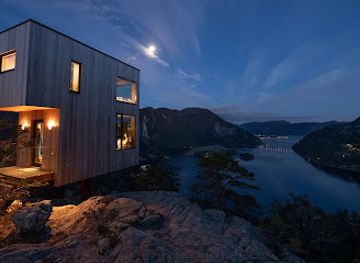
Discover the breathtaking beauty of Norway at The Bolder Skylodge, where luxury meets nature in the stunning landscapes of Forsand.
Explore Lysefjord on the map
Plan your trip on one map. See where the top attractions, landmarks, restaurants and hotels are, and book hotels and experiences in a few clicks.
Best hotels in Lysefjord
Best restaurants in Lysefjord
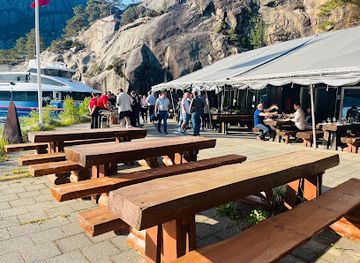
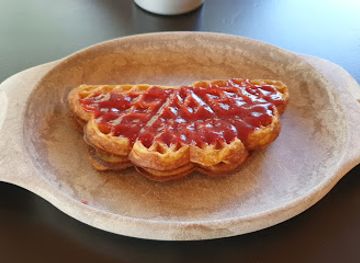
Dining around Lysefjord is shaped by its scattered settlements and seasonal visitor economy rather than by a large restaurant scene. Stavanger offers the widest choice, from everyday cafés and bakeries to restaurants drawing on western Norwegian ingredients such as seafood, lamb, dairy produce and locally grown fruit and vegetables. Closer to the fjord, visitors are more likely to find meals through accommodation providers, cafés, small village establishments or seasonal food services in places such as Forsand, Flørli and Lysebotn. Menus and opening arrangements can be limited outside the main travel period, so self-catering supplies may be useful for longer stays or remote hikes. Regional specialities can include fish and shellfish, brown cheese, cured meats and simple home-style dishes associated with rural Norway, although availability varies by settlement and season.
-
Restaurant
Lysefjordsenteret AS
Experience exquisite Norwegian cuisine at Lysefjordsenteret with stunning views of Lysefjord – a true culinary adventure in Norway.
-
Restaurant
Gøysa Gard - Lysefjord
Discover culinary delights and breathtaking views at Gøysa Gard, your gateway to experiencing the stunning Lysefjord region.
-
Barbecue
fjord restaurant Lysefjord-Helleren
Experience the essence of Norwegian cuisine at Fjord Restaurant Lysefjord-Helleren while enjoying breathtaking views of the majestic Lysefjord.
-
Restaurant
Matsalen
Experience authentic Norwegian cuisine with breathtaking views at Matsalen in Jørpeland - a must-visit dining destination.
Best bars in Lysefjord
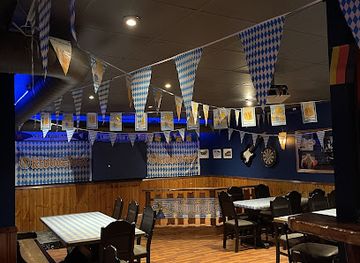
Lysefjord does not have a conventional nightlife district or concentration of nightclubs. Evening activity is generally quiet and centred on pubs, dining rooms and social spaces connected with accommodation in settlements such as Flørli, Lysebotn and Forsand, where the atmosphere depends heavily on the season and local visitor numbers. Stavanger, outside the fjord itself, provides the region’s broadest choice of bars, music venues and late-evening entertainment. In the fjord communities, evenings are more naturally spent watching the light change over the cliffs, talking with fellow travellers or attending an occasional local or seasonal event when one is taking place. Visitors should not assume that rural venues operate late or that every settlement has a pub open each night.
-
Pub
Radlaren Pub
Discover the vibrant atmosphere of Radlaren Pub in Jørpeland, where great drinks, delicious food, and live entertainment await every visitor.
-
Barbecue
fjord restaurant Lysefjord-Helleren
Experience the fusion of breathtaking fjord views and authentic barbecue flavors at Fjord Restaurant Lysefjord-Helleren, a true Norwegian culinary delight.
-
Bar
Preikestolen Café
Experience the perfect blend of nature and taste at Preikestolen Café, your ideal retreat near Norway's breathtaking Pulpit Rock.
Best shops in Lysefjord
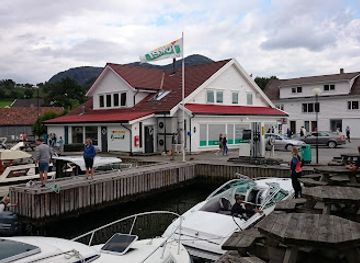
Shopping within the Lysefjord area is modest and concentrated in gateway settlements rather than organised retail districts. Stavanger provides the greatest choice of food shops, outdoor equipment, galleries, crafts and Norwegian design, while smaller provisions and practical supplies may be available around Forsand and other mainland communities. Flørli and Lysebotn may offer limited seasonal purchases connected with accommodation, cafés or local visitor services, but they should not be treated as dependable shopping centres. Regional products worth looking for include woollen goods, locally produced foods, preserves, brown cheese, smoked or cured specialities and small-scale arts and crafts. Visitors planning a remote walk or an overnight stay should obtain essential food, fuel and equipment before leaving larger towns, particularly outside the main season.
-
Grocery store
Joker Lysefjorden
Experience local flavors and essentials at Joker Lysefjorden, your go-to grocery store in the heart of Norway's breathtaking fjord region.
-
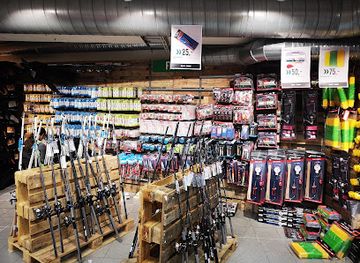
Sporting goods store
Sport Outlet Jørpeland
Explore Sport Outlet Jørpeland for top-notch sporting goods and friendly service, perfect for your outdoor adventures in Norway.
-
Lodging
The Bolder Skylodge
Discover unparalleled luxury and breathtaking views at The Bolder Skylodge, your serene retreat in the heart of Norway's stunning landscapes.
-
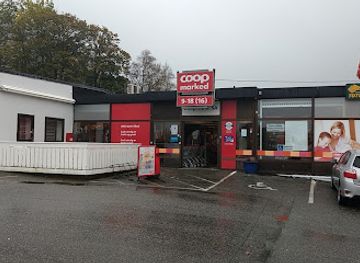
Grocery store
Coop Marked Høle
Explore local flavors and international goods at Coop Marked Høle, a charming grocery store in the heart of Sandnes, Norway.
Get your free copy of our complete guide to Lysefjord, delivered straight to you.
Everything on this page, from attractions and restaurants to essentials and local phrases, in one PDF you can read offline, print or share.
Already have an account? Sign in
Your Lysefjord guide is ready.
We'll send it to · Not you? Sign out

Getting your guide ready…
We are putting together a fresh copy of the Lysefjord guide. This can take up to a minute.
This can take a few moments. If your browser asks, choose Allow so the download can start. You'll find the guide in your Downloads folder.
Nothing happened? Download it again
Sorry, the guide is taking longer than usual. Please try again in a minute, or get it by email instead.
Lysefjord essentials
Currency and Payment
Safety
Emergency Situations
Do's and Don'ts
Local Tips
From Eve
Local phrases worth knowing
You don't need to get them perfect. A few words go a long way, and locals appreciate the effort.
Basics
| English | Local | Say it |
|---|---|---|
| Hello | Hei | [hay] |
| Goodbye | Ha det bra | [hah deh bra] |
| Yes | Ja | [yah] |
| No | Nei | [nay] |
| Please/You're welcome | Vær så god | [ver soh goh] |
| Thank you | Takk | [tahk] |
| Excuse me/Sorry | Unnskyld | [oon-skyld] |
| How are you? | Hvordan har du det? | [hvohr-dahn har doo deh] |
| Fine. And you? | Bra. Og du? | [bra oh doo] |
| Do you speak English? | Snakker du engelsk? | [snah-kehr doo eng-ehlsk] |
| I don't understand | Jeg forstår ikke | [yehg fohr-stor eek-keh] |
Eating & Drinking
| English | Local | Say it |
|---|---|---|
| I'd like to see the menu, please | Jeg vil gjerne se menyen, takk | [yehg veel geer-neh seh meh-nyen, tahk] |
| I don't eat meat | Jeg spiser ikke kjøtt | [yehg spee-sehr eek-keh shuht] |
| Cheers! | Skål! | [skohl] |
| I would like to pay, please | Jeg vil gjerne betale, takk | [yehg veel geer-neh beh-tah-leh, tahk] |
Emergencies
| English | Local | Say it |
|---|---|---|
| Help! | Hjelp! | [yehlp] |
| Go away! | Gå bort! | [goh bohrt] |
| Call the Police! | Ring politiet! | [ring poh-lee-tee-eh] |
| Call a doctor! | Ring en lege! | [ring ehn leh-geh] |
| I'm lost | Jeg er borte | [yehg ehr bohr-teh] |
| I'm ill | Jeg er syk | [yehg ehr sook] |
Shopping
| English | Local | Say it |
|---|---|---|
| I'd like to buy... | Jeg vil kjøpe... | [yehg veel shuh-peh] |
| I'm just looking | Jeg bare ser | [yehg bah-reh sair] |
| How much is it? | Hvor mye koster det? | [vohr myeh kohs-tehr deh] |
| That's too expensive | Det er for dyrt | [deh ehr fohr deert] |
| Can you lower the price? | Kan du senke prisen? | [kahn doo sehn-keh pree-sen] |
Time & Numbers
| English | Local | Say it |
|---|---|---|
| What time is it? | Hva er klokka? | [hvah ehr klohk-kah] |
| It's one o'clock | Klokken er ett | [klohk-ehn ehr eht] |
| Half past (10) | Halv ti | [hahlv tee] |
| Morning | Morgen | [mohr-gehn] |
| Afternoon | Ettermiddag | [eh-tehr-meed-dahg] |
| Evening | Kveld | [kvehld] |
| Yesterday | I går | [ee gohr] |
| Today | I dag | [ee dahg] |
| Tomorrow | I morgen | [ee mohr-gehn] |
| 1 | En | [ehn] |
| 2 | To | [too] |
| 3 | Tre | [treh] |
| 4 | Fire | [fee-reh] |
| 5 | Fem | [fehm] |
| 6 | Seks | [sehks] |
| 7 | Sju | [shoo] |
| 8 | Åtte | [awt-teh] |
| 9 | Ni | [nee] |
| 10 | Ti | [tee] |
Transport & Directions
| English | Local | Say it |
|---|---|---|
| Where's a/the...? | Hvor er en/et...? | [vohr ehr ehn/et] |
| What's the address? | Hva er adressen? | [hvah ehr ah-drahss-ehn] |
| Can you show me (on the map)? | Kan du vise meg (på kartet)? | [kahn doo vee-seh meh (poh kahr-teh)] |
| When's the next (bus)? | Når går neste (buss)? | [nohr gohr neh-steh (boos)] |
| A ticket (to ....) | En billett (til ....) | [ehn bee-leht (teel ....)] |
History of Lysefjord
A Glacially Carved Landscape
Lysefjord’s defining form was created through repeated glacial activity during the Quaternary period. Moving ice deepened and widened an older valley system, leaving the classic U-shaped profile, steep rock walls and hanging valleys visible along the fjord. Retreating ice and changing sea levels eventually allowed seawater to occupy the trough. The dramatic cliffs are therefore geological features rather than monumental structures, and their scale explains why the fjord is experienced as much from the water as from its mountain paths.
Farms and Fjord Communities
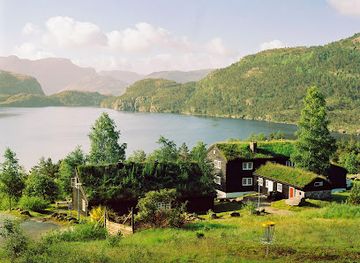
For centuries, people lived in small farms and settlements on the narrow strips of cultivable land beside the water and on elevated terraces above it. Farming, animal husbandry and use of the fjord for travel connected communities that were separated by mountains and difficult terrain. Isolated farmsteads along Lysefjord reflect this pattern of settlement, while Forsand developed as an important community on the western approach. Boats were essential for carrying people and goods before roads reached the inner fjord.
Flørli and the Rise of Hydropower
Modern industrial history became particularly visible at Flørli, where hydroelectric development transformed a small fjord settlement. Water from the surrounding mountains was channelled towards a power station, and the steep route of 4,444 steps was built to connect the village with the upper hydroelectric installations. The power station and associated infrastructure remain central to Flørli’s identity, showing how Norway’s mountainous terrain was adapted for electricity generation while preserving a distinctive settlement on the fjord shore.
Roads, Boats and Early Tourism
Lysefjord’s difficult terrain long restricted overland movement, so boats remained the principal means of reaching its communities. As interest in Norway’s fjord scenery grew during the nineteenth and twentieth centuries, organised boat journeys and mountain excursions introduced more visitors to Preikestolen and the inner fjord. Roads later improved access to Forsand, Lysebotn and trailheads, although the area has never developed as a continuous urban resort. Tourism grew around viewing, walking and boating rather than large-scale construction.
Conservation and Responsible Access
The modern visitor economy is closely connected with the protection of dramatic mountain terrain and sensitive natural surroundings. Preikestolen, Kjerag and the routes around Lysefjord receive heavy seasonal use, making path management, erosion control, waste reduction and responsible cliff-edge behaviour important parts of local tourism. Hydroelectric infrastructure, traditional settlements, roads and hiking routes now coexist within a landscape where weather, steep ground and limited services continue to shape how people travel.
Lysefjord in Photos
Browse through our photo collection highlighting the charm and character of the destination.
Neighbouring destination travel guides
The closest destinations to Lysefjord, if you have time for more than one.
-

-

-

-

-


Swipe for more destinations
Explore more
Explore more of Rogaland
Explore the stunning landscapes and rich cultural heritage of Rogaland, Norway’s coastal gem, from the iconic Preikestolen to the charming streets of Stavanger.
Explore Rogaland
Explore more of Norway
Explore Norway's spectacular fjords, vibrant cities, and natural wonders. Experience the Northern Lights, Midnight Sun, and rich cultural heritage in this Scandinavian gem.
Explore Norway