

Free Vestlandet Travel Guide & Mobile App
Explore Vestlandet with free travel guides. Discover regional history, expert tips, proposed trips, and audio guides on web or mobile app.


Explore Vestlandet’s Norwegian fjords, mountain trails, historic ports, island communities and distinctive food culture from Bergen to Ålesund.
Read more about Vestlandet
When is the best time to visit Vestlandet?
Best: June–August · 17–19°C| Month | High (°C) | Rainfall (mm) |
|---|---|---|
| January | 4 | 220 |
| February | 4 | 200 |
| March | 6 | 180 |
| April | 9 | 140 |
| May | 13 | 120 |
| June (best) | 17 | 100 |
| July (best) | 19 | 110 |
| August (best) | 18 | 130 |
| September | 15 | 150 |
| October | 11 | 170 |
| November | 7 | 190 |
| December | 4 | 210 |
Getting to and around Vestlandet
How to get there
Transportation
Top city travel guides in Vestlandet
The cities of Vestlandet, and the easiest places to base yourself.
-

-

-

-

-


Swipe for more cities
Destinations in Vestlandet
Resorts, valleys and scenic spots worth a trip of their own.
-

-

-

-

-

-


Swipe for more destinations
Best attractions in Vestlandet
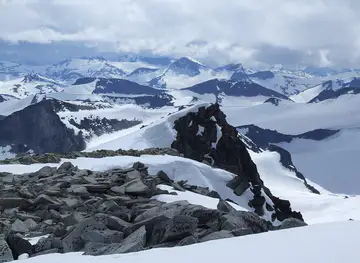
Vestlandet’s attractions are shaped by the interaction of water, mountains and settlement. Bergen’s Bryggen, museums and harbour provide an urban introduction, while Stavanger offers the Norwegian Petroleum Museum, the historic wooden district of Gamle Stavanger and access to Lysefjord. In the fjord country, boat journeys, village viewpoints and waterfall walks are as important as formal visitor sites. Hardanger combines orchards, waterfalls and mountain scenery; Sognefjord opens routes towards glacier landscapes and historic churches; and the Nærøyfjord area offers narrow waterways and steep valley walls. Preikestolen and Trolltunga are demanding but widely known walking destinations, requiring suitable preparation. The western approaches to Jotunheimen provide access to high mountain scenery, while the Geirangerfjord area in Møre og Romsdal is associated with viewpoints, waterfalls and scenic roads. Ålesund’s museums and maritime setting add a coastal perspective, and the Atlantic Ocean Road lies in the northern part of the region as a major scenic route. Across Vestlandet, ferries, heritage sites, galleries, aquariums and outdoor activities create a varied visitor landscape, but many experiences are seasonal and weather dependent.
-
Nature preserve
Brekkefossen
Experience the breathtaking beauty of Brekkefossen, a stunning waterfall and hiking destination in the heart of Flåm, Norway's majestic fjord region.
-
National park
Hallingskarvet National Park
Explore Hallingskarvet National Park, Norway's first national park, offering breathtaking landscapes and thrilling outdoor adventures for all nature lovers.
-
Church
Flåm Church
Explore the historical charm and breathtaking beauty of Flåm Church, a must-visit tourist attraction in the heart of Norway's stunning fjord landscape.
-
Tourist attraction
Stalheimskleiva
Experience the breathtaking beauty of Stalheimskleiva, a stunning scenic spot in Norway known for its dramatic landscapes and adventurous trails.


Best landmarks in Vestlandet
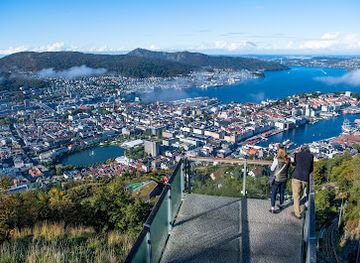
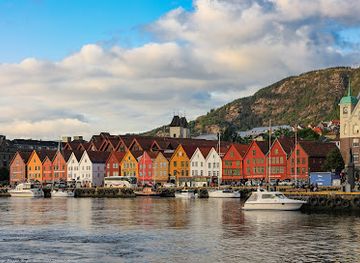
Bryggen in Bergen is Vestlandet’s most recognisable historic landmark: its timber buildings line the former Hanseatic wharf and represent the city’s medieval role in North Sea trade. Bergen Cathedral and the old harbour area add further layers to the city’s long urban history. Stavanger Cathedral, begun in the twelfth century, is one of Norway’s important medieval churches, while Gamle Stavanger preserves a substantial concentration of white wooden houses from the eighteenth and nineteenth centuries. The stave churches at Urnes, Hopperstad and Borgund demonstrate the distinctive medieval timber architecture of the inner fjord districts, with Urnes recognised for its exceptional artistic and historical importance. In the natural landscape, Preikestolen forms a near-vertical rock platform above Lysefjord, and Trolltunga projects dramatically over Ringedalsvatnet. The Seven Sisters waterfalls and the mountain walls of Geirangerfjord are among the region’s most recognisable fjord views. Ålesund’s post-1904 Art Nouveau streetscape is a landmark of a different kind, showing how a modern town was rebuilt in a coherent architectural style after disaster.
-
Tourist attraction
Steinsdalsfossen
Discover the breathtaking beauty of Steinsdalsfossen, a stunning waterfall in Norway, where nature meets adventure in the heart of scenic landscapes.
-
Fortress
Bergenhus Fortress
Discover the charm of Bergenhus Fortress, a historic landmark in Bergen, Norway, offering a glimpse into the rich tapestry of Norwegian history and culture.
-
Mountain cable car
Fløibanen - Funicular Railway
Experience the breathtaking views of Bergen from the Fløibanen Funicular Railway, your gateway to Mount Fløyen's stunning panoramas.
-
Historical place
Bryggen
Discover the enchanting Bryggen in Bergen, a UNESCO World Heritage site where history meets vibrant culture in Norway's picturesque harbor.
Explore Vestlandet on the map
Plan your trip on one map. See where the top cities, national parks and sights are, and book hotels and experiences in a few clicks.
Best hotels in Vestlandet
Best restaurants in Vestlandet
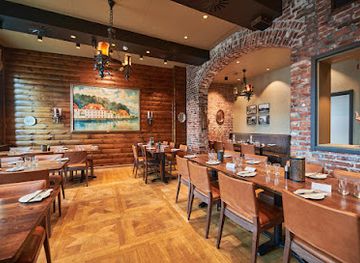
Vestlandet’s food culture follows its geography. Seafood is central along the coast, with cod, salmon, shellfish and locally farmed fish appearing in restaurants, cafés and informal harbour settings. Fjord districts are known for fruit production, particularly apples, pears, cherries and plums in parts of Hardanger, where these ingredients also support juices and other drinks. Lamb, game, potatoes, root vegetables and dairy products reflect mountain and farm traditions, while brown cheese and regional baking are familiar Norwegian staples rather than exclusively western specialities. Bergen’s dining scene ranges from traditional fish restaurants and cafés to contemporary kitchens, while Stavanger has a strong modern food identity shaped partly by its urban and international population. Ålesund and other coastal towns provide access to seafood-focused dining, and rural areas often rely on inns, farm shops and seasonal cafés. Markets and local-produce shops are useful places to find fruit, preserves, smoked foods, cheeses and bakery goods, although opening patterns vary outside the main towns.
-
Restaurant
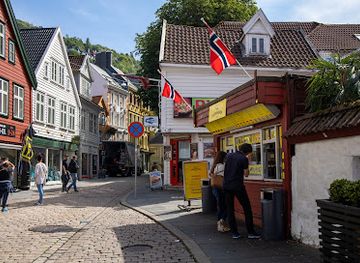
AS Bryggestuen - Bryggeloftet
Experience exquisite seafood dining at AS Bryggestuen - Bryggeloftet in Bergen, Norway, where tradition meets flavor in a picturesque harbor setting.
-
Gastropub
Pingvinen
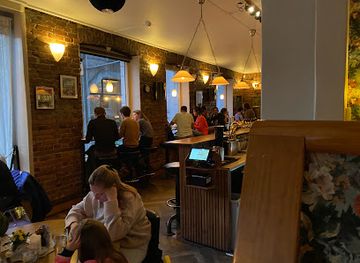
Discover the heart of Norwegian cuisine at Pingvinen - A cozy gastropub offering traditional flavors in Bergen's vibrant atmosphere.
-
Hot Dog
Trekroneren
Discover Bergen's vibrant street food scene at Trekroneren, where gourmet hot dogs meet local flavors in an inviting atmosphere.
-
Seafood
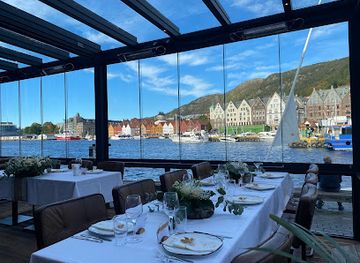
Fjellskål Sjømatrestaurant
Discover Bergen's finest seafood at Fjellskål Sjømatrestaurant - where fresh flavors meet stunning harbor views.
Best bars in Vestlandet
Evening life in Vestlandet is concentrated in Bergen, Stavanger, Ålesund and the larger coastal towns, with a quieter pattern in fjord villages and rural valleys. Bergen offers traditional pubs, cocktail bars, live music and cultural venues around the central streets and harbour, while Stavanger combines long-established pubs with contemporary bars and restaurants. Ålesund’s compact centre has bars and places for late dining, particularly when maritime, cultural or seasonal activity brings more visitors. Outside these cities, the social centre is more likely to be a local pub, hotel bar, brewery taproom or restaurant than a nightclub. Some towns have live music and seasonal events, but programmes and opening arrangements change. Alcohol is expensive by international standards, and visitors should remember that Norway’s licensing rules and retail restrictions are national rather than distinctive to Vestlandet.
-
Brewpub
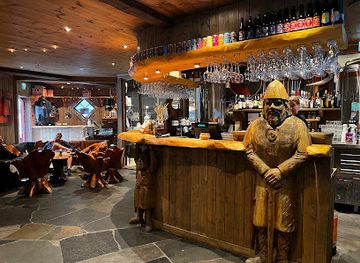
Ægir microbrewery
Discover the taste of Norway at Ægir Microbrewery, where craft beer meets Viking heritage in the heart of Flåm.
-
Bar
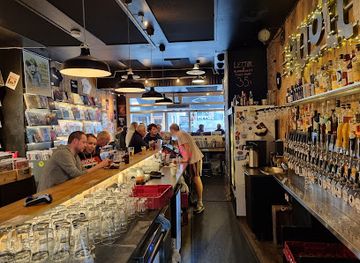
Apollon Platebar
Discover the vibrant fusion of music and drinks at Apollon Platebar in the heart of Bergen, Norway's unique bar and music store.
-
Pub
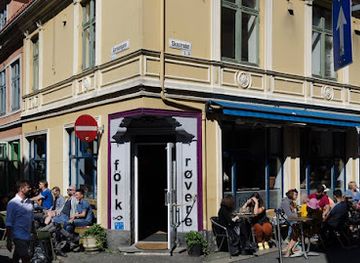
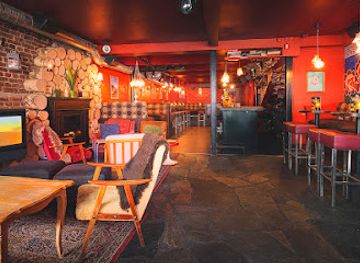
Folk & Røvere
Experience the vibrant atmosphere and superb beer selection at Folk & Røvere, a trendy pub in the heart of Bergen.
-
Bar
No Stress Bergen
Experience the vibrant cocktail culture at No Stress Bergen, a bar known for its creative drinks and lively atmosphere in the heart of the city.
Best nightclubs in Vestlandet
Evening life in Vestlandet is concentrated in Bergen, Stavanger, Ålesund and the larger coastal towns, with a quieter pattern in fjord villages and rural valleys. Bergen offers traditional pubs, cocktail bars, live music and cultural venues around the central streets and harbour, while Stavanger combines long-established pubs with contemporary bars and restaurants. Ålesund’s compact centre has bars and places for late dining, particularly when maritime, cultural or seasonal activity brings more visitors. Outside these cities, the social centre is more likely to be a local pub, hotel bar, brewery taproom or restaurant than a nightclub. Some towns have live music and seasonal events, but programmes and opening arrangements change. Alcohol is expensive by international standards, and visitors should remember that Norway’s licensing rules and retail restrictions are national rather than distinctive to Vestlandet.
-
Night club
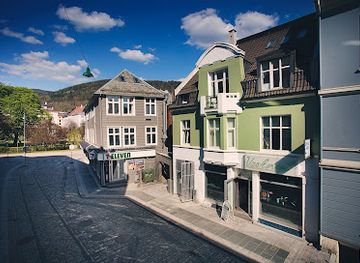
Ricks AS
Experience the lively nightlife at Ricks AS, a top nightclub and pub in Bergen, known for its vibrant atmosphere and friendly locals.
-
Night club
Vaskeriet
Vaskeriet: A vibrant night club and cocktail bar in Bergen, where nightlife comes alive with great drinks and music.
-
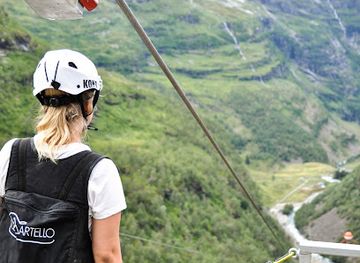
Adventure sports
Flåm Zipline
Discover the breathtaking Flåm Zipline, the longest in the Nordic region, and experience an unforgettable aerial adventure above Norway's stunning fjords.
-
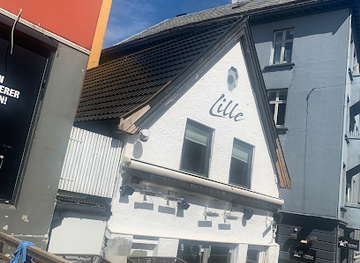
Night club
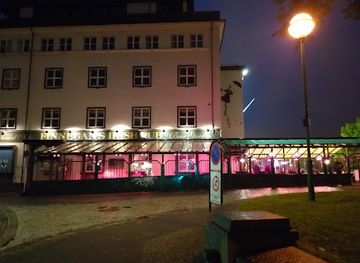
Lille Bar & Lounge
Discover the vibrant nightlife of Bergen at Lille Bar & Lounge, a stylish night club and cocktail bar offering an unforgettable experience.
Best shops in Vestlandet
Shopping in Vestlandet ranges from city-centre retail to small-town produce and craft outlets. Bergen’s central streets and areas around Bryggen contain independent design shops, galleries, bookshops, clothing stores and outlets selling Norwegian textiles, knitwear and food products, while Stavanger combines established high-street retail with galleries and craft businesses in its older wooden quarters. Ålesund has a compact urban shopping area with design, outdoor and maritime-oriented products. In the fjord districts, farm shops and seasonal stalls are often more rewarding for regional purchases than conventional retail, offering fruit, juices, preserves, cheeses, smoked foods and locally made crafts. Look for woollen goods, ceramics, woodwork, jewellery and contemporary art, but check provenance when a product is marketed as local. Markets vary by town and season, and rural shops may have limited opening hours, so plan food and practical purchases before travelling into remote valleys or along the coast.
-
Shopping mall
Galleriet
Discover Galleriet, Bergen's ultimate shopping experience with diverse stores, delicious dining options, and a vibrant atmosphere to explore.
-
Shopping mall
Bergen Storsenter
Discover Bergen Storsenter: The premier shopping destination in Bergen with diverse stores, dining options, and vibrant events.
-
Shopping mall
Xhibition Shopping Center
Experience the vibrant shopping scene at Xhibition Shopping Center in Bergen, where you'll find everything from fashion to gourmet dining.
-
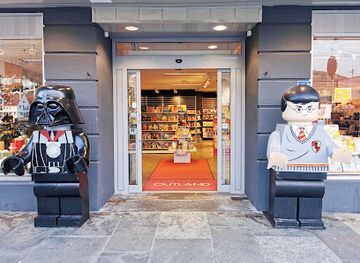
Comic book store
Outland Bergen
Discover a world of comics, games, and collectibles at Outland Bergen, where passion for pop culture comes alive in every aisle.


Get your free copy of our complete guide to Vestlandet, delivered straight to you.
Everything on this page, from attractions and restaurants to essentials and local phrases, in one PDF you can read offline, print or share.
Already have an account? Sign in
Your Vestlandet guide is ready.
We'll send it to · Not you? Sign out

Getting your guide ready…
We are putting together a fresh copy of the Vestlandet guide. This can take up to a minute.
This can take a few moments. If your browser asks, choose Allow so the download can start. You'll find the guide in your Downloads folder.
Nothing happened? Download it again
Sorry, the guide is taking longer than usual. Please try again in a minute, or get it by email instead.
Vestlandet essentials
Currency and Payment
Safety
Emergency Situations
Do's and Don'ts
Local Tips
From Eve
Local phrases worth knowing
You don't need to get them perfect. A few words go a long way, and locals appreciate the effort.
Basics
| English | Local | Say it |
|---|---|---|
| Hello | Hei | [Hay] |
| Goodbye | Ha det | [Hah deh] |
| Yes | Ja | [Yah] |
| No | Nei | [Nay] |
| Please/You're welcome | Vær så snill/Ingen årsak | [Vair shaw sneel/In-yen or-sahk] |
| Thank you | Takk | [Tahk] |
| Excuse me/Sorry | Unnskyld | [Oon-shild] |
| How are you? | Hvordan har du det? | [Vor-dahn har doo deh?] |
| Fine. And you? | Bra. Og du? | [Brah. Oh doo?] |
| Do you speak English? | Snakker du engelsk? | [Snahk-er doo eng-elsk?] |
| I don't understand | Jeg forstår ikke | [Yah for-stor ik-keh] |
Eating & Drinking
| English | Local | Say it |
|---|---|---|
| I'd like to see the menu, please | Jeg vil gjerne se menyen, vær så snill | [Yah vil yair-na se men-yen, vair shaw sneel] |
| I don't eat meat | Jeg spiser ikke kjøtt | [Yah spee-ser ik-keh shutt] |
| Cheers! | Skål! | [Skohl!] |
| I would like to pay, please | Jeg vil gjerne betale, vær så snill | [Yah vil yair-na beh-tah-leh, vair shaw sneel] |
Emergencies
| English | Local | Say it |
|---|---|---|
| Help! | Hjelp! | [Yelp!] |
| Go away! | Gå vekk! | [Gaw vek!] |
| Call the Police! | Ring politiet! | [Ring po-li-tiet!] |
| Call a doctor! | Ring en lege! | [Ring en leh-geh!] |
| I'm lost | Jeg har gått meg bort | [Yah har goht may bort] |
| I'm ill | Jeg er syk | [Yah air seek] |
Shopping
| English | Local | Say it |
|---|---|---|
| I'd like to buy... | Jeg vil kjøpe... | [Yah vil shur-peh...] |
| I'm just looking | Jeg ser bare | [Yah ser bah-reh] |
| How much is it? | Hvor mye koster det? | [Vor mye koster deh?] |
| That's too expensive | Det er for dyrt | [Deh air for deert] |
| Can you lower the price? | Kan du senke prisen? | [Kahn doo sen-keh pree-sen?] |
Time & Numbers
| English | Local | Say it |
|---|---|---|
| What time is it? | Hva er klokka? | [Vah air klok-kah?] |
| It's one o'clock | Det er ett | [Deh air et] |
| Half past (10) | Halv elleve | [Halv el-leh-veh] |
| Morning | Morgen | [Mor-gen] |
| Afternoon | Ettermiddag | [Et-ter-mid-dahg] |
| Evening | Kveld | [Kveld] |
| Yesterday | I går | [Ee gor] |
| Today | I dag | [Ee dahg] |
| Tomorrow | I morgen | [Ee mor-gen] |
| 1 | 1 | [En] |
| 2 | 2 | [To] |
| 3 | 3 | [Tre] |
| 4 | 4 | [Fire] |
| 5 | 5 | [Fem] |
| 6 | 6 | [Seks] |
| 7 | 7 | [Sju] |
| 8 | 8 | [Åtte] |
| 9 | 9 | [Ni] |
| 10 | 10 | [Ti] |
Transport & Directions
| English | Local | Say it |
|---|---|---|
| Where's a/the...? | Hvor er en/det...? | [Vor air en/deh...?] |
| What's the address? | Hva er adressen? | [Vah air ad-reh-sen?] |
| Can you show me (on the map)? | Kan du vise meg (på kartet)? | [Kahn doo vee-seh may (poh kar-teh)?] |
| When's the next (bus)? | Når går neste (buss)? | [Nor gor nes-teh (boos)?] |
| A ticket (to ....) | En billett (til ....) | [En bee-let (til ....)] |
History of Vestlandet
Early coastal settlement and prehistoric landscapes
Vestlandet has been occupied since the retreat of the last Ice Age, when people followed the coast, rivers and seasonal resources into a newly accessible landscape. Archaeological evidence includes settlements, burial monuments and rock art, while the region’s many sheltered sounds supported travel by boat long before written history. Sites such as the rock-art area at Vingen in Bremanger preserve evidence of prehistoric communities and their relationship with animals and the sea. The mountains and fjords were not simply barriers: waterways formed practical routes linking farms, fishing grounds and trading places.
Viking Age seaways and royal power
The western coast played a central role in the Viking Age because its islands, sounds and fjords connected local communities with the North Atlantic and the wider North Sea world. Avaldsnes in northern Rogaland became an important royal and political centre, while coastal chieftains controlled resources and maritime routes from settlements across the region. Later traditions associate western Norway with the consolidation of the Norwegian kingdom, although power was distributed among many local communities. The enduring importance of boats, maritime law and overseas connections remains visible in the region’s historic sites and cultural memory.
Christianisation and the medieval stave churches
Christianity reshaped Vestlandet during the early medieval period, introducing new institutions, religious art and monumental building traditions. Bergen became an important ecclesiastical and commercial centre, while churches were established throughout the fjord valleys. The surviving stave churches at Urnes, Hopperstad and Borgund show how local timber construction developed into highly sophisticated architecture, combining Christian symbolism with older Scandinavian ornamental forms. Stavanger Cathedral also reflects the region’s medieval religious importance. These buildings survive as tangible evidence of communities that were connected to European religious and trading networks.
Bergen, the Hanseatic trade and the stockfish economy
From the Middle Ages into the early modern period, Bergen was one of Norway’s principal commercial ports. German merchants of the Hanseatic League established themselves at Bryggen, organising trade in stockfish from northern Norway and grain, beer, cloth and other goods from Europe. The wharf’s tightly packed timber buildings, warehouses and passages were repeatedly damaged by fire but rebuilt over centuries. Bergen’s commercial influence reached far beyond the city, linking western fjord communities and northern fisheries with international markets. Bryggen’s survival gives the region one of Scandinavia’s most recognisable medieval urban landscapes.
Farming, fishing and the growth of coastal towns
For centuries, most people in Vestlandet lived through combinations of farming, fishing, boatbuilding, shipping and seasonal work. Small plots on fjord terraces supplied fruit, grain and livestock, while coastal communities depended on fisheries and maritime trade. Towns such as Stavanger, Haugesund, Ålesund and Florø developed as ports serving regional and international commerce. The sea connected rather than separated communities, although difficult terrain meant that many valleys and islands retained strong local identities. Migration, including movement to North America, also shaped families and settlements during the nineteenth and early twentieth centuries.
Hydropower and industrial transformation
The steep rivers and abundant rainfall of western Norway enabled major industrial change from the late nineteenth century onwards. Hydroelectricity supported factories producing metals, chemicals and other energy-intensive goods in places such as Odda, Sauda and Årdal. New transport links, workers’ communities and industrial landscapes appeared beside older farms and villages. This development brought employment and modern infrastructure but also altered rivers, shorelines and patterns of settlement. Industrial heritage remains visible in factory sites, power stations and museums, providing a different perspective on Vestlandet beyond its scenic reputation.
Shipping, petroleum and contemporary Vestlandet
Vestlandet remains closely connected to shipping, fisheries, aquaculture and offshore activity. Stavanger became Norway’s principal centre for petroleum-related business after North Sea oil development began in the late twentieth century, while Bergen and Ålesund retain major maritime, research and commercial functions. Energy, engineering and ocean industries continue to influence the region’s economy, alongside tourism and food production. Contemporary Vestlandet therefore combines historic harbours and fishing villages with universities, technology companies, cultural institutions and debates about environmental management, transport and the future of the energy sector.
Vestlandet in Photos
Browse through our photo collection highlighting the charm and character of the destination.
Neighbouring regions of Vestlandet
The closest regions to Vestlandet, if you have time for more than one.
-

-

-

-

-


Swipe for more regions
Explore more

Explore more of Norway
Explore Norway's spectacular fjords, vibrant cities, and natural wonders. Experience the Northern Lights, Midnight Sun, and rich cultural heritage in this Scandinavian gem.
Explore Norway