

Saas-Fee Travel Guide - Free Web & App
Your ultimate guide to Saas-Fee. Discover top landmarks, proposed trips, and local tips. Free on the web or via the Evendo companion app.


Saas-Fee, Switzerland, pairs a car-free Alpine village with glaciers, high mountain views, hiking, skiing, the Mittelallalin Ice Pavilion and Valais culture.
High-Alpine Setting
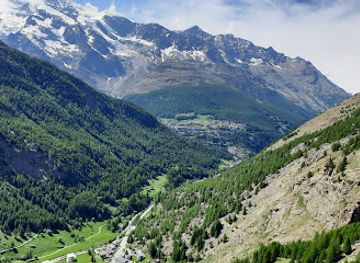
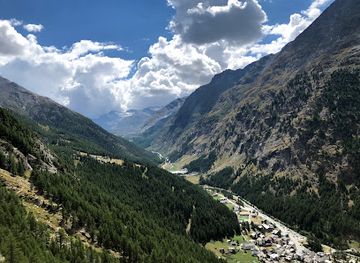
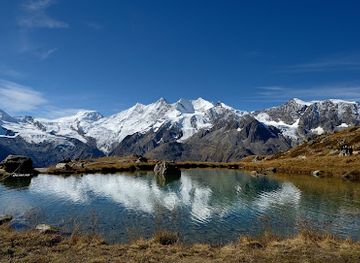
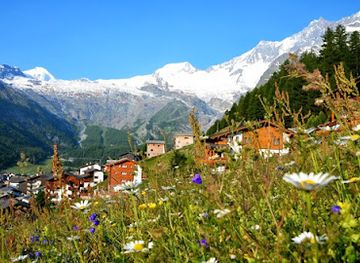
Saas-Fee stands at the head of the Saas Valley in the Swiss canton of Valais, surrounded by a tight amphitheatre of 4,000-metre peaks and glaciated slopes. The village lies above the valley floor, beneath the Fee Glacier and the rocky summits of the Mischabel group, including the Dom, Switzerland’s highest mountain entirely within the country. Much of Saas-Fee is car-free, giving its compact centre a quieter character than many major Alpine resorts, although vehicles can reach a large parking area at the village entrance.Read more about Saas-Fee
Mountain Landscapes and Seasons
Village Life and Valais Heritage
When is the best time to visit Saas-Fee?
Best: June–August · 19–22°C| Month | High (°C) | Rainfall (mm) |
|---|---|---|
| January | 0 | 26 |
| February | 0 | 24 |
| March | 4 | 21 |
| April | 9 | 18 |
| May | 14 | 14 |
| June (best) | 19 | 13 |
| July (best) | 22 | 12 |
| August (best) | 21 | 13 |
| September | 15 | 16 |
| October | 10 | 20 |
| November | 3 | 23 |
| December | 1 | 26 |
Getting to and around Saas-Fee
How to get there
Transportation
Best attractions in Saas-Fee
The main attraction is the high-Alpine setting itself: Saas-Fee is enclosed by the Fee Glacier and the peaks of the Mischabel group, with the Dom rising above the wider valley. Mittelallalin combines a mountain railway terminus, extensive glacier views and the Ice Pavilion, carved into the Fee Glacier, while Hannig provides a quieter starting point for walking above the village. Spielboden is associated with summer mountain access and marmot observation, whereas Plattjen offers steep mountain scenery and routes for experienced walkers. Within the settlement, the compact old village preserves timber chalets and farm buildings among hotels and shops. Cableways and valley buses also make it possible to explore the surrounding Saas communities, but these are separate settlements rather than districts of Saas-Fee. Winter visitors focus on the ski area and snow-covered mountain terrain; in warmer months, marked paths reveal larch forests, meadows, moraines and changing views of the glaciers.
-
Tourist attraction
Erlebnisweg Saas-Almagell
Experience the breathtaking trails and stunning views at Erlebnisweg Saas-Almagell, a must-visit hiking paradise in the Swiss Alps.
-
Promenade
Marmottes Spielboden
Explore the scenic Marmottes Spielboden in Saas-Fee, where stunning alpine views and playful marmots await your family adventures.
-
Tourist attraction
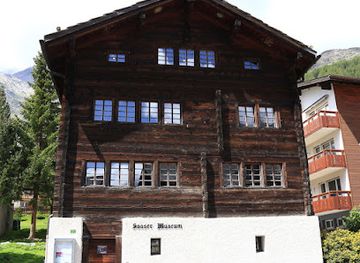
Saaser Museum
Explore the rich cultural heritage of Saas-Fee at the Saaser Museum, where local history comes alive through captivating exhibits and artifacts.
-
Park
Wasserfall Saas-Almagell
Discover the breathtaking beauty of Wasserfall Saas-Almagell, a hidden gem in the Swiss Alps, where nature’s wonders await your exploration.
Best landmarks in Saas-Fee
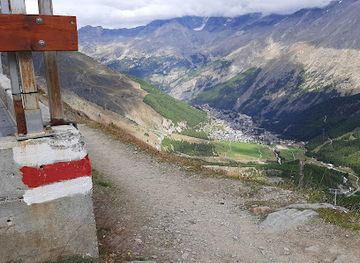
The Fee Glacier is Saas-Fee’s defining natural landmark, descending from the high peaks above the village and forming the setting for the Mittelallalin mountain station and Ice Pavilion. The Mischabel massif dominates the skyline, with the Dom and neighbouring summits marking one of the most imposing mountain groups in the Valais. Hannig, Plattjen and Spielboden are important landmark areas because they reveal the relationship between the settlement, forested slopes, pastures and glaciated heights. In the village, the old timber houses, barns and chalets preserve evidence of the traditional Walser-influenced mountain economy, while the modern Metro Alpin represents the resort’s technological adaptation to its high setting. These features together express Saas-Fee’s character as both a historic Alpine settlement and a contemporary glacier resort.
-
 Hotel
HotelHotel Kristall Saphir Superior
Experience alpine luxury and breathtaking views at Hotel Kristall Saphir Superior in Saas-Almagell, your gateway to Swiss adventure and relaxation.
-
Playground
Bergbahnen Hohsaas
Experience the breathtaking beauty and thrilling adventures at Bergbahnen Hohsaas, a premier outdoor destination in the Swiss Alps, perfect for every season.
-
Tourist information center
Tourismusbüro Saas-Fee/Saastal
Explore Saas-Fee with expert guidance at the Tourist Information Center, your gateway to alpine adventures and cultural experiences in the Swiss Alps.
-
Recreation center
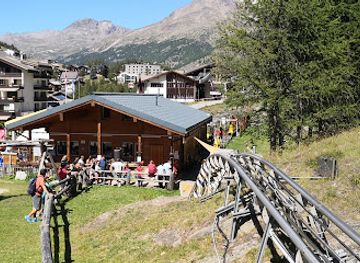
Feeblitz Rodelbobbahn
Discover the excitement of Feeblitz Rodelbobbahn in Saas-Fee, where stunning alpine views meet thrilling sledding adventures for all ages.
Explore Saas-Fee on the map
Plan your trip on one map. See where the top attractions, landmarks, restaurants and hotels are, and book hotels and experiences in a few clicks.
Best hotels in Saas-Fee
Best restaurants in Saas-Fee
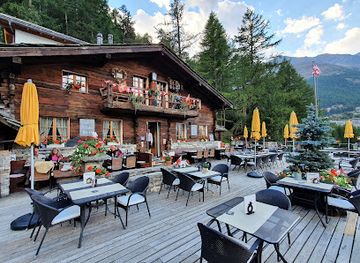
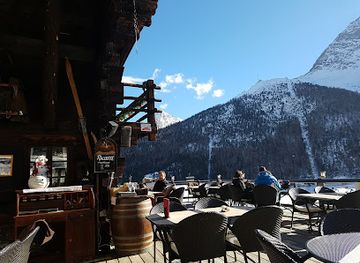
Dining in Saas-Fee reflects both Valais tradition and the expectations of an international mountain resort. Menus commonly draw on local products such as raclette, cheese fondue, rösti, dried meats, rye bread and other Swiss Alpine staples, while restaurants and hotel dining rooms also serve broader European cuisine. The village has the greatest concentration of cafés, bakeries, hotel restaurants and casual places to eat, with further options around mountain stations and the wider Saas Valley depending on the season and operating arrangements. Valais wines, produced mainly in the sunny Rhône Valley below, are a natural accompaniment to regional dishes. Visitors staying in apartments can find everyday provisions in village shops, but those planning longer mountain days should carry food and water rather than assume that a high trail or lift station will provide a meal.
-
Swiss
Gletschergrotte
Experience the stunning beauty of Gletschergrotte in Saas-Fee – a mesmerizing glacier cave showcasing nature's icy wonders.
-
Swiss
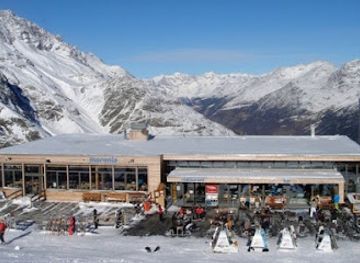
Bergrestaurant Morenia
Experience authentic Swiss cuisine with breathtaking views at Bergrestaurant Morenia in Saas-Fee.
-
Restaurant
Waldhüs Bodmen
Experience authentic Swiss cuisine and breathtaking views at Waldhüs Bodmen in Saas-Fee.
-
Swiss
Schäferstube Saas-Fee
Experience authentic Swiss cuisine at Schäferstube Saas-Fee, where tradition meets taste in a charming alpine setting.

Best bars in Saas-Fee
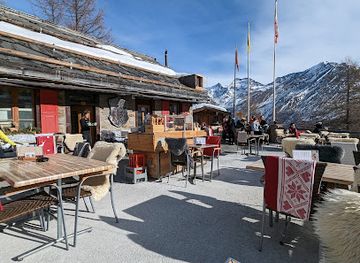
Saas-Fee’s evening life is that of a large Alpine resort rather than a city nightlife centre. Visitors can find hotel bars, traditional-style pubs and relaxed après-ski venues in and around the village, particularly during the winter season, with the atmosphere shaped by skiers returning from the slopes and walkers gathering after a day outdoors. Some establishments may offer music or evening entertainment, but programmes and opening patterns vary by season. The car-free centre makes short walks between accommodation and hospitality venues straightforward, while the surrounding villages of the Saas Valley are quieter and more residential. There is no need to expect a dense nightclub district; evenings are generally centred on food, drinks, conversation and mountain views.
-
Swiss
Gletschergrotte
Experience authentic Swiss cuisine at Gletschergrotte in Saas-Fee, surrounded by stunning alpine views and rich culinary traditions.
-
Restaurant
Waldhüs Bodmen
Discover the authentic flavors of Switzerland at Waldhüs Bodmen, a charming restaurant in the heart of Saas-Fee with stunning mountain views.
-
Swiss
Restaurant Steinbock
Experience authentic Swiss cuisine at Restaurant Steinbock in Saas-Fee, where local flavors meet stunning mountain views.
-
Restaurant
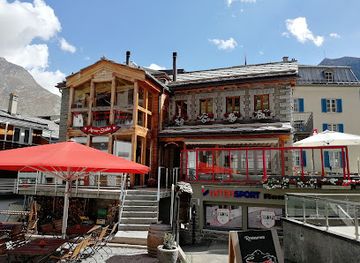
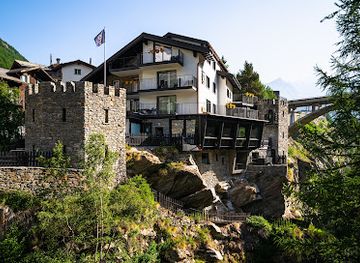
Hotel La Gorge & Restaurant Zer Schlucht
Discover the exquisite flavors of Europe at La Gorge, a serene hotel and restaurant nestled in the breathtaking landscapes of Saas-Fee, Switzerland.
Best nightclubs in Saas-Fee
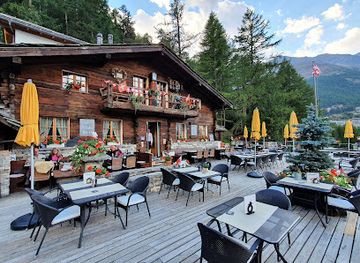
Saas-Fee’s evening life is that of a large Alpine resort rather than a city nightlife centre. Visitors can find hotel bars, traditional-style pubs and relaxed après-ski venues in and around the village, particularly during the winter season, with the atmosphere shaped by skiers returning from the slopes and walkers gathering after a day outdoors. Some establishments may offer music or evening entertainment, but programmes and opening patterns vary by season. The car-free centre makes short walks between accommodation and hospitality venues straightforward, while the surrounding villages of the Saas Valley are quieter and more residential. There is no need to expect a dense nightclub district; evenings are generally centred on food, drinks, conversation and mountain views.
-
Bar
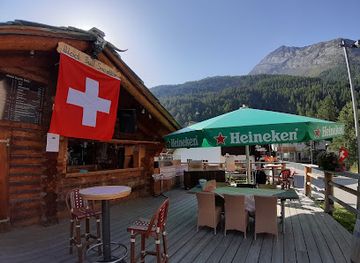
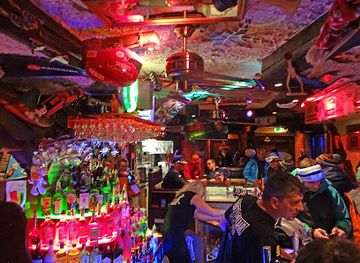
Black Bull Snowbar
Discover the ultimate après-ski experience at Black Bull Snowbar, where warmth and camaraderie meet stunning Swiss mountain views.
-
Pub
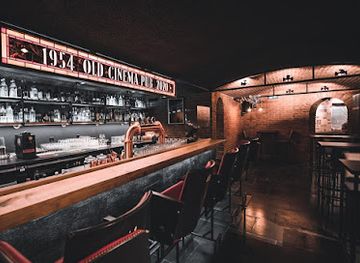
Old Cinema Pub
Discover the charm of the Old Cinema Pub in Saas-Fee, where classic cinema meets modern pub culture, offering delightful drinks and unforgettable experiences.
-
Bar
Nesti's Ski Bar
Experience the vibrant charm of Nesti's Ski Bar in Saas-Fee, where skiers gather to unwind and enjoy delightful drinks in a cozy atmosphere.
-
Bar
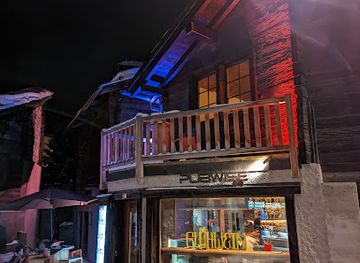
Pubwise
Discover the vibrant nightlife at Pubwise, a must-visit bar in Saas-Fee for locals and tourists alike, offering a cozy atmosphere and fantastic drink selection.
Best shops in Saas-Fee
Shopping in Saas-Fee is concentrated in the village and serves both residents and mountain visitors. Sports shops provide equipment, clothing and practical supplies for skiing, hiking and other Alpine activities, while smaller retailers include bakeries, food shops, souvenir outlets and stores selling locally themed gifts. Visitors may find Valais cheeses, dried meats, rye bread, chocolate, wine and other regional provisions, although the selection and opening patterns can vary outside the main seasons. Craft and design-led items may be available through local businesses, but Saas-Fee is not a major shopping destination for international brands. For a broader range of everyday retail and services, the larger settlements and commercial centres of the Rhône Valley offer more choice, reached by travelling beyond the Saas Valley.
-
Supermarket
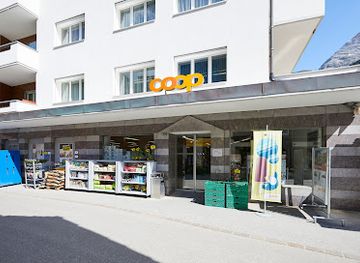
Coop Supermarkt Saas Fee Dorfstrasse
Discover the heart of Saas-Fee at Coop Supermarkt, where local flavors and essentials meet convenience in the Swiss Alps.
-
Ski rental service
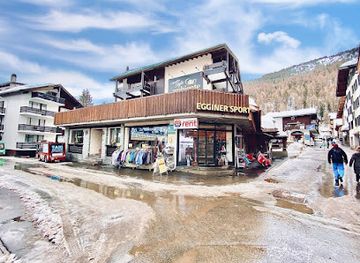
Egginer-Sport
Discover premium ski rentals and expert service at Egginer-Sport in Saas-Fee, your gateway to winter sports excellence.
-
Grocery store
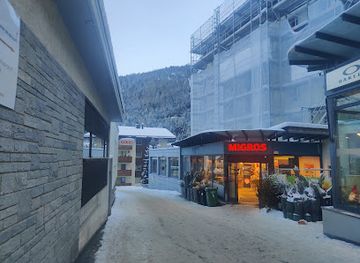
Migros-Supermarkt - Saas Fee
Explore the charm of Migros-Supermarkt in Saas Fee, where convenience meets Swiss culinary delights amidst stunning alpine views.
-
Coffee shop
12-inch CofFee
Experience the perfect blend of coffee culture and music at 12-inch CofFee, a unique café in the heart of Saas-Fee.
Get your free copy of our complete guide to Saas-Fee, delivered straight to you.
Everything on this page, from attractions and restaurants to essentials and local phrases, in one PDF you can read offline, print or share.
Already have an account? Sign in
Your Saas-Fee guide is ready.
We'll send it to · Not you? Sign out

Getting your guide ready…
We are putting together a fresh copy of the Saas-Fee guide. This can take up to a minute.
This can take a few moments. If your browser asks, choose Allow so the download can start. You'll find the guide in your Downloads folder.
Nothing happened? Download it again
Sorry, the guide is taking longer than usual. Please try again in a minute, or get it by email instead.
Saas-Fee essentials
Currency and Payment
Safety
Emergency Situations
Do's and Don'ts
Local Tips
From Eve
Local phrases worth knowing
You don't need to get them perfect. A few words go a long way, and locals appreciate the effort.
Basics
| English | Local | Say it |
|---|---|---|
| Hello | Grüezi | [grüe-tsi] |
| Goodbye | Adieu | [a-dju] |
| Yes | Ja | [ya] |
| No | Nein | [nine] |
| Please/You're welcome | Bitte | [bi-te] |
| Thank you | Danke | [dan-ke] |
| Excuse me/Sorry | Entschuldigung | [ent-shul-di-gung] |
| How are you? | Wie geht es dir? | [vee geyt es dir] |
| Fine. And you? | Gut. Und du? | [goot. oond doo] |
| Do you speak English? | Sprechen Sie Englisch? | [shpre-ken zee eng-lish] |
| I don't understand | Ich verstehe nicht | [ikh fer-shte-e nikht] |
Eating & Drinking
| English | Local | Say it |
|---|---|---|
| I'd like to see the menu, please | Ich möchte die Speisekarte sehen, bitte | [ikh merkhte dee shpy-ze-kar-te zay-en, bi-te] |
| I don't eat meat | Ich esse kein Fleisch | [ikh es-se kine fleysh] |
| Cheers! | Prost! | [prohst] |
| I would like to pay, please | Ich möchte bitte zahlen | [ikh merkhte bi-te tsah-len] |
Emergencies
| English | Local | Say it |
|---|---|---|
| Help! | Hilfe! | [hil-fe] |
| Go away! | Geh weg! | [gey vekh] |
| Call the Police! | Rufen Sie die Polizei! | [roo-fen zee dee po-lee-tsey] |
| Call a doctor! | Rufen Sie einen Arzt! | [roo-fen zee ine-en artsht] |
| I'm lost | Ich habe mich verirrt | [ikh hah-be meesh fer-irrt] |
| I'm ill | Ich bin krank | [ikh been krunk] |
Shopping
| English | Local | Say it |
|---|---|---|
| I'd like to buy... | Ich möchte kaufen... | [ikh merkhte kow-fen] |
| I'm just looking | Ich schaue nur | [ikh shou-e noor] |
| How much is it? | Wie viel kostet es? | [vee feel kow-stet es] |
| That's too expensive | Das ist zu teuer | [dahs ist tsoo toy-er] |
| Can you lower the price? | Können Sie den Preis senken? | [kern-en zee den preys zeng-ken] |
Time & Numbers
| English | Local | Say it |
|---|---|---|
| What time is it? | Wie spät ist es? | [vee shpet ist es] |
| It's one o'clock | Es ist ein Uhr | [es ist ine oor] |
| Half past (10) | Halb zehn | [halb tseyen] |
| Morning | Morgen | [mohr-gen] |
| Afternoon | Nachmittag | [nakh-mit-tahk] |
| Evening | Abend | [ah-bent] |
| Yesterday | Gestern | [geys-tern] |
| Today | Heute | [hoi-te] |
| Tomorrow | Morgen | [mohr-gen] |
| 1 | Eins | [ines] |
| 2 | Zwei | [tsvai] |
| 3 | Drei | [dry] |
| 4 | Vier | [feer] |
| 5 | Fünf | [fuenf] |
| 6 | Sechs | [zeks] |
| 7 | Sieben | [zee-ben] |
| 8 | Acht | [ahkt] |
| 9 | Neun | [noyn] |
| 10 | Zehn | [tsay-en] |
Transport & Directions
| English | Local | Say it |
|---|---|---|
| Where's a/the...? | Wo ist ein/der...? | [vo ist ine/dehr] |
| What's the address? | Was ist die Adresse? | [vas ist dee ah-dres] |
| Can you show me (on the map)? | Können Sie mir (auf der Karte) zeigen? | [kern-en zee meer (ouf dehr kar-te) tsay-gen] |
| When's the next (bus)? | Wann kommt der nächste (Bus)? | [vann kommt dehr nakh-stuh (boos)] |
| A ticket (to ....) | Eine Fahrkarte (nach ....) | [ine fahr-kar-te (nahkh ....)] |
History of Saas-Fee
A Glacial Valley Takes Shape
The landscape around Saas-Fee was formed by the interaction of Alpine tectonic uplift, erosion and successive glaciations. Ice carved the steep Saas Valley and left the high basins, moraines and dramatic rock walls visible today. The Fee Glacier and surrounding permanent snowfields are not simply scenic features but part of a changing high-mountain environment, where retreating ice has exposed new ground and altered familiar routes. The geological setting explains both the village’s enclosed mountain character and the concentration of exceptionally high summits around the valley.
Walser Settlement and Alpine Land Use
Saas-Fee developed within a valley settled by German-speaking communities associated with the Walser migration across the Alps during the medieval period. For centuries, local life depended on a demanding mixture of cattle husbandry, haymaking, farming, forestry and seasonal movement between valley settlements and higher pastures. The village’s timber chalets, barns and traditional farm buildings reflect this economy. Before modern tourism, the valley was relatively isolated, and travel was shaped by steep mountain routes rather than by the roads and cableways that now connect Saas-Fee with the wider Valais.
Early Alpine Exploration
Mountaineering and scientific interest grew in the nineteenth century as improved routes into the Valais brought travellers closer to the Mischabel peaks and the glaciers above Saas-Fee. Guides from the valley became important intermediaries for visitors attempting demanding ascents, while the scenery began to attract painters, writers and early Alpine tourists. The construction of better roads and the development of accommodation gradually changed Saas-Fee from an agricultural settlement into a place able to receive visitors, without removing the underlying relationship between the village and its surrounding high pastures.
Tourism and the Mountain Resort
Saas-Fee’s modern resort economy expanded during the twentieth century as hotels, holiday apartments, mountain railways and ski infrastructure brought the upper valley into the international Alpine tourism market. The village’s decision to restrict ordinary car traffic in the centre helped preserve a more pedestrian-oriented character as visitor numbers grew. Cableways towards Hannig, Spielboden, Plattjen and Mittelallalin opened different elevations to summer walkers, winter skiers and mountaineers, while the underground Metro Alpin and the Ice Pavilion made the high glacier environment more accessible to non-climbers.
Glacier Change and Contemporary Stewardship
Today, Saas-Fee’s identity is closely linked to the glaciers and peaks that support both its scenery and its tourism economy. Rising temperatures and glacier retreat have affected the appearance of the Fee Glacier and the conditions of high-Alpine routes, making local information and professional guidance increasingly important. The destination’s future combines established winter and summer recreation with the need to manage fragile habitats, water, paths and mountain infrastructure responsibly. Its history is therefore not only one of tourism growth but also of adapting a settled Alpine landscape to environmental change.
Saas-Fee in Photos
Browse through our photo collection highlighting the charm and character of the destination.
Neighbouring destination travel guides
The closest destinations to Saas-Fee, if you have time for more than one.
-

-

-

-

-


Swipe for more destinations
Explore more

Explore more of Valais
Discover Valais: A breathtaking region in the Swiss Alps offering iconic peaks, charming villages, world-class skiing, and exquisite local wines.
Explore Valais
Explore more of Switzerland
Discover Switzerland's majestic landscapes, vibrant cities, and rich culture. From alpine adventures to urban exploration, experience the best of Europe in one destination.
Explore Switzerland