

Downtown Dallas (Dallas) Travel Guide - Free
Explore Downtown Dallas in Dallas with Evendo's free guide. Find the best shops, historic streets, restaurants, and gems on web or mobile.


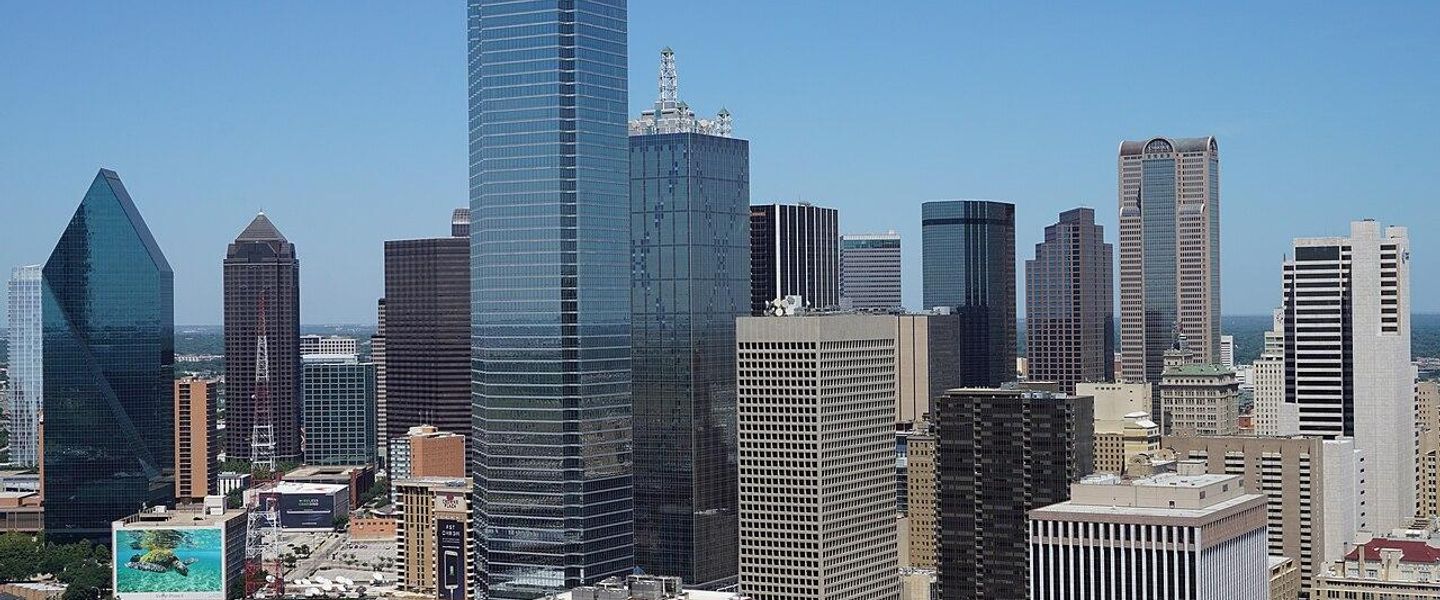


Downtown Dallas blends Dealey Plaza, Arts District museums, historic Main Street, rooftop dining, DART access and Texas city culture in one walkable core.
A Compact Urban Core
Downtown Dallas occupies the historic centre of the city, a cluster of commercial streets, civic spaces, cultural institutions and high-rise blocks bordered by the Trinity River to the west and connected to the Arts District, Deep Ellum, the Cedars and the West End. Its character changes noticeably from one block to the next: glass towers and hotel lobbies rise above Main Street, restored nineteenth-century buildings line parts of the West End, and broad public spaces open around Dealey Plaza, Pioneer Plaza and Main Street Garden.Read more about Downtown Dallas
History in the Streets
Culture, Food and Public Space
Best attractions in Downtown Dallas
Downtown Dallas concentrates several of the city's most significant visitor attractions within a relatively compact area. Dealey Plaza and the Sixth Floor Museum at Dealey Plaza provide the principal historical focus, while the Old Red Museum, the Dallas World Aquarium and the National Medal of Honor Museum offer different perspectives on regional history, nature and national service. The Dallas Arts District, at the northern side of the central business area, brings together the Dallas Museum of Art, the Nasher Sculpture Center, the Crow Museum of Asian Art and major performance venues including the Winspear Opera House and Meyerson Symphony Center. Pioneer Plaza's bronze cattle-drive sculpture recalls the city's frontier mythology, whereas Main Street Garden and the AT&T Discovery District provide contemporary public spaces. The Dallas Farmers Market adds a food-oriented stop near the southern edge of downtown.
-
Aquarium
The Dallas World Aquarium
Explore the Dallas World Aquarium, a unique fusion of aquatic life and terrestrial wonders in the heart of Dallas, Texas. A must-see for families and nature lovers!
7 min walk · 0.5 km from neighbourhood centre
-
Museum
Museum of Illusions Dallas
Discover a mind-bending experience at the Museum of Illusions Dallas, where reality and imagination collide in spectacular ways.
5 min walk · 0.4 km from neighbourhood centre
-
 Open air museum
Old City Park
Explore Texas' rich heritage at Old City Park, an open-air museum in Dallas featuring historic buildings, lush gardens, and engaging cultural experiences.
5 min drive · 1.8 km from neighbourhood centre
-
Park
Civic Garden
Discover the serene beauty of Civic Garden, a lush retreat in Downtown Dallas, featuring vibrant gardens and tranquil fountains for relaxation.
2 min walk · 0.2 km from neighbourhood centre


Best landmarks in Downtown Dallas
Downtown Dallas's landmarks range from nineteenth- and early twentieth-century commercial buildings to monuments and modern civic spaces. Dealey Plaza and the former Texas School Book Depository are the district's most internationally recognised sites, their significance inseparable from the assassination of John F. Kennedy in 1963. The Old Red Museum occupies the ornate former Dallas County Courthouse, while the Adolphus Hotel, Magnolia Hotel and Majestic Theatre represent the grand commercial and entertainment architecture of the early twentieth century. Pioneer Plaza's bronze cattle and longhorn figures evoke the cattle drives celebrated in Dallas's civic mythology, although the work is a modern monument rather than a surviving frontier scene. Union Station, Main Street's historic façades, the Pegasus sign associated with the Magnolia Hotel and the skyline's later towers together express the transformation from railway and trading centre to major corporate city.
-
Park
Pioneer Plaza
Explore Pioneer Plaza, a captivating park in Dallas featuring stunning bronze sculptures and a vibrant atmosphere that celebrates Texas' rich cultural heritage.
5 min walk · 0.4 km from neighbourhood centre
-
Open air museum
Old City Park
Explore Old City Park, a historic open-air museum in Dallas, where Texas heritage comes to life amidst beautiful gardens and charming architecture.
5 min drive · 1.8 km from neighbourhood centre
-
Tourist attraction
Thanks-Giving Square
Explore the tranquil beauty of Thanks-Giving Square in Dallas, where history, nature, and spirituality intertwine in a serene urban retreat.
9 min walk · 0.7 km from neighbourhood centre
-
Sculpture
The Globe
Explore The Globe, a stunning sculpture in Dallas that symbolizes creativity and unity, right in the vibrant Downtown Historic District.
6 min walk · 0.5 km from neighbourhood centre


Explore Downtown Dallas on the map
A handpicked selection of must-see spots in Downtown Dallas, mapped for you.
Best hotels in Downtown Dallas
Best restaurants in Downtown Dallas
Downtown Dallas has a varied but uneven dining landscape shaped by office workers, hotel guests, cultural visitors and residents of increasingly mixed-use blocks. Main Street and the surrounding central streets offer steakhouses, modern American cooking, casual cafés, bars with food and restaurants in converted historic buildings, while the West End leans towards visitor-oriented dining close to Dealey Plaza and the museums. The Dallas Farmers Market provides a central place to browse prepared food and regional produce, though it is distinct from a traditional neighbourhood market. Around the Arts District, restaurants serve museum and theatre audiences, with options ranging from quick meals to more formal dining. Hotel restaurants and rooftop venues contribute to the city's business-centre character, while the wider downtown scene also reflects Dallas's strong Tex-Mex, barbecue and contemporary Southern influences.
-
American
3Eleven Kitchen and Cocktails
Discover culinary brilliance at 3Eleven Kitchen and Cocktails, where American flavors meet exquisite cocktails in Dallas' vibrant West End.
5 min walk · 0.4 km from neighbourhood centre
-
American
CBD Provisions
Discover CBD Provisions in Dallas: Where American cuisine meets innovative dining experiences in a stylish atmosphere.
7 min walk · 0.6 km from neighbourhood centre
-
American
Green Door Public House
Experience delightful American cuisine and vibrant nightlife at Green Door Public House in Dallas' historic downtown district.
14 min walk · 1.1 km from neighbourhood centre
-
Restaurant
Monarch Restaurant
Experience fine dining with breathtaking views at Monarch Restaurant in Dallas – where culinary excellence meets stunning skyline vistas.
5 min walk · 0.4 km from neighbourhood centre


Best bars in Downtown Dallas
Downtown's nightlife is concentrated rather than continuous, with the busiest evening activity around Main Street, the West End, hotel bars, rooftop venues, the AT&T Discovery District and programmed events in the Arts District. Visitors will find cocktail bars, sports bars, casual drinking places and restaurants that remain active after office hours, alongside theatres, concert halls and performances that create a more cultural form of evening entertainment. The atmosphere can change sharply between event nights and quieter weekdays, since parts of downtown remain dominated by offices. Deep Ellum, immediately east of downtown, is better known for dense live-music nightlife, but it is a separate neighbourhood and should not be confused with the bars and venues within the central district. Checking current event and venue information is sensible because performances, operating patterns and access arrangements vary.
-
Sports bar
Frankie's Downtown
Discover the vibrant atmosphere of Frankie's Downtown, a premier sports bar in Dallas, perfect for sports lovers and foodies alike.
5 min walk · 0.4 km from neighbourhood centre
-
Irish pub
The Crafty Irishman Public House
Discover the charm of Irish culture at The Crafty Irishman Public House in Dallas, where great food and lively atmosphere await.
10 min walk · 0.8 km from neighbourhood centre
-
Restaurant
The Woolworth
Discover the essence of Dallas at The Woolworth, where innovative cuisine meets a vibrant cocktail scene in the heart of the historic district.
7 min walk · 0.6 km from neighbourhood centre
-
American
Green Door Public House
Discover the vibrant atmosphere and delicious American cuisine at Green Door Public House in Dallas, the perfect spot for food lovers and nightlife enthusiasts.
14 min walk · 1.1 km from neighbourhood centre


Best nightclubs in Downtown Dallas
Downtown's nightlife is concentrated rather than continuous, with the busiest evening activity around Main Street, the West End, hotel bars, rooftop venues, the AT&T Discovery District and programmed events in the Arts District. Visitors will find cocktail bars, sports bars, casual drinking places and restaurants that remain active after office hours, alongside theatres, concert halls and performances that create a more cultural form of evening entertainment. The atmosphere can change sharply between event nights and quieter weekdays, since parts of downtown remain dominated by offices. Deep Ellum, immediately east of downtown, is better known for dense live-music nightlife, but it is a separate neighbourhood and should not be confused with the bars and venues within the central district. Checking current event and venue information is sensible because performances, operating patterns and access arrangements vary.
-
Night club
Club VIVO
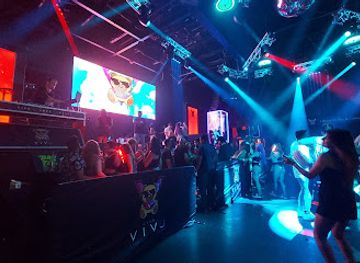
Discover the electrifying nightlife at Club VIVO, a premier night club in Dallas with top DJs and an unforgettable party atmosphere.
12 min walk · 1.0 km from neighbourhood centre
-
Night club
Feu Nightclub
Discover the fusion of nightlife and dining at Feu Nightclub, Dallas' premier destination for unforgettable evenings filled with music and flavor.
12 min walk · 0.9 km from neighbourhood centre
-
Night club
Rokwood Nightclub and Bar
Discover the exhilarating nightlife at Rokwood Nightclub and Bar, where music, drinks, and good vibes meet in the heart of Dallas.
3 min walk · 0.3 km from neighbourhood centre
-
Night club
Stars and Spirits
Experience the vibrant nightlife of Dallas at Stars and Spirits, where live music, dance, and cocktails create unforgettable memories.
5 min drive · 1.5 km from neighbourhood centre


Best shops in Downtown Dallas
Shopping in Downtown Dallas is more concentrated around markets, visitor retail, department-store remnants and independent businesses than around a single continuous shopping street. Main Street and the West End contain boutiques, souvenirs, galleries, convenience retail and shops serving office workers and visitors, while the Dallas Farmers Market at the southern edge offers produce, prepared food and stalls from local vendors. The Arts District adds museum shops and design-oriented retail connected to its cultural institutions. Downtown's historic buildings occasionally house specialist stores, cafés and small businesses, but the district is not Dallas's principal destination for large-scale fashion shopping; visitors seeking a deeper selection of luxury and mainstream brands generally travel beyond the neighbourhood to areas such as NorthPark or Uptown. The pleasure here is browsing within a multilayered urban district rather than following a tightly defined retail circuit.
-
Gift shop
Whiski Designs
Discover unique gifts and souvenirs at Whiski Designs, the heart of Dallas' shopping scene, where local artisans bring Texas culture to life.
18 min walk · 1.4 km from neighbourhood centre
-
Clothing store
Commerce Goods + Supply
Uncover unique clothing, home decor, and stationery at Commerce Goods + Supply, a must-visit shop in the heart of Dallas.
5 min walk · 0.4 km from neighbourhood centre
-
Gift shop
Texas Goods Company
Explore Texas Goods Company: Your one-stop gift shop for unique souvenirs, home decor, and handcrafted furniture in Dallas.
16 min walk · 1.3 km from neighbourhood centre
-
Clothing store
Forty Five Ten
Explore luxury fashion at Forty Five Ten, a premier clothing store in the heart of Dallas, where style meets sophistication.
8 min walk · 0.6 km from neighbourhood centre


Downtown Dallas essentials
Getting There
Getting Around
Safety
Emergency Situations
Do's and Don'ts
Local Tips

From Eve
Local phrases worth knowing
You don't need to get them perfect. A few words go a long way, and locals appreciate the effort.
Basics
| English | Local | Say it |
|---|---|---|
| Hello | Howdy | [haw-dee] |
| Goodbye | See ya | [see yuh] |
| Yes | Yep | [yep] |
| No | Nah | [nah] |
| Please/You're welcome | Please/You're welcome | [pleez/yur wel-cum] |
| Thank you | Thank ya | [thank yuh] |
| Excuse me/Sorry | Pardon me/My bad | [par-dn me/my bad] |
| How are you? | Howdy | [haw-dee] |
| Fine. And you? | Good. You? | [good. yuh] |
| Do you speak English? | Ya speak English? | [ya speak ing-glish] |
| I don't understand | I ain't catchin' on | [I aint katch-in on] |
Eating & Drinking
| English | Local | Say it |
|---|---|---|
| I'd like to see the menu, please | Can I check out the menu? | [kan I chek out the menu] |
| I don't eat meat | I don't do meat | [I dont do meat] |
| Cheers! | Cheers! | [cheers] |
| I would like to pay, please | Check please | [chek please] |
Emergencies
| English | Local | Say it |
|---|---|---|
| Help! | Help! | [help] |
| Go away! | Get lost! | [get lost] |
| Call the Police! | Call the cops! | [call the cops] |
| Call a doctor! | Get a doc! | [get a doc] |
| I'm lost | I'm lost | [Im lost] |
| I'm ill | I'm sick | [Im sick] |
Shopping
| English | Local | Say it |
|---|---|---|
| I'd like to buy... | I wanna buy... | [I wanna buy] |
| I'm just looking | Just lookin' | [just lookin] |
| How much is it? | How much? | [how much] |
| That's too expensive | That's too much | [thats too much] |
| Can you lower the price? | Can ya do better? | [can ya do bet-ter] |
Time & Numbers
| English | Local | Say it |
|---|---|---|
| What time is it? | What's the time? | [whats the time] |
| It's one o'clock | It's one | [its one] |
| Half past (10) | Ten thirty | [ten thur-tee] |
| Morning | Morning | [mor-ning] |
| Afternoon | Afternoon | [af-ter-noon] |
| Evening | Evening | [eve-ning] |
| Yesterday | Yesterday | [yes-ter-day] |
| Today | Today | [to-day] |
| Tomorrow | Tomorrow | [to-mor-row] |
| 1 | One | [wun] |
| 2 | Two | [too] |
| 3 | Three | [three] |
| 4 | Four | [four] |
| 5 | Five | [five] |
| 6 | Six | [six] |
| 7 | Seven | [sev-en] |
| 8 | Eight | [ate] |
| 9 | Nine | [nine] |
| 10 | Ten | [ten] |
Transport & Directions
| English | Local | Say it |
|---|---|---|
| Where's a/the...? | Where's the...? | [wheres the] |
| What's the address? | What's the address? | [whats the address] |
| Can you show me (on the map)? | Can you show me (on the map)? | [can you show me] |
| When's the next (bus)? | When's the next (bus)? | [whens the next bus] |
| A ticket (to ....) | A ticket (to ....) | [a ticket to] |
History of Downtown Dallas
Trading Settlement to County Seat
Dallas began as a settlement associated with John Neely Bryan, who established a trading post near the Trinity River in 1841. The town developed around the river crossing and the courthouse and commercial functions that followed, becoming the seat of Dallas County in 1846. Early downtown was not a planned cultural quarter but the practical centre of a growing North Texas community, with Main Street and surrounding blocks gradually filling with shops, offices, homes and civic buildings. The area's position between regional routes helped it become the city's principal meeting and trading place.
Railways and Commercial Expansion
Rail connections transformed downtown during the 1870s, linking Dallas more directly with regional markets and accelerating population growth, trade and construction. Brick commercial buildings replaced much of the earlier frontier fabric, while Main Street became an important retail and business corridor. Hotels, banks, warehouses and civic institutions followed, establishing the dense urban core that still defines downtown. The arrival of rail also strengthened Dallas's role as a distribution and wholesale centre for North Texas, even as the Trinity River remained a difficult geographical presence west of the district.
A Twentieth-Century Business Centre
During the early twentieth century, downtown Dallas acquired the office towers, department stores, theatres and financial institutions associated with a rapidly expanding commercial city. Buildings such as the Adolphus Hotel, the Magnolia Hotel and the Majestic Theatre reflect the period's confidence, while later modernist towers pushed the skyline higher. Retail and office activity concentrated around Main Street and adjoining blocks, and public infrastructure increasingly favoured automobiles. This growth gave downtown regional importance but also encouraged decentralisation as newer business and shopping areas developed beyond the historic core.
Dealey Plaza and Public Memory
Dealey Plaza was created in the 1930s as part of civic improvements near the western end of downtown, and its later significance came from the assassination of President John F. Kennedy on 22 November 1963. The former Texas School Book Depository, now home to the Sixth Floor Museum at Dealey Plaza, and the surrounding streets became internationally recognised sites of historical interpretation and public remembrance. The event brought intense scrutiny to downtown Dallas and permanently connected a small group of buildings and open spaces with one of the most consequential moments in modern American history.
Revival, Transit and Mixed-Use Downtown
Late twentieth-century suburban growth left parts of downtown quieter outside business hours, but public and private investment gradually encouraged a more mixed-use district. DART's light-rail network, opened in 1996, improved connections across the central city, while the West End's redevelopment, the Dallas Arts District, residential conversions and new public spaces brought more cultural and evening activity. Projects including Klyde Warren Park and the AT&T Discovery District continued this shift towards a district used for living, entertainment and events as well as offices. The result is a layered downtown where historic preservation, new construction and changing patterns of urban life remain visibly intertwined.
Downtown Dallas in Photos
Browse through our photo collection highlighting the charm and character of the destination.
Neighbourhoods near Downtown Dallas
The closest neighbourhoods to Downtown Dallas, if you have time for more than one stop.
-

-


Swipe for more neighbourhoods
Explore more

Explore more of Dallas
Dallas blends Texas history, acclaimed museums, live music, modern architecture and distinctive Tex-Mex dining across broad, energetic neighbourhoods.
Explore Dallas