

McKinney Falls State Park Travel Guide - Free Web & App
Your ultimate guide to McKinney Falls State Park. Discover top landmarks, proposed trips, and local tips. Free on the web or via the Evendo companion app.


McKinney Falls State Park in Texas pairs Onion Creek waterfalls, limestone landscapes, hiking, camping and Austin-area history in one compact escape.
Onion Creek and the Waterfalls
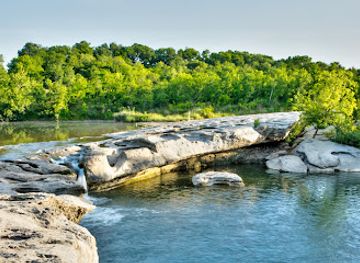
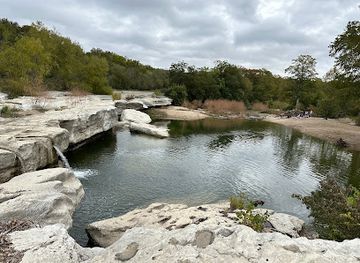
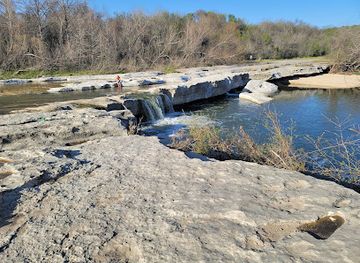
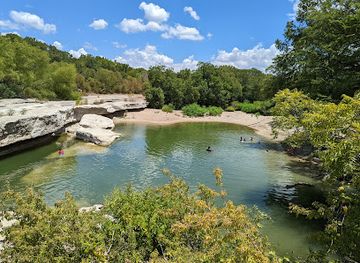
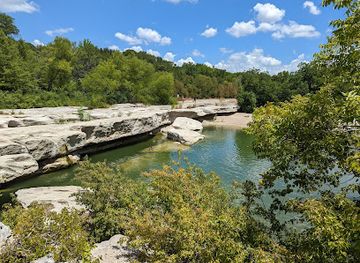
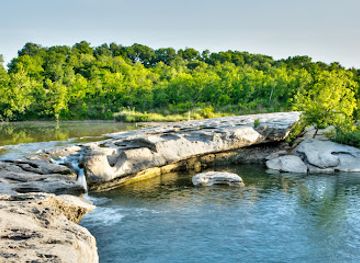
Just a short drive south-east of central Austin, McKinney Falls State Park protects a compact but varied landscape shaped by Onion Creek. The creek passes through layers of Central Texas limestone, forming Upper and Lower McKinney Falls, where water spills over broad shelves of pale rock. Flow varies considerably with rainfall, and the falls may be modest during dry periods or forceful after storms. The changing water level is part of the park’s character, but visitors should follow current conditions and posted guidance around the creek and swimming areas.Read more about McKinney Falls State Park
A Green Refuge Near Austin
History in the Landscape
When is the best time to visit McKinney Falls State Park?
Best: March–April, October · 22–27°C| Month | High (°C) | Rainfall (mm) |
|---|---|---|
| January | 17 | 56 |
| February | 18 | 61 |
| March (best) | 22 | 71 |
| April (best) | 26 | 86 |
| May | 30 | 107 |
| June | 33 | 91 |
| July | 35 | 66 |
| August | 34 | 76 |
| September | 32 | 102 |
| October (best) | 27 | 97 |
| November | 21 | 81 |
| December | 16 | 66 |
Getting to and around McKinney Falls State Park
How to get there
Transportation
Best attractions in McKinney Falls State Park
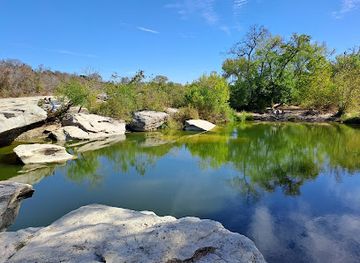
The principal attractions are Upper and Lower McKinney Falls, two limestone cascades on Onion Creek whose appearance changes with seasonal rainfall. The creek corridor offers shaded stretches, rocky shelves and pools, while the surrounding trails reveal the park’s mixture of live-oak woodland, juniper, open limestone and riparian habitat. The historic McKinney Homestead, centred on a nineteenth-century stone house associated with Thomas F. McKinney, adds a human dimension to the natural setting. Hiking routes connect these features with picnic areas, camping areas and quieter sections of the park, and cyclists can use designated routes where permitted. Water-based recreation depends on current conditions, rainfall and posted park guidance rather than on a permanent level of flow. The park’s position on Austin’s south-eastern edge also makes it a useful base for visitors interested in combining a protected creek landscape with the museums, neighbourhoods and cultural attractions of the state capital.
-
Park
Upper McKinney Falls
Explore Upper McKinney Falls in Austin, Texas, where breathtaking waterfalls meet scenic trails for an unforgettable outdoor adventure.
-
Visitor center
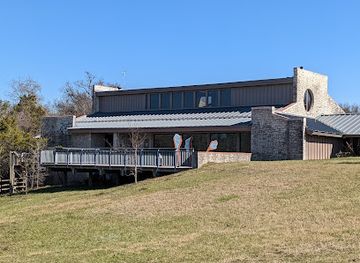
McKinney Falls Smith Visitor Center
Explore the beauty of Austin at McKinney Falls Smith Visitor Center—your gateway to adventure, nature, and scenic trails.
-
Waterfall
Lower McKinney Falls
Experience the breathtaking beauty of Lower McKinney Falls in Austin, Texas, a tranquil oasis perfect for outdoor adventures and relaxation.
-
Picnic ground
Smith Rock Shelter
Experience the beauty of Texas at Smith Rock Shelter — a tranquil picnic ground in McKinney Falls State Park, perfect for family outings and nature lovers.
Explore McKinney Falls State Park on the map
Plan your trip on one map. See where the top attractions, landmarks, restaurants and hotels are, and book hotels and experiences in a few clicks.
Best hotels in McKinney Falls State Park
Best restaurants in McKinney Falls State Park
McKinney Falls State Park is not a dining destination in its own right, so visitors generally bring a picnic or prepare food at their campsite and obtain substantial supplies before arriving. The surrounding Austin area provides the widest choice, from breakfast cafés and food trucks to barbecue restaurants, Tex-Mex kitchens and independent dining rooms shaped by the city’s Central Texas food culture. Nearby south-eastern Austin is more practical for provisions than the park, while central Austin offers the greatest breadth of regional and international cuisine. Visitors planning a full day outdoors should not assume that a meal or extensive refreshments will be available inside the park. Local specialities worth seeking in the wider city include smoked meats, corn-based Tex-Mex dishes, breakfast tacos and locally produced beer, with opening arrangements and availability varying by establishment.
-
State park
McKinney Falls State Park
Explore breathtaking waterfalls and scenic trails at McKinney Falls State Park in Austin - a perfect getaway for nature lovers.
Best shops in McKinney Falls State Park
Shopping within McKinney Falls State Park is limited to the practical needs of a day outdoors, so visitors should buy food, water, fuel, swim equipment and other supplies in Austin before entering the park. The nearest urban area provides supermarkets, pharmacies, outdoor retailers and general shops, while central Austin has the broadest selection of independent businesses, Texas-made goods, art and local food products. Visitors interested in regional purchases can look for items associated with Central Texas such as locally roasted coffee, hot sauces, craft beverages, barbecue ingredients, ceramics and work by Austin artists, although these are city-wide products rather than specialities sold at the falls. The park’s historic and natural character is better experienced on site than through souvenir retail, and visitors should not expect a substantial market or craft-shopping area within its boundaries.
-
State park
McKinney Falls State Park
Explore McKinney Falls State Park, a stunning natural retreat in Austin, Texas, featuring beautiful waterfalls, hiking trails, and abundant wildlife.
-
Park
Upper McKinney Falls
Discover the breathtaking waterfalls and scenic trails of Upper McKinney Falls in Austin, Texas, perfect for outdoor adventures and nature photography.
-
Visitor center
McKinney Falls Smith Visitor Center
Explore nature's beauty at McKinney Falls Smith Visitor Center, the gateway to stunning landscapes and vibrant wildlife in Texas.
-
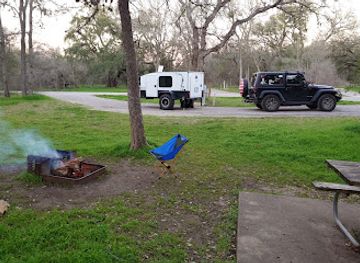
Campground
McKinney Falls State Park site 10
Experience the natural beauty of McKinney Falls State Park in Austin, Texas, where scenic trails, stunning waterfalls, and serene campsites await outdoor enthusiasts.
Get your free copy of our complete guide to McKinney Falls State Park, delivered straight to you.
Everything on this page, from attractions and restaurants to essentials and local phrases, in one PDF you can read offline, print or share.
Already have an account? Sign in
Your McKinney Falls State Park guide is ready.
We'll send it to · Not you? Sign out

Getting your guide ready…
We are putting together a fresh copy of the McKinney Falls State Park guide. This can take up to a minute.
This can take a few moments. If your browser asks, choose Allow so the download can start. You'll find the guide in your Downloads folder.
Nothing happened? Download it again
Sorry, the guide is taking longer than usual. Please try again in a minute, or get it by email instead.
McKinney Falls State Park essentials
Currency and Payment
Safety
Emergency Situations
Do's and Don'ts
Local Tips
From Eve
Local phrases worth knowing
You don't need to get them perfect. A few words go a long way, and locals appreciate the effort.
Basics
| English | Local | Say it |
|---|---|---|
| Hello | Howdy | [Hou-dee] |
| Goodbye | See ya | [See ya] |
| Yes | Yep | [Yep] |
| No | Nope | [Nope] |
| Please/You're welcome | Please/You're welcome | [Please/You're welcome] |
| Thank you | Thanks | [Thanks] |
| Excuse me/Sorry | Pardon me | [Par-don me] |
| How are you? | Howdy | [Hou-dee] |
| Fine. And you? | Fine. And you? | [Fine. And you?] |
| Do you speak English? | Do you speak English? | [Do you speak English?] |
| I don't understand | I don't understand | [I don't understand] |
Eating & Drinking
| English | Local | Say it |
|---|---|---|
| I'd like to see the menu, please | Can I see the menu, please | [Can I see the menu, please] |
| I don't eat meat | I don't eat meat | [I don't eat meat] |
| Cheers! | Cheers! | [Cheers!] |
| I would like to pay, please | I would like to pay, please | [I would like to pay, please] |
Emergencies
| English | Local | Say it |
|---|---|---|
| Help! | Help! | [Help!] |
| Go away! | Go away! | [Go away!] |
| Call the Police! | Call the Rangers! | [Call the Rangers!] |
| Call a doctor! | Call a doctor! | [Call a doctor!] |
| I'm lost | I'm lost | [I'm lost] |
| I'm ill | I'm sick | [I'm sick] |
Shopping
| English | Local | Say it |
|---|---|---|
| I'd like to buy... | I'd like to buy... | [I'd like to buy...] |
| I'm just looking | I'm just looking | [I'm just looking] |
| How much is it? | How much is it? | [How much is it?] |
| That's too expensive | That's too expensive | [That's too expensive] |
| Can you lower the price? | Can you lower the price? | [Can you lower the price?] |
Time & Numbers
| English | Local | Say it |
|---|---|---|
| What time is it? | What time is it? | [What time is it?] |
| It's one o'clock | It's one o'clock | [It's one o'clock] |
| Half past (10) | Half past (10) | [Half past (10)] |
| Morning | Morning | [Morning] |
| Afternoon | Afternoon | [Afternoon] |
| Evening | Evening | [Evening] |
| Yesterday | Yesterday | [Yesterday] |
| Today | Today | [Today] |
| Tomorrow | Tomorrow | [Tomorrow] |
| 1 | 1 | [1] |
| 2 | 2 | [2] |
| 3 | 3 | [3] |
| 4 | 4 | [4] |
| 5 | 5 | [5] |
| 6 | 6 | [6] |
| 7 | 7 | [7] |
| 8 | 8 | [8] |
| 9 | 9 | [9] |
| 10 | 10 | [10] |
Transport & Directions
| English | Local | Say it |
|---|---|---|
| Where's a/the...? | Where's a/the...? | [Where's a/the...?] |
| What's the address? | What's the address? | [What's the address?] |
| Can you show me (on the map)? | Can you show me (on the map)? | [Can you show me (on the map)?] |
| When's the next (bus)? | When's the next (bus)? | [When's the next (bus)?] |
| A ticket (to ....) | A ticket (to ....) | [A ticket (to ....)] |
History of McKinney Falls State Park
Limestone, Water and Early Use
McKinney Falls State Park lies within the limestone country of Central Texas, where erosion by Onion Creek created the ledges and channels that form its two principal waterfalls. Long before the present park existed, the creek corridor provided water, shade and a route through the surrounding uplands. Indigenous peoples, including groups associated with the Tonkawa and Lipan Apache, used the broader Central Texas region, although the surviving park landscape offers limited interpretation of specific earlier sites. The natural setting remained important as later settlement expanded around the developing town of Austin.
Thomas F. McKinney’s Homestead
The park takes its name from Thomas F. McKinney, an early Anglo-American settler who arrived in Texas during the nineteenth century and became involved in ranching, commerce and public affairs. His homestead stood beside Onion Creek, taking advantage of the watercourse and fertile ground. The surviving McKinney Homestead, including its stone house, reflects the practical construction and rural life of the period. McKinney’s activities formed part of the wider transformation of Central Texas from Indigenous homeland and frontier territory into an increasingly settled agricultural and commercial landscape.
Farming and Changing Land Use
During the nineteenth and early twentieth centuries, the creek corridor supported farming and domestic activity, while roads and settlement gradually connected the area more closely with Austin. The landscape was shaped by grazing, cultivation, construction and the demands placed on local watercourses. Floods and droughts, both natural features of the region, influenced how land could be used. The historic buildings and large trees that remain in the park provide tangible evidence of this earlier rural occupation, even though the area is now primarily valued for conservation and public recreation.
From Private Land to State Park
Texas acquired the property for public recreation and conservation in the twentieth century, and McKinney Falls State Park opened to visitors in 1976. Its creation reflected a growing effort to protect representative landscapes near expanding cities while providing space for hiking, camping and outdoor education. Management by Texas Parks and Wildlife has since brought together protection of Onion Creek, the waterfalls, woodland habitats and historic resources. The park’s modern identity therefore rests on both its natural setting and the preservation of a small but significant part of the Austin area’s settlement history.
McKinney Falls State Park in Photos
Browse through our photo collection highlighting the charm and character of the destination.
Neighbouring destination travel guides
The closest destinations to McKinney Falls State Park, if you have time for more than one.
-

-

-
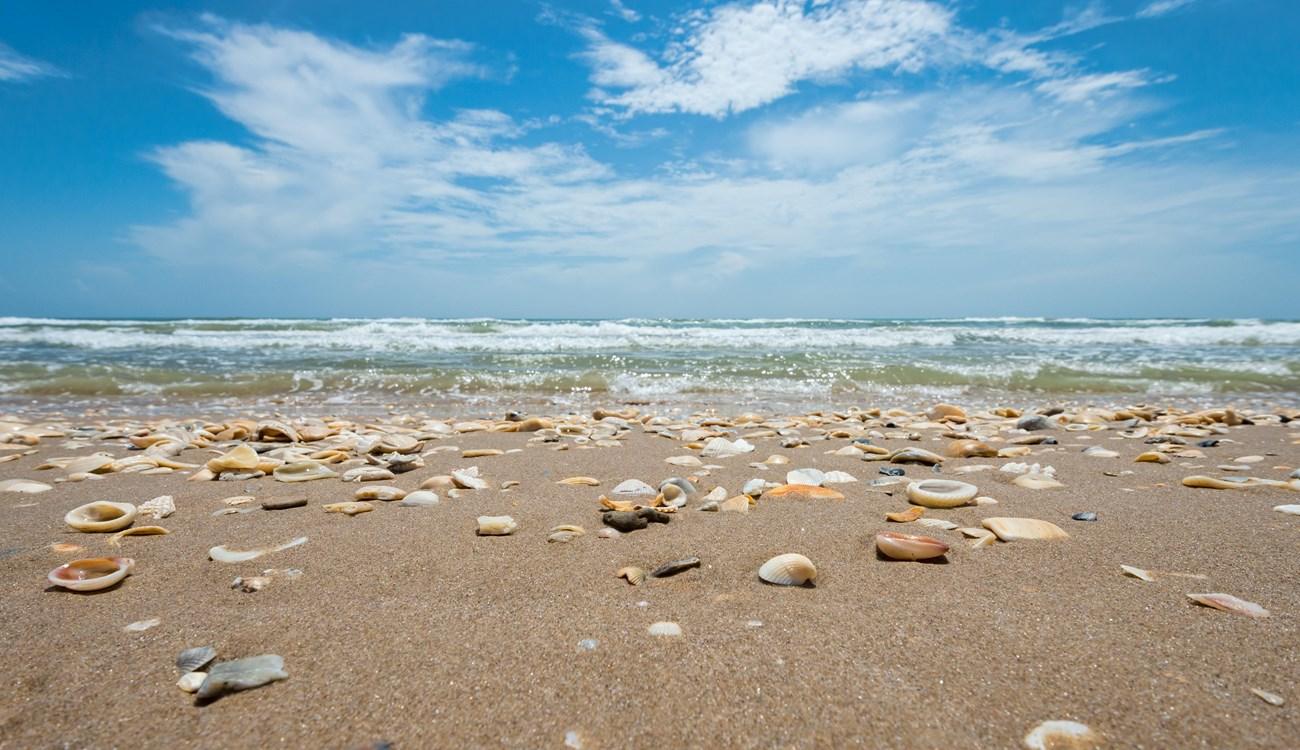 Padre Island National Seashore
, Texas: sea turtles, shorebirds, wild beaches, dunes, camping and quiet Gulf Coast adventure near Corpus Christi.
Padre Island National Seashore
Padre Island National Seashore, Texas: sea turtles, shorebirds, wild beaches, dunes, camping and quiet Gulf Coast adventure near Corpus Christi.
-

-


Swipe for more destinations
Explore more
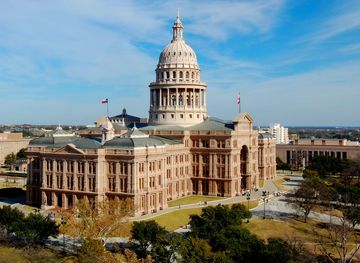
Explore more of Central Texas
Central Texas combines Austin's music and food scene with San Antonio missions, Hill Country landscapes, rivers, vineyards and distinctive Texan heritage.
Explore Central Texas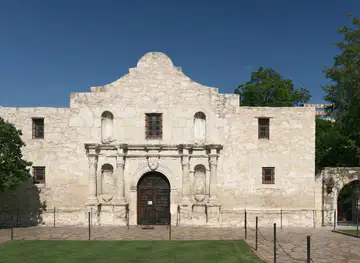
Explore more of Texas
Discover the diverse landscapes, rich history, vibrant cities, and culinary delights of Texas, the Lone Star State, where adventure and culture await at every turn.
Explore Texas