

Hoverla Mountain, Ukraine Travel Guide
Discover Hoverla Mountain, the highest peak in Ukraine, offering breathtaking views, challenging hikes, and a connection to nature in the heart of the Carpathians.
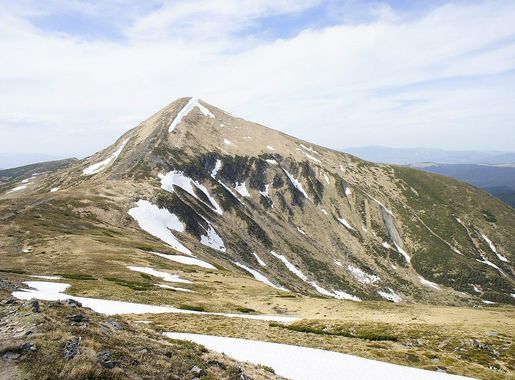
Hoverla Mountain, standing tall at 2,061 meters, is the highest peak in Ukraine. Located within the Carpathian Mountains, it is a beloved destination for nature enthusiasts, hikers, and adventure seekers. The mountain is part of the Carpathian National Nature Park, which boasts stunning landscapes, lush forests, and diverse wildlife. The views from the summit are breathtaking, offering panoramic sights of the surrounding peaks and valleys. The ascent to Hoverla is challenging but rewarding. There are several trails leading to the summit, each varying in difficulty and length. The most popular route starts from the village of Vorokhta, which is accessible by train or car. As you climb, you will pass through enchanting forests and open meadows, with the crisp mountain air invigorating your senses. In the winter, the mountain transforms into a snowy wonderland, attracting skiers and snowboarders. Hoverla is not just about the climb; it’s about the experience. The mountain holds cultural significance for Ukrainians and is a symbol of national pride. Many visitors choose to camp in the area, allowing them to fully immerse themselves in the serene environment. Whether you are an experienced hiker or a casual nature lover, Hoverla Mountain promises an unforgettable adventure.

Know before you go
Hi, I'm Eve. Here are a few practical things to know before exploring Hoverla Mountain.
- Check the weather forecast before you go. Conditions can change quickly in the mountains.
- Wear sturdy hiking boots and bring layers of clothing. Temperatures can vary greatly from base to summit.
- Carry enough water and snacks for the hike. There are no facilities on the mountain.
- Start your hike early in the morning to avoid afternoon thunderstorms.
- Respect the natural environment. Do not leave any trash behind.
- Consider hiring a local guide, especially if you are unfamiliar with the area.
- Bring a map or download an offline trail app. Mobile signal can be unreliable.
Explore Hoverla Mountain: Things to Do, Places to Eat, Hotels & More
Handpicked recommendations for top attractions, local dining, accommodations, and more

Best attractions in Hoverla Mountain
Top-rated picks
Best Attractions
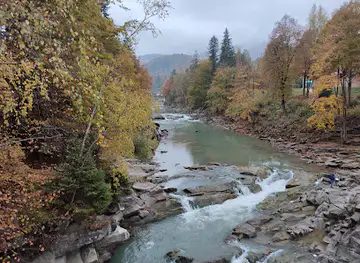
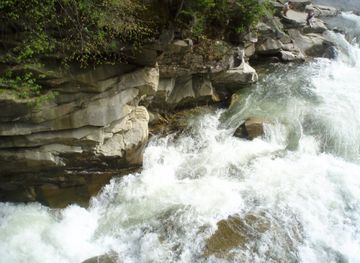
Waterfall Probiy
Discover the breathtaking beauty of Waterfall Probiy in Yaremche, a must-visit natural attraction in Ukraine's Carpathian Mountains.
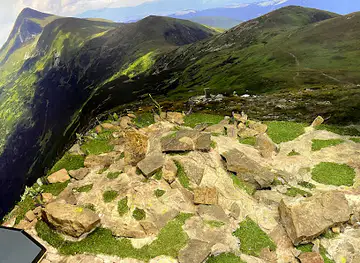
Upside Down House
Visit the Upside Down House in Polyanytsya for a quirky and fun-filled experience that challenges your perception of architecture and reality.

Hoverla
Explore the breathtaking views and exhilarating trails of Hoverla, the highest peak in Ukraine, nestled in the stunning Carpathian Mountains.

Zhenetsʹkyy Huk waterfall
Explore the breathtaking Zhenetsʹkyy Huk Waterfall, a stunning natural attraction in Ivano-Frankivsk Oblast, showcasing the beauty of Ukraine's nature.


Best restaurants in Hoverla Mountain
Top-rated picks
Best Restaurants

Mushroom House
Discover authentic Ukrainian cuisine at the Mushroom House in Polyanytsya - where tradition meets flavor in a delightful setting.
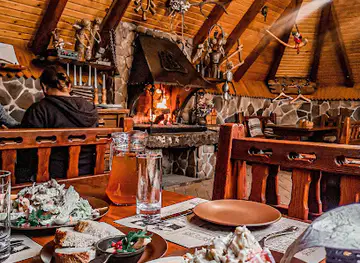
Stara Vorokhta
Experience authentic Ukrainian cuisine at Stara Vorokhta, where tradition meets flavor in every dish.

Vysokyy Pereval
Experience authentic Ukrainian flavors at Vysokyy Pereval in Yablunytsya – where tradition meets taste amidst stunning mountain views.

Cufer
Experience authentic Ukrainian cuisine amidst breathtaking landscapes at Cufer Restaurant in Tatariv.

Best bars in Hoverla Mountain
Top-rated picks
Best Bars

Bartik Brewpub
Discover unique local brews and hearty meals at Bartik Brewpub in the scenic Polyanytsya, Ivano-Frankivsk Oblast.

Simka Bar
Experience the warmth and charm of Simka Bar in Bukovel, where delightful drinks and a cozy atmosphere await every visitor.
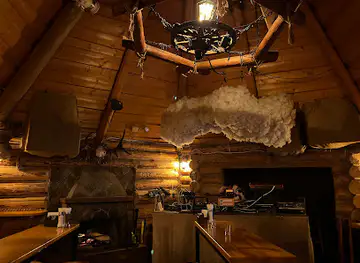
Gogol bar
Discover Gogol Bar in Zakarpattia Oblast, where vibrant nightlife meets local culture, offering an unforgettable experience for all visitors.

Rock-Pub
Experience the charm of Velykyi Bychkiv at Rock-Pub, where locals gather for refreshing drinks and warm hospitality in a cozy setting.


Best shops in Hoverla Mountain
Top-rated picks
Best Shops

Hoverla
Discover the breathtaking beauty of Hoverla, Ukraine's tallest peak, where adventure meets stunning natural landscapes in the heart of the Carpathians.

Vershyna
Explore the vibrant flavors of Ukraine at Vershyna, your go-to grocery store in Vorokhta for fresh local produce and traditional snacks.

Zustrich
Discover the flavors of Ukraine at Zustrich, a delightful grocery store and cafeteria in Ivano-Frankivsk Oblast, perfect for a culinary adventure.

Hoverla.
Explore Hoverla, the enchanting souvenir store in Ivano-Frankivsk Oblast, where local crafts and culture come to life.

Explore Hoverla Mountain on the Map
A handpicked selection of must-see spots in Hoverla Mountain, mapped for you.
Hoverla Mountain Essentials
-
Hoverla Mountain is located in the Carpathian Mountains of Ukraine. The nearest major city is Ivano-Frankivsk, which has an airport and train station. From Ivano-Frankivsk, you can take a bus or a taxi to the town of Vorokhta, which is a common starting point for trips to Hoverla. The journey from Ivano-Frankivsk to Vorokhta typically takes around 2 to 3 hours by road. Alternatively, you can also start from the town of Yaremche, which is another popular gateway to the mountain.
-
Once in Vorokhta or Yaremche, you can hire a local guide or join a tour group to reach Hoverla Mountain. Public minibuses (marshrutkas) also operate between these towns and the base of the mountain. For those preferring more flexibility, renting a car is a viable option, but be prepared for mountainous roads that can be challenging to navigate. Hiking is the primary mode of transportation to reach the summit of Hoverla, and the trails are well-marked and maintained.
-
The official currency in Ukraine is the Ukrainian Hryvnia (UAH). Credit cards are accepted in larger hotels, restaurants, and shops in cities like Ivano-Frankivsk, but it is advisable to carry cash, especially in smaller towns and rural areas. ATMs are available in Vorokhta and Yaremche, but it's wise to withdraw sufficient cash before heading to the mountain.
-
Hoverla Mountain is generally a safe destination for tourists. However, it is essential to take standard precautions. Avoid hiking alone, especially in difficult weather conditions, and always inform someone of your plans. While crime rates are low, keep an eye on your belongings in crowded areas and do not leave valuables unattended. There are no specific high-crime areas targeting tourists, but it is always best to stay vigilant and aware of your surroundings.
-
In case of emergency, dial 112 for immediate assistance. Local emergency services are available, but response times can be longer in remote mountain areas. It is recommended to have travel insurance that covers medical emergencies and evacuation. For minor health issues, there are pharmacies in Vorokhta and Yaremche where you can purchase over-the-counter medications. Always carry a basic first aid kit while hiking.
-
Fashion: Do wear appropriate hiking gear, including sturdy boots and weather-appropriate clothing. Avoid wearing flip-flops or open-toed shoes. Religion: Do respect local customs and traditions. When visiting religious sites, dress modestly and cover your head if required. Public Transport: Do be respectful and give up your seat to elderly passengers. Don't eat or drink on public transport. Greetings: Do greet people with a handshake. Ukrainians appreciate politeness and a friendly demeanor. Eating & Drinking: Do try local delicacies and accept food offerings graciously. Don't refuse hospitality, as it is considered impolite.
-
To experience Hoverla Mountain like a local, visit during the off-peak seasons to avoid crowds and enjoy a more serene environment. Engage with local guides who can share stories about the mountain's history and folklore. Don't miss the chance to visit traditional Hutsul villages nearby to experience authentic local culture and crafts. Packing a small picnic with local cheeses and bread can make for a delightful meal with a view at the summit.
When is the best time to visit Hoverla Mountain?
Useful Local Phrases for Hoverla Mountain
You don't need to speak the language perfectly. Even learning a few simple words can make conversations warmer—and locals usually appreciate the effort.
— Eve

Here are the phrases I use most often in Hoverla Mountain. Try a few—you'll be surprised how far they go! 😊
❤️
-
- HelloПривіт
[Pryvit] - GoodbyeДо побачення
[Do pobachennya] - YesТак
[Tak] - NoНі
[Ni] - Please/You're welcomeБудь ласка
[Budʹ laska] - Thank youДякую
[Dyakuyu] - Excuse me/SorryВибачте
[Vybachte] - How are you?Як ви?
[Yak vy?] - Fine. And you?Добре. А ви?
[Dobre. A vy?] - Do you speak English?Ви говорите англійською?
[Vy hovoryte anhliysʹkoyu?] - I don't understandЯ не розумію
[Ya ne rozumiyu]
- HelloПривіт
-
- I'd like to see the menu, pleaseЯ б хотів подивитися меню, будь ласка
[Ya b khotiv podyvytysya meny, budʹ laska] - I don't eat meatЯ не їм м'ясо
[Ya ne yim m'yaso] - Cheers!Будьмо!
[Budʹmo!] - I would like to pay, pleaseЯ б хотів розрахуватися, будь ласка
[Ya b khotiv rozrakhuvatysya, budʹ laska]
- I'd like to see the menu, pleaseЯ б хотів подивитися меню, будь ласка
-
- Help!Допоможіть!
[Dopomozhitʹ!] - Go away!Піди геть!
[Pidi hetʹ!] - Call the Police!Покличте поліцію!
[Poklychte politsiyu!] - Call a doctor!Покличте лікаря!
[Poklychte likarya!] - I'm lostЯ загубився
[Ya zahubyvsya] - I'm illЯ хворий
[Ya khvoryy]
- Help!Допоможіть!
-
- I'd like to buy...Я б хотів купити...
[Ya b khotiv kupity...] - I'm just lookingЯ просто дивлюсь
[Ya prosto dyvlyusʹ] - How much is it?Скільки це коштує?
[Skilʹky tse koshtuye?] - That's too expensiveЦе занадто дорого
[Tse zanadto doroho] - Can you lower the price?Чи можна знизити ціну?
[Chy mozhna znyzyty tsinu?]
- I'd like to buy...Я б хотів купити...
-
- What time is it?Котра година?
[Kotra hodyna?] - It's one o'clockОдинадцята година
[Odynadtsyata hodyna] - Half past (10)Пів на одинадцяту
[Piv na odynadtsyatu] - MorningРанок
[Ranok] - AfternoonДень
[Denʹ] - EveningВечір
[Vechir] - YesterdayВчора
[Vchora] - TodayСьогодні
[Sʹogodni] - TomorrowЗавтра
[Zavtra] - 1Один
[Odyn] - 2Два
[Dva] - 3Три
[Try] - 4Чотири
[Chotyry] - 5П'ять
[P'yatʹ] - 6Шість
[Shistʹ] - 7Сім
[Sim] - 8Вісім
[Visim] - 9Дев'ять
[Dev'yatʹ] - 10Десять
[Desyatʹ]
- What time is it?Котра година?
-
- Where's a/the...?Де є/знаходиться...?
[De ye/znakhodytsya...?] - What's the address?Яка адреса?
[Yaka adresa?] - Can you show me (on the map)?Чи можете показати мені (на мапі)?
[Chy mozhete pokazaty meni (na mapi)?] - When's the next (bus)?Коли наступний (автобус)?
[Koly nastupnyy (avtobus)?] - A ticket (to ....)Квиток (до ....)
[Kvytok (do ....)]
- Where's a/the...?Де є/знаходиться...?
History of Hoverla Mountain
-
Hoverla Mountain, part of the Carpathian range, has been a significant landmark for the local Hutsul people for centuries. The Hutsuls, known for their distinct culture and traditions, have lived in the Carpathians for over a millennium. Their folklore is rich with stories about Hoverla, considered a sacred site and a symbol of natural beauty.
-
In the late 9th century, the region encompassing Hoverla became part of the Principality of Carpathian Ruthenia. This period saw the development of early Slavic culture in the Carpathians, with the mountain serving as both a natural barrier and a place of spiritual significance.
-
During the Austro-Hungarian Empire, Hoverla and the surrounding Carpathians were popular for timber and hunting. The Empire built some of the first roads and paths through the Carpathians, opening up the region for exploration and economic development.
-
After World War I, the Treaty of Versailles placed Hoverla within the borders of Poland. During the interwar period, the mountain became a popular destination for Polish tourists and hikers. The Polish government invested in developing infrastructure to support the growing interest in the region's natural beauty.
-
Following World War II, Hoverla became part of the Soviet Union. The mountain was declared a natural preserve, and Soviet policies focused on conservation and scientific study of the Carpathian ecosystem. The area was also used for military training exercises due to its rugged terrain.
-
Since Ukraine's independence in 1991, Hoverla has become a symbol of national pride. It is the highest point in Ukraine, and scaling its peak has become a popular activity among Ukrainians and international tourists alike. The mountain is also a venue for cultural and patriotic events, underscoring its significance in Ukrainian identity.
-
Today, Hoverla is part of the Carpathian Biosphere Reserve, a UNESCO site. Efforts to preserve the unique flora and fauna of the region are ongoing, with a focus on sustainable tourism and environmental education. The reserve aims to balance human activity with the need to protect the natural landscape.
Neighbouring destination travel guides
Browse our curated selection of top destinations, scenic points, and must-visit spots in the area.



Your all‑in‑one travel companion app
Explore expert travel guides, compare and book tours, experiences, hotels, and more—all from the palm of your hand. Download now for seamless trip planning wherever your wanderlust takes you.


Explore More of Bukovina
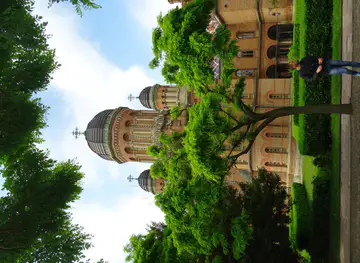
Looking beyond Hoverla Mountain? Discover Bukovina for broader travel guides, local hot-spots, and regional highlights.
Explore BukovinaExplore More of Ukraine

Looking beyond Hoverla Mountain? Discover Ukraine for broader travel guides, local hot-spots, and regional highlights.
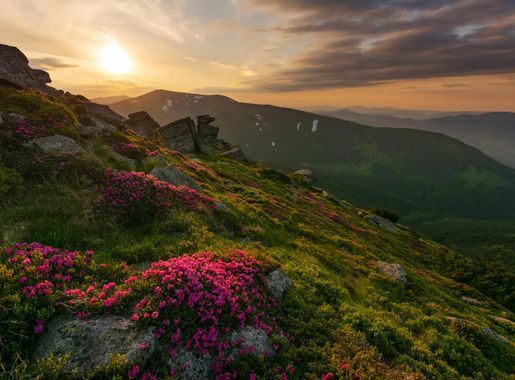
Explore UkraineHoverla Mountain in Photos
Browse through our photo collection highlighting the charm and character of the destination.





Hoverla Mountain: The Roof of Ukraine
Hoverla Mountain, standing tall at 2,061 meters, is the highest peak in Ukraine. Located within the Carpathian Mountains, it is a beloved destination for nature enthusiasts, hikers, and adventure seekers. The mountain is part of the Carpathian National Nature Park, which boasts stunning landscapes, lush forests, and diverse wildlife. The views from the summit are breathtaking, offering panoramic sights of the surrounding peaks and valleys. The ascent to Hoverla is challenging but rewarding. There are several trails leading to the summit, each varying in difficulty and length. The most popular route starts from the village of Vorokhta, which is accessible by train or car. As you climb, you will pass through enchanting forests and open meadows, with the crisp mountain air invigorating your senses. In the winter, the mountain transforms into a snowy wonderland, attracting skiers and snowboarders. Hoverla is not just about the climb; it’s about the experience. The mountain holds cultural significance for Ukrainians and is a symbol of national pride. Many visitors choose to camp in the area, allowing them to fully immerse themselves in the serene environment. Whether you are an experienced hiker or a casual nature lover, Hoverla Mountain promises an unforgettable adventure.