David Hume Statue, Edinburgh Travel Guide
Free Guide: A striking bronze tribute to philosopher David Hume, blending classical imagery with Edinburgh’s Enlightenment heritage and a toe-rubbing tradition for luck.


A brief summary of David Hume Statue
A striking bronze tribute to philosopher David Hume, blending classical imagery with Edinburgh’s Enlightenment heritage and a toe-rubbing tradition for luck.
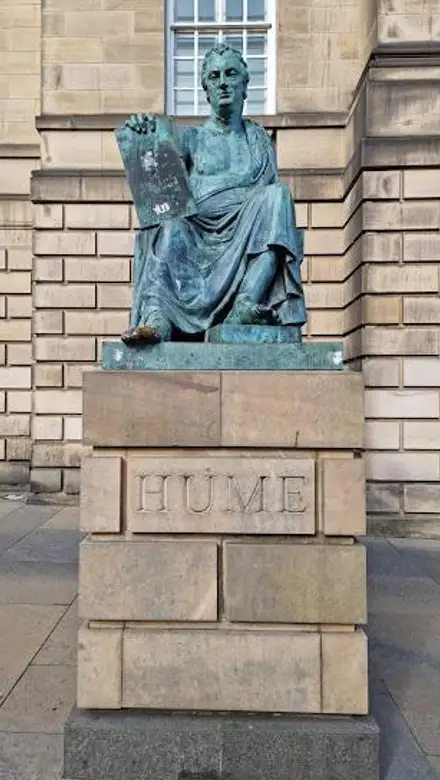
The David Hume Statue, located at 379-381 High Street in Edinburgh, is a striking bronze monument portraying the Scottish Enlightenment philosopher in classical Greek attire. Erected in 1997 outside the High Court, the statue is famous for its polished toe, rubbed by visitors for good luck and wisdom. The monument commemorates Hume’s profound influence on philosophy, history, and economics, while also sparking debate due to his controversial views on race.
On-site amenities
 Information boards
 Seating areas
 Trash bins
 Restrooms
 Drink options
 Food options
Opening hours
- Every dayOpen 24 hours
Opening hours as listed on the venue’s Google Business Profile. Hours can change for services and special events, so check with the venue before you go.
- Address
- 379-381 High St, Edinburgh EH1 1PW
Getting there
Bus
Tram and Walk
Taxi or Rideshare
Walking
Discover more about David Hume Statue
A Tribute to a Scottish Enlightenment Giant
The David Hume Statue stands prominently on Edinburgh’s Royal Mile, outside the High Court building at 379-381 High Street. Sculpted by Alexander "Sandy" Stoddart and unveiled in 1997, the statue depicts Hume as an ancient Greek philosopher, a classical artistic choice that contrasts with his 18th-century Scottish identity. This nine-foot bronze figure reclines thoughtfully, his right foot’s big toe extending over the plinth’s edge, now polished to a golden sheen from centuries of visitors rubbing it for luck or wisdom. Hume’s legacy as a pioneering empiricist philosopher, historian, economist, and skeptic is deeply embedded in Edinburgh’s intellectual heritage, marking him as one of the most influential figures of the Scottish Enlightenment.
Philosophical Legacy and Controversies
David Hume (1711–1776) was a central figure in the Scottish Enlightenment, a period of remarkable intellectual and scientific advancement. His philosophy emphasized empirical observation and skepticism, challenging established religious and metaphysical doctrines. Hume’s writings on human nature, government, and economics have had enduring influence worldwide. However, his legacy is complicated by his documented racist views, particularly in his essay "Of National Characters," where he expressed beliefs in the inherent inferiority of non-white races. These views have sparked ongoing debates about how to reconcile his intellectual contributions with his problematic opinions, prompting discussions about the statue’s role in public memory and historical representation.
Local Traditions and Visitor Experience
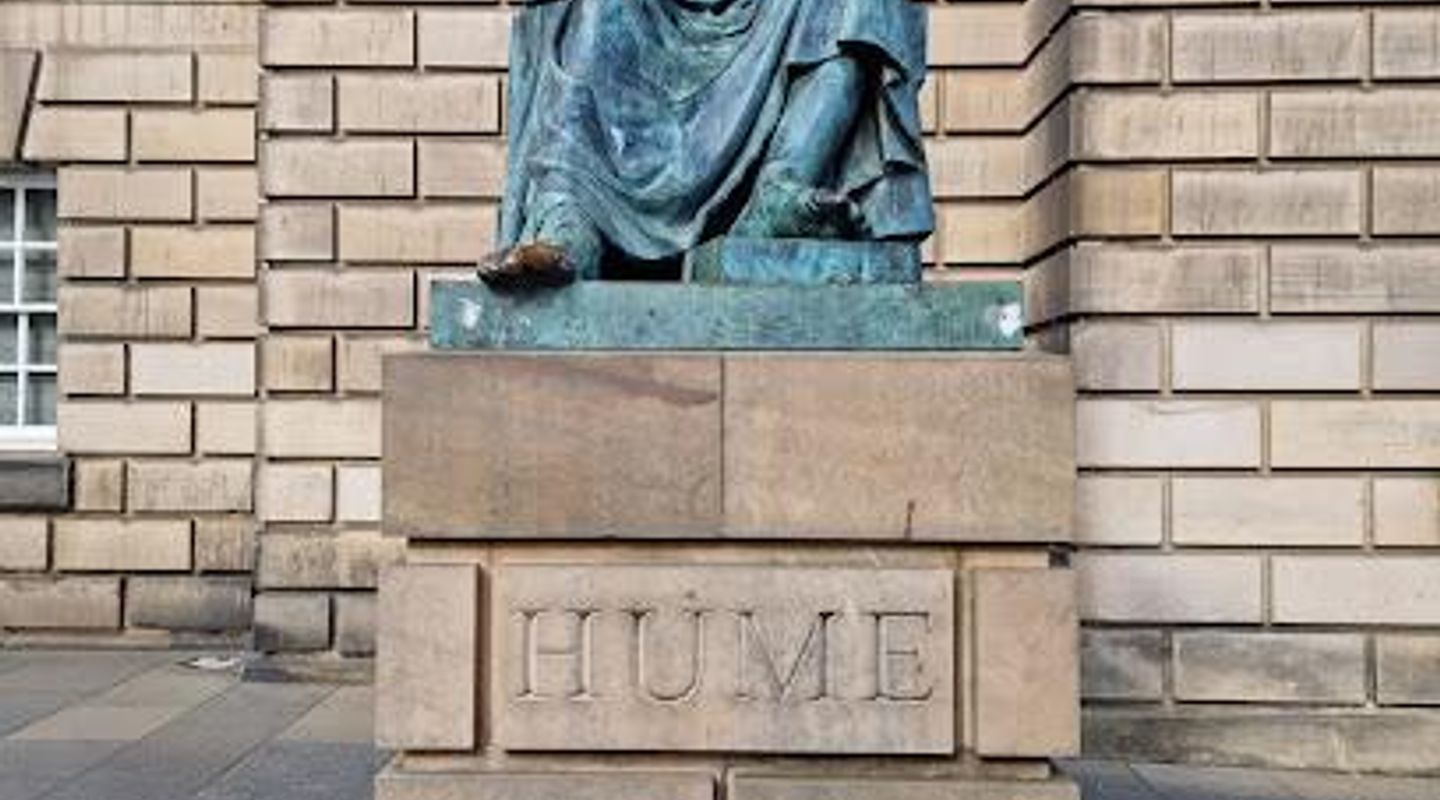
The statue has become a beloved local landmark and tourist attraction, with a unique tradition of visitors rubbing Hume’s toe for good fortune. This ritual, ironically, contrasts with Hume’s strong opposition to superstition. The statue’s location outside the High Court has also led to folklore that defendants might touch the toe for luck in their legal cases. Beyond the toe, visitors are encouraged to look behind the statue to see Stoddart’s depiction of Helios, the Greek god of enlightenment, whose head is encircled by snakes symbolizing the fight against anti-intellectualism. The statue’s presence on the Royal Mile situates it amid Edinburgh’s rich historical and cultural tapestry, near landmarks such as St Giles’ Cathedral and the Heart of Midlothian mosaic.
Historical Context and Commemoration
Hume was born and died in Edinburgh, spending much of his life in the city’s Old Town and New Town. Despite his profound impact on philosophy and the intellectual life of Scotland, Hume faced opposition during his lifetime due to his atheism and skepticism, which cost him academic positions. His burial site is in Old Calton Cemetery, marked by a modest tomb designed by architect Robert Adam, reflecting Hume’s wish for simplicity. The statue, by contrast, is a grand public acknowledgment of his enduring influence, though it also serves as a focal point for contemporary reflections on the complexities of historical figures.
Artistic and Symbolic Elements
Artist Alexander Stoddart’s design intentionally blends classical imagery with Hume’s Scottish identity, presenting him in philosopher’s robes reminiscent of ancient Greece. The statue’s size and detailed craftsmanship make it a striking visual landmark on the Royal Mile. The polished toe has become a tactile symbol of connection between visitors and Hume’s intellectual legacy, while the nearby Helios figure adds layers of meaning about enlightenment and the struggle against ignorance. The statue’s placement in front of the High Court building also underscores Hume’s engagement with law and government theory.
Engaging with the Statue Today
Today, the David Hume Statue invites visitors to reflect on the Scottish Enlightenment’s profound contributions to modern thought, as well as the ongoing challenges of interpreting historical legacies. It stands as both a celebration and a conversation starter, encouraging thoughtful engagement with Hume’s philosophy and the ethical questions raised by his controversial views. The statue’s location on the bustling Royal Mile ensures it remains a vital part of Edinburgh’s cultural and historical landscape, drawing scholars, tourists, and locals alike.
Evendo Review Centre
 Google
Guest reviews
Best time to go
Quietest: Jan, Feb & Mar · before 6am or from 11pm
Busy times are Evendo estimates for a typical year, to help you plan. Actual crowds vary with events, school holidays and the weather.
Explore David Hume Statue on the map
A handpicked selection of must-see spots near David Hume Statue, mapped for you.
Get your free copy of our complete guide to David Hume Statue, delivered straight to you.
Everything on this page, from opening hours and how to get there to Eve’s tips and the best time to go, in one PDF you can read offline, print or share.
Already have an account? Sign in
Your David Hume Statue guide is ready.
We'll send it to · Not you? Sign out

Getting your guide ready…
We are putting together a fresh copy of the David Hume Statue guide. This can take up to a minute.
This can take a few moments. If your browser asks, choose Allow so the download can start. You'll find the guide in your Downloads folder.
Nothing happened? Download it again
Sorry, the guide is taking longer than usual. Please try again in a minute, or get it by email instead.
Unlock the best of David Hume Statue
Skip-the-line tickets, guided tours with entry, and walking tours of the area, booked in a few clicks.
 Tour with entry
Edinburgh Old Town Walking Tour with an App
from $9.49 Tour with entry
Royal Mile, Edinburgh Walking Tour with Audioguide
from $10.61 Tour with entry
Edinburgh 3 Hours Walking Tour English Tour Guide
from $21.35 Tour with entry
Self-guided Discovery Walk in Edinburgh: An Obscure Adventure
from $27.60


Other nearby places you may find interesting
The closest places of the same kind, if this one is not quite what you had in mind.
-
Scott Monument Climb 287 steps to Scotland's greatest literary tribute and Edinburgh's most iconic skyline views.
-
Edinburgh Castle Explore Scotland’s iconic fortress atop Castle Rock, where history, tradition, and panoramic city views converge in Edinburgh’s heart.
-
National Monument of Scotland Edinburgh's iconic unfinished Parthenon—a monument to ambition, sacrifice, and Scottish identity perched atop Calton Hill.
-
Flodden Wall Explore Edinburgh’s historic Flodden Wall, a 16th-century fortress that shaped the city’s medieval heart and stands as a testament to resilience and history.
-
Dugald Stewart Monument A neoclassical tribute to philosopher Dugald Stewart, offering iconic views over Edinburgh from historic Calton Hill.
Swipe for more places
More to explore near David Hume Statue

 Best experiences near David Hume Statue
 Best hotels near David Hume Statue
 Best landmarks near David Hume Statue
 Best attractions near David Hume Statue
 Best shops near David Hume Statue
 Best restaurants near David Hume Statue
 Best bars near David Hume Statue
Do you manage this location?
Take control to get all the benefits, like improved information, better appearance, and stronger visibility across AI-powered discovery.
Explore more

Explore more of Edinburgh
Discover the enchanting blend of history, culture, and natural beauty in Edinburgh, Scotland's captivating capital city.
Explore Edinburgh
Explore more of United Kingdom
Discover the United Kingdom: A blend of rich history, stunning landscapes, and vibrant cities, offering a unique travel experience for every visitor.
Explore United Kingdom