Multangular Tower, Leeds Travel Guide
Free Guide: A ten-sided Roman fortress tower bearing the marks of two millennia of warfare and siege.


A brief summary of Multangular Tower
A ten-sided Roman fortress tower bearing the marks of two millennia of warfare and siege.
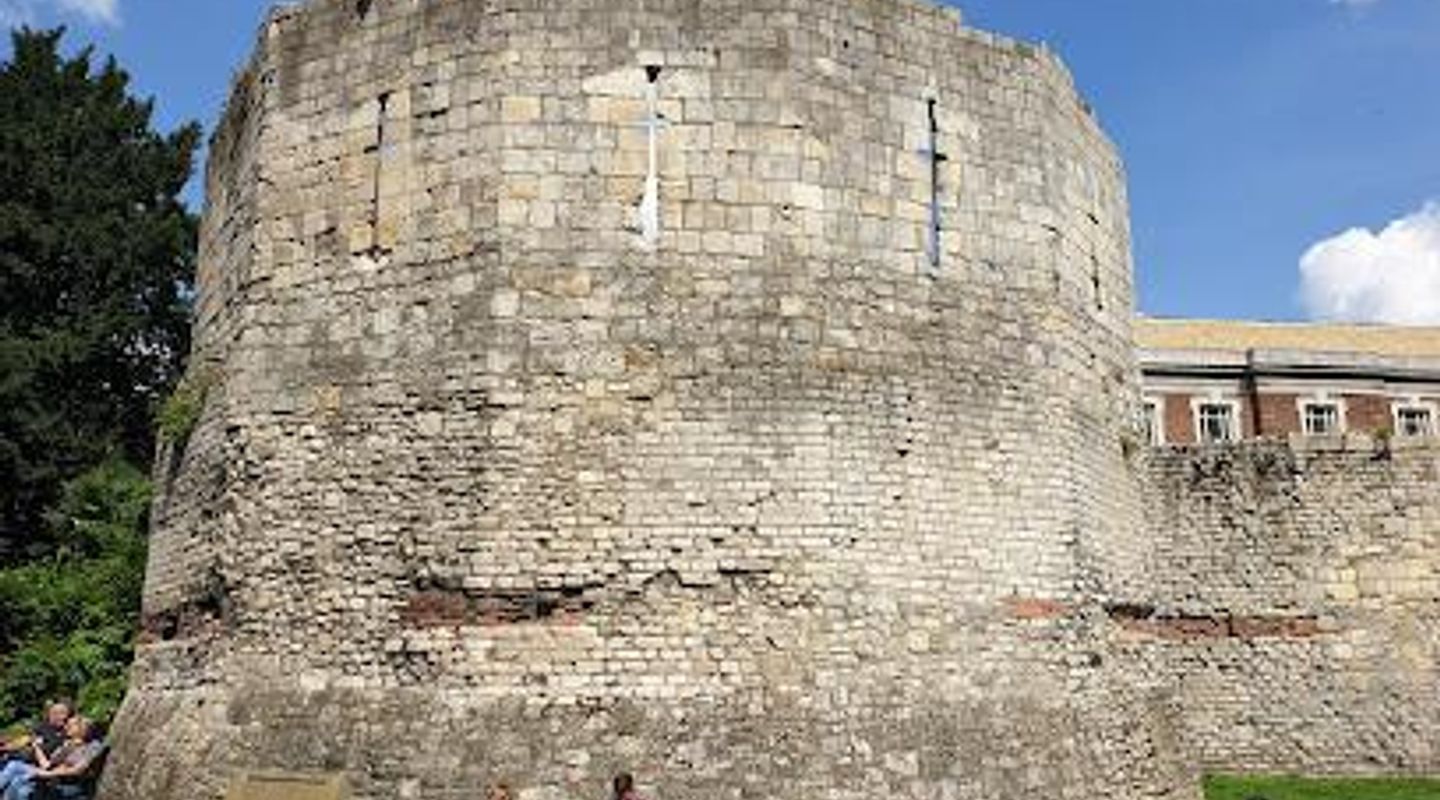
A striking ten-sided Roman stone tower dating to the early 3rd century AD, the Multangular Tower stands as one of York's most impressive surviving Roman structures. Originally built as a corner defensive tower of the legionary fortress, it showcases distinct layers of Roman masonry at its base and medieval reconstruction above. Located within the scenic Museum Gardens, the tower displays Roman coffins and bears visible scars from the English Civil War, offering visitors a tangible connection to nearly two millennia of York's turbulent history.
On-site amenities
 Seating areas
 Information boards
 Visitor centre
 Restrooms
 Food options
 Drink options
Opening hours
- Every dayOpen 24 hours
Opening hours as listed on the venue’s Google Business Profile. Hours can change for services and special events, so check with the venue before you go.
- Address
- Bootham, York YO1 7DS
- Website
Getting there
Walking from York City Centre
Local Bus Services
Cycling
Taxi or Private Vehicle
Discover more about Multangular Tower
A Monument to Roman Military Engineering
The Multangular Tower represents one of the finest examples of standing Roman architecture in Britain. Built around 100 AD as part of Eboracum's legionary fortress, this ten-sided tower originally stood at the southwest corner of the massive stone wall that defended the Roman settlement. The fortress itself was established in AD 71 when the 9th Legion marched north from Lincoln to secure this strategically vital location at the confluence of the Rivers Ouse and Foss. The Romans chose this position not for its elevation but for its unparalleled defensive advantages—the converging rivers provided natural barriers on two sides, while supplies and reinforcements could be transported directly from the North Sea via the River Ouse.The tower's construction employed limestone quarried from Tadcaster, known to the Romans as Calcaria, and represents a substantial military investment. Originally standing over ten metres high with three internal floors, the uppermost level housed a catapult for long-range defence. The structure's distinctive ten-sided design gave it superior defensive coverage compared to square towers, allowing Roman soldiers to command wider sight lines along the fortress walls.
Layers of History Carved in Stone
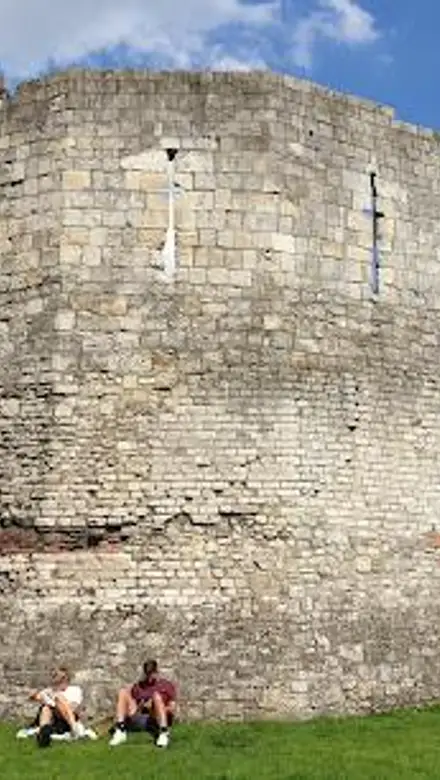
What makes the Multangular Tower exceptional is its visible archaeological narrative. The lower portion retains the original Roman masonry, with neatly laid inner stone skins and rough outer faces where earth embankments once reinforced the walls. Above this foundation sits a distinctly different section of medieval stonework, added during the 1300s when York required new city defences covering a far greater area than the original Roman fort. Medieval builders ingeniously incorporated the surviving Roman walls as foundations for their own fortifications, a practical solution that preserved these ancient structures for posterity.The medieval additions are unmistakable—larger stone blocks form the upper section, and distinctive cross-shaped arrow slits pierce the walls, designed to allow medieval archers to operate safely behind the ramparts. These embrasures opened as wedges internally, permitting archers to adjust their aim while remaining protected from enemy fire. The tower's medieval phase also saw the addition of arched embrasures that accommodated the longer bows of 14th-century warfare.
Scars of Conflict and Civil War
The tower's walls bear witness to York's most recent period of military significance. During the English Civil War, when the city walls were still actively defended, a cannonball struck the tower, leaving a visible impact hole that remains visible to this day. This damage serves as a poignant reminder that the Multangular Tower remained strategically important more than 1,500 years after its Roman construction. The tower's longevity as a defensive structure—from the Roman era through the medieval period and into the 17th century—testifies to the enduring value of its location and design.
Archaeological Treasures Within
Inside the tower, visitors encounter Roman coffins crafted from millstone grit, a coarse hard sandstone, excavated from graveyards throughout York. These burial vessels provide intimate evidence of the Roman population that once inhabited Eboracum, offering tangible connections to individual lives lived nearly two thousand years ago. The coffins' presence within the tower transforms it from a mere defensive structure into a repository of human history.
Setting and Modern Context
The Multangular Tower now stands within the Museum Gardens, a beautifully maintained green space in York's historic centre. The gardens themselves form a living museum, surrounded by other significant ruins including the remains of St Mary's Abbey church. The tower's integration into this landscape creates an ideal environment for understanding York's layered past. The nearby Yorkshire Museum, established in the 1820s and recently refurbished, complements the tower experience with extensive collections relating to Roman York and the broader history of the region.
Evendo Review Centre
 Google
Guest reviews
Best time to go
Quietest: Jan, Feb & Dec · before 6am or at 10pm
Busy times are Evendo estimates for a typical year, to help you plan. Actual crowds vary with events, school holidays and the weather.
Explore Multangular Tower on the map
A handpicked selection of must-see spots near Multangular Tower, mapped for you.
Get your free copy of our complete guide to Multangular Tower, delivered straight to you.
Everything on this page, from opening hours and how to get there to Eve’s tips and the best time to go, in one PDF you can read offline, print or share.
Already have an account? Sign in
Your Multangular Tower guide is ready.
We'll send it to · Not you? Sign out

Getting your guide ready…
We are putting together a fresh copy of the Multangular Tower guide. This can take up to a minute.
This can take a few moments. If your browser asks, choose Allow so the download can start. You'll find the guide in your Downloads folder.
Nothing happened? Download it again
Sorry, the guide is taking longer than usual. Please try again in a minute, or get it by email instead.
Unlock the best of Multangular Tower
Skip-the-line tickets, guided tours with entry, and walking tours of the area, booked in a few clicks.


Other nearby places you may find interesting
The closest places of the same kind, if this one is not quite what you had in mind.
-
-
-
-
-


Swipe for more places
More to explore near Multangular Tower

 Best experiences near Multangular Tower
 Best hotels near Multangular Tower
 Best landmarks near Multangular Tower
 Best attractions near Multangular Tower
 Best shops near Multangular Tower
 Best restaurants near Multangular Tower
 Best bars near Multangular Tower
Do you manage this location?
Take control to get all the benefits, like improved information, better appearance, and stronger visibility across AI-powered discovery.
Explore more

Explore more of Leeds
Discover Leeds: A dynamic city where history meets innovation, offering cultural treasures, stunning architecture, and a gateway to the scenic Yorkshire Dales.
Explore Leeds
Explore more of United Kingdom
Discover the United Kingdom: A blend of rich history, stunning landscapes, and vibrant cities, offering a unique travel experience for every visitor.
Explore United Kingdom