

St Martin Ludgate, London Travel Guide
Free Guide: A small Wren church on Ludgate Hill, where medieval City history, restrained architecture, and a quiet interior sit beside the St Paul’s route.


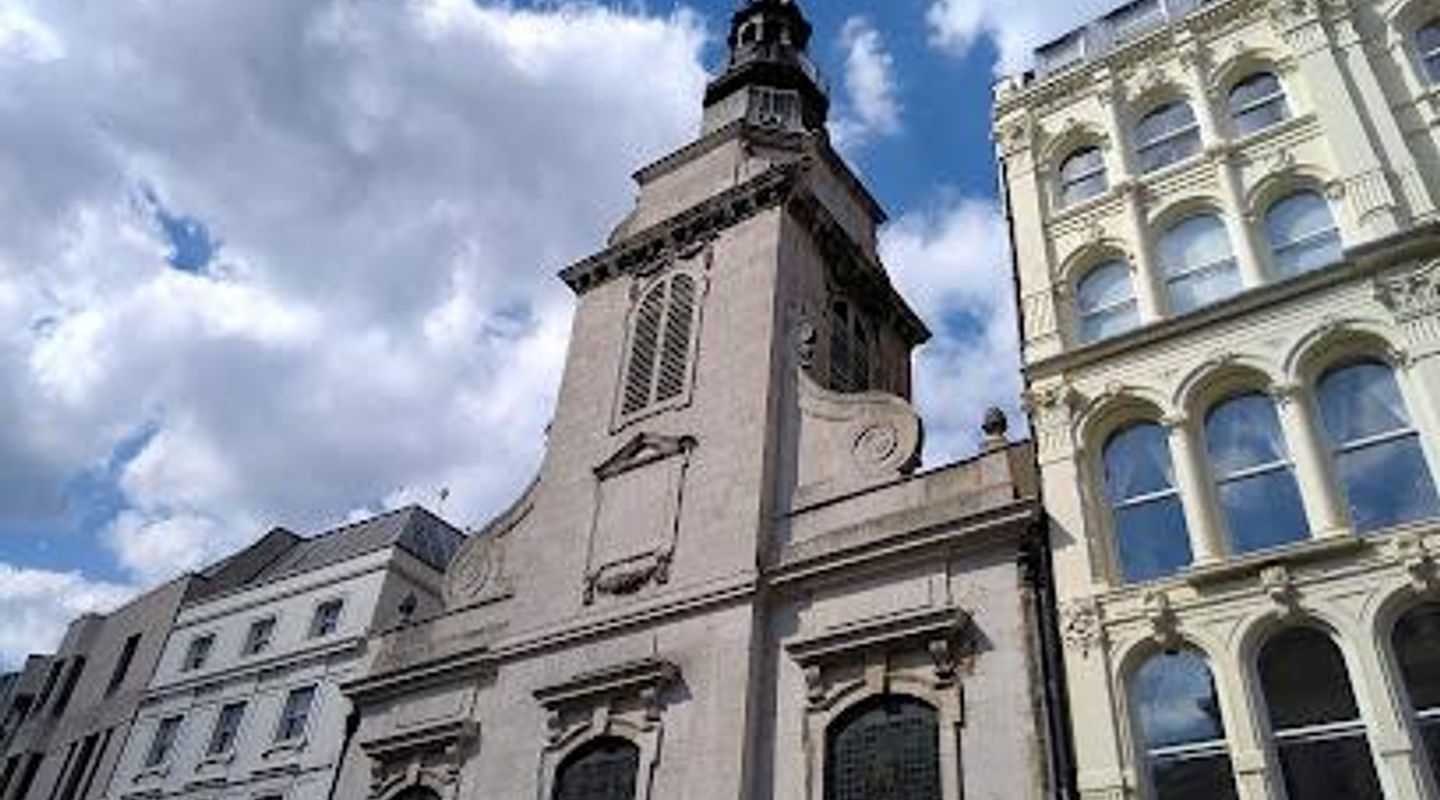
A brief summary of St Martin Ludgate
A small Wren church on Ludgate Hill, where medieval City history, restrained architecture, and a quiet interior sit beside the St Paul’s route.
St Martin Ludgate is a compact City of London church with medieval roots, a Wren rebuild after the Great Fire, and a calm interior just off Ludgate Hill. Visitors come for a brief, self-guided look at restrained architecture, historic woodwork, and details tied to the old Ludgate entrance and the St Paul’s area. It suits a short heritage stop rather than a long visit.
On-site amenities
 Restrooms
 Seating areas
 Information boards
Opening hours
- MonClosed
- TueClosed
- WedClosed
- Thu11 am–3 pm
- Fri11 am–3 pm
- SatClosed
- SunClosed
Opening hours as listed on the venue’s Google Business Profile. Hours can change for services and special events, so check with the venue before you go.
- Address
- 40 Ludgate Hill London
- Phone
- Website
Getting there
Underground
Bus
On foot
Taxi or rideshare
Discover more about St Martin Ludgate
What it is
St Martin Ludgate, formally St Martin within Ludgate, is a Church of England guild church on Ludgate Hill in the City of London. It is not a large visitor attraction, but a compact historic church that rewards a short, attentive stop. The building’s story runs from medieval origins through rebuilding after the Great Fire of London, with the present church reconstructed by Sir Christopher Wren in the late 17th century.The church sits in a dense urban setting where the old City boundary, Ludgate, and the St Paul’s area overlap. That context matters: this is a place to read London’s layers in stone, wood, and street alignment rather than a site built for long interpretation or spectacle.
What you see inside
The interior is the main reason to visit. Expect a quiet, fairly simple Wren-era space with historic furnishings, woodwork, stained glass, and a sense of preservation rather than display. The church is small enough that you can take it in quickly, but there are enough details to justify lingering: the font, references to Ludgate, and the church’s relationship to the old City wall line all give the visit a local, specific character.The atmosphere is reflective and low-key. You are more likely to hear footsteps and the soft movement of other visitors than any formal commentary. It is the sort of place where architecture, liturgical fittings, and city history are the point, and where the compact scale keeps the experience focused.
Why travellers stop here
People usually come to St Martin Ludgate as part of a walking route between Fleet Street and St Paul’s Cathedral, or as a short detour from central London sightseeing. It suits travellers interested in Wren churches, church history, and the survival of older City landmarks in a modern business district. The church also appeals to photographers looking for a restrained exterior and a strong architectural relationship with its surroundings.The visit is typically self-directed and brief. Most travellers spend 15 to 30 minutes for a quick look, while those with a stronger interest in ecclesiastical architecture may stay up to an hour. It is not a place for a full-day itinerary, but it fits neatly into a broader City walk.
Practical expectations
Access is straightforward by central London standards, with nearby Underground, rail, and bus connections, followed by a short walk. The church is urban and mostly indoors, so weather has limited impact once you arrive. That said, the entrance has steps, so access is not fully step-free. Facilities are basic but practical, with toilets reported on site and cafés nearby rather than within the church itself.Crowds are usually light to moderate, with the busiest periods tending to be late morning and lunchtime on weekdays when office workers and sightseers pass through the area. The best way to approach St Martin Ludgate is as a calm, compact heritage stop: brief, specific, and best appreciated by travellers who enjoy London’s smaller historic buildings.
Evendo Review Centre
 Google
Guest reviews
Best time to go
Quietest: Jan, Feb & Nov · before 1pm or from 2pm
Busy times are Evendo estimates for a typical year, to help you plan. Actual crowds vary with events, school holidays and the weather.
Explore St Martin Ludgate on the map
A handpicked selection of must-see spots near St Martin Ludgate, mapped for you.
Get your free copy of our complete guide to St Martin Ludgate, delivered straight to you.
Everything on this page, from opening hours and how to get there to Eve’s tips and the best time to go, in one PDF you can read offline, print or share.
Already have an account? Sign in
Your St Martin Ludgate guide is ready.
We'll send it to · Not you? Sign out

Getting your guide ready…
We are putting together a fresh copy of the St Martin Ludgate guide. This can take up to a minute.
This can take a few moments. If your browser asks, choose Allow so the download can start. You'll find the guide in your Downloads folder.
Nothing happened? Download it again
Sorry, the guide is taking longer than usual. Please try again in a minute, or get it by email instead.
Unlock the best of St Martin Ludgate
Skip-the-line tickets, guided tours with entry, and walking tours of the area, booked in a few clicks.



Other nearby places you may find interesting
The closest places of the same kind, if this one is not quite what you had in mind.
-
-
-
-
-


Swipe for more places
More to explore near St Martin Ludgate

 Best experiences near St Martin Ludgate
 Best hotels near St Martin Ludgate
 Best landmarks near St Martin Ludgate
 Best attractions near St Martin Ludgate
 Best shops near St Martin Ludgate
 Best restaurants near St Martin Ludgate
 Best bars near St Martin Ludgate
Do you manage this location?
Take control to get all the benefits, like improved information, better appearance, and stronger visibility across AI-powered discovery.
Explore more

Explore more of London
Explore London: A city of iconic landmarks, rich history, vibrant culture, and endless attractions that cater to every taste, making it a must-visit destination.
Explore London
Explore more of United Kingdom
Discover the United Kingdom: A blend of rich history, stunning landscapes, and vibrant cities, offering a unique travel experience for every visitor.
Explore United Kingdom
