Winchester Palace, London Travel Guide
A compact medieval ruin in Southwark, where the surviving Great Hall wall and rose window offer a brief, atmospheric stop on a Bankside walk.
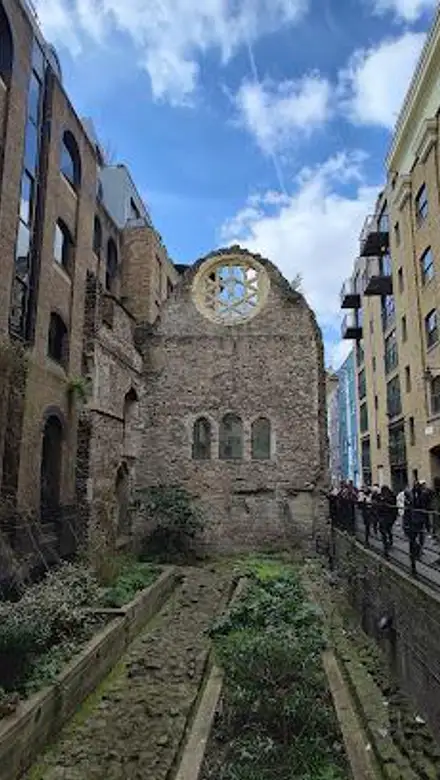
Winchester Palace is a compact medieval ruin in Southwark, best known for its surviving Great Hall wall and rose window. Set just off Clink Street, it is a brief but rewarding stop for walkers tracing London’s riverside history. There is no interior to tour; you come for the stonework, the quiet garden setting, and the sense of a major lost palace compressed into a small urban plot.
A brief summary to Winchester Palace
- Winchester Palace, Pickfords Wharf, London, SE1 9DN, GB
- Click to display
- Click to display
- Duration: 0.25 to 1 hours
- Free
-
 Outdoor
- Mobile reception: 5 out of 5

Know before you go
Hi, I'm Eve. Here are a few practical things to know before exploring Winchester Palace.
- Pair it with a Thames Path or Bankside walk; the ruin is small and works best as part of a wider heritage route.
- Use London Bridge station for the simplest approach, then continue on foot through the Southwark streetscape.
- Bring a camera for close architectural details; the rose window and wall fragments are the main visual draw.
- Do not expect toilets, shelter, or a staffed visitor experience on site; facilities are nearby rather than at the ruin.
Do you manage this location?
Take control to get all the benefits, like improved information, better appearance, and stronger visibility across AI-powered discovery. Learn more about listing your business on Evendo
Activate your presenceOther nearby places you may find interesting
The closest places of the same kind, if this one is not quite what you had in mind.


Explore Winchester Palace on the Map
A handpicked selection of must-see spots near Winchester Palace, mapped for you.
Unlock the Best of Winchester Palace
Buy tickets
-
No tickets available
Book tours with entry


Getting There
-
Tube and rail
London Bridge is the most practical arrival point, usually a short walk away and the easiest option for most visitors.
-
Walking
A walk from London Bridge, Borough Market, or the Thames Path is the normal way to reach the ruin and fits the site’s scale.
-
Taxi or rideshare
Useful if you are already in central London, though the immediate area has limited stopping and parking is not a good option.
-
Cycling
Possible as part of a wider city ride, but the attraction itself is better approached on foot than as a dedicated cycle stop.
For the on-the-go comforts that matter to you
-
 Seating Areas
-
 Trash Bins
-
 Information Boards
Discover more about Winchester Palace
What it is
Winchester Palace is the fragmentary remains of a once-important episcopal residence in medieval London. Founded in the 12th century for the Bishops of Winchester, it was among the city’s major buildings before most of it was destroyed by fire in 1814. What survives today is a ruin rather than a restored monument: sections of the Great Hall walls, a striking rose window, and a small managed garden set within the old footprint.What the visit feels like
This is not a place for a long, structured visit. You usually arrive on foot, pause at the pavement edge, and take in the masonry from close range. The atmosphere is quiet and slightly tucked away, with the ruin framed by modern Southwark streets rather than by a grand forecourt or park. The best moments are visual and immediate: weathered stone, the geometry of the rose window, and the contrast between medieval fabric and the surrounding city.Why travellers come
People visit Winchester Palace for a short, history-led stop that fits neatly into a Bankside or Thames Path walk. It appeals to travellers who prefer layered urban heritage over polished attractions. The site explains a great deal about medieval ecclesiastical power in London, yet it does so through a few surviving walls rather than through exhibits or interpretation. That makes the experience lean and direct: you look, photograph, read what you can, and move on.Practical expectations
Expect a free, open-air viewing site with no interior access and limited facilities. The ground around the ruin is part of a tight urban streetscape, so the visit is best treated as a short stop rather than a destination in itself. Nearby London Bridge and Borough Market make it easy to combine with other sights, food stops, or a riverside walk. In good weather the site feels calm and photogenic; in rain or winter cold it becomes a much briefer proposition. It suits visitors who enjoy compact historic remnants, not those looking for a full museum experience.












Your all‑in‑one travel companion app
Explore expert travel guides, compare and book tours, experiences, hotels, and more—all from the palm of your hand. Download now for seamless trip planning wherever your wanderlust takes you.


Explore More of London

Looking beyond Winchester Palace? Discover London for broader travel guides, local hot-spots, and regional highlights.
Explore London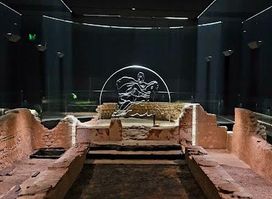
A compact underground museum in the City of London, where a reconstructed Roman temple and excavation finds sit beneath a modern office tower.
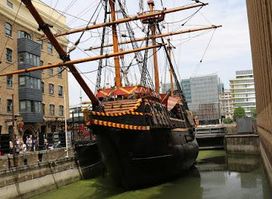
A compact Thames-side dock in Bankside where The Golden Hinde turns Elizabethan seafaring into a close-up, stair-stepped museum ship visit.