

Captain James Cook, London Travel Guide
Free Guide: Bronze tribute to the explorer who charted the Pacific and shaped the British Empire


A brief summary of Captain James Cook
Bronze tribute to the explorer who charted the Pacific and shaped the British Empire
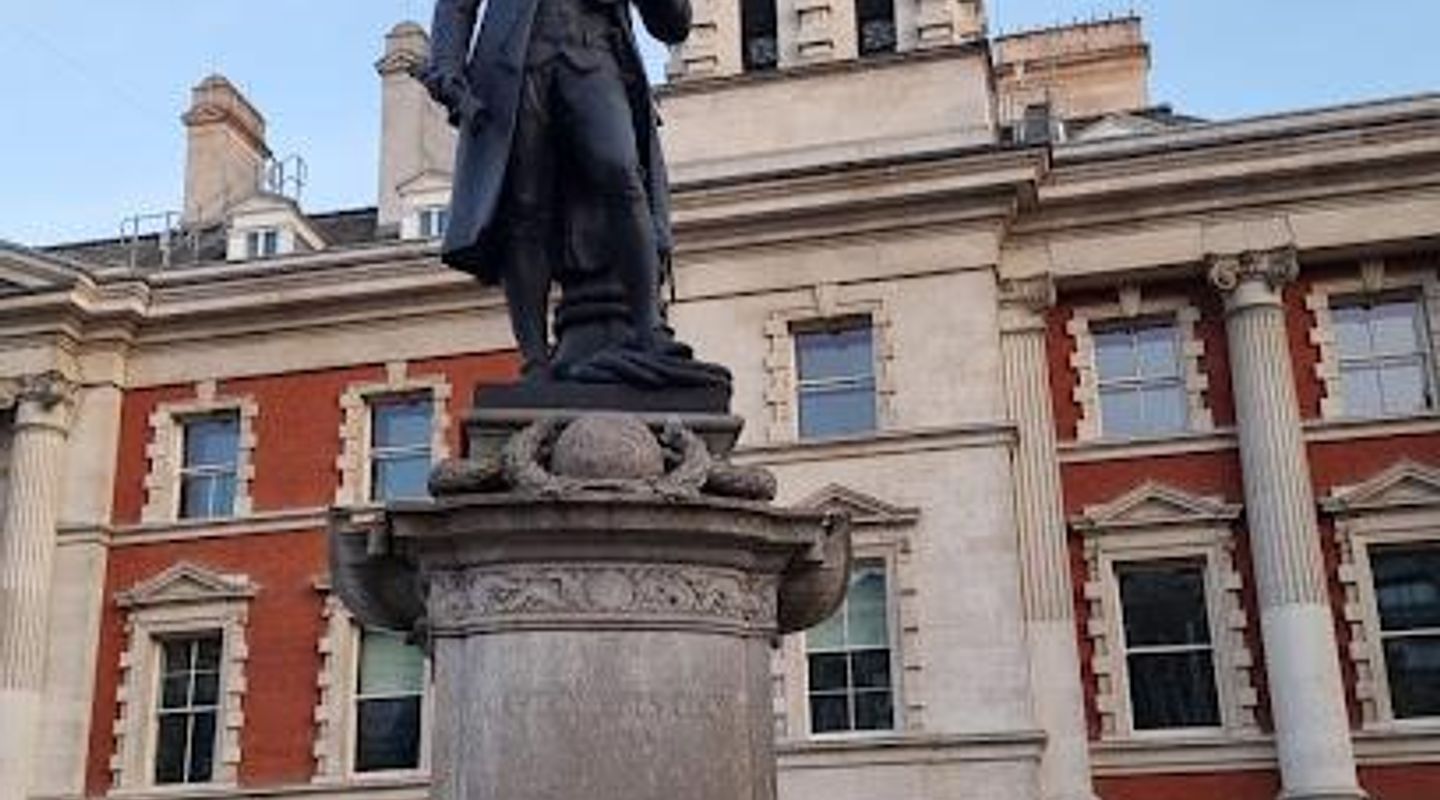
A life-sized bronze statue of Captain James Cook stands near Admiralty Arch on The Mall in London, commemorating the legendary explorer and navigator who circumnavigated the globe. Sculpted by Sir Thomas Brock and unveiled in 1914, the statue depicts Cook in Royal Navy captain's uniform, standing with his foot on a coil of rope beside a capstan. The Grade II listed monument honours Cook's pioneering voyages across the Pacific Ocean and his role in charting the coasts of Australia, New Zealand, Canada, and Newfoundland.
On-site amenities
 Seating areas
 Information boards
Opening hours
- Every dayOpen 24 hours
Opening hours as listed on the venue’s Google Business Profile. Hours can change for services and special events, so check with the venue before you go.
- Address
- The Mall, London SW1A 2WH
Getting there
Underground (Tube)
Bus
Walking
Taxi or Ride-Share
Discover more about Captain James Cook
A Monument to Maritime Exploration
The Captain James Cook statue stands as one of London's most significant maritime memorials, positioned prominently near Admiralty Arch on the south side of The Mall. This life-sized bronze sculpture commemorates one of history's greatest navigators and explorers, whose voyages fundamentally shaped the British Empire and expanded geographical knowledge of the Pacific world. The statue occupies a prestigious location within the heart of Westminster, where it commands attention from visitors walking between Trafalgar Square and Buckingham Palace.
Artistic Vision and Sculptural Detail
Sir Thomas Brock, the renowned sculptor who also created the Queen Victoria Memorial nearby, designed this striking bronze figure. Cook is depicted in full Royal Navy captain's uniform, wearing his distinctive tricorn hat and standing with legs astride in a confident, commanding pose. His left hand holds naval charts and maps, referencing his crucial role as a cartographer, while his right hand grips his left glove. A sword hangs from a broad belt slung diagonally across his body. The figure stands upon a stone plinth carved with maritime imagery, including a ship's prow and representations of the globe. Most notably, Cook's foot rests upon a coil of rope beside a capstan—a detail that has long amused sailors, who point out that standing on rope is considered bad luck aboard ship.
Historical Commissioning and Unveiling
The impetus for this memorial came from Sir Joseph Carruthers, the recently retired Premier of New South Wales, who published a letter in The Times in November 1908 lamenting the absence of any major Cook commemoration in London. The British Empire League took up the challenge, establishing a memorial committee to raise funds. In March 1911, the Office of Works offered a site on The Mall on the condition that Thomas Brock serve as sculptor, ensuring harmony with his existing works on nearby Admiralty Arch. King George V approved Brock's model in February 1912, and the statue was formally unveiled on 7 July 1914 by Prince Arthur of Connaught, the King's uncle, acting on behalf of the British Empire League. Winston Churchill, then First Lord of the Admiralty, proposed a vote of thanks at the ceremony.
Inscription and Later Amendments
The original plinth inscription celebrated Cook as "Circumnavigator of the globe, explorer of the Pacific Ocean, he laid the foundations of the British Empire in Australia and New Zealand." However, following protests from Canada regarding the omission of Cook's significant contributions to charting Canadian waters, the inscription was expanded in 1928 to include: "charted the shores of Newfoundland and traversed the ocean gates of Canada, both east and west." This amendment reflects the broader historical recognition of Cook's comprehensive mapping of North American coastlines.
Legacy and Preservation
The statue remains Grade II listed and is maintained by The Royal Parks, ensuring its preservation for future generations. It stands as a tangible reminder of Cook's extraordinary achievements—his circumnavigation of the globe, his exploration of the Pacific, and his role in charting territories that would become crucial to British imperial expansion. The monument attracts visitors year-round who pause to appreciate both the artistic craftsmanship and the historical significance embodied in this bronze figure.
Evendo Review Centre
 Google
Guest reviews
Best time to go
Quietest: Jan, Feb & Mar · before 6am or at 10pm
Busy times are Evendo estimates for a typical year, to help you plan. Actual crowds vary with events, school holidays and the weather.
Explore Captain James Cook on the map
A handpicked selection of must-see spots near Captain James Cook, mapped for you.
Get your free copy of our complete guide to Captain James Cook, delivered straight to you.
Everything on this page, from opening hours and how to get there to Eve’s tips and the best time to go, in one PDF you can read offline, print or share.
Already have an account? Sign in
Your Captain James Cook guide is ready.
We'll send it to · Not you? Sign out

Getting your guide ready…
We are putting together a fresh copy of the Captain James Cook guide. This can take up to a minute.
This can take a few moments. If your browser asks, choose Allow so the download can start. You'll find the guide in your Downloads folder.
Nothing happened? Download it again
Sorry, the guide is taking longer than usual. Please try again in a minute, or get it by email instead.
Unlock the best of Captain James Cook
Skip-the-line tickets, guided tours with entry, and walking tours of the area, booked in a few clicks.

Other nearby places you may find interesting
The closest places of the same kind, if this one is not quite what you had in mind.
-

-
-
-
-


Swipe for more places
More to explore near Captain James Cook

 Best experiences near Captain James Cook
 Best hotels near Captain James Cook
 Best landmarks near Captain James Cook
 Best attractions near Captain James Cook
 Best shops near Captain James Cook
 Best restaurants near Captain James Cook
 Best bars near Captain James Cook
Do you manage this location?
Take control to get all the benefits, like improved information, better appearance, and stronger visibility across AI-powered discovery.
Explore more

Explore more of London
Explore London: A city of iconic landmarks, rich history, vibrant culture, and endless attractions that cater to every taste, making it a must-visit destination.
Explore London
Explore more of United Kingdom
Discover the United Kingdom: A blend of rich history, stunning landscapes, and vibrant cities, offering a unique travel experience for every visitor.
Explore United Kingdom
