

Guards Memorial, London Travel Guide
Free Guide: A solemn tribute to the valor and sacrifice of the Guardsmen who fell in World War I, set amidst London’s historic ceremonial heart.


A brief summary of Guards Memorial
A solemn tribute to the valor and sacrifice of the Guardsmen who fell in World War I, set amidst London’s historic ceremonial heart.
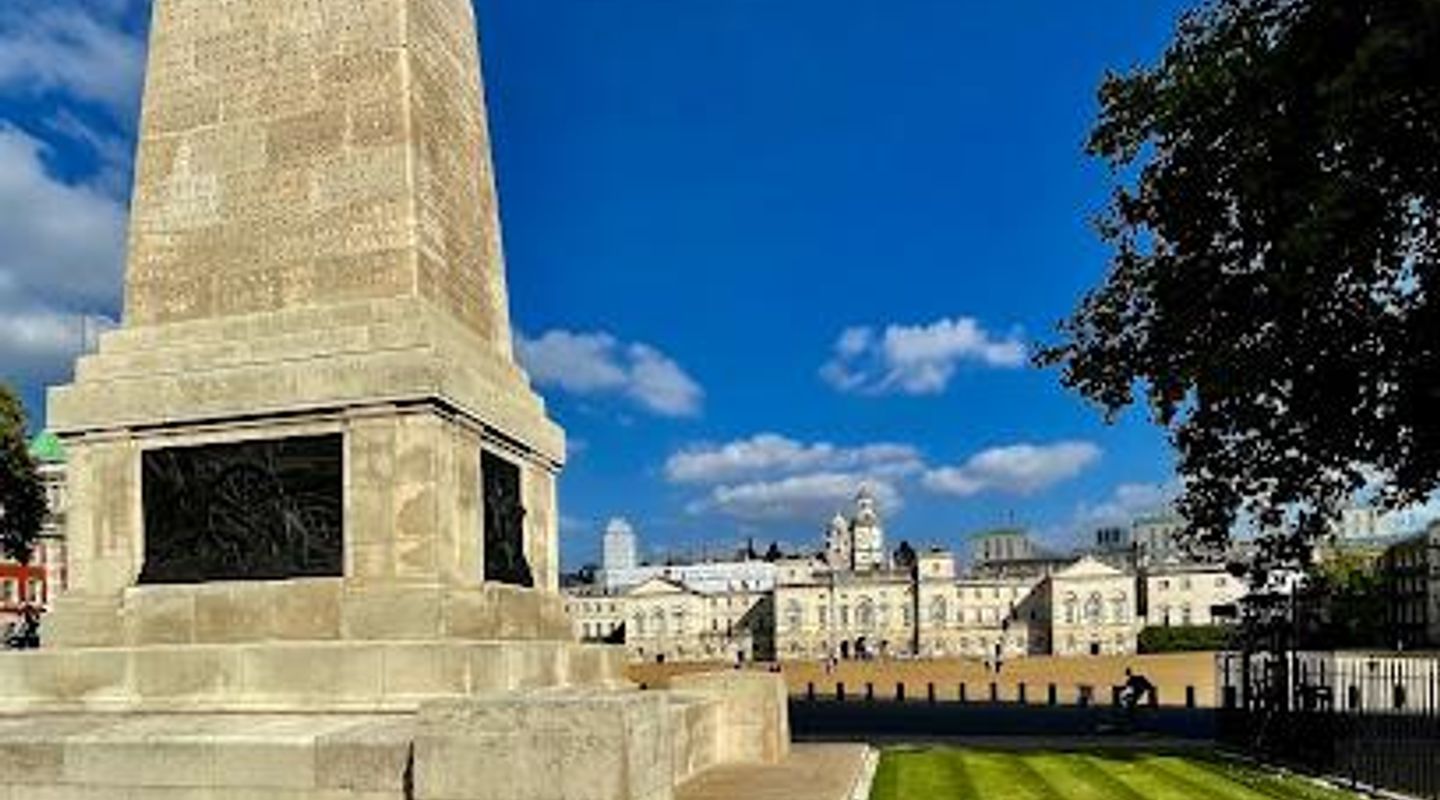
The Guards Memorial, located at 69 Horse Guards Road in London, commemorates the 14,000 Guardsmen who died in World War I. Unveiled in 1926, this solemn monument features five life-sized bronze statues representing the five Guards regiments, set against a stone cenotaph adorned with detailed bronze relief panels. It stands prominently opposite Horse Guards Parade, offering a place of reflection amidst London's historic ceremonial district.
On-site amenities
 Restrooms
 Seating areas
 Information boards
Opening hours
- Every dayOpen 24 hours
Opening hours as listed on the venue’s Google Business Profile. Hours can change for services and special events, so check with the venue before you go.
- Address
- 69 Horse Guards Rd, London SW1A 2BJ
Getting there
London Underground
Bus
Walking
Discover more about Guards Memorial
A Tribute to Fallen Guardsmen
The Guards Memorial was unveiled in 1926 to honor the 14,000 soldiers of the Guards Division who lost their lives during the First World War. Designed by architect Harold Chalton Bradshaw and sculptor Gilbert Ledward, the memorial evolved from an initial concept inspired by an Italian monument into a powerful stone obelisk or pylon. Against this imposing backdrop stand five bronze statues, each representing a soldier from one of the five Guards regiments: Grenadier, Coldstream, Scots, Welsh, and Irish Guards. These figures are depicted in a formal, stiff posture, symbolizing the discipline and solemnity of the Guardsmen.
Artistic Details and Symbolism
The bronze statues were crafted with meticulous attention to detail, with models drawn from the Irish Guards regiment. The sculptor worked initially from nude figures to capture anatomical accuracy before the soldiers donned their uniforms. The rear of the memorial, facing St James’s Park, features a carved stone panel illustrating an 18-pounder field gun being loaded, symbolizing the artillery support crucial to the Guards’ efforts. Bronze relief panels on the sides depict representative military equipment, while the memorial is topped with a small incised cross and badges of the Guards regiments, reinforcing its sacred and commemorative nature.
Location and Setting
Situated on Horse Guards Road, the memorial faces the historic Horse Guards Parade ground, a site of great ceremonial importance in London. The surrounding area is rich with landmarks, including St James’s Park and the nearby Wellington Barracks, home to the Guards regiments. The memorial’s placement provides a contemplative space within the bustling city, often adorned with wreaths and flowers during remembrance ceremonies. Its proximity to other military and historic sites enhances its significance as part of London’s cultural heritage.
Historical Context and Legacy
Harold Chalton Bradshaw, who designed the memorial, was himself a war veteran, having been wounded and gassed during the conflict. His experience informed the memorial’s sober and respectful tone. The Guards Memorial not only commemorates those who died in World War I but also honors the enduring legacy of the Guards regiments through subsequent conflicts. The memorial remains a focal point for remembrance events and is a protected Grade II listed structure, ensuring its preservation for future generations.
Visitor Experience and Atmosphere
Visitors to the Guards Memorial find a solemn and tranquil atmosphere conducive to reflection. The stone and bronze materials convey a sense of permanence and gravitas, while the detailed sculptures invite closer inspection. The memorial’s location amidst London’s ceremonial district means visitors can combine their visit with nearby attractions such as the National Gallery or the Changing of the Guard at Wellington Barracks. Early morning or late afternoon visits offer softer light for photography and a quieter experience.
Commemorative Role and Continuing Significance
The Guards Memorial plays an active role in London’s commemorative calendar, often serving as a site for wreath-laying ceremonies and military parades. It stands as a poignant reminder of sacrifice and duty, embodying the spirit of the Guardsmen it honors. The memorial’s enduring presence near key military and royal sites underscores its importance within the narrative of British military history and national identity.
Evendo Review Centre
 Google
Guest reviews
Best time to go
Quietest: Jan, Feb & Mar · before 6am or at 10pm
Busy times are Evendo estimates for a typical year, to help you plan. Actual crowds vary with events, school holidays and the weather.
Explore Guards Memorial on the map
A handpicked selection of must-see spots near Guards Memorial, mapped for you.
Get your free copy of our complete guide to Guards Memorial, delivered straight to you.
Everything on this page, from opening hours and how to get there to Eve’s tips and the best time to go, in one PDF you can read offline, print or share.
Already have an account? Sign in
Your Guards Memorial guide is ready.
We'll send it to · Not you? Sign out

Getting your guide ready…
We are putting together a fresh copy of the Guards Memorial guide. This can take up to a minute.
This can take a few moments. If your browser asks, choose Allow so the download can start. You'll find the guide in your Downloads folder.
Nothing happened? Download it again
Sorry, the guide is taking longer than usual. Please try again in a minute, or get it by email instead.
Unlock the best of Guards Memorial
Skip-the-line tickets, guided tours with entry, and walking tours of the area, booked in a few clicks.


Other nearby places you may find interesting
The closest places of the same kind, if this one is not quite what you had in mind.
-
 Big Ben
Discover the iconic Elizabeth Tower and its famous bell, Big Ben, a timeless symbol of London's heritage and British culture.
Big Ben
Discover the iconic Elizabeth Tower and its famous bell, Big Ben, a timeless symbol of London's heritage and British culture.
-
Buckingham Palace Explore the majestic official residence of the British monarch, from lavish State Rooms to the iconic Changing of the Guard ceremony.
-
Victoria Memorial A majestic tribute to Queen Victoria, blending imperial grandeur with royal ceremony at the heart of London’s historic Mall.
-
Richard D’Oyly Carte Monument A sculptural homage to Richard D’Oyly Carte’s theatrical and hospitality legacy, nestled in the serene Victoria Embankment Gardens.
-
George Duke of Cambridge statue A commanding bronze tribute to Prince George, Duke of Cambridge, standing proudly on Whitehall amidst London’s historic military heart.
Swipe for more places
More to explore near Guards Memorial

 Best experiences near Guards Memorial
 Best hotels near Guards Memorial
 Best landmarks near Guards Memorial
 Best attractions near Guards Memorial
 Best shops near Guards Memorial
 Best restaurants near Guards Memorial
 Best bars near Guards Memorial
Do you manage this location?
Take control to get all the benefits, like improved information, better appearance, and stronger visibility across AI-powered discovery.
Explore more

Explore more of London
Explore London: A city of iconic landmarks, rich history, vibrant culture, and endless attractions that cater to every taste, making it a must-visit destination.
Explore London
Explore more of United Kingdom
Discover the United Kingdom: A blend of rich history, stunning landscapes, and vibrant cities, offering a unique travel experience for every visitor.
Explore United Kingdom
