

Anglian Tower, York Travel Guide
Free Guide: Discover York’s rare Anglo-Saxon watchtower, a unique stone relic woven into the ancient Roman city walls near Museum Gardens.


A brief summary of Anglian Tower
Discover York’s rare Anglo-Saxon watchtower, a unique stone relic woven into the ancient Roman city walls near Museum Gardens.
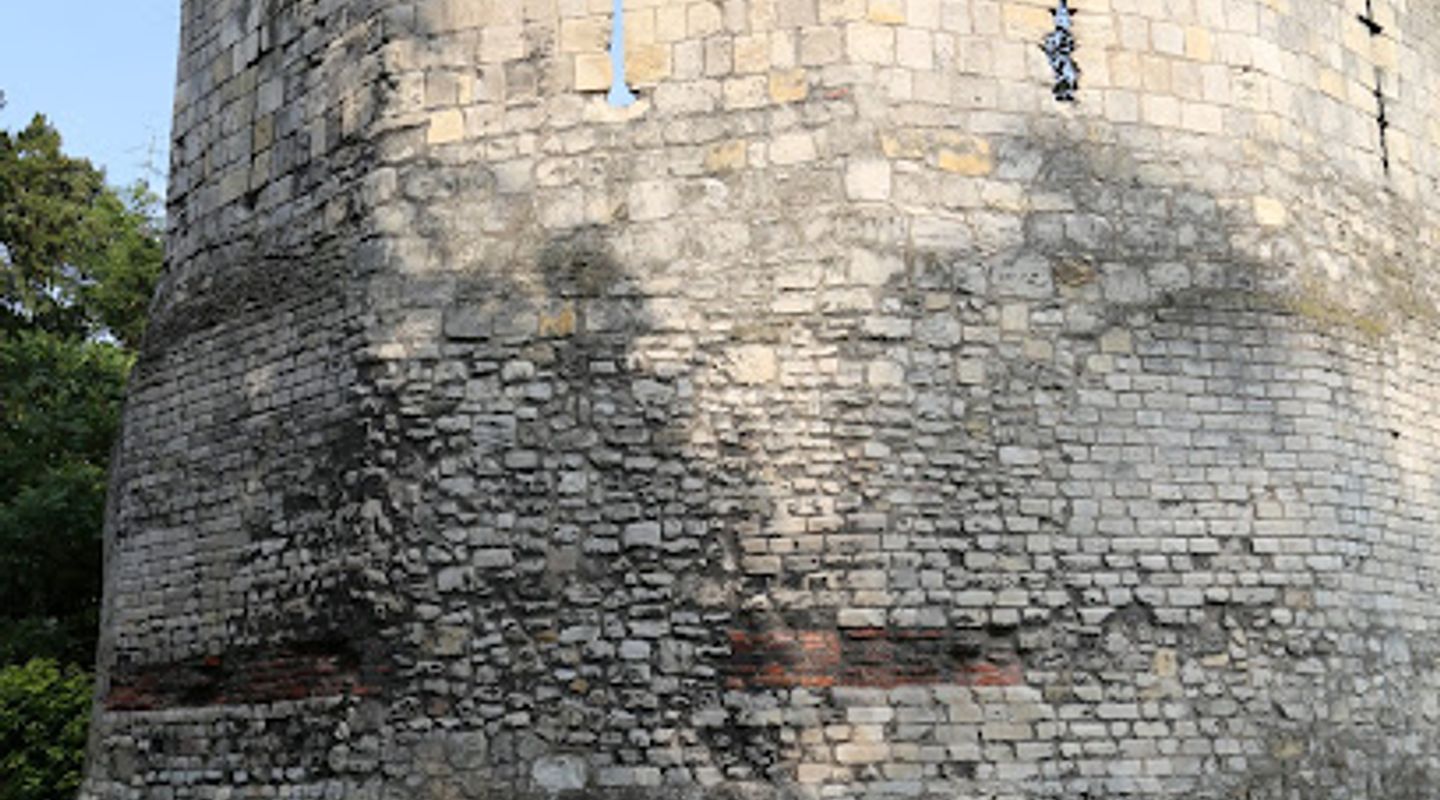
The Anglian Tower in York is one of only two surviving non-ecclesiastical Anglo-Saxon stone structures in Britain. Nestled into the Roman city walls near Museum Gardens, this roughly 4.5-meter-high tower likely served as a watchtower or defensive post from the 7th or possibly 9th century. Its unique oolitic limestone construction and vaulted brick roof distinguish it from the surrounding Roman masonry. Rediscovered in the 19th century, the tower offers a glimpse into York’s post-Roman and early medieval military architecture.
On-site amenities
 Information boards
 Seating areas
 Trash bins
- Address
- York YO1 7HN
Getting there
Bus
Walking
Taxi
Discover more about Anglian Tower
An Architectural Anomaly in York’s Ancient Walls
The Anglian Tower stands as a remarkable and rare survivor of Anglo-Saxon secular architecture, embedded within the Roman city walls of York. Unlike the Roman walls built from magnesian limestone quarried locally, the tower is constructed from roughly dressed oolitic limestone sourced from a different region, highlighting a distinctive building phase. Its ground-level arched doorways lead to a tunnel-vaulted chamber, with evidence of a brick vaulted roof above. Though only the ground floor remains, the original structure likely rose over 10 meters and was possibly two stories high. This tower’s design and materials set it apart from both Roman and medieval fortifications nearby.
Historical Context and Dating Debates
The exact age of the Anglian Tower is debated among historians and archaeologists. Some propose a late Roman or early post-Roman date, around the 5th century AD, coinciding with the Roman military withdrawal from Britain. Others suggest a mid-7th century origin linked to King Edwin of Northumbria’s reign and his efforts to strengthen York’s defenses following his baptism in 627 AD. Another theory places its construction in the 9th century during Viking occupation, when the tower may have been incorporated into ramparts built over the Roman walls. Despite inconclusive excavation results, the tower’s unique architecture and materials indicate a construction phase distinct from the Roman fortress walls it overlays.
The Tower’s Function in York’s Defenses
Strategically positioned between two former Roman interval towers, the Anglian Tower likely functioned as a watchtower or defensive post. Its two narrow arched doorways at ground level are thought to have allowed sentries to patrol the city walls while remaining protected. The tower’s height and vantage point would have enabled archers or lookouts to monitor and defend against approaching threats. However, its relatively thin walls and limited internal space suggest it was not designed for prolonged habitation but rather as a military outpost facilitating surveillance and quick response.
Rediscovery and Archaeological Investigations
Buried beneath earth and rubble for centuries, the Anglian Tower was accidentally uncovered in 1839 during tunnel construction near St Leonard’s Place. Further excavations in 1969 revealed its structure and confirmed its post-Roman origins, though the exact dating remained uncertain. The archaeologist Jeffrey Radley led these investigations but tragically died in an accident on site in 1970. Subsequent research has highlighted the tower’s significance as a unique example of Anglo-Saxon military architecture, with no direct secular parallels in Britain or Europe. The tower is now a Grade I listed historic landmark, preserved as a testament to York’s layered defensive history.
Setting and Visitor Experience Today
Today, the Anglian Tower is discreetly located just outside York’s Museum Gardens, partially hidden behind the city library. Its modest remains rise about 4.5 meters, inviting visitors to reflect on the city’s turbulent early medieval period. The tower’s integration into the Roman walls creates a striking contrast of architectural eras. Though the interior is not accessible, the site offers a tangible connection to York’s Anglo-Saxon past and the city’s evolution from Roman fortress to medieval stronghold.
Legacy and Cultural Significance
The Anglian Tower embodies York’s rich historical tapestry, bridging Roman, Anglo-Saxon, and Viking influences. It stands as a rare secular stone structure from the Anglo-Saxon era, providing invaluable insight into early medieval defensive strategies and urban continuity. Its survival beneath later ramparts and rediscovery in the 19th century underscore the layers of history beneath York’s streets. The tower continues to fascinate historians, archaeologists, and visitors alike, symbolizing the resilience and complexity of Britain’s post-Roman heritage.
Evendo Review Centre
 Google
Guest reviews
Best time to go
Quietest: Jan, Feb & Dec · before 3am
Busy times are Evendo estimates for a typical year, to help you plan. Actual crowds vary with events, school holidays and the weather.
Explore Anglian Tower on the map
A handpicked selection of must-see spots near Anglian Tower, mapped for you.
Get your free copy of our complete guide to Anglian Tower, delivered straight to you.
Everything on this page, from opening hours and how to get there to Eve’s tips and the best time to go, in one PDF you can read offline, print or share.
Already have an account? Sign in
Your Anglian Tower guide is ready.
We'll send it to · Not you? Sign out

Getting your guide ready…
We are putting together a fresh copy of the Anglian Tower guide. This can take up to a minute.
This can take a few moments. If your browser asks, choose Allow so the download can start. You'll find the guide in your Downloads folder.
Nothing happened? Download it again
Sorry, the guide is taking longer than usual. Please try again in a minute, or get it by email instead.
Other nearby places you may find interesting
The closest places of the same kind, if this one is not quite what you had in mind.
-
-
-
-
-


Swipe for more places
More to explore near Anglian Tower

 Best experiences near Anglian Tower
 Best hotels near Anglian Tower
 Best landmarks near Anglian Tower
 Best attractions near Anglian Tower
 Best shops near Anglian Tower
 Best restaurants near Anglian Tower
 Best bars near Anglian Tower
Do you manage this location?
Take control to get all the benefits, like improved information, better appearance, and stronger visibility across AI-powered discovery.
Explore more

Explore more of York
Explore York, a captivating city where medieval history meets modern charm. Discover York Minster, The Shambles, and a vibrant food scene in this must-visit UK destination.
Explore York
Explore more of United Kingdom
Discover the United Kingdom: A blend of rich history, stunning landscapes, and vibrant cities, offering a unique travel experience for every visitor.
Explore United Kingdom
