

Redmond, Washington Travel Guide
Explore Redmond, Washington: Where cutting-edge technology meets serene natural beauty, offering a unique blend of innovation, outdoor adventures, and local charm.
Nestled in the lush greenery of Washington State, Redmond offers a delightful blend of nature and technology. Known globally as the headquarters of Microsoft, this city is a paradise for tech enthusiasts. The Microsoft Visitor Center is a must-visit, offering a glimpse into the future of technology and innovation. Redmond is also a haven for outdoor lovers. The city is surrounded by parks and trails, with the Marymoor Park being the crown jewel. Spread over 640 acres, Marymoor Park features biking trails, off-leash dog areas, and even a climbing wall. The Sammamish River Trail is perfect for a scenic walk or bike ride, boasting stunning views of the river and surrounding landscapes. Don't miss the Redmond Saturday Market, where you can find fresh produce, artisanal crafts, and delicious local food. The city's downtown area is bustling with quaint shops, cafes, and restaurants, offering a perfect blend of urban charm and small-town warmth. Redmond’s vibrant community and rich cultural scene make it an ideal destination for tourists looking for both relaxation and excitement.

Know before you go
Hi, I'm Eve. Here are a few practical things to know before exploring Redmond.
- Visit the Microsoft Visitor Center early to avoid crowds and make the most of interactive exhibits.
- Bring comfortable walking shoes for exploring the numerous parks and trails.
- Check out the Redmond Saturday Market for local produce and crafts, but arrive early for the best selection.
- Consider renting a bike to explore the Sammamish River Trail.
- Downtown Redmond offers free parking on weekends, making it easier to explore.
Explore Redmond: Things to Do, Places to Eat, Hotels & More
Handpicked recommendations for top attractions, local dining, accommodations, and more

Best attractions in Redmond
Top-rated picks
Best Attractions

Marymoor Park
Explore Marymoor Park in Redmond, WA - a stunning destination for outdoor activities, nature walks, and community events in the heart of the Pacific Northwest.

Marymoor Park
Explore Marymoor Park: A lush, expansive park in Redmond, Washington, perfect for outdoor activities, picnics, and community events.

Chateau Ste. Michelle Winery
Experience the beauty and excellence of Chateau Ste. Michelle Winery, where exquisite wines meet stunning landscapes in Woodinville, Washington.

Idylwood Park
Discover the serene beauty of Idylwood Park, a picturesque retreat on Lake Sammamish offering sandy beaches, lush greenery, and endless outdoor activities.

Best landmarks in Redmond
Top-rated picks
Best Landmarks
Marymoor Park
Explore the scenic beauty and diverse activities at Marymoor Park, a premier destination for nature lovers and outdoor enthusiasts in Redmond, Washington.

Redmond Town Center
Explore Redmond Town Center, where shopping meets dining and entertainment in a vibrant, open-air setting perfect for tourists.

Matador Redmond
Explore the vibrant flavors of Mexico at Matador Redmond – a lively restaurant offering delicious cuisine, handcrafted cocktails, and vibrant decor.

Idylwood Park
Discover Idylwood Park, a beautiful lakeside escape in Redmond, Washington, perfect for picnics, swimming, and scenic walks along Lake Sammamish.

Best restaurants in Redmond
Top-rated picks
Best Restaurants

Tipsy Cow Redmond
Experience gourmet burgers and vibrant nightlife at Tipsy Cow Redmond - where delicious food meets great drinks.

Kanishka Cuisine of India
Experience the authentic taste of India at Kanishka Cuisine in Redmond—where every dish tells a story.

Matador Redmond
Experience the vibrant flavors of Mexico at Matador Redmond - where authentic cuisine meets lively atmosphere.

Bai Tong Thai Restaurant - Redmond
Discover authentic Thai flavors at Bai Tong Thai Restaurant in Redmond - where every bite transports you to Thailand's vibrant culinary scene.

Best bars in Redmond
Top-rated picks
Best Bars

Tipsy Cow Redmond
Discover the ultimate burger experience at Tipsy Cow Redmond, where gourmet flavors meet a lively bar atmosphere in the heart of Washington.

Woodblock
Experience the innovative New American cuisine at Woodblock, a culinary treasure in Redmond, WA, perfect for brunch and cocktails.

Redmond's Bar & Grill
Discover Redmond's Bar & Grill: a lively gastropub serving delicious American cuisine and unique drinks in the heart of Redmond, WA.

BJ's Restaurant & Brewhouse
Savor an array of mouth-watering dishes and craft beers at BJ's Restaurant & Brewhouse in Redmond, WA—your ultimate dining destination.

Best nightclubs in Redmond
Top-rated picks
Best Nightclubs

Redmond's Bar & Grill
Experience the vibrant atmosphere and delicious American cuisine at Redmond's Bar & Grill, your go-to gastropub in Downtown Redmond.

The Lime
Discover Kirkland's nightlife at The Lime, where live music, delicious food, and vibrant energy create an unforgettable experience.
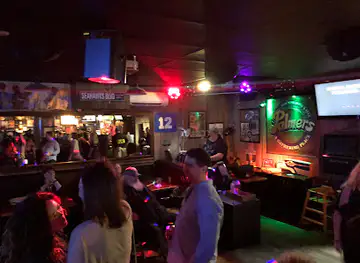
Palmers East
Discover the lively atmosphere of Palmers East in Redmond, WA, offering delicious grill delights and exciting karaoke entertainment.

Three Lions Pub
Discover the warmth and flavor of Three Lions Pub in Redmond, Washington, where British tradition meets local charm.

Best shops in Redmond
Top-rated picks
Best Shops

Redmond Town Center
Explore Redmond Town Center: Your Ultimate Shopping and Dining Destination in Washington.

Whole Foods Market
Discover a world of organic and gourmet delights at Whole Foods Market in Redmond, where quality meets health-conscious shopping.

Half Price Books
Explore Half Price Books in Redmond for an extensive selection of books, music, and toys at unbeatable prices, perfect for all ages.

Overlake Fashion Plaza
Explore Overlake Fashion Plaza: A premier shopping and dining destination in Redmond, Washington, offering diverse retail and culinary experiences for all.

Explore Redmond on the Map
A handpicked selection of must-see spots in Redmond, mapped for you.
Redmond Essentials
-
Redmond is located in the state of Washington, approximately 15 miles east of Seattle. The nearest major airport is Seattle-Tacoma International Airport (SEA), which is well-connected to domestic and international destinations. From the airport, you can reach Redmond by renting a car, taking a shuttle service, or using public transportation such as the Link Light Rail to downtown Seattle and then transferring to a bus or rideshare service.
-
Redmond has a well-developed public transportation system operated by King County Metro and Sound Transit, providing bus services that connect to Seattle and other surrounding areas. For local travel, you can use the local bus routes, rideshare services, or rent a bike from one of the many bike-sharing options. If you prefer driving, rental cars are readily available, and the city has ample parking facilities.
-
The official currency in Redmond, as in the rest of the United States, is the US Dollar (USD). Credit and debit cards are widely accepted in most establishments, including hotels, restaurants, and shops. ATMs are easily accessible throughout the city for cash withdrawals. Mobile payment options such as Apple Pay, Google Wallet, and contactless cards are also commonly used.
-
Redmond is generally a safe city for tourists. However, like any urban area, it is important to stay vigilant. Avoid walking alone at night in secluded areas and keep your belongings secure, especially in crowded places. While Redmond does not have specific high-crime neighborhoods targeting tourists, standard precautions should always be observed.
-
In case of an emergency, dial 911 for immediate assistance from police, fire, or medical services. Redmond has several medical facilities, including the EvergreenHealth Redmond Medical Center, which provides urgent care services. It is advisable to have travel insurance that covers medical emergencies. For minor health issues, pharmacies are available across the city for over-the-counter medications.
-
Fashion: Do dress comfortably and weather-appropriately. Casual attire is generally acceptable. Avoid overly revealing clothing when visiting religious or formal sites. Religion: Do respect local customs and traditions. Public Transport: Do be courteous and give up your seat for elderly or disabled passengers. Don’t eat or drink on public transportation. Greetings: Do greet others with a friendly smile and a handshake. Eating & Drinking: Do try local cuisine and be open to different food experiences. Don’t leave a poor tip in restaurants; 15-20% is customary.
-
To experience Redmond like a local, visit the Saturday Market during the summer months for fresh produce and handmade goods. Explore the numerous parks and trails, such as Marymoor Park and the Sammamish River Trail, which are popular with residents. Engage with locals at community events and enjoy the vibrant tech culture by visiting the Microsoft Visitor Center. Don’t miss the opportunity to dine at local eateries that offer a variety of cuisines, from American to international fare.
When is the best time to visit Redmond?
Useful Local Phrases for Redmond
You don't need to speak the language perfectly. Even learning a few simple words can make conversations warmer—and locals usually appreciate the effort.
— Eve

Here are the phrases I use most often in Redmond. Try a few—you'll be surprised how far they go! 😊
❤️
-
- HelloHowdy
[haw-dee] - GoodbyeSee ya
[see yah] - YesYep
[yep] - NoNope
[nohp] - Please/You're welcomePlease/No problem
[pleez/no prob-lem] - Thank youThanks
[thanks] - Excuse me/SorryPardon me/My bad
[par-dun me/my bad] - How are you?How's it going?
[hows it go-in] - Fine. And you?Good. You?
[good. yoo?] - Do you speak English?You speak English?
[yoo speak in-glish?] - I don't understandI don't get it
[I dont get it]
- HelloHowdy
-
- I'd like to see the menu, pleaseCan I check out the menu?
[can I chek out the menu?] - I don't eat meatI'm vegetarian
[Im ve-ji-tear-ee-an] - Cheers!Cheers!
[Cheers!] - I would like to pay, pleaseCheck please
[chek please]
- I'd like to see the menu, pleaseCan I check out the menu?
-
- Help!Help!
[Help!] - Go away!Leave me alone!
[leave mee a-lone] - Call the Police!Call the cops!
[call the cops!] - Call a doctor!I need a doctor!
[I need a doc-tor!] - I'm lostI'm lost
[Im lost] - I'm illI'm sick
[Im sik]
- Help!Help!
-
- I'd like to buy...I wanna buy...
[I wanna buy...] - I'm just lookingJust browsing
[just brows-ing] - How much is it?What's the price?
[whats the price?] - That's too expensiveToo pricey
[too prye-see] - Can you lower the price?Can you give me a discount?
[can yoo give me a dis-count?]
- I'd like to buy...I wanna buy...
-
- What time is it?What's the time?
[whats the time?] - It's one o'clockIt's one
[Its one] - Half past (10)Ten thirty
[Ten thur-tee] - MorningMorning
[mor-ning] - AfternoonAfternoon
[af-ter-noon] - EveningEvening
[ee-ven-ing] - YesterdayYesterday
[yes-ter-day] - TodayToday
[to-day] - TomorrowTomorrow
[to-mor-row] - 1One
[wun] - 2Two
[too] - 3Three
[three] - 4Four
[four] - 5Five
[five] - 6Six
[siks] - 7Seven
[sev-en] - 8Eight
[ate] - 9Nine
[nine] - 10Ten
[ten]
- What time is it?What's the time?
-
- Where's a/the...?Where's the...?
[wheres the] - What's the address?What's the address?
[whats the address] - Can you show me (on the map)?Can you show me (on the map)?
[can yoo show me on the map] - When's the next (bus)?When's the next (bus)?
[whens the next bus] - A ticket (to ....)A ticket (to ....)
[a ticket to]
- Where's a/the...?Where's the...?
History of Redmond
-
Redmond, Washington, was originally inhabited by Native American tribes, primarily the Duwamish and Sammamish peoples. The area, rich in natural resources, provided a bounty of fish, game, and plants for the indigenous communities. European settlers first arrived in the late 1800s, drawn by the promise of land and the potential for logging. Luke McRedmond, the city's namesake, filed the first land claim in 1871, and the town was officially platted in 1888.
-
Redmond's early economy was heavily dependent on the logging industry. The dense forests of the Pacific Northwest provided ample timber, and the town quickly became a hub for logging operations. Sawmills sprang up along the Sammamish River, and the town grew as a result of the booming industry. The arrival of the Seattle Lake Shore and Eastern Railway in 1888 further spurred growth, making it easier to transport logs to Seattle and beyond.
-
Redmond was officially incorporated on December 31, 1912. The early 20th century saw the community gradually transition from a logging town to a more diversified economy. Agriculture began to play a significant role, with dairy farming and berry cultivation becoming prominent. The establishment of schools, churches, and other community institutions helped to solidify Redmond's identity as a growing town.
-
The latter half of the 20th century marked a significant transformation for Redmond. The arrival of tech giant Microsoft in 1986 was a turning point, bringing with it an influx of jobs, investment, and population growth. The company's headquarters, located in what is now known as the Microsoft Redmond campus, became the centerpiece of the city's economy. This period also saw the development of other tech companies and startups, making Redmond a key player in the global technology sector.
-
As Redmond grew, so did its cultural and recreational offerings. The city invested in parks, trails, and community centers, fostering a strong sense of community. Notable developments include the opening of Marymoor Park, a sprawling 640-acre park that offers a variety of recreational activities, and the creation of the Redmond Town Center, a mixed-use development that serves as a cultural and commercial hub. Annual events like Derby Days, a summer festival that dates back to 1939, further enrich the city's cultural fabric.
-
Today, Redmond is a vibrant, diverse city that balances its rich history with modern innovation. It is home to a thriving tech industry, a robust educational system, and a wide range of cultural and recreational opportunities. The city's commitment to sustainability and smart growth ensures that it continues to be a desirable place to live, work, and visit. Redmond's transformation from a small logging town to a global technology hub is a testament to its resilience and adaptability.
Cities near Redmond
The closest cities to Redmond, if you have time for more than one stop.




Your all‑in‑one travel companion app
Explore expert travel guides, compare and book tours, experiences, hotels, and more—all from the palm of your hand. Download now for seamless trip planning wherever your wanderlust takes you.


Redmond in Photos
Browse through our photo collection highlighting the charm and character of the destination.





Redmond: The Tech Hub Surrounded by Nature
Nestled in the lush greenery of Washington State, Redmond offers a delightful blend of nature and technology. Known globally as the headquarters of Microsoft, this city is a paradise for tech enthusiasts. The Microsoft Visitor Center is a must-visit, offering a glimpse into the future of technology and innovation. Redmond is also a haven for outdoor lovers. The city is surrounded by parks and trails, with the Marymoor Park being the crown jewel. Spread over 640 acres, Marymoor Park features biking trails, off-leash dog areas, and even a climbing wall. The Sammamish River Trail is perfect for a scenic walk or bike ride, boasting stunning views of the river and surrounding landscapes. Don't miss the Redmond Saturday Market, where you can find fresh produce, artisanal crafts, and delicious local food. The city's downtown area is bustling with quaint shops, cafes, and restaurants, offering a perfect blend of urban charm and small-town warmth. Redmond’s vibrant community and rich cultural scene make it an ideal destination for tourists looking for both relaxation and excitement.
Explore More of Washington

Looking beyond Redmond? Discover Washington for broader travel guides, local hot-spots, and regional highlights.
Explore Washington