

Mullins Beach Travel Guide - Free Web & App
Your ultimate guide to Mullins Beach. Discover top landmarks, proposed trips, and local tips. Free on the web or via the Evendo companion app.


Mullins Beach, Barbados, pairs calm west-coast swimming with golden sand, watersports, sunsets and easy access to Speightstown’s heritage and dining.
Beach and Sea
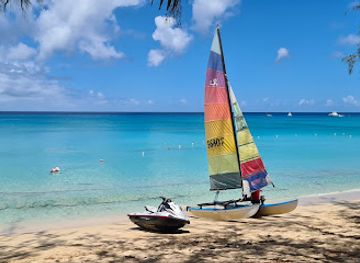
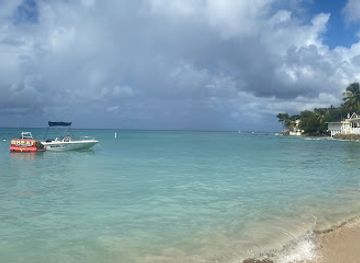
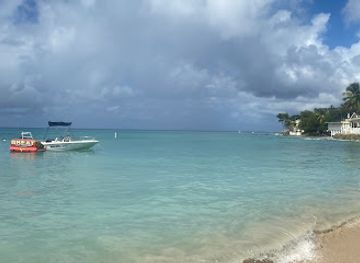
Mullins Beach is a compact, well-known stretch of pale sand on Barbados’s west coast, in the parish of Saint Peter. Its sheltered position on the Caribbean Sea gives the beach a gentler character than many exposed Atlantic-facing shores, with clear water, calm mornings and warm swimming conditions during suitable weather. The beach is used for relaxing, sea bathing and water-based recreation, while the gently curving coastline provides open views towards the northern reaches of the island. Conditions can change with swell, currents and seasonal weather, so visitors should follow local advice and use care in the water.Read more about Mullins Beach
West Coast Character
Relaxed Coastal Experiences
When is the best time to visit Mullins Beach?
Best: July–September · 32°C| Month | High (°C) | Rainfall (mm) |
|---|---|---|
| January | 31 | 60 |
| February | 31 | 50 |
| March | 31 | 50 |
| April | 32 | 40 |
| May | 32 | 30 |
| June | 32 | 30 |
| July (best) | 32 | 30 |
| August (best) | 32 | 30 |
| September (best) | 32 | 30 |
| October | 32 | 40 |
| November | 31 | 50 |
| December | 31 | 60 |
Getting to and around Mullins Beach
How to get there
Transportation
Best landmarks in Mullins Beach
Mullins Beach is the defining natural landmark of this small destination, with its pale sand, sheltered west-coast setting and open Caribbean horizon. The beach belongs to Barbados’s coral limestone shoreline, whose gentle western profile has helped shape the island’s long association with coastal settlement and tourism. Nearby Speightstown is the principal historic landmark in the wider area: its surviving streets and buildings recall the town’s former role as a port and commercial centre. The Arlington House Museum in Speightstown is a notable cultural landmark outside Mullins Beach, while the coast south towards Holetown contains further reminders of Barbados’s maritime and plantation history. The sea itself is central to the area’s identity, supporting bathing, boating and marine wildlife, including turtles that may be encountered in Barbados’s coastal waters. These natural and built features are best understood as parts of a connected west-coast landscape rather than as monuments contained within the beach site.
-
Restaurant
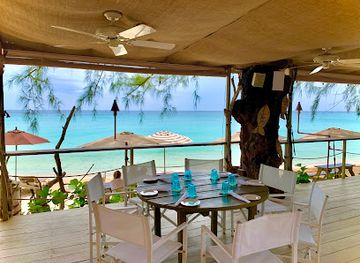
Sea Shed Restaurant
Experience beachfront bliss at Sea Shed Restaurant in Barbados: French-inspired cuisine, vibrant ambiance, and unforgettable sunsets await on Mullins Beach for the ultimate island escape.
-
Bar
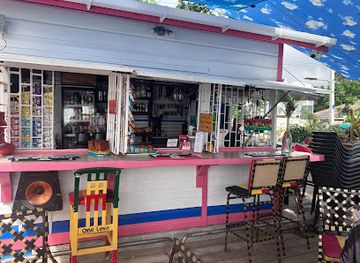
Adrian’s bar
Experience the vibrant atmosphere of Adrian's Bar in Mullins, a Caribbean haven for relaxation and socializing with stunning beach views, local flavors, and live music.
-
Restaurant
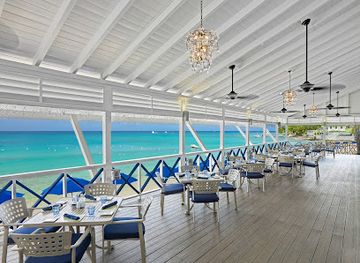
Royal Westmoreland Beach Club
Experience unforgettable dining at Royal Westmoreland Beach Club, where exquisite cuisine meets stunning Caribbean views in Speightstown, Barbados.
-
Villa
Tradewinds
Experience luxurious villa living in Barbados at Tradewinds, perfectly situated in vibrant Mullins Bay for beachside bliss and island exploration.
Explore Mullins Beach on the map
Plan your trip on one map. See where the top attractions, landmarks, restaurants and hotels are, and book hotels and experiences in a few clicks.
Best hotels in Mullins Beach
Best restaurants in Mullins Beach
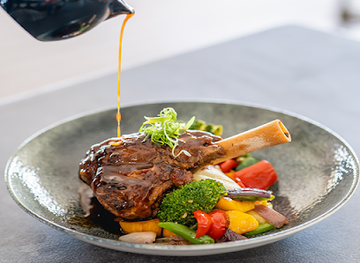
Dining around Mullins Beach reflects the wider west-coast pattern of beach concessions, hotel restaurants, casual cafés and independent establishments, with more choice in nearby Speightstown, Holetown and other coastal settlements. Barbadian cooking commonly features flying fish, fish cakes, macaroni pie, rice and peas, cou-cou, grilled seafood and hearty dishes influenced by West African, British and Caribbean traditions. Visitors may also encounter rum-based drinks and locally produced fruit, although menus and operating arrangements vary. Mullins is a beach destination rather than a large dining district, so it is sensible to check what is open locally and use Speightstown or Holetown for a broader choice of restaurants and provisions. Buying food from small vendors or eating at a traditional rum shop can offer a more local experience, provided visitors respect that these businesses may be informal and have limited seating or payment facilities.
-
Restaurant
Sea Shed Restaurant
Experience Barbados' vibrant flavors at Sea Shed Restaurant – where culinary delights meet stunning beachfront views.
-
Restaurant
Royal Westmoreland Beach Club
Experience exquisite Caribbean dining at Royal Westmoreland Beach Club in Speightstown – where stunning views meet delectable flavors.
-
Restaurant
Larry Rogers at Mullins Bay
Discover Larry Rogers at Mullins Bay, where exquisite Caribbean cuisine meets stunning beachfront views in Speightstown, Barbados.
-
 Restaurant
The Food Room
Experience authentic Barbadian flavors at The Food Room – where fresh ingredients meet vibrant culture in Mullins.
Best bars in Mullins Beach
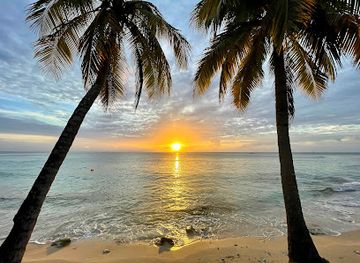
Evenings at Mullins Beach are generally quiet and coastal rather than centred on a dedicated nightlife district. Beachside and hotel venues may provide drinks, casual food and sunset socialising, but individual businesses and entertainment schedules can change, so visitors should not assume that a particular event or late opening is guaranteed. Speightstown offers a more local evening atmosphere through rum shops, bars and restaurants, while Holetown has a larger concentration of hospitality venues and is the more practical nearby choice for a broader evening out. Bridgetown, farther south, provides Barbados’s widest range of organised nightlife, music and cultural entertainment. At Mullins itself, the defining evening experience is the changing light over the Caribbean and the relaxed pace of the west coast rather than nightclubs or large-scale entertainment.
-
Restaurant
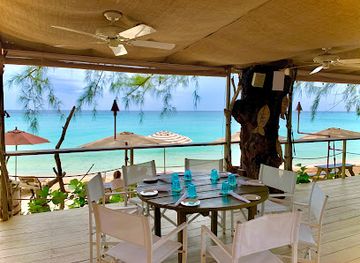
Sea Shed Restaurant
Experience the best of Caribbean cuisine at Sea Shed Restaurant, where fresh flavors meet breathtaking ocean views in Saint Peter, Barbados.
-
Bar
Adrian’s bar
Experience the vibrant culture and stunning sunsets at Adrian’s Bar in Mullins, Barbados, the perfect retreat for tourists seeking relaxation and enjoyment.
-
Restaurant
Royal Westmoreland Beach Club
Discover the ultimate dining experience at Royal Westmoreland Beach Club, where exquisite cuisine meets stunning Caribbean views.
Best nightclubs in Mullins Beach
Evenings at Mullins Beach are generally quiet and coastal rather than centred on a dedicated nightlife district. Beachside and hotel venues may provide drinks, casual food and sunset socialising, but individual businesses and entertainment schedules can change, so visitors should not assume that a particular event or late opening is guaranteed. Speightstown offers a more local evening atmosphere through rum shops, bars and restaurants, while Holetown has a larger concentration of hospitality venues and is the more practical nearby choice for a broader evening out. Bridgetown, farther south, provides Barbados’s widest range of organised nightlife, music and cultural entertainment. At Mullins itself, the defining evening experience is the changing light over the Caribbean and the relaxed pace of the west coast rather than nightclubs or large-scale entertainment.
-
Bar
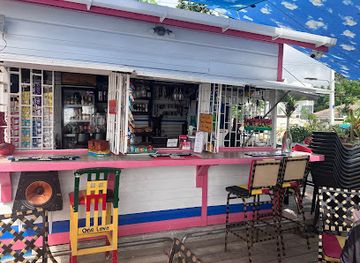
Adrian’s bar
Experience the vibrant atmosphere of Adrian’s Bar in Mullins, a Caribbean haven for relaxation and socializing with stunning beach views.
-
Restaurant
Royal Westmoreland Beach Club
Experience exquisite dining at Royal Westmoreland Beach Club, where Caribbean flavors meet stunning ocean views in Speightstown, Barbados.
-
Bar
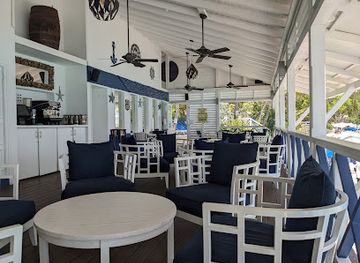
Larry Rogers at Mullins Bay
Discover the vibrant atmosphere of Larry Rogers at Mullins Bay, a perfect blend of bar, restaurant, and beach club in Speightstown, Barbados.
Get your free copy of our complete guide to Mullins Beach, delivered straight to you.
Everything on this page, from attractions and restaurants to essentials and local phrases, in one PDF you can read offline, print or share.
Already have an account? Sign in
Your Mullins Beach guide is ready.
We'll send it to · Not you? Sign out

Getting your guide ready…
We are putting together a fresh copy of the Mullins Beach guide. This can take up to a minute.
This can take a few moments. If your browser asks, choose Allow so the download can start. You'll find the guide in your Downloads folder.
Nothing happened? Download it again
Sorry, the guide is taking longer than usual. Please try again in a minute, or get it by email instead.
Mullins Beach essentials
Currency and Payment
Safety
Emergency Situations
Do's and Don'ts
Local Tips
From Eve
Local phrases worth knowing
You don't need to get them perfect. A few words go a long way, and locals appreciate the effort.
Basics
| English | Local | Say it |
|---|---|---|
| Hello | Good morning | [Gud mawnin] |
| Goodbye | Goodbye | [Gud-bye] |
| Yes | Yes | [Ya] |
| No | No | [Noh] |
| Please/You're welcome | Please/You're welcome | [Pleez/Yuh welcome] |
| Thank you | Thank you | [Tank yuh] |
| Excuse me/Sorry | Excuse me/Sorry | [Excuse me/Sorry] |
| How are you? | How are you? | [How are yuh?] |
| Fine. And you? | Fine. And you? | [Fine. And yuh?] |
| Do you speak English? | Do you speak English? | [Do yuh speak Inglish?] |
| I don't understand | I don't understand | [I doh understand] |
Eating & Drinking
| English | Local | Say it |
|---|---|---|
| I'd like to see the menu, please | Can I see de menu, please | [Can I see de menu, please] |
| I don't eat meat | I doh eat meat | [I doh eat meat] |
| Cheers! | Cheers! | [Cheers!] |
| I would like to pay, please | I would like to pay, please | [I would like to pay, please] |
Emergencies
| English | Local | Say it |
|---|---|---|
| Help! | Help! | [Help!] |
| Go away! | Go 'way! | [Go 'way!] |
| Call the Police! | Call de Police! | [Call de Police!] |
| Call a doctor! | Call a doctor! | [Call a doctor!] |
| I'm lost | I los' | [I los'] |
| I'm ill | I sick | [I sick] |
Shopping
| English | Local | Say it |
|---|---|---|
| I'd like to buy... | I wan' to buy... | [I wan' to buy...] |
| I'm just looking | I jus' looking | [I jus' looking] |
| How much is it? | How much dis is? | [How much dis is?] |
| That's too expensive | Dat too dear | [Dat too dear] |
| Can you lower the price? | Can yuh droppa price? | [Can yuh droppa price?] |
Time & Numbers
| English | Local | Say it |
|---|---|---|
| What time is it? | Wha' time it is? | [Wha' time it is?] |
| It's one o'clock | It one o'clock | [It one o'clock] |
| Half past (10) | Half pass (10) | [Half pass (10)] |
| Morning | Mornin' | [Mornin'] |
| Afternoon | Afternoon | [Afternoon] |
| Evening | Evenin' | [Evenin'] |
| Yesterday | Yesterday | [Yesterday] |
| Today | Today | [Today] |
| Tomorrow | Tomorrow | [Tomorrow] |
| 1 | 1 | [1] |
| 2 | 2 | [2] |
| 3 | 3 | [3] |
| 4 | 4 | [4] |
| 5 | 5 | [5] |
| 6 | 6 | [6] |
| 7 | 7 | [7] |
| 8 | 8 | [8] |
| 9 | 9 | [9] |
| 10 | 10 | [10] |
Transport & Directions
| English | Local | Say it |
|---|---|---|
| Where's a/the...? | Where de...? | [Where de...?] |
| What's the address? | Wha' de address? | [Wha' de address?] |
| Can you show me (on the map)? | Can yuh show me (on de map)? | [Can yuh show me (on de map)?] |
| When's the next (bus)? | When de nex' (bus)? | [When de nex' (bus)?] |
| A ticket (to ....) | A ticket (to ....) | [A ticket (to ....)] |
History of Mullins Beach
A Coral Island Landscape
Mullins Beach forms part of Barbados’s coral limestone west coast, a landscape shaped over geological timescales by the accumulation and uplift of marine sediments. The island’s relatively gentle western shoreline contrasts with the more exposed eastern coast, helping to create the sheltered coastal conditions for which beaches in the Saint Peter and Saint James area are known. The beach itself is a natural shoreline rather than a historic settlement, and its identity has developed from its coastal setting, bathing conditions and relationship with the wider Caribbean Sea.
Settlement and Plantation Barbados
European colonisation transformed Barbados from the seventeenth century onwards, bringing plantation agriculture, new settlements and an economy closely tied to sugar. The west coast became particularly associated with estates, ports and the movement of agricultural goods, while enslaved Africans and their descendants formed the majority of the population and shaped the island’s language, foodways, music and social culture. Mullins lies within this wider historical landscape, although the most visible surviving heritage is concentrated in established settlements and former plantation sites elsewhere in Saint Peter and neighbouring parishes.
Speightstown and the West Coast
Speightstown, north of Mullins Beach, developed as one of Barbados’s early ports and became an important point of connection between the island, Britain and other Caribbean territories. Its historic streets and surviving buildings reflect the commercial and maritime importance of the west coast. The town’s fortunes changed as Bridgetown became more dominant, but Speightstown retained a distinct local identity. Mullins remained a coastal location rather than a major urban centre, benefiting later from the growth of seaside recreation and tourism along Barbados’s western shore.
Tourism and Coastal Stewardship
During the twentieth century, Barbados expanded its tourism economy, and the west coast became one of the island’s principal visitor areas because of its beaches, sea conditions and proximity to Bridgetown and historic settlements. Mullins developed a reputation as a convenient beach stop within this coastal corridor, with informal and commercial leisure uses growing around the shoreline. Modern visitors encounter a coast shaped by both tourism and environmental pressures, including the need to protect marine life, manage waste and respect public access while preserving the beach’s natural character.
Mullins Beach in Photos
Browse through our photo collection highlighting the charm and character of the destination.
Neighbouring destination travel guides
The closest destinations to Mullins Beach, if you have time for more than one.
-

-

-

-

-


Swipe for more destinations
Explore more

Explore more of West Coast
Explore West Coast Barbados for calm Caribbean beaches, coral-stone heritage, marine life, Bajan food and lively Holetown and Speightstown.
Explore West Coast
Explore more of Barbados
Discover Barbados: Pristine beaches, rich history, and vibrant culture await in this Caribbean paradise. Perfect for adventure, relaxation, and culinary delights.
Explore Barbados