

Quartier des Spectacles (Montreal) Travel Guide - Free
Explore Quartier des Spectacles in Montreal with Evendo's free guide. Find the best shops, historic streets, restaurants, and gems on web or mobile.


Quartier des Spectacles in Montreal pairs Place des Arts, festival-filled public squares, contemporary culture, cafés and late-night music in the city centre.
Festival Streets and Public Squares
Quartier des Spectacles occupies a compact, centrally placed part of Montreal where the city’s performance culture spills into the streets. Its principal landmarks include Place des Arts, the city’s major performing-arts complex, and Place des Festivals, a broad public square designed for concerts, outdoor installations and large cultural events. Around them, Sainte-Catherine Street, Saint-Laurent Boulevard, Jeanne-Mance Street and the lanes near the Université du Québec à Montréal form a lively urban grid of theatres, galleries, restaurants and student spaces.Read more about Quartier des Spectacles
A District Built Around Culture
Everyday Montreal in a Performance Setting
Best attractions in Quartier des Spectacles
Place des Arts is the district’s principal cultural attraction, bringing together major performance spaces for concerts, theatre, dance and opera in a large complex facing the public realm. Immediately outside, Place des Festivals provides a broad setting for outdoor concerts, projections, installations and festival audiences, while the Illuminated Emphasis route and other temporary works give nearby streets a changing visual character. The district’s cultural circuit also includes MTELUS, Club Soda, the Cinémathèque québécoise and the Musée d’art contemporain de Montréal, subject to individual programmes and opening arrangements. Visitors can explore the streets around UQAM, follow Sainte-Catherine Street towards Saint-Laurent Boulevard, or continue towards the Latin Quarter and Chinatown nearby. The appeal lies less in one isolated sight than in seeing how theatres, public squares, student life and temporary art occupy the same compact urban landscape.
-
Basilica
Notre-Dame Basilica of Montreal
Discover the Notre-Dame Basilica of Montreal, an architectural marvel and spiritual haven, rich in history and beauty, a must-see for every traveler.
12 min walk · 0.9 km from neighbourhood centre
-
Park
Square Saint-Louis
Experience the serene beauty of Square Saint-Louis, a picturesque park in Montreal's Plateau-Mont-Royal, perfect for relaxation and cultural exploration.
13 min walk · 1.1 km from neighbourhood centre
-
Tourist attraction
Montreal Chinatown
Explore Montreal's Chinatown: A vibrant blend of culture, cuisine, and history in the heart of the city.
7 min walk · 0.6 km from neighbourhood centre


Best landmarks in Quartier des Spectacles
Place des Arts is the district’s defining architectural landmark, a large performing-arts complex whose presence has shaped Montreal’s cultural geography since its opening in 1963. Place des Festivals is the corresponding public-space landmark: its open design and event infrastructure allow the district’s cultural life to extend beyond theatre walls. Nearby UQAM buildings form another important part of the streetscape, representing the university presence that has influenced the area since the institution’s establishment in the early 1970s. The theatres and concert halls along Sainte-Catherine Street and Saint-Laurent Boulevard also preserve the neighbourhood’s longer association with popular entertainment, even as public-realm improvements have reorganised the surroundings. Rather than a district of uniform historic façades, Quartier des Spectacles is defined by the contrast between older commercial streets, modern cultural buildings, university architecture and temporary illuminated installations.
-
Performing arts theater
Place des Arts
Experience world-class performances and cultural events at Place des Arts, Montreal's premier performing arts complex.
1 min walk · 0.1 km from neighbourhood centre
-
Concert hall
Place des Festivals
Experience the vibrant cultural heartbeat of Montreal at Place des Festivals, where art and entertainment come alive throughout the year.
1 min walk · 0.1 km from neighbourhood centre
-
Park
Parterre du Quartier des spectacles
Discover the vibrant Parterre du Quartier des spectacles, a cultural oasis in Montreal where art, music, and community come together in a stunning urban park.
4 min walk · 0.3 km from neighbourhood centre
-
Performing arts theater
Monument-National
Discover the historic Monument-National, Montreal's iconic performing arts theater showcasing diverse performances and rich cultural heritage.
5 min walk · 0.4 km from neighbourhood centre


Explore Quartier des Spectacles on the map
A handpicked selection of must-see spots in Quartier des Spectacles, mapped for you.
Best hotels in Quartier des Spectacles
Best restaurants in Quartier des Spectacles
Dining in Quartier des Spectacles reflects its role as a performance district: restaurants and cafés around Sainte-Catherine Street, Saint-Laurent Boulevard and the eastern downtown grid serve audiences before concerts, festival visitors between events and students from UQAM. The choice ranges from casual counter service and cafés to sit-down restaurants, with the nearby Latin Quarter adding further options within a short walk. Restaurant styles change as the district’s cultural calendar changes, and event nights can make tables and pavements busier than usual. The area is useful for combining a meal with a performance, although visitors should distinguish venues inside the Quartier des Spectacles from the broader dining streets just beyond its informal boundaries. For a wider range of cuisines, Chinatown is nearby to the south, while the Main and downtown offer additional independent restaurants and late-opening food options.
-
Restaurant
BOUILLON BILK
Discover Bouillon Bilk: A modern French restaurant in Montreal offering exquisite dishes crafted from local ingredients in an elegant setting.
5 min walk · 0.4 km from neighbourhood centre
-
Vegan
Lola Rosa Place-des-Arts
Discover Lola Rosa Place-des-Arts: Montreal's premier vegan restaurant serving innovative dishes in an artistic setting.
1 min walk · 0.1 km from neighbourhood centre
-
Restaurant
Cadet
Experience the innovative flavors of Cadet in Montreal—a restaurant where every dish tells a story through local ingredients and creativity.
5 min walk · 0.4 km from neighbourhood centre
-
Restaurant
Restaurant Bivouac
Experience culinary excellence at Restaurant Bivouac in Montreal—where local flavors meet innovative cuisine.
2 min walk · 0.2 km from neighbourhood centre


Best bars in Quartier des Spectacles
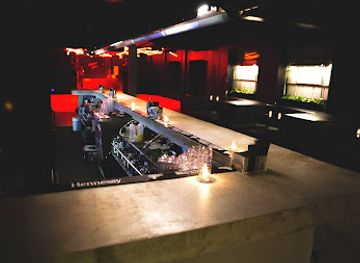
After dark, Quartier des Spectacles is animated primarily by concerts, theatre and festival programming rather than by one concentrated club strip. MTELUS and Club Soda are established live-music venues, while Foufounes Électriques, on Sainte-Catherine Street, has long been associated with alternative music and nightlife. The streets around Saint-Laurent Boulevard and the Latin Quarter provide further bars, casual drinking places and late-evening venues, though the atmosphere varies considerably from one block to the next. Concert audiences often move between venues, restaurants and Metro stations, giving the district a strong event-night rhythm. Visitors should check individual venue programmes and entry arrangements, as performance schedules, temporary outdoor events and seasonal festivals shape the evening scene more than fixed opening patterns.
-
Beer hall
Brasserie du Monde
Experience the vibrant essence of Montreal at Brasserie du Monde, where craft beer meets gourmet dining in a lively atmosphere.
11 min walk · 0.9 km from neighbourhood centre
-
Grill
NYKS
Experience the vibrant flavors of Montreal at NYKS, a grill and bistro that brings culinary delight to the heart of the city.
2 min walk · 0.2 km from neighbourhood centre
-
Pub
Pub Le Sainte-Élisabeth
Discover the heart of Montreal's nightlife at Pub Le Sainte-Élisabeth, where local beers and classic pub fare create an unforgettable experience.
8 min walk · 0.7 km from neighbourhood centre
-
Bar
La Distillerie no.1
Experience the best of Montreal's nightlife at La Distillerie No. 1, renowned for its creative cocktails and inviting ambiance.
10 min walk · 0.8 km from neighbourhood centre


Best nightclubs in Quartier des Spectacles
After dark, Quartier des Spectacles is animated primarily by concerts, theatre and festival programming rather than by one concentrated club strip. MTELUS and Club Soda are established live-music venues, while Foufounes Électriques, on Sainte-Catherine Street, has long been associated with alternative music and nightlife. The streets around Saint-Laurent Boulevard and the Latin Quarter provide further bars, casual drinking places and late-evening venues, though the atmosphere varies considerably from one block to the next. Concert audiences often move between venues, restaurants and Metro stations, giving the district a strong event-night rhythm. Visitors should check individual venue programmes and entry arrangements, as performance schedules, temporary outdoor events and seasonal festivals shape the evening scene more than fixed opening patterns.
-
Event venue
Newspeak
Discover the vibrant nightlife at Newspeak, Montreal's premier event venue known for electrifying DJ performances and an intimate atmosphere.
9 min walk · 0.7 km from neighbourhood centre
-
Cocktail bar
PointBar Lounge
Experience the vibrant atmosphere of PointBar Lounge, a cocktail bar and club in Montreal, perfect for brunches and lively nightlife.
12 min walk · 0.9 km from neighbourhood centre
-
Bar
Vino Disco
Discover Vino Disco, a lively cocktail and wine bar in Montreal, where great music meets a vibrant atmosphere for an unforgettable night out.
5 min walk · 0.4 km from neighbourhood centre
-
Disco club
Montreal Skeleton Key
Discover the vibrant nightlife of Montreal at Skeleton Key, a premier disco club offering an eclectic mix of music, cocktails, and unforgettable party vibes.
8 min walk · 0.6 km from neighbourhood centre


Best shops in Quartier des Spectacles
Shopping in Quartier des Spectacles is secondary to its cultural and entertainment role, but the district is well placed for browsing between performances. Sainte-Catherine Street offers practical downtown retail, while Saint-Laurent Boulevard and the streets around the Latin Quarter provide independent shops, cafés, books, records and everyday goods within a short walk, with the exact mix changing over time. UQAM’s presence contributes a student-oriented commercial character, and cultural venues add opportunities to browse programmes, books, recordings and exhibition-related merchandise rather than conventional luxury retail. The district becomes especially useful for event-related browsing, including festival stalls or temporary cultural markets when scheduled. For more specialised shopping, visitors can continue south towards Chinatown or west along Sainte-Catherine Street, which lie close by but are not all within the Quartier des Spectacles itself.
-
Shopping mall
Complexe Desjardins
Discover the dynamic blend of shopping, dining, and culture at Complexe Desjardins, Montreal's premier shopping mall.
3 min walk · 0.2 km from neighbourhood centre
-
Shopping mall
Promenades Cathédrale
Discover the heart of Montreal at Promenades Cathédrale, a vibrant shopping mall offering a unique mix of retail, dining, and cultural experiences.
6 min walk · 0.5 km from neighbourhood centre
-
Gift shop
Le Magasin Général du Vieux-Montréal
Explore Le Magasin Général du Vieux-Montréal for unique gifts, local artisan treasures, and a glimpse into Montreal's rich heritage.
13 min walk · 1.1 km from neighbourhood centre
-
Gift shop
Souvenirs Quebec Je T’aime
Discover a unique collection of souvenirs and Native American goods at Souvenirs Quebec Je T’aime, where every item tells a story of Quebec's rich culture.
2 min walk · 0.2 km from neighbourhood centre


Quartier des Spectacles essentials
Getting There
Getting Around
Safety
Emergency Situations
Do's and Don'ts
Local Tips

From Eve
Local phrases worth knowing
You don't need to get them perfect. A few words go a long way, and locals appreciate the effort.
Basics
| English | Local | Say it |
|---|---|---|
| Hello | Bonjour | [bon-zhoor] |
| Goodbye | Au revoir | [o re-vwar] |
| Yes | Oui | [wee] |
| No | Non | [non] |
| Please/You're welcome | S'il vous plaît/De rien | [see voo pleh/duh ryen] |
| Thank you | Merci | [mehr-see] |
| Excuse me/Sorry | Excusez-moi/Désolé | [ex-kew-zay mwah/deh-zoh-lay] |
| How are you? | Comment ça va? | [koh-mohn sah vah] |
| Fine. And you? | Bien. Et toi? | [byen. ay twah] |
| Do you speak English? | Parlez-vous anglais? | [par-lay voo ahn-glay] |
| I don't understand | Je ne comprends pas | [zhuh nuh kohm-prahn pah] |
Eating & Drinking
| English | Local | Say it |
|---|---|---|
| I'd like to see the menu, please | Je voudrais voir le menu, s'il vous plaît | [zhuh voo-dray vwahr luh meh-nyoo, see voo pleh] |
| I don't eat meat | Je ne mange pas de viande | [zhuh nuh mahnj pah duh vee-ahnd] |
| Cheers! | Santé! | [sahn-tay] |
| I would like to pay, please | Je voudrais payer, s'il vous plaît | [zhuh voo-dray pay-ay, see voo pleh] |
Emergencies
| English | Local | Say it |
|---|---|---|
| Help! | Au secours! | [oh seh-koor] |
| Go away! | Allez-vous en! | [al-ay vooz ahn] |
| Call the Police! | Appelez la police! | [ah-pel-ay lah poh-lees] |
| Call a doctor! | Appelez un médecin! | [ah-pel-ay uh may-duh-sahn] |
| I'm lost | Je suis perdu | [zhuh swee pair-doo] |
| I'm ill | Je suis malade | [zhuh swee mah-lahd] |
Shopping
| English | Local | Say it |
|---|---|---|
| I'd like to buy... | Je voudrais acheter... | [zhuh voo-dray zheh-tey...] |
| I'm just looking | Je regarde juste | [zhuh ruh-gard zhew-stuh] |
| How much is it? | Combien ça coûte? | [kohm-byen sah koot] |
| That's too expensive | C'est trop cher | [say troh shair] |
| Can you lower the price? | Est-ce que vous pouvez baisser le prix? | [ess-kuh voo poo-vey beh-say luh pree] |
Time & Numbers
| English | Local | Say it |
|---|---|---|
| What time is it? | Quelle heure est-il? | [kel uhr ay-teel] |
| It's one o'clock | Il est une heure | [eel ay tun uhr] |
| Half past (10) | Dix heures et demie | [dees uhr ay duh-mee] |
| Morning | Matin | [mah-tahn] |
| Afternoon | Après-midi | [ah-pray mee-dee] |
| Evening | Soir | [swahr] |
| Yesterday | Hier | [yehr] |
| Today | Aujourd'hui | [oh-zhoor-dwee] |
| Tomorrow | Demain | [duh-man] |
| 1 | Un | [uhn] |
| 2 | Deux | [duh] |
| 3 | Trois | [twah] |
| 4 | Quatre | [kat] |
| 5 | Cinq | [sank] |
| 6 | Six | [sees] |
| 7 | Sept | [set] |
| 8 | Huit | [wheet] |
| 9 | Neuf | [nuf] |
| 10 | Dix | [dees] |
Transport & Directions
| English | Local | Say it |
|---|---|---|
| Where's a/the...? | Où se trouve...? | [oo suh troov] |
| What's the address? | Quelle est l'adresse? | [kel ay lah-dress] |
| Can you show me (on the map)? | Pouvez-vous me montrer (sur la carte)? | [poo-vey voo muh mohn-tray (soor lah kart)] |
| When's the next (bus)? | Quand est le prochain (bus)? | [kahn ay luh proh-shahn (bus)] |
| A ticket (to ....) | Un billet (pour ....) | [uhn bee-yay (poor)] |
History of Quartier des Spectacles
From Suburban Edge to Urban Quarter
Before Montreal’s modern cultural district emerged, the area around present-day Saint-Laurent Boulevard and Sainte-Catherine Street developed as part of the city’s expanding east-central urban fabric. Commercial buildings, theatres, cafés and places of entertainment accumulated along these important routes during the nineteenth and early twentieth centuries. Saint-Laurent, traditionally known as the Main, became a prominent north–south corridor through Montreal, while the surrounding streets acquired a reputation for nightlife and popular amusements. This mixture of commerce, performance and everyday urban life established the cultural associations that would later shape the Quartier des Spectacles.
The Rise of Place des Arts
A decisive change came with the opening of Place des Arts in 1963. Built as a major public performing-arts complex, it brought concert, opera, dance and theatre institutions into a part of the city already associated with entertainment, while strengthening Montreal’s French-language cultural infrastructure. The complex expanded over subsequent decades and became an anchor for festivals and major productions. The arrival of the Université du Québec à Montréal in the early 1970s also altered the surrounding streets, adding a substantial student and academic presence to the theatres, shops and older commercial buildings.
Creating a Festival District
At the beginning of the twenty-first century, Montreal pursued a more coherent identity for the cultural area around Place des Arts and the entertainment venues of the Main. The Quartier des spectacles concept linked existing institutions with improved public spaces, lighting and infrastructure for outdoor programming. Place des Festivals, created in the late 2000s, became the district’s principal event square, while a network of illuminated installations helped connect venues across the neighbourhood. This redevelopment did not erase the area’s older history of nightlife and popular entertainment; instead, it placed that history alongside a more formal concentration of festivals, cultural institutions and public art.
A Contemporary Cultural Hub
Today, Quartier des Spectacles is recognised through its year-round calendar of performances, exhibitions and public events rather than through a single architectural style or historic boundary. The district hosts major Montreal festivals and supports a dense cluster of theatres, concert halls, cinemas, museums and educational institutions. Its public realm is designed to accommodate both ordinary pedestrian movement and large cultural gatherings, with temporary stages, projections and installations frequently changing the appearance of its squares. The result is a neighbourhood whose identity remains closely tied to Montreal’s performance economy and to the continuing renewal of its central streets.
Quartier des Spectacles in Photos
Browse through our photo collection highlighting the charm and character of the destination.
Neighbourhoods near Quartier des Spectacles
The closest neighbourhoods to Quartier des Spectacles, if you have time for more than one stop.
-

-

-

-

-


Swipe for more neighbourhoods
Explore more

Explore more of Montreal
Montreal combines Old World architecture, Quebec culture, renowned museums, lively markets, Mount Royal views and memorable food across a welcoming island city.
Explore Montreal