

Mystic Seaport Travel Guide - Free Web & App
Your ultimate guide to Mystic Seaport. Discover top landmarks, proposed trips, and local tips. Free on the web or via the Evendo companion app.


Mystic Seaport in Connecticut brings America's maritime past to life through historic vessels, a recreated coastal village, craft demonstrations and riverfront heritage.
A Waterfront Museum of American Seafaring
Mystic Seaport is a maritime museum on the banks of the Mystic River in the village of Mystic, Connecticut, dedicated to the seafaring history of the United States and the working communities of coastal New England. Rather than presenting its collections solely inside galleries, the museum creates an expansive waterfront environment where historic vessels, preserved buildings, working craft shops and maritime landscapes form a connected story. Visitors can walk through a recreated nineteenth-century coastal village, watch traditional skills being practised, and explore ships that reflect the commercial, fishing and passenger trades that shaped the region.Read more about Mystic Seaport
Ships, Crafts and Coastal Communities
Exploring Mystic
When is the best time to visit Mystic Seaport?
Best: June, August–September · 23–27°C| Month | High (°C) | Rainfall (mm) |
|---|---|---|
| January | 3 | 75 |
| February | 4 | 70 |
| March | 8 | 90 |
| April | 14 | 100 |
| May | 19 | 90 |
| June (best) | 24 | 90 |
| July | 27 | 90 |
| August (best) | 27 | 90 |
| September (best) | 23 | 90 |
| October | 18 | 85 |
| November | 12 | 95 |
| December | 6 | 90 |
Getting to and around Mystic Seaport
How to get there
Transportation
Best attractions in Mystic Seaport
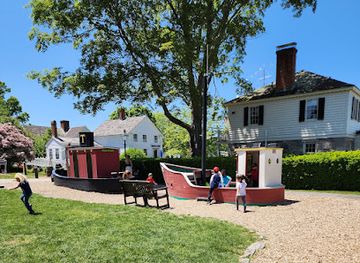
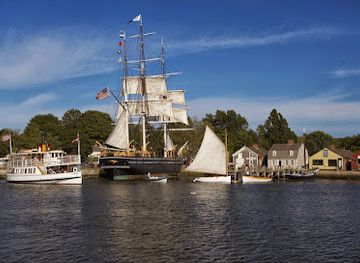
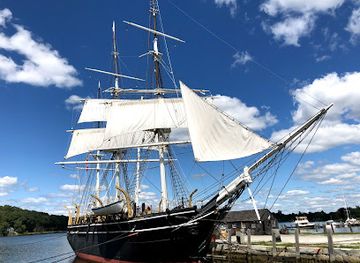
Mystic Seaport’s principal attractions are its waterfront collection of historic vessels, the recreated nineteenth-century seafaring village and its working maritime trades. The Charles W. Morgan, the last surviving wooden whaleship, offers the clearest connection with America’s whaling era, while the fishing schooner L.A. Dunton and the steamboat Sabino illustrate other forms of coastal and passenger travel. On land, historic homes, shops, a general store, a church and maritime workshops create an interpretive village assembled from buildings associated with New England communities. Boatbuilders, riggers, sailmakers and other craftspeople demonstrate techniques that supported working harbours before industrial production transformed shipbuilding. The Maritime Gallery adds a more conventional museum setting for collections and exhibitions, while the Mystic River provides the landscape in which the stories of shipyards, commerce and coastal life make sense. Nearby Mystic village offers a complementary walking area, but it is a separate settlement rather than part of the museum’s collection.
-
Corporate office
Mystic Seaport Museum - Membership Office
Explore America's maritime history at Mystic Seaport Museum, a living museum featuring historic ships, exhibits, and a charming 19th-century coastal village.
-
Tourist attraction
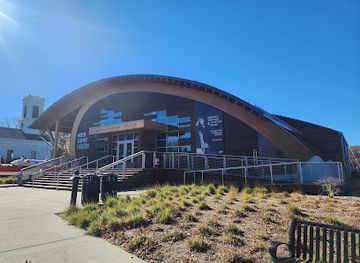
Thompson Exhibition Building
Discover maritime history and culture at the Thompson Exhibition Building in Mystic Seaport, a captivating museum for all ages.
-
Museum
Mystic Seaport Museum - Youth Training
Explore America's maritime history at Mystic Seaport Museum: historic ships, recreated village, and interactive exhibits on the Mystic River.
-
Tourist attraction
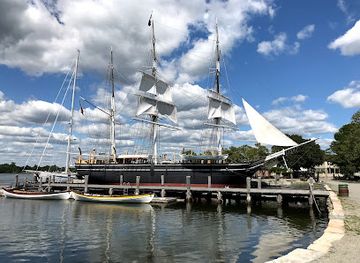
Charles W. Morgan
Explore the decks of the Charles W. Morgan, the world's last wooden whaleship, at Mystic Seaport Museum and relive maritime history.
Best landmarks in Mystic Seaport
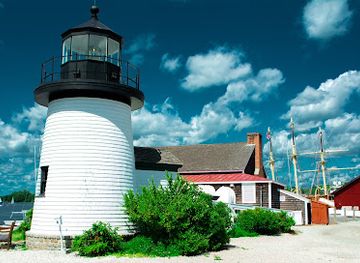
The Charles W. Morgan is Mystic Seaport’s defining landmark: launched in 1841, it is the world’s last surviving wooden whaleship and embodies the scale, technology and global reach of New England’s nineteenth-century maritime economy. The museum’s waterfront setting on the Mystic River is itself significant, linking the collection to the working waterways that supported shipbuilding, fishing and trade. Other important vessels include the L.A. Dunton, a fishing schooner, and Sabino, a historic wooden steamboat. On shore, the recreated maritime village, preserved houses, commercial buildings, church and working ropewalk establish a landscape of historic craft and coastal commerce. The Maritime Gallery provides a landmark indoor setting for marine art and material culture, while the wider village of Mystic contributes surviving streets, river views and local heritage beyond the museum boundary.
-
Museum
Mystic Seaport Museum
Delve into the rich maritime history at Mystic Seaport Museum, where ships, exhibits, and interactive experiences await all ages.
-
Corporate office
Mystic Seaport Museum - Membership Office
Explore Mystic Seaport Museum, a vibrant maritime heritage site in Mystic, CT, featuring historic ships, interactive exhibits, and stunning waterfront views.
-
Gift shop
Mystic Seaport Gift Shop
Discover a nautical paradise at the Mystic Seaport Gift Shop, your go-to destination for unique maritime-themed gifts and souvenirs in Mystic, Connecticut.
-
Museum
Mystic Seaport Museum - Youth Training
Discover the maritime heritage of Mystic at the Mystic Seaport Museum, where history meets the charm of Connecticut's coastal beauty.
Explore Mystic Seaport on the map
Plan your trip on one map. See where the top attractions, landmarks, restaurants and hotels are, and book hotels and experiences in a few clicks.
Best hotels in Mystic Seaport
Best restaurants in Mystic Seaport
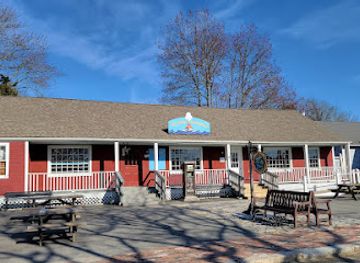
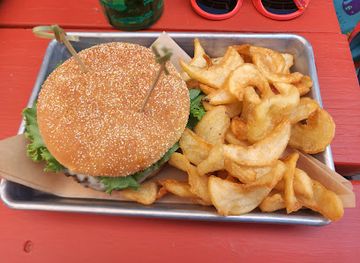
Dining at Mystic Seaport is oriented towards visitor cafés, seasonal outlets and historic waterfront settings, while a broader choice of restaurants is found in the village of Mystic and nearby shoreline communities. The regional food culture reflects southern New England’s coastal geography, with seafood, oysters, clams, lobster, fried fish and New England-style comfort food appearing alongside burgers, sandwiches and contemporary American cooking. Traditional taverns and seafood restaurants in the wider village provide a useful setting for a meal before or after museum visits, while cafés and bakeries suit shorter breaks. Farm stands and independent food shops in the surrounding region may also feature Connecticut produce and locally made goods. Exact outlets and service patterns can change, particularly outside the main visitor season, so visitors should check current arrangements rather than assume that every museum dining facility is open throughout the day.
-
American
Spouter Tavern
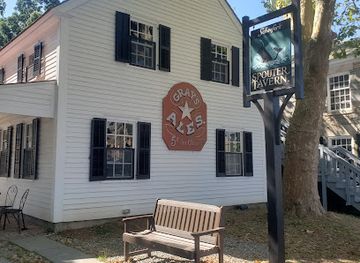
Experience authentic American dining steeped in maritime history at Spouter Tavern in Mystic, CT.
Best bars in Mystic Seaport
Mystic Seaport itself is not a nightlife district, and evenings are generally quiet once the museum’s public programme has ended. The village of Mystic, immediately nearby, has the area’s most accessible choice of established pubs, taverns, restaurants with bars and occasional live entertainment, while Stonington and other coastal communities provide further evening options by car. The atmosphere is oriented towards relaxed dining, local drinks and conversation rather than late-night clubbing. Seasonal festivals, performances and special museum events may add evening interest, but their timing and availability vary. Visitors staying in rural inns or guesthouses should expect a restrained coastal setting, with evening activity concentrated in the village and larger nearby settlements rather than along the museum waterfront itself.
-
American
Spouter Tavern
Discover the flavors of America at Spouter Tavern in Mystic, CT, where delicious cuisine meets maritime charm.
-
American
Greenman's Landing
Savor classic American flavors at Greenman's Landing in the heart of Mystic, Connecticut, where comfort food meets local charm!
Best shops in Mystic Seaport
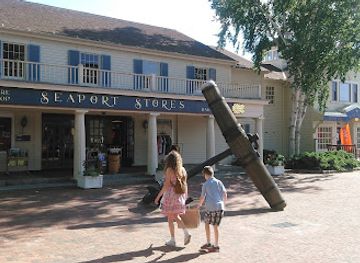
Shopping connected with Mystic Seaport centres on museum stores, maritime books, nautical gifts, educational items, craft products and reproductions inspired by New England seafaring. The village of Mystic provides a larger selection of independent shops, galleries, clothing retailers, jewellers, food sellers and gift businesses, making it the principal nearby place for browsing after a museum visit. Regional products may include locally made preserves, confectionery, artwork, pottery, textiles and nautical-themed goods, although the exact selection varies between businesses and seasons. Visitors looking for specialist outdoor equipment or everyday supplies may need to use commercial areas beyond the historic village. The seaport’s strongest retail identity lies in its connection with maritime history, traditional craftsmanship and books, rather than in a large modern shopping district.
-
Gift shop
Mystic Seaport Gift Shop
Discover maritime treasures and unique gifts at Mystic Seaport Gift Shop, the perfect stop for a memorable souvenir in Mystic, Connecticut.
Get your free copy of our complete guide to Mystic Seaport, delivered straight to you.
Everything on this page, from attractions and restaurants to essentials and local phrases, in one PDF you can read offline, print or share.
Already have an account? Sign in
Your Mystic Seaport guide is ready.
We'll send it to · Not you? Sign out

Getting your guide ready…
We are putting together a fresh copy of the Mystic Seaport guide. This can take up to a minute.
This can take a few moments. If your browser asks, choose Allow so the download can start. You'll find the guide in your Downloads folder.
Nothing happened? Download it again
Sorry, the guide is taking longer than usual. Please try again in a minute, or get it by email instead.
Mystic Seaport essentials
Currency and Payment
Safety
Emergency Situations
Do's and Don'ts
Local Tips
From Eve
Local phrases worth knowing
You don't need to get them perfect. A few words go a long way, and locals appreciate the effort.
Basics
| English | Local | Say it |
|---|---|---|
| Hello | Ahoy | [ah-hoy] |
| Goodbye | Fair winds | [fair winds] |
| Yes | Aye | [aye] |
| No | Nay | [nay] |
| Please/You're welcome | If you please | [if you pleez] |
| Thank you | Many thanks | [many thanks] |
| Excuse me/Sorry | Beggin' your pardon | [beggin' your par-dun] |
| How are you? | How be ye? | [how bee yee?] |
| Fine. And you? | Fair winds. And you? | [fair winds. and yoo?] |
| Do you speak English? | Speak ye the King's English? | [speak yee the king's ing-glish?] |
| I don't understand | I'm at sea | [I'm at see] |
Eating & Drinking
| English | Local | Say it |
|---|---|---|
| I'd like to see the menu, please | Might I peruse the bill of fare, if you please | [mite eye per-use the bill of fair, if yoo pleez] |
| I don't eat meat | I'm on a sea diet | [I'm on a see dye-it] |
| Cheers! | Yo ho ho! | [yo ho ho] |
| I would like to pay, please | I'll settle my score, if you please | [I'll settle my score, if yoo pleez] |
Emergencies
| English | Local | Say it |
|---|---|---|
| Help! | Man overboard! | [man over-board] |
| Go away! | Belay that! | [be-lay that] |
| Call the Police! | Summon the constabulary! | [sum-mon the con-stab-u-lary] |
| Call a doctor! | Fetch the ship's sawbones! | [fetch the ships saw-bones] |
| I'm lost | I've lost me bearings | [I've lost me bear-ings] |
| I'm ill | I've taken ill | [I've taken ill] |
Shopping
| English | Local | Say it |
|---|---|---|
| I'd like to buy... | I'd be wantin' to purchase... | [I'd be wantin' to pur-chase] |
| I'm just looking | I be browse | [I be browse] |
| How much is it? | What's the damage? | [whats the dam-age] |
| That's too expensive | That be a pirate's ransom | [that be a py-rates ran-some] |
| Can you lower the price? | Can ye drop the anchor a bit? | [can yee drop the an-ker a bit] |
Time & Numbers
| English | Local | Say it |
|---|---|---|
| What time is it? | What hour be it? | [what our be it] |
| It's one o'clock | It be one bell | [it be one bell] |
| Half past (10) | Bells be striking (10) | [bells be strik-ing (10)] |
| Morning | Forenoon | [fore-noon] |
| Afternoon | Afternoon watch | [after-noon watch] |
| Evening | Dogwatch | [dog-watch] |
| Yesterday | Afore yesterday | [a-fore yesterday] |
| Today | This day | [this day] |
| Tomorrow | On the morrow | [on the morrow] |
| 1 | One | [one] |
| 2 | Two | [two] |
| 3 | Three | [three] |
| 4 | Four | [four] |
| 5 | Five | [five] |
| 6 | Six | [six] |
| 7 | Seven | [seven] |
| 8 | Eight | [eight] |
| 9 | Nine | [nine] |
| 10 | Ten | [ten] |
Transport & Directions
| English | Local | Say it |
|---|---|---|
| Where's a/the...? | Where be the...? | [where be the] |
| What's the address? | What be the bearing? | [what be the bear-ing] |
| Can you show me (on the map)? | Can ye point the way? | [can yee point the way] |
| When's the next (bus)? | When be the next (bus)? | [when be the next (bus)] |
| A ticket (to ....) | A passage (to ....) | [a pas-sage (to)] |
History of Mystic Seaport
A River Shaped by Maritime Trade
The Mystic River supported a long tradition of shipbuilding, fishing, coastal trade and small-scale commerce before the modern museum existed. Its sheltered waters connected local communities with Long Island Sound and the wider Atlantic economy. During the eighteenth and nineteenth centuries, vessels built or handled in this part of Connecticut served regional trading routes and ocean-going industries. The surrounding village developed as a commercial and maritime centre, while the riverbanks accommodated shipyards, wharves and workshops. This working landscape provides the historical setting for Mystic Seaport’s interpretation of coastal New England.
The Whaling Economy and Wooden Ships
New England’s maritime prosperity was closely linked to whaling, fishing and merchant shipping during the nineteenth century. The Charles W. Morgan, launched in New Bedford in 1841, operated as a whaleship for much of its active career and later became one of the most important surviving reminders of that industry. Its preservation reflects both the technical achievement of wooden shipbuilding and the complex human history of whaling, which depended on seafarers, shipbuilders, merchants and communities across the Atlantic world. The vessel is now the centrepiece of Mystic Seaport’s historic fleet.
Founding of Mystic Seaport
Mystic Seaport was established in 1929 by a group that included marine historian Edward E. Bradley, architect J. Murray Crane and philanthropist Carl C. Cutler. Their aim was to preserve the material culture of America’s maritime past at a time when wooden vessels, shipyards and traditional crafts were disappearing. The museum expanded through the acquisition of historic vessels, buildings, tools, documents and artworks. Rather than creating a conventional indoor institution, it developed as a living waterfront museum in which the river, working trades and built environment could be interpreted together.
Preservation and Public Interpretation
During the twentieth century, Mystic Seaport became a major centre for the preservation and interpretation of American maritime history. The arrival of the Charles W. Morgan in 1941 strengthened the museum’s national significance, while the creation of a historic village and the conservation of additional vessels broadened its educational purpose. Restoration, research and public demonstrations have continued to connect historical objects with the skills needed to build, sail and maintain them. Today, the museum presents maritime history alongside changing discussions of labour, trade, technology, environmental impact and the diverse communities connected with the sea.
Mystic Seaport in Photos
Browse through our photo collection highlighting the charm and character of the destination.
Neighbouring destination travel guides
The closest destinations to Mystic Seaport, if you have time for more than one.
-

-

-
-
-


Swipe for more destinations
Explore more
Explore more of Southeastern Connecticut
Southeastern Connecticut combines Mystic's maritime heritage, coastal villages, Indigenous history, beaches, forests and New England seafood.
Explore Southeastern Connecticut
Explore more of Connecticut
Discover Connecticut: A blend of charming coastal towns, rich history, and scenic landscapes, perfect for nature lovers, history buffs, and cultural enthusiasts.
Explore Connecticut