

Delaware Beaches Travel Guide - Free Web & App
Your ultimate guide to Delaware Beaches. Discover top landmarks, proposed trips, and local tips. Free on the web or via the Evendo companion app.


Delaware Beaches pair Atlantic shores, boardwalks and Cape Henlopen history with seafood, sailing and welcoming coastal towns in the United States.
Atlantic Landscapes and Resort Towns
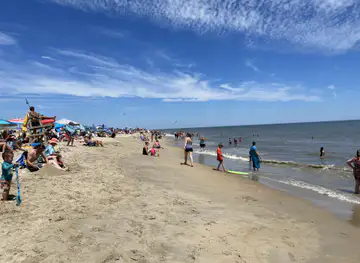
Delaware Beaches stretch along the state’s Atlantic coast, where broad sandy shores, tidal inlets, maritime forests and bayside wetlands form a compact but varied coastal destination. The main visitor centres are Lewes and Rehoboth Beach in the north, followed by the lively summer resort of Dewey Beach and the quieter communities of Bethany Beach, South Bethany and Fenwick Island farther south. Each has a distinct character, from Lewes’s historic streets and protected harbours to Rehoboth’s traditional boardwalk and family-oriented beach, Dewey’s water sports and nightlife, and the more residential atmosphere of the Bethany area.Read more about Delaware Beaches
Nature, Water and Protected Coast
History and Coastal Culture
When is the best time to visit Delaware Beaches?
Best: May–June, September · 23–27°C| Month | High (°C) | Rainfall (mm) |
|---|---|---|
| January | 7 | 90 |
| February | 8 | 78 |
| March | 12 | 95 |
| April | 18 | 90 |
| May (best) | 23 | 100 |
| June (best) | 27 | 100 |
| July | 28 | 111 |
| August | 28 | 110 |
| September (best) | 25 | 100 |
| October | 19 | 95 |
| November | 13 | 98 |
| December | 8 | 106 |
Getting to and around Delaware Beaches
How to get there
Transportation
Best attractions in Delaware Beaches
Delaware Beaches offer a chain of contrasting coastal attractions rather than one uninterrupted resort. Lewes combines historic streets, the Zwaanendael Museum, the Lewes Canalfront and access to Cape Henlopen State Park, where ocean beaches, wooded trails, bird habitat and Fort Miles occupy the former defence landscape. Rehoboth Beach centres on its traditional boardwalk, sandy municipal beach and family amusements, while neighbouring Dewey Beach is associated with water sports, bay access and a more youthful summer atmosphere. Delaware Seashore State Park stretches between the Atlantic and Indian River Bay, providing beach scenery, maritime habitats and access to the Indian River Inlet area. Bethany Beach and South Bethany are quieter residential resorts with broad beaches and seasonal boardwalk activity, while Fenwick Island State Park preserves a less built-up southern shoreline. Inland, the Rehoboth and Delaware bays offer a different perspective through kayaking, sailing, fishing and birdwatching.
-
Beach
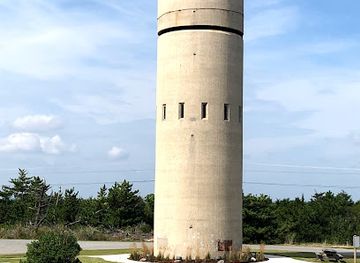
Towers Beach
Discover a tranquil beach with a historic backdrop at Towers Beach, Delaware Seashore State Park. Perfect for swimming, sunbathing, and history enthusiasts.
-
State park
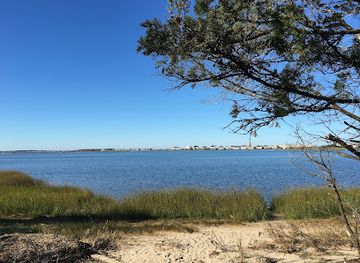
Delaware Seashore State Park
Explore Delaware's stunning coast: beaches, bays, history, and endless outdoor adventures await at Delaware Seashore State Park.
-
Bar
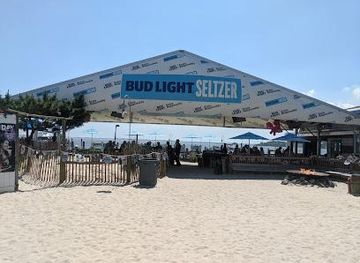
Northbeach
Dewey Beach's ultimate destination for waterfront dining, live music, and unforgettable sunsets on Rehoboth Bay.
-
Beach
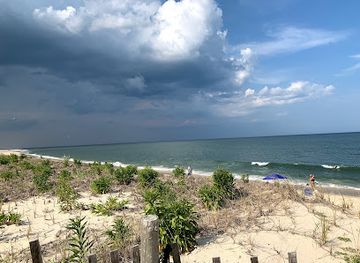
Coin Beach
Discover history and natural beauty at Coin Beach, where tales of shipwrecks meet the serene Delaware shoreline.
Best landmarks in Delaware Beaches
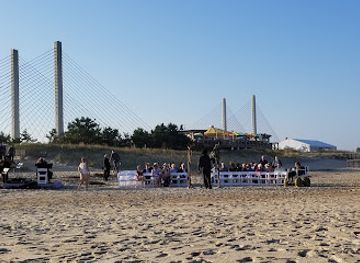
Cape Henlopen is the defining natural and historical landmark at the northern end of Delaware Beaches, its headland marking the entrance to Delaware Bay and bringing together dunes, ocean shore, maritime forest and military remains. Inside Cape Henlopen State Park, Fort Miles preserves part of the coastal defence system built during the Second World War. Lewes’s Zwaanendael Museum recalls the early Dutch settlement of Zwaanendael, while the town’s historic buildings reflect its long relationship with shipping and the bay. Rehoboth Beach’s boardwalk is a cultural landmark of the resort tradition, extending the town’s public life along the oceanfront. Farther south, the Indian River Inlet and the narrow barrier landscape of Delaware Seashore State Park demonstrate the shifting relationship between ocean and bay. Fenwick Island’s state park protects a relatively open stretch of southern beach, contrasting with the more intensively developed resort frontage nearby.
-
State park
Delaware Seashore State Park
Discover the natural beauty and recreational wonders of Delaware Seashore State Park, a must-visit for beach lovers and nature enthusiasts.
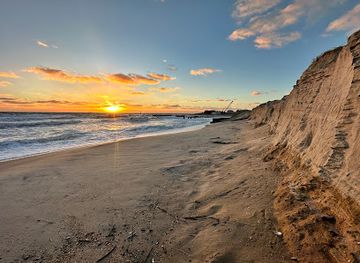
Explore Delaware Beaches on the map
Plan your trip on one map. See where the top attractions, landmarks, restaurants and hotels are, and book hotels and experiences in a few clicks.
Best hotels in Delaware Beaches
Best restaurants in Delaware Beaches
Dining across Delaware Beaches is shaped by the Atlantic, Delaware Bay and the agricultural inland peninsula. Seafood restaurants, casual crab houses, oyster counters and fish markets are concentrated in Lewes, Rehoboth Beach, Dewey Beach, Bethany Beach and Fenwick Island, with menus often reflecting Mid-Atlantic coastal cooking alongside burgers, pizza and international food. Rehoboth and Lewes provide the broadest choice of sit-down dining, cafés, bakeries and seasonal boardwalk food, while smaller southern communities have a more compact selection. Regional favourites include fresh fish, crab, oysters and clams when available, as well as boardwalk staples such as salt-water taffy, French fries and frozen desserts. Farm shops and producers inland from the shore add fruit, vegetables and other Delaware-grown products to the coastal food culture. Summer demand is seasonal, and options become more limited outside the principal resort centres.
-
Grill
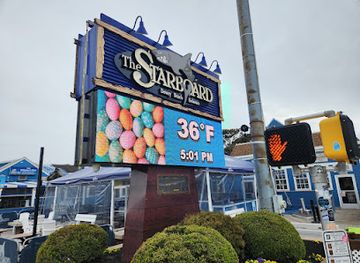
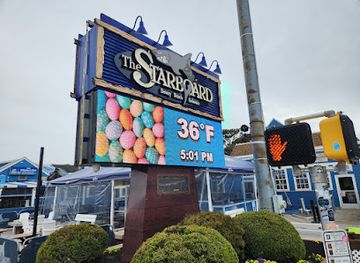
The Starboard
Discover The Starboard in Dewey Beach: A vibrant grill serving fresh seafood, hearty burgers, and lively entertainment in a charming coastal setting.
-
Restaurant
Mama Maria's Restaurant and Beach Bar
Experience authentic Italian cuisine at Mama Maria's Restaurant and Beach Bar in Dewey Beach - where delicious food meets stunning coastal views.
-
Grill
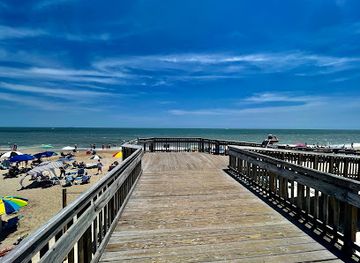
Delaware Seashore - South Inlet Big Chill Beach Club
Experience coastal dining at its best with fresh seafood, vibrant atmosphere, and breathtaking views at Big Chill Beach Club in Delaware.
Best bars in Delaware Beaches
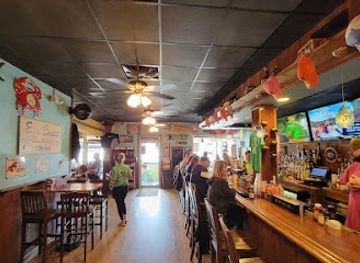
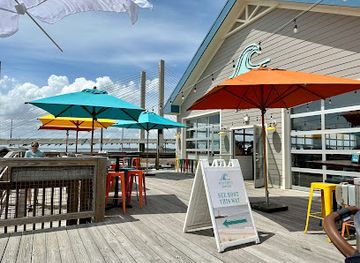
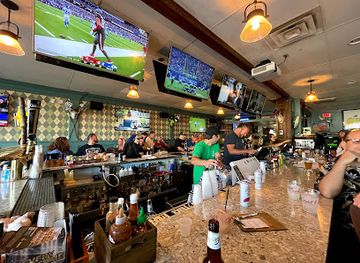
Evening entertainment varies sharply between the Delaware beach towns. Rehoboth Beach has the widest choice of established pubs, breweries, restaurants with bars, live music and boardwalk activity, while Dewey Beach is known for a concentrated summer nightlife scene with bars and venues serving a younger, late-evening crowd. Lewes is generally quieter, with taverns, restaurants and waterfront or historic-town settings rather than a large club district. Bethany Beach, South Bethany and Fenwick Island tend towards family-oriented evenings, seasonal concerts and relaxed drinks in restaurants or local pubs. Entertainment is strongly influenced by the summer calendar and may be much quieter outside the main season. Visitors should arrange transport responsibly, particularly when travelling between resorts along busy Delaware Route 1, and should not assume that every venue operates year-round.
-
Grill
Woody's Dewey Beach
Experience the vibrant coastal dining at Woody's Dewey Beach, where fresh seafood meets American classics in a lively atmosphere.
-
Grill
The Starboard
Experience the vibrant flavors and lively atmosphere of The Starboard, Dewey Beach's premier grill and restaurant, perfect for your coastal getaway.
-
Brewpub
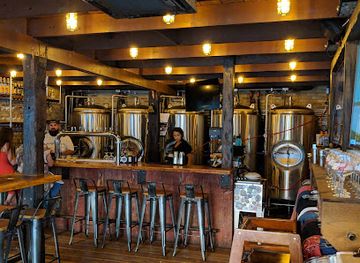
Dewey Beer Co.
Discover the best craft brews at Dewey Beer Co., where delicious food meets a vibrant atmosphere at Dewey Beach.
-
American
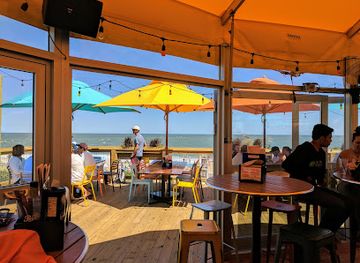
Big Chill Beach Club
Experience the best of beachside dining at Big Chill Beach Club, where delicious American cuisine meets breathtaking ocean views.
Best nightclubs in Delaware Beaches
Evening entertainment varies sharply between the Delaware beach towns. Rehoboth Beach has the widest choice of established pubs, breweries, restaurants with bars, live music and boardwalk activity, while Dewey Beach is known for a concentrated summer nightlife scene with bars and venues serving a younger, late-evening crowd. Lewes is generally quieter, with taverns, restaurants and waterfront or historic-town settings rather than a large club district. Bethany Beach, South Bethany and Fenwick Island tend towards family-oriented evenings, seasonal concerts and relaxed drinks in restaurants or local pubs. Entertainment is strongly influenced by the summer calendar and may be much quieter outside the main season. Visitors should arrange transport responsibly, particularly when travelling between resorts along busy Delaware Route 1, and should not assume that every venue operates year-round.
-
American
Big Chill Beach Club
Experience the vibrant flavors and lively atmosphere of Big Chill Beach Club in Bethany Beach, where coastal dining meets American comfort food.
-
Grill
Delaware Seashore - South Inlet Big Chill Beach Club
Experience the vibrant blend of relaxation and culinary delights at Big Chill Beach Club on the Delaware coast.
-
Sports bar
Dewey Beach Country Club
Discover Dewey Beach Country Club, where delicious food meets a vibrant sports bar atmosphere in the heart of beach-town Delaware.
Get your free copy of our complete guide to Delaware Beaches, delivered straight to you.
Everything on this page, from attractions and restaurants to essentials and local phrases, in one PDF you can read offline, print or share.
Already have an account? Sign in
Your Delaware Beaches guide is ready.
We'll send it to · Not you? Sign out

Getting your guide ready…
We are putting together a fresh copy of the Delaware Beaches guide. This can take up to a minute.
This can take a few moments. If your browser asks, choose Allow so the download can start. You'll find the guide in your Downloads folder.
Nothing happened? Download it again
Sorry, the guide is taking longer than usual. Please try again in a minute, or get it by email instead.
Delaware Beaches essentials
Currency and Payment
Safety
Emergency Situations
Do's and Don'ts
Local Tips
From Eve
Local phrases worth knowing
You don't need to get them perfect. A few words go a long way, and locals appreciate the effort.
Basics
| English | Local | Say it |
|---|---|---|
| Hello | Howdy | [haw-dee] |
| Goodbye | Catch ya later | [ketch yuh lay-tur] |
| Yes | Yep | [yep] |
| No | Nah | [nah] |
| Please/You're welcome | Please/No problem | [pleez/no prob-lem] |
| Thank you | Thanks a million | [thanks uh mil-yun] |
| Excuse me/Sorry | Pardon me/My bad | [par-dun me/my bad] |
| How are you? | How you doin'? | [how yuh doin'] |
| Fine. And you? | Good. How 'bout you? | [good. how 'bout yuh] |
| Do you speak English? | Ya speak English? | [ya speak ing-glish] |
| I don't understand | I ain't gettin' it | [I aint get-tin it] |
Eating & Drinking
| English | Local | Say it |
|---|---|---|
| I'd like to see the menu, please | Can I check out the menu? | [kan I chek out the menu] |
| I don't eat meat | I don't do meat | [I don't do meat] |
| Cheers! | Cheers! | [Cheers!] |
| I would like to pay, please | I'll settle up now, thanks | [I'll set-tul up now, thanks] |
Emergencies
| English | Local | Say it |
|---|---|---|
| Help! | SOS! | [ess-oh-ess] |
| Go away! | Get lost! | [get lost] |
| Call the Police! | Dial 911! | [dial nine-one-one] |
| Call a doctor! | Get me a doc! | [get me uh doc] |
| I'm lost | I'm turned around | [I'm turned uh-round] |
| I'm ill | I'm under the weather | [I'm un-der the weath-er] |
Shopping
| English | Local | Say it |
|---|---|---|
| I'd like to buy... | I'm lookin' to pick up... | [I'm look-in to pick up] |
| I'm just looking | Just browsin' | [just brow-sin'] |
| How much is it? | What's the damage? | [whats the dam-ij] |
| That's too expensive | That's steep | [that's steep] |
| Can you lower the price? | Can ya knock it down? | [can ya nok it down] |
Time & Numbers
| English | Local | Say it |
|---|---|---|
| What time is it? | What's the time? | [whats the time] |
| It's one o'clock | It's one | [its one] |
| Half past (10) | Ten-thirty | [ten-thur-tee] |
| Morning | Mornin' | [mornin'] |
| Afternoon | Afternoon | [after-noon] |
| Evening | Evenin' | [even-in'] |
| Yesterday | Yest'day | [yest-day] |
| Today | Today | [to-day] |
| Tomorrow | Tomorra | [tom-orr-uh] |
| 1 | One | [wun] |
| 2 | Two | [too] |
| 3 | Three | [three] |
| 4 | Four | [four] |
| 5 | Five | [five] |
| 6 | Six | [six] |
| 7 | Seven | [sev-en] |
| 8 | Eight | [ate] |
| 9 | Nine | [nine] |
| 10 | Ten | [ten] |
Transport & Directions
| English | Local | Say it |
|---|---|---|
| Where's a/the...? | Where's the... | [wheres the] |
| What's the address? | What's the addy? | [whats the ad-dy] |
| Can you show me (on the map)? | Can ya point it out? | [can ya point it out] |
| When's the next (bus)? | When's the next (bus)? | [whens the next] |
| A ticket (to ....) | A pass (to ....) | [uh pass (to)] |
History of Delaware Beaches
Coastal Formation and Indigenous Homelands
The Delaware coast is a low-lying Atlantic landscape shaped by barrier beaches, tidal bays, marshes and shifting sands rather than by a single continuous urban shoreline. Before European colonisation, the region formed part of the homeland of Lenape communities, whose lives were connected to estuaries, forests, hunting grounds and coastal resources. Seasonal movement and knowledge of waterways were essential in an environment where inlets and shorelines changed over time. Indigenous history remains fundamental to understanding the coast, even though later settlement and resort development have transformed much of the accessible shoreline.
Dutch Settlement at Lewes
European settlement began at the Delaware coast in the seventeenth century. The Dutch established Zwaanendael near present-day Lewes in 1631, one of the earliest European colonies in the region, although the settlement was destroyed after conflict with local Indigenous people the following year. The site’s story is interpreted today through Lewes’s historic landscape and the Zwaanendael Museum. English control followed, and Lewes developed as a port serving the Delaware Bay and nearby rural communities. Its position at the mouth of the bay gave the settlement continuing importance in trade, navigation and coastal defence.
Maritime Trade and Coastal Defence
Lewes and the surrounding waterways became closely associated with shipping, pilotage, fishing and the movement of goods through Delaware Bay. Cape Henlopen marked the approach to the bay, making the headland both a navigational reference and a strategic position. The Delaware Breakwater, constructed in the nineteenth century near Lewes, provided anchorage and shelter for vessels. In the twentieth century, military installations strengthened the coast’s defensive role. Fort Miles, built during the Second World War at Cape Henlopen, formed part of the harbour-defence system guarding the approaches to Delaware Bay and survives as an important historic feature within the state park.
The Rise of Seaside Resorts
Rehoboth Beach developed as a Methodist seaside resort in the nineteenth century, with the town’s boardwalk and beach becoming central to its identity. Rail connections and improved roads helped make the coast more accessible to visitors from nearby cities, and seasonal tourism gradually expanded beyond religious retreats. Dewey Beach grew between the ocean and Rehoboth Bay as a smaller resort with a strong summer leisure culture. Farther south, Bethany Beach and neighbouring communities developed as family-oriented coastal settlements, while Fenwick Island became Delaware’s southernmost beach community. These resorts were shaped by the national growth of automobile holidays and post-war coastal tourism.
Conservation and a Changing Shoreline
Modern Delaware Beaches combine intensive seasonal recreation with efforts to protect dunes, wetlands, maritime forest and wildlife habitat. Cape Henlopen State Park, Delaware Seashore State Park and Fenwick Island State Park preserve major sections of the coast, while beach replenishment, dune management and access controls respond to erosion, storms and rising pressure from visitors. The historic resort towns continue to evolve, but the wider coastal identity still depends on the relationship between developed beaches, tidal ecosystems and the working waters of Delaware Bay, Rehoboth Bay and Indian River Bay.
Delaware Beaches in Photos
Browse through our photo collection highlighting the charm and character of the destination.
Neighbouring destination travel guides
The closest destinations to Delaware Beaches, if you have time for more than one.
-

-
-

-

-


Swipe for more destinations
Explore more

Explore more of The Lewes and Rehoboth Canal Area
Explore the Lewes and Rehoboth Canal Area for Delaware beaches, historic Lewes, coastal parks, waterways, cycling and lively seaside dining.
Explore The Lewes and Rehoboth Canal Area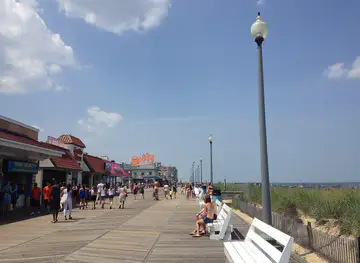
Explore more of Delaware
Discover Delaware: From historic sites and serene beaches to culinary delights and scenic parks, this small state offers big experiences for every traveler.
Explore Delaware