Kultippen Hasle Travel Guide
Free Guide: A stark, moonlike coal tip above a soft Baltic beach, where Bornholm’s industrial past meets wild forest and wide, west-coast horizons.


A brief summary of Kultippen Hasle
A stark, moonlike coal tip above a soft Baltic beach, where Bornholm’s industrial past meets wild forest and wide, west-coast horizons.
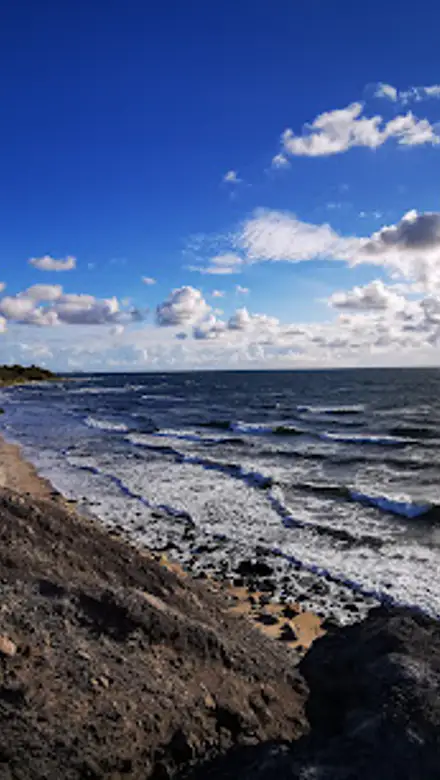
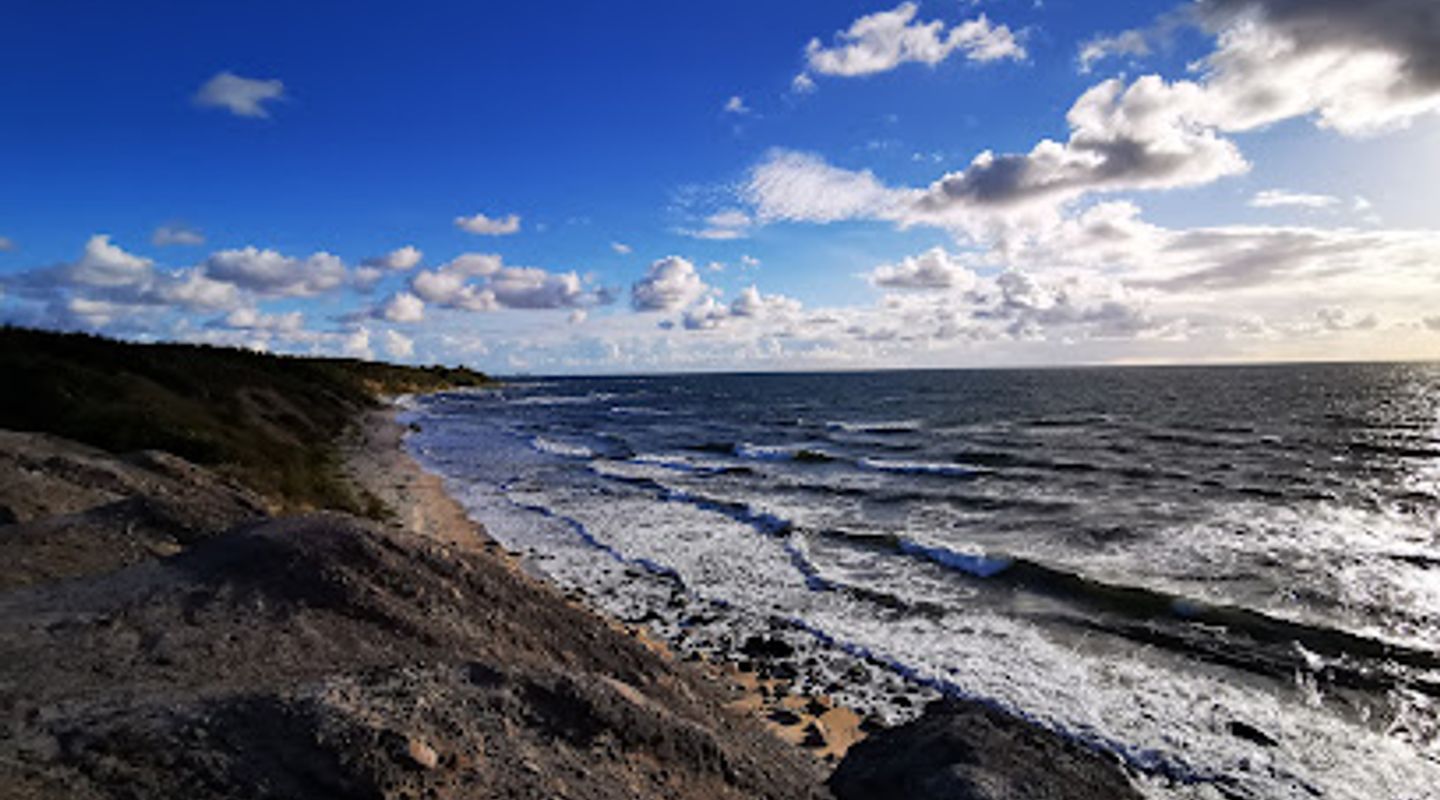
Kultippen, just south of Hasle on Bornholm’s west coast, is a striking man‑made moonscape where coal‑mining waste once slid into the Baltic Sea. Today the dark slag slopes, scattered old mine trolleys and rough terraces form a dramatic contrast to the surrounding green forest and pale sandy beach below. It is a free, open‑air landscape for short hikes, sea views and atmospheric sunsets, offering an unusual mix of industrial heritage and wild coastal nature.
On-site amenities
 Seating areas
 Trash bins
 Information boards
- Address
- Unnamed Road, 3790 Hasle
Getting there
Car from Rønne
Local bus plus short walk
Bicycle along the west coast
Discover more about Kultippen Hasle
A man-made moonscape on Bornholm’s wild west coast
Kultippen lies just south of Hasle, where dense coastal forest suddenly gives way to a stark, ash-grey open slope falling towards the Baltic. Created in the mid‑20th century when spoil from local coal and clay extraction was dumped over the cliffs, the area has slowly weathered into a rugged, terraced landscape with a distinctly lunar feel. Dark gravel, scattered boulders and sharp ridges stand in vivid contrast to the soft blues of sea and sky.From the upper edge you look down over broken ledges and gullies carved by rainwater. The surface crunches underfoot, and in places wisps of grass and pioneer plants have begun to colonise the slag. It is at once raw and strangely beautiful, a reminder of how industry can reshape a coastline in just a few decades.
From coal wagons to coastal curiosity
After the Second World War, the area around Hasle saw intensified mining of coal and clay, used for brickmaking and energy. Waste material was tipped here from narrow‑gauge trolleys, which ran out towards the edge and emptied their load straight towards the sea. Over time, thousands of tons of spoil formed an artificial promontory with steep man‑made slopes. A few of the old wagons still stand nearby as silent witnesses to that industrial past.When mining ceased, nature began a slow takeover. Wind and rain sculpted the heaps into smooth curves and sharp channels, while grasses, heather and low shrubs started to creep across the darker surfaces. Today Kultippen sits somewhere between ruin and regeneration: a coastal scar that has become an outdoor archive of Bornholm’s working history.
Walking the edge between forest, slag and sea
Visiting Kultippen is less about formal trails and more about wandering through contrasts. One moment you are under tall trees in Hasle Lystskov, the next you step into a broad, open slope of charcoal‑coloured grit. Simple paths lead across the upper terraces, where you can feel the wind and watch ships pass on the horizon. Underfoot the surface is uneven but manageable for most reasonably sure‑footed walkers.Those who continue down towards the shore are rewarded with a long sandy beach, softer in colour and texture than the landscape above. Here you can sit on the sand, listen to the waves and look back at the dramatic dark slope behind you. On calm summer days the sea invites a swim, while in rougher weather the breakers only heighten the sense of standing at the edge of something elemental.
Light, weather and the changing face of Kultippen
Because the area is so open, Kultippen changes character with every shift in light and weather. Under clear midday skies it can feel bright and almost harsh, the ash‑grey ground reflecting the sun. In the low light of evening, the contours of the slopes are picked out in long shadows, and the Baltic often glows orange as the sun sinks towards the horizon.Mist and drizzle can turn the place atmospheric and slightly eerie, with the forest edge receding and the crunch of gravel amplified in the quiet. Even on windy days, when sand and fine grit lift in small clouds, the play of clouds and light over sea and slag makes the visit memorable. Good footwear and a windproof layer help you enjoy the elements comfortably.
Part of a wider Bornholm coastal story
Kultippen does not stand alone; it is part of a chain of varied landscapes along Bornholm’s west coast. To the north lie sea cliffs and rock formations, while to the south the shoreline becomes more gently curving and sandy. Nearby, Hasle’s harbour and smokehouse speak of fishing traditions, and the surrounding forest offers lakes, broad paths and picnic spots.Seen in this context, Kultippen becomes a kind of open‑air exhibit linking geology, industry and recreation. Fossil finds along the coast hint at much older natural histories, while the slag slope itself tells a more recent human story. For many visitors it works best as a short stop within a wider day of walking, cycling or beach time, adding an unexpected, almost otherworldly chapter to their experience of Bornholm.
Evendo Review Centre
 Google
Guest reviews
Best time to go
Quietest: Jan, Feb & Mar · before 8am or at 10pm
Busy times are Evendo estimates for a typical year, to help you plan. Actual crowds vary with events, school holidays and the weather.
Explore Kultippen Hasle on the map
A handpicked selection of must-see spots near Kultippen Hasle, mapped for you.
Get your free copy of our complete guide to Kultippen Hasle, delivered straight to you.
Everything on this page, from opening hours and how to get there to Eve’s tips and the best time to go, in one PDF you can read offline, print or share.
Already have an account? Sign in
Your Kultippen Hasle guide is ready.
We'll send it to · Not you? Sign out

Getting your guide ready…
We are putting together a fresh copy of the Kultippen Hasle guide. This can take up to a minute.
This can take a few moments. If your browser asks, choose Allow so the download can start. You'll find the guide in your Downloads folder.
Nothing happened? Download it again
Sorry, the guide is taking longer than usual. Please try again in a minute, or get it by email instead.
Other nearby places you may find interesting
The closest places of the same kind, if this one is not quite what you had in mind.
-
Hammershus Castle Ruins Bornholm’s great clifftop fortress, where vast medieval ruins, Baltic Sea panoramas and a striking modern visitor centre bring 800 years of history to life.
-
Opal Lake A flooded granite quarry turned emerald lake, Opal Lake on Bornholm blends raw cliffs, deep clear water and coastal views with swimming, cliff jumps and rugged trails.
-
Bornholms Rovfugleshow Immersive birds-of-prey shows and evolution-themed encounters on Bornholm, where owls, falcons, reptiles and farm animals turn science into a full, family-friendly day out.
-
Bornholmertarnet Former top-secret NATO listening post turned Cold War museum, crowned by a 70 m viewing tower with sweeping panoramas over Dueodde and eastern Bornholm.
-
Hammeren Lighthouse Compact granite lighthouse on Bornholm’s highest headland, offering free summer access, sweeping Baltic views and heather-clad coastal walking trails.
Swipe for more places
More to explore near Kultippen Hasle

 Best experiences near Kultippen Hasle
 Best hotels near Kultippen Hasle
 Best landmarks near Kultippen Hasle
 Best attractions near Kultippen Hasle
 Best shops near Kultippen Hasle
 Best restaurants near Kultippen Hasle
 Best bars near Kultippen Hasle
Do you manage this location?
Take control to get all the benefits, like improved information, better appearance, and stronger visibility across AI-powered discovery.
Explore more

Explore more of Bornholm
Explore Bornholm: Denmark's Baltic gem, offering stunning nature, rich history, and vibrant local culture. Perfect for nature lovers, history buffs, and food enthusiasts.
Explore Bornholm
Explore more of Denmark
Discover Denmark: A perfect blend of history, modern design, and the cozy concept of hygge. Explore vibrant cities, serene landscapes, and world-class cuisine.
Explore Denmark