Lilleborg, Bornholm Travel Guide
Medieval fortress ruins crowning a cliff-top stronghold in Bornholm's ancient forest heart.
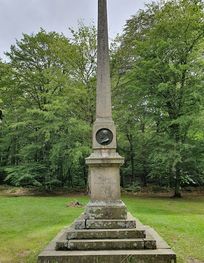
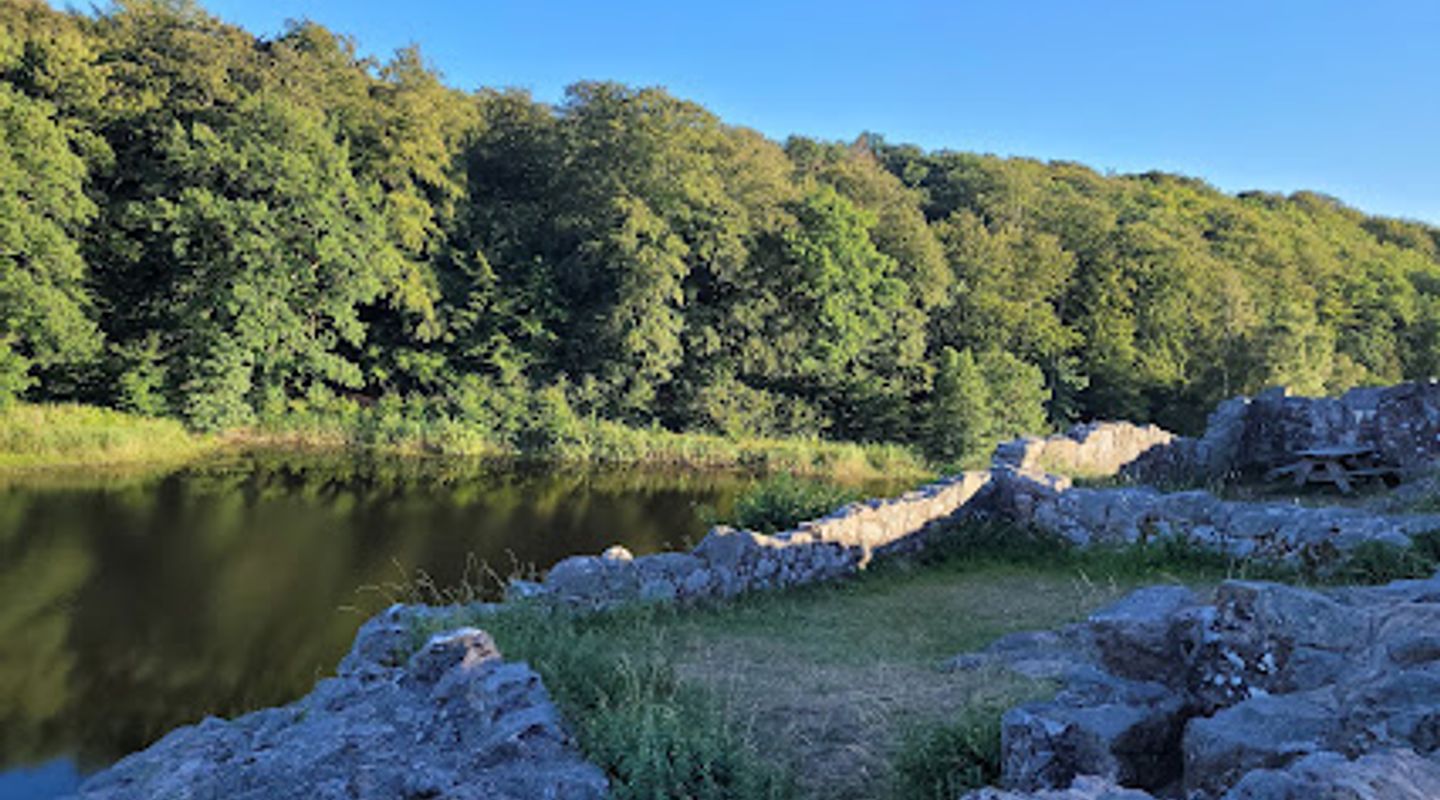
Lilleborg is a striking medieval castle ruin perched atop a 16-meter rocky cliff in the heart of Bornholm's Almindingen Forest. Built around 1150 as a royal fortress by King Svend III Grathe, this 12th-century stronghold showcases Saxon architectural style and remains one of Denmark's oldest preserved medieval monuments. Though destroyed in 1259, the site offers atmospheric ruins, panoramic forest views, and a fascinating glimpse into medieval power struggles on the Danish island.
A brief summary to Lilleborg
- Segenvej 48, Aakirkeby, 3720, DK
- Click to display
- Duration: 0.75 to 2 hours
- Free
-
 Outdoor
- Mobile reception: 4 out of 5

Know before you go
Hi, I'm Eve. Here are a few practical things to know before exploring Lilleborg.
- Visit during autumn or spring when the surrounding Almindingen Forest displays vibrant colors and the weather is mild for exploring the cliff-top ruins and walking around the adjacent lake.
- Wear sturdy footwear with good grip; the terrain is uneven and the rocky plateau can be slippery, especially after rain. The steep path up the cliff requires careful footing.
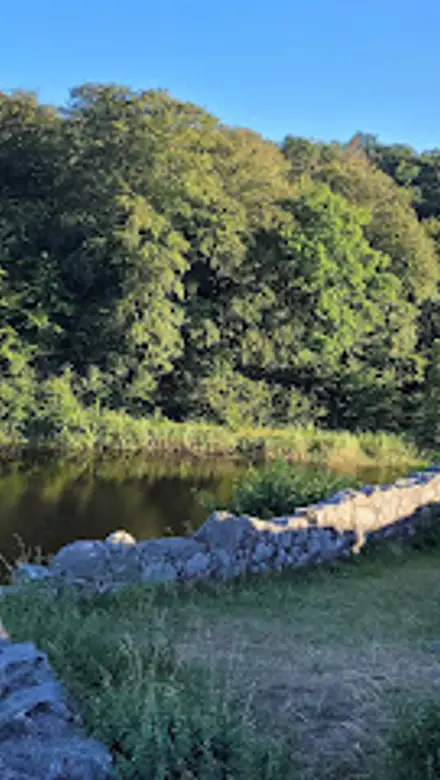
- Allow time for a leisurely walk around Borresø lake to appreciate the full landscape context and enjoy views of the ruins from different angles across the water.
- Bring a camera or sketch pad; the combination of medieval stonework, forest setting, and water reflections creates compelling compositions throughout the day.
- Check the information boards on-site for detailed historical context about the castle's architecture, excavation findings, and the political circumstances of its construction and destruction.
Do you manage this location?
Take control to get all the benefits, like improved information, better appearance, and stronger visibility across AI-powered discovery. Learn more about listing your business on Evendo
Activate your presenceOther nearby places you may find interesting
The closest places of the same kind, if this one is not quite what you had in mind.
Explore Lilleborg on the Map
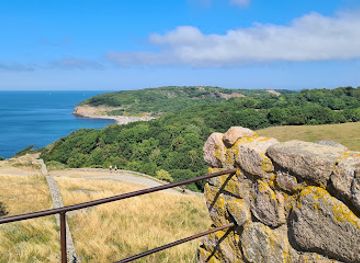
A handpicked selection of must-see spots near Lilleborg, mapped for you.
Getting There
-
Car from Rønne
Drive from Rønne toward Svaneke on the main island road; Lilleborg is situated directly along this route in central Bornholm. The journey takes approximately 20–25 minutes depending on traffic. Free parking is available near the site entrance at Segenvej 48, 3720 Aakirkeby. The location is clearly signposted and easily accessible from the road.
-
Car from Aakirkeby
From Aakirkeby town center, follow local roads toward Almindingen Forest; the site is approximately 5–8 kilometers away and takes 10–15 minutes by car. Parking is available at the entrance. This route is convenient if you are exploring other attractions in the central island area.
-
Cycling from Almindingen area
Bornholm has an extensive network of cycling routes. From nearby forest trails or the village of Almindingen, cycling to Lilleborg takes 15–30 minutes depending on your starting point and route. The final approach involves some uneven terrain, so a hybrid or mountain bike is recommended. This option allows you to explore the surrounding forest environment at a leisurely pace.
-
Walking from Almindingen Forest trails
If you are already exploring Almindingen Forest's hiking network, Lilleborg can be reached on foot via forest paths. Walking time varies from 20–45 minutes depending on which trail you follow. The terrain is forested and uneven; wear appropriate footwear. This approach immerses you in the natural landscape that has surrounded the fortress for centuries.
For the on-the-go comforts that matter to you
-
 Information Boards
-
 Seating Areas
-
 Trash Bins
Discover more about Lilleborg
A Royal Fortress Born from Political Necessity
Lilleborg emerged in the mid-12th century as an assertion of royal power during a pivotal moment in Bornholm's history. When King Svend III Grathe saw three-quarters of his island domain surrendered to the Archbishop of Lund in 1149, he established this fortress as his seat of power on the remaining western territory. Rather than rebuild the massive Gamleborg fortress nearby, the king chose a more strategic and defensible location—a decision that would define Lilleborg's character for the next century.Engineering Strength on Stone and Water
The fortress was constructed on an oval rocky plateau rising 16 meters above what was then the Borresø lake, creating a natural moat that made the site nearly impregnable. A wooden bridge provided the only access, leading to a steep path guarded by a formidable corner tower measuring 9.5 meters square with walls 2.4 meters thick. From this tower's height, defenders could rain arrows on attackers from multiple angles. The castle courtyard, protected by a curtain wall following the cliff edges, measured approximately 76 meters long and 41 meters wide—modest compared to the archbishop's Hammershus fortress, but perfectly suited to its defensive purpose.Architectural Innovation and Medieval Refinement
Lilleborg showcased sophisticated medieval construction techniques for its era. The main building featured granite arches over windows and polished limestone columns—architectural elements that reflected royal ambition. Most remarkably, glass window panes were discovered among the ruins, indicating that Lilleborg may have been among the first structures in Denmark to feature glazed windows, a luxury reserved for the most important fortifications.A Brief Reign and Violent End
The fortress stood for barely a century. In 1259, during the tumultuous church feud between the Archbishop of Lund and King Christopher I, Prince Jaromar of Rügen stormed the castle and set it ablaze, destroying the "king's stronghold" in a single devastating assault. Though coins minted after 1259 suggest some occupation continued, the castle was never rebuilt. Over subsequent centuries, its stones were repurposed throughout the Almindingen area, gradually reducing the fortress to the atmospheric ruins visible today.Layers of History Beneath the Forest Floor
Archaeological excavations spanning from 1820 to 1957 revealed that Lilleborg's significance extended far deeper into prehistory. Neolithic stone axes and amber beads approximately 5,000 years old emerged from the lake bed, while Bronze Age pottery and cup marks on the rock testified to activity between 1800 and 500 BC. Most intriguingly, Iron Age treasure hoards dating to around 400 AD were discovered, including 16 Roman silver coins and a spiral gold ring—evidence that this rocky plateau held strategic importance long before the medieval kingdom claimed it.Legend and Landscape in the Forest Heart
Local folklore has woven Lilleborg into Bornholm's cultural memory. One enduring legend tells of a parish priest who lectured the castle's inhabitants, only to be scorned. In his fury, he cursed the fortress to disappear into the lake—a symbolic tale reflecting the eventual triumph of ecclesiastical power over royal authority on the island. Today, the ruins sit peacefully within Almindingen Forest, surrounded by the natural beauty that once protected it, offering visitors a tangible connection to Denmark's medieval past and the dramatic power struggles that shaped the Baltic region.












Your all‑in‑one travel companion app
Explore expert travel guides, compare and book tours, experiences, hotels, and more—all from the palm of your hand. Download now for seamless trip planning wherever your wanderlust takes you.


Explore More of Bornholm

Looking beyond Lilleborg? Discover Bornholm for broader travel guides, local hot-spots, and regional highlights.
Explore Bornholm