

Nyboder, Copenhagen Travel Guide
Historic yellow naval barracks turned living neighborhood, where Nyboder’s compact row houses and the Nyboder Memorial Rooms reveal 400 years of Copenhagen seafaring life.
Nyboder, tucked just north of Copenhagen’s inner centre, is a historic district of low, terraced row houses, instantly recognisable by their warm “Nyboder yellow” facades and regimented lines. Founded in the 1630s by King Christian IV as housing for the Royal Danish Navy, the area evolved over centuries into a self-contained military community with its own hospital, schools, and police. At Sankt Pauls Gade 24, the Nyboder Mindestuer museum occupies one of the oldest surviving houses, preserving intimate rooms and stories from nearly 400 years of naval and family life.
A brief summary to Nyboder
- Sankt Pauls Gade 24, København K, København K, 1313, DK
- Click to display
- Duration: 1 to 2.5 hours
- Budget
-
 Mixed
Mixed
- Mobile reception: 5 out of 5
- Sunday 11 am-2 pm

Know before you go
Hi, I'm Eve. Here are a few practical things to know before exploring Nyboder.
- Visit Nyboder Mindestuer on a Sunday between late morning and early afternoon, when the small museum is typically open, and allow time to explore the nearby streets afterward.
- Bring a camera or phone: the repeating yellow facades and narrow perspectives along Sankt Pauls Gade and neighboring rows are excellent for architectural photography.
- Walk quietly and respect doorways and windows; many of the historic houses are still private homes for military personnel and civilians.
- Combine a visit with nearby sights such as Kastellet or Amalienborg Palace, both within a comfortable walking distance through pleasant city streets.
Do you manage this location?
Take control to get all the benefits, like improved information, better appearance, and stronger visibility across AI-powered discovery. Learn more about listing your business on Evendo
Activate your presenceOther nearby places you may find interesting
The closest places of the same kind, if this one is not quite what you had in mind.

Explore Nyboder on the Map
A handpicked selection of must-see spots near Nyboder, mapped for you.
Unlock the Best of Nyboder
Buy tickets
-
No tickets available
Book tours with entry


Getting There
-
Metro and walk
From central Copenhagen, take the M3 Cityring metro to Marmorkirken Station, which usually takes 3–6 minutes from major interchange stops. From there, walk about 10–15 minutes along city streets to Nyboder on Sankt Pauls Gade; the route is flat and suitable for most visitors. A single metro ticket within the city zones typically costs around 20–25 DKK, and trains run every few minutes throughout the day.
-
Local bus
Several city bus routes run through the area between Østerport and the historic centre, with journey times of roughly 10–20 minutes from central hubs depending on traffic. Alight at a stop near Store Kongensgade or Fredericiagade and walk 5–10 minutes to reach the yellow houses of Nyboder. Standard bus fares within the central zones are usually 20–25 DKK, and services operate frequently during daytime and early evening.
-
Bicycle
Copenhagen’s extensive cycle lanes make biking to Nyboder straightforward and pleasant. From most central neighbourhoods you can expect a 5–20 minute ride on largely flat terrain, with dedicated bike lanes for almost the entire way. Public bike-share schemes and rental shops in the city centre typically offer hourly or day rates starting around 50–150 DKK; remember to park only in designated areas and keep clear of doorways along Sankt Pauls Gade.
-
On foot from the historic centre
If you are already in the inner city, plan on a 15–25 minute walk to Nyboder through well-paved, mostly flat streets. This option allows you to link the visit with nearby sights such as the royal palace district and Kastellet. The walk is suitable for most visitors, though some cobbled sections may be uneven for wheels or those with limited mobility.
For the on-the-go comforts that matter to you
-
 Restrooms
-
 Drink Options
-
 Drinking Water
-
 Food Options
-
 Seating Areas
-
 Trash Bins
-
 Information Boards
-
 Visitor Center
Discover more about Nyboder
From royal naval project to living neighborhood
Nyboder began in the 1630s as one of King Christian IV’s most ambitious social projects: purpose‑built housing for the rapidly expanding Royal Danish Navy. Laid out beyond the old city ramparts, the development consisted of long, low rows of simple homes for sailors, shipyard workers, and their families, who traded up to twenty years of compulsory service for secure accommodation and community facilities.Over time the original single‑storey houses were gradually replaced or extended, yet the basic rhythm of the streets has stayed remarkably constant. By the late 18th and early 19th centuries, the district had expanded to thousands of households, forming a dense, tightly knit enclave defined as much by shared duty and hardship as by its distinctive architecture.The story behind the famous yellow rows
Today Nyboder is instantly identified by the deep ochre often called “Nyboder yellow”, a colour that glows in low northern light and shifts subtly with the seasons. The uniform facades, small-paned windows and red-tiled roofs create an almost cinematic backdrop, especially where long rows converge in tight street vistas. Though the earliest buildings were once painted in other tones, this yellow has become inseparable from the neighborhood’s identity.The houses themselves are modest in scale: narrow fronts, compact rooms and shared stairwells speak of a time when space was rationed and families were large. Many dwellings were once split to accommodate more residents, with tiny kitchens acting as both workspace and social hub. Looking closely, you can trace the evolution from single-storey rows to later, taller types that accommodated higher-ranking personnel and larger families.Nyboder Mindestuer: intimate memorial rooms
At Sankt Pauls Gade 24, one of the earliest surviving houses now hosts the Nyboder Mindestuer, or Memorial Rooms. Inside, a sequence of small, period-furnished spaces tells the story of everyday life in the barracks: simple furniture, uniforms, domestic objects and archival photos evoke several centuries of naval households and their routines.The museum focuses on lived experience rather than grand battles. You encounter stories of women running households while men were at sea, children growing up between duty and play in the streets, and multi‑generation families tied to the navy for decades. The cramped floor plans and low ceilings underscore how close-knit this community once was, both physically and socially.Streets of flowers, animals and quiet rituals
Nyboder’s street names hint at its layered past. Parts of the district once carried names drawn from animals or medicinal plants, a whimsical counterpoint to the strictly ordered rows. Along Sankt Pauls Gade, the surviving single‑storey terrace and the so‑called Grey Rows opposite highlight different eras of military housing, ranging from early 17th‑century forms to later, more spacious officer apartments.Despite its central location, the area retains a hushed, almost village-like feel. The repetition of facades, occasional courtyards, and glimpses of laundry or bicycles create a sense of ordinary life continuing within a historic grid. St Paul’s Church, in red brick nearby, adds a vertical landmark to the horizontal geometry of the rows, anchoring the quarter with its tower.A historic community that still feels lived-in
Unlike many preserved districts, Nyboder remains partly inhabited by members of Denmark’s armed forces alongside civilian residents. This mix keeps the streets from feeling like an open‑air museum, even as the past is carefully interpreted in the Mindestuer. You may notice small details—nameplates, plants at doorsteps, a window left ajar—that remind you these houses are still homes.Spending time here is less about a checklist of sights and more about absorbing atmosphere. A slow walk through the yellow corridors of houses, paired with a visit to the Memorial Rooms, gives a compact but vivid sense of how Copenhagen’s naval power, urban growth and everyday domestic life intertwined over nearly four centuries.












Your all‑in‑one travel companion app
Explore expert travel guides, compare and book tours, experiences, hotels, and more—all from the palm of your hand. Download now for seamless trip planning wherever your wanderlust takes you.


Explore More of Copenhagen
Looking beyond Nyboder? Discover Copenhagen for broader travel guides, local hot-spots, and regional highlights.
Explore Copenhagen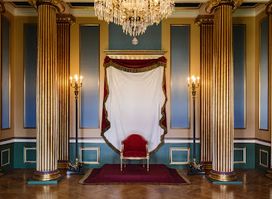
Step inside Christian VIII’s Palace to explore 150 years of Danish royal life, from intimate apartments and Fabergé treasures to gala halls still used today.

Intimate contemporary art gallery on Copenhagen’s Bredgade, blending Nordic creativity, refined townhouse spaces and free, unhurried access to original works.
