Södergatan
Malmö's grand historic boulevard where 19th-century ambition meets modern urban vitality.
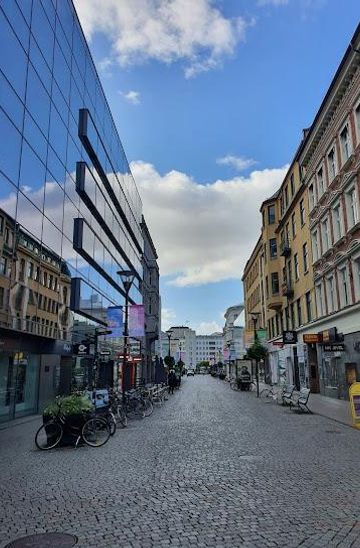
Södergatan is Malmö's historic main street and the city's commercial heart, stretching from Stortorget toward the southern exits. Developed in the late 19th and early 20th centuries, this vibrant thoroughfare transformed from a modest route into a grand boulevard lined with elegant architecture, historic cinemas, department stores, and distinctive red-brick buildings. Today it remains a lively shopping and cultural destination, blending period architecture with contemporary commerce.
A brief summary to Södergatan
- Malmö, SE
- Duration: 1 to 3 hours
- Free
-
 Outdoor
- Mobile reception: 5 out of 5

Know before you go
Hi, I'm Eve. Here are a few practical things to know before exploring Södergatan.
- Visit during daytime hours (10 AM–5 PM) to fully appreciate the architectural details of historic buildings and enjoy the street's shopping and café culture at its liveliest.
- Walk the entire length from Stortorget southward to experience the street's evolution and discover period details on building facades, including original shopfronts and ornamental stonework.
- Explore side streets and parallel routes (Skomakaregatan, Östergatan) to understand how Södergatan's commercial influence extended into the surrounding urban fabric during the early 20th century.
- Stop at Boulebar (the former cavalry regiment's riding school) to experience a historic venue that connects directly to Södergatan's military heritage.
Do you manage this location?
Take control to get all the benefits, like improved information, better appearance, and stronger visibility across AI-powered discovery. Learn more
Activate your presenceOther nearby places you may find interesting
Getting There
-
Walking from Stortorget
Södergatan begins directly at Stortorget (Malmö's central square). From the square, Södergatan extends southward as a continuous pedestrian and shopping street. The walk from Stortorget to the southern end of the main commercial section takes approximately 10–15 minutes on foot. The street is flat, well-paved, and fully accessible year-round.
-
Public Transport (Bus)
Multiple bus lines serve stops along or near Södergatan. Journey times from Malmö Central Station to Södergatan area stops range from 5–10 minutes depending on the specific stop. Local buses operate frequently throughout the day (typically every 5–15 minutes during peak hours). Single journey fares are approximately 25–35 SEK; day passes and multi-journey tickets offer better value.
-
Cycling
Malmö is highly cycle-friendly, with dedicated bike lanes throughout the city center. Södergatan and its surrounding streets are accessible by bicycle from any part of central Malmö within 10–20 minutes. Bike rental services are available at multiple locations near Stortorget and Central Station, typically costing 50–100 SEK per day.
-
Train and Walking
From Malmö Central Station (Malmö Centralstation), Södergatan is reachable by a 5–10 minute walk northwestward through the city center. Exit the station, head toward Stortorget, and Södergatan begins at the square's southern edge. This is the most direct route for visitors arriving by train.
For the on-the-go comforts that matter to you
-
 Restrooms
-
 Drink Options
-
 Food Options
-
 Seating Areas
-
 Information Boards
Discover more about Södergatan
From Medieval Route to Modern Thoroughfare
Södergatan emerged as Malmö's principal artery during the late 19th century, fundamentally reshaping the city's urban character. When Stortorget was established as the new central square in the 1680s, Södergatan gained strategic importance as the main connection between the marketplace and the southern countryside. By the 1890s, the street had evolved into the city's primary commercial corridor, earning the Danish designation "strög"—a term reflecting Malmö's historical ties to Copenhagen and denoting a city's most significant pedestrian thoroughfare. This transformation was not accidental but the result of deliberate urban planning that positioned Södergatan as the spine of Malmö's emerging modern city center.The Golden Age of Architecture and Commerce
The period from 1897 to the 1930s marked Södergatan's architectural and commercial zenith. In 1897, the ornately decorated Apoteket Lejonets building rose at the street's northern terminus, designed by renowned Malmö architects Boklund and Lindvall in rich red sandstone. This landmark established the aesthetic tone for subsequent development. The street became a showcase for institutional and commercial ambition: grand bank buildings, elegant shops, and cultural venues lined both sides. The cinema palaces Palladium (1920) and Scania (1925) brought entertainment and architectural distinction to the street, while the functionalist department store Epa introduced Sweden's first escalator to Malmö in 1934, symbolizing the street's embrace of modernity. These structures reflected the aspirations of Malmö's merchant class and the city's growing prosperity.Military Presence and Urban Life
From 1897 onward, Södergatan's character was shaped not only by commerce but also by military tradition. The Kronprinsens Husarregemente, a cavalry regiment with roots dating to 1757, relocated to Malmö in its entirety that year, bringing 500 mounted soldiers and 600 horses to the city. The regiment's barracks occupied the entire block where the modern high-rise Kronprinsen now stands, and their presence became woven into the fabric of daily life on Södergatan. The regiment's horses, uniforms, and ceremonial activities added a distinctive pageantry to the street's character, while their economic impact supported local merchants and service providers. This military element persisted until the barracks were demolished in 1960, marking the end of an era.Architectural Heritage and Urban Identity
The buildings along Södergatan represent a coherent architectural narrative spanning from the late 19th century through the mid-20th century. The street's visual identity is dominated by substantial masonry structures, many constructed in red brick and sandstone, featuring ornamental details that reflect the confidence and craftsmanship of their era. Historic facades, some still bearing traces of former shopfronts and signage, tell stories of businesses long departed. The street's width and proportions were deliberately designed to create an impressive urban space, and despite modern changes, the fundamental character of this grand boulevard remains legible. The preservation of key structures, including the former cavalry regiment's riding school (now Boulebar) at Drottningtorget, maintains tangible connections to Södergatan's multifaceted past.A Living Street Today
Södergatan continues to function as Malmö's primary shopping street and social gathering place, maintaining the role it claimed over a century ago. The street pulses with foot traffic, contemporary retail, restaurants, and cultural activity, yet its historical character remains evident in its architecture and urban form. The blend of preserved heritage buildings with modern storefronts creates a dynamic streetscape where past and present coexist. For visitors and residents alike, Södergatan offers an accessible entry point into Malmö's urban history, visible in every facade and street corner.Explore the best of what Södergatan has to offer













More about Copenhagen Region
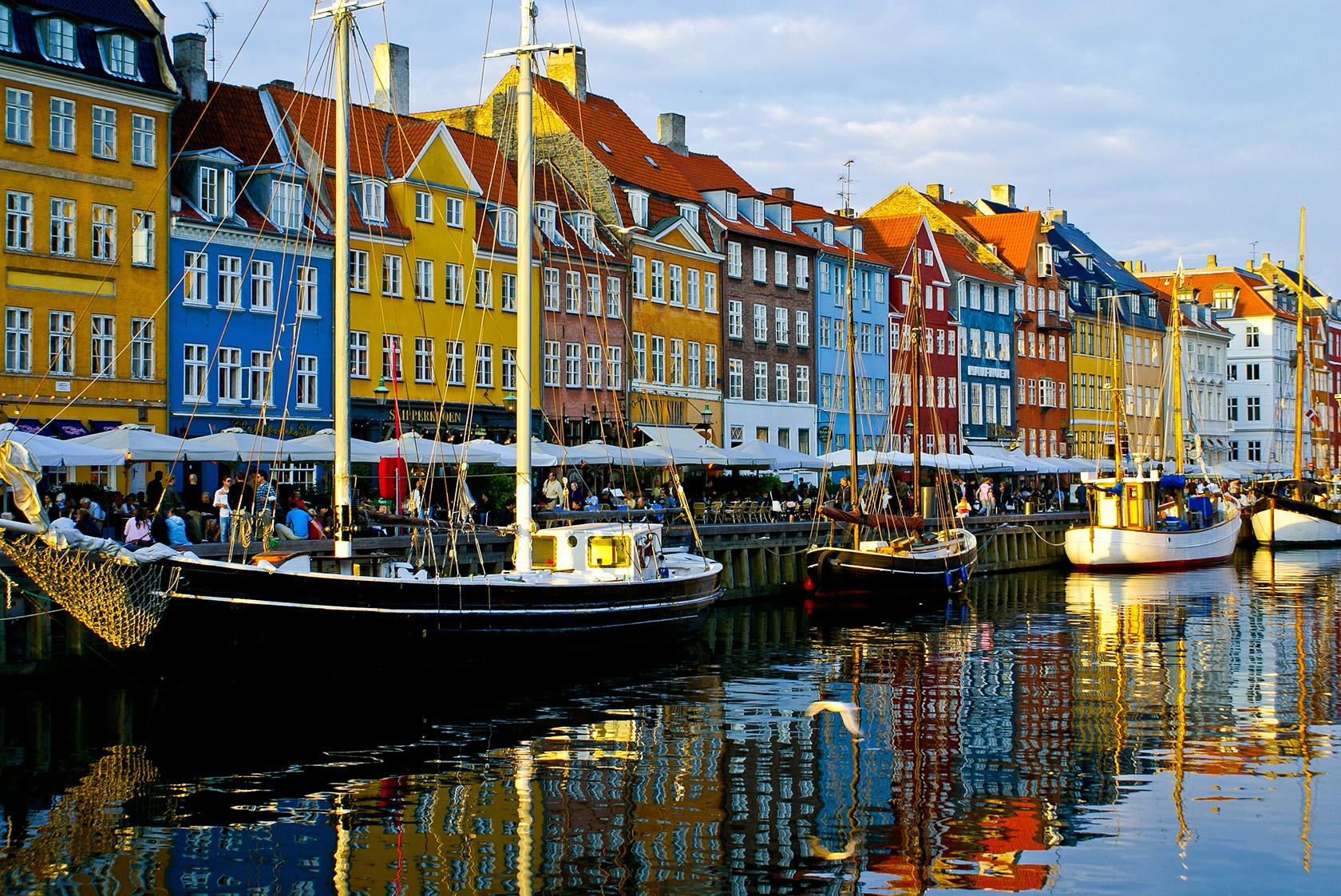
Discover the Copenhagen Region: A perfect mix of historic charm and modern vibrancy, offering scenic beauty, cultural landmarks, and a high quality of life.
Tell me more about Copenhagen Region