Hannes Hus Travel Guide
Free Guide: Step into a perfectly preserved Fanø skipper’s widow’s cottage and experience everyday island life from the age when sailing ships shaped Sønderho’s world.


A brief summary of Hannes Hus
Step into a perfectly preserved Fanø skipper’s widow’s cottage and experience everyday island life from the age when sailing ships shaped Sønderho’s world.
Hannes Hus in Sønderho on Fanø is a beautifully preserved 18th–19th century skipper’s widow’s house, offering an intimate glimpse into everyday island life when Fanø was home to a major sailing fleet. Low-beamed rooms, painted furniture, ship models and traditional textiles remain much as they were left, creating a rare time capsule of maritime domestic culture. With its compact scale, personal stories and knowledgeable guides, this small museum feels more like stepping into a lived-in home than visiting a formal exhibition.
On-site amenities
 Restrooms
 Information boards
Opening hours
- MonClosed
- Tue2 pm–4 pm
- Wed2 pm–4 pm
- Thu2 pm–4 pm
- Fri2 pm–4 pm
- Sat2 pm–4 pm
- Sun2 pm–4 pm
Opening hours as listed on the venue’s Google Business Profile. Hours can change for services and special events, so check with the venue before you go.
- Address
- Øster Land 7, 6720 Fanø
- Phone
- Website
Getting there
Ferry and local bus from Esbjerg
Car via Esbjerg–Fanø ferry
Cycling from Nordby on Fanø
Discover more about Hannes Hus
A skipper’s widow’s house frozen in time
Hannes Hus is a low, thatched cottage in the heart of Sønderho, preserved almost exactly as it looked when a captain’s widow lived here in the 19th century. Stepping inside feels less like entering a museum and more like quietly crossing the threshold of a private home that its owner has just left for a moment. The rooms are compact and dimly lit, with the soft glow of daylight filtering through small-paned windows and catching the colors of painted furniture and worn floorboards.The house is considered one of the best-preserved examples of a modest yet comfortable Sønderho home from the era when Fanø prospered from overseas shipping. You can read this story in the details: the sturdy wooden table ready for needlework, the box beds built into alcoves against the wall, and the carefully arranged ornaments that hint at both local traditions and influences carried home from distant ports.
Stories from Fanø’s great age of sail
In the 1800s, Fanø was home to a sizeable sailing fleet, and many men spent long stretches at sea while their families managed life on the island. Hannes Hus shows how a skipper’s widow maintained a household, balanced between pride in maritime connections and the uncertainty of life tied to ships and weather. Objects in the house – from ship portraits and model vessels to sea chests and navigation-themed decorations – reflect these close bonds with the ocean.Each room adds a piece to the narrative. In the living room, decorative plates and framed prints suggest a measure of prosperity won from trade. In more practical spaces, you notice the simplicity of tools and storage solutions, reminding you how little space was available and how carefully every corner was used. Together they create a vivid impression of a household shaped by global seafaring and local resilience.
Interiors rich with detail and craftsmanship
What makes Hannes Hus particularly engaging is the authenticity of its interior. The painted furniture in muted blues and greens, the carved chests, and the textiles with traditional patterns all speak to the island’s craft traditions. Many surfaces show patina and wear, giving the sense that generations have passed through these rooms, leaving subtle traces in every scratch and faded color.Look closely at the decorative touches: floral motifs on cupboard doors, framed samplers, and small devotional images. These elements reveal both personal taste and wider cultural currents of the time. Even the placement of objects – a polished coffee pot on a tray, lace curtains at the windows, a pipe resting near an armchair – is deliberate, echoing the rhythms of everyday routines.
A compact museum with a personal feel
The scale of Hannes Hus means a visit is intimate and manageable. You move through just a few rooms, but each is layered with information and atmosphere. Introductory explanations and guiding help bring the former inhabitants to life, putting names, relationships and daily tasks to the furniture and objects you see around you.Because the house has not been enlarged or substantially altered, corridors and doorways are narrow, ceilings low and floors slightly uneven. This preserves the historical feel while quietly reminding you how different domestic comfort once was. It is a place best enjoyed at an unhurried pace, taking time to stand still in each room and imagine the sounds of conversation, the clatter of dishes and the crackle of a fire on a winter day.
Sønderho’s village setting beyond the doorway
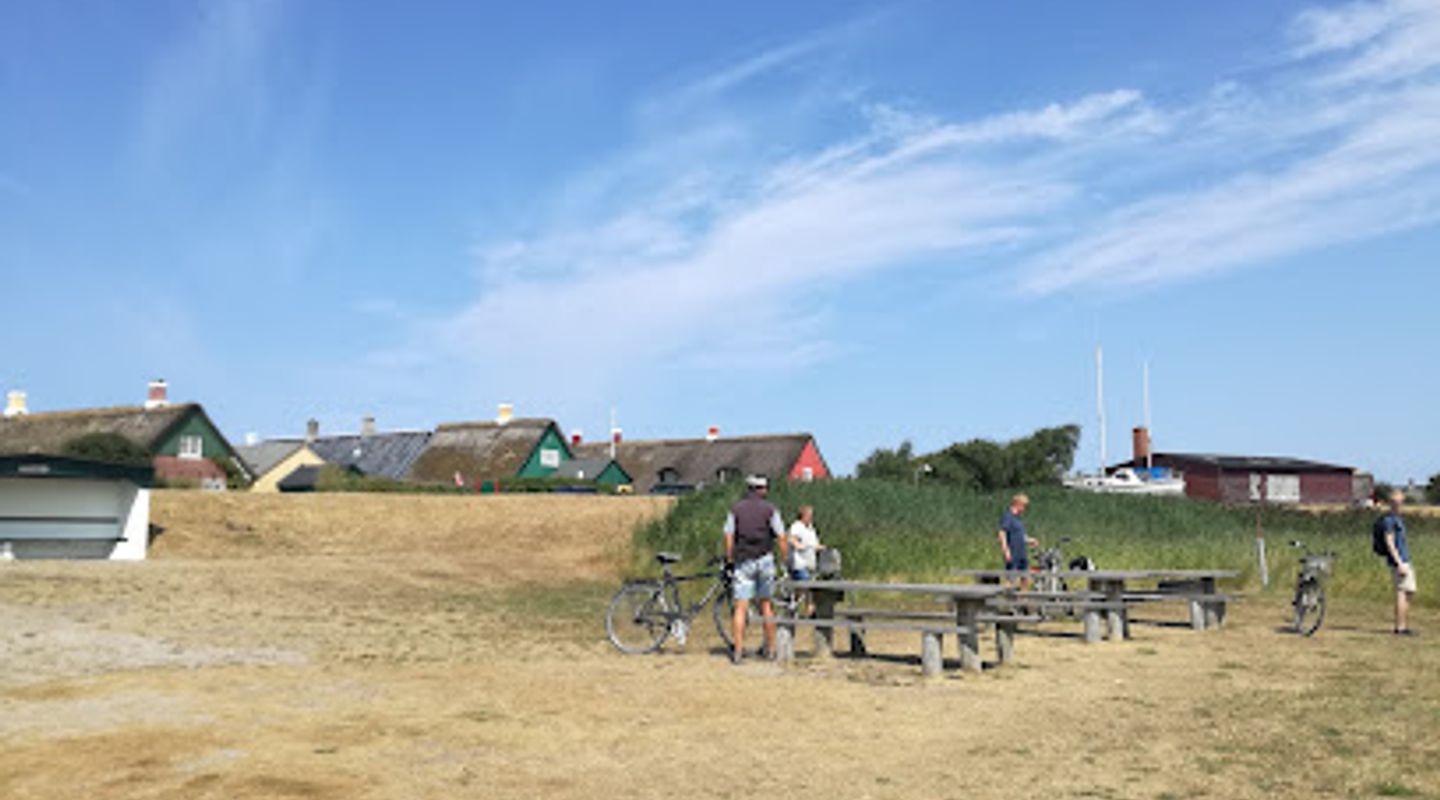
Although the focus is the house itself, its setting in Sønderho is part of the experience. Through the small windows you glimpse neighbouring thatched roofs, sandy lanes and the soft, flat landscape of Fanø beyond. The exterior of the cottage, with whitewashed walls, deep thatch and a compact garden area, harmonises with the surrounding historic village.This connection between house and village underlines how closely linked people, sea and settlement once were. A visit to Hannes Hus naturally complements a wider stroll through Sønderho’s lanes and dunes, but even if you only step inside for a short while, the house offers a concentrated impression of Fanø’s maritime past, distilled into one remarkably well-preserved home.
Evendo Review Centre
 Google
Guest reviews
Best time to go
Quietest: Jan, Feb & Nov · before 9am or at 7pm
Busy times are Evendo estimates for a typical year, to help you plan. Actual crowds vary with events, school holidays and the weather.
Explore Hannes Hus on the map
A handpicked selection of must-see spots near Hannes Hus, mapped for you.
Get your free copy of our complete guide to Hannes Hus, delivered straight to you.
Everything on this page, from opening hours and how to get there to Eve’s tips and the best time to go, in one PDF you can read offline, print or share.
Already have an account? Sign in
Your Hannes Hus guide is ready.
We'll send it to · Not you? Sign out

Getting your guide ready…
We are putting together a fresh copy of the Hannes Hus guide. This can take up to a minute.
This can take a few moments. If your browser asks, choose Allow so the download can start. You'll find the guide in your Downloads folder.
Nothing happened? Download it again
Sorry, the guide is taking longer than usual. Please try again in a minute, or get it by email instead.
Other nearby places you may find interesting
The closest places of the same kind, if this one is not quite what you had in mind.
-
Fanø Skibsfarts- & Dragtsamling Maritime museum preserving Fanø's golden age of sailing ships and island traditions.
-
Fanø Museum Step into an 18th-century skipper’s home in Nordby and discover how Fanø’s seafaring families lived, worked and kept island traditions alive by the North Sea.
-
 Detrigonometriskestation
A quiet dune top on Fanø where 19th‑century surveyors fixed their instruments, this modest trigonometrical station now offers big skies, wind, and quiet reflection.
Detrigonometriskestation
A quiet dune top on Fanø where 19th‑century surveyors fixed their instruments, this modest trigonometrical station now offers big skies, wind, and quiet reflection.
-
Strandgut - Strandfischerei Monument A simple dune-side memorial where driftwood, sea wind and open sky recall Fanø’s hard-earned living from beach fishing and the gifts and losses of the North Sea.
-
Fanø Kunstmuseum Intimate island art museum in an old merchant’s house, celebrating Fanø’s luminous Wadden Sea light and a century of coastal-inspired painting.
Swipe for more places
More to explore near Hannes Hus

 Best experiences near Hannes Hus
 Best hotels near Hannes Hus
 Best landmarks near Hannes Hus
 Best attractions near Hannes Hus
 Best shops near Hannes Hus
 Best restaurants near Hannes Hus
 Best bars near Hannes Hus
Do you manage this location?
Take control to get all the benefits, like improved information, better appearance, and stronger visibility across AI-powered discovery.
Explore more

Explore more of Fanø
Discover Fanø, Denmark's hidden coastal gem, offering stunning beaches, charming villages, and rich wildlife, perfect for a tranquil getaway and nature adventures.
Explore Fanø
Explore more of Denmark
Discover Denmark: A perfect blend of history, modern design, and the cozy concept of hygge. Explore vibrant cities, serene landscapes, and world-class cuisine.
Explore Denmark