Stormflodssøjlen, Sønderho Travel Guide
Free Guide: A slender harbor-side column that quietly records Sønderho’s greatest storm surges, turning Fanø’s gentle Wadden Sea horizon into a vivid story of water and wind.


A brief summary of Stormflodssøjlen, Sønderho
A slender harbor-side column that quietly records Sønderho’s greatest storm surges, turning Fanø’s gentle Wadden Sea horizon into a vivid story of water and wind.
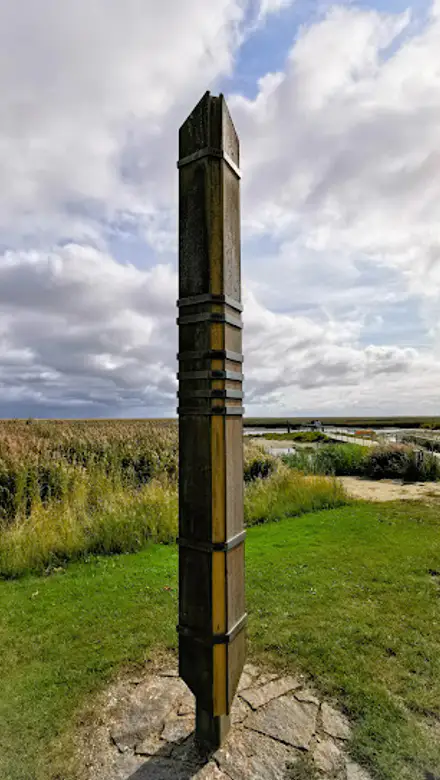
Stormflodssøjlen in Sønderho is a slender storm surge pillar on the harbor that quietly tells the dramatic story of the Wadden Sea’s power. Marked with historic water levels from major storm floods, it stands beside the old, now silted harbor basin, framed by tidal flats and low dikes. This modest monument makes the forces of wind and sea tangible and links Sønderho’s pretty village scenery with a sobering reminder of life on Denmark’s exposed west coast.
On-site amenities
 Seating areas
 Trash bins
 Information boards
Opening hours
- Every dayOpen 24 hours
Opening hours as listed on the venue’s Google Business Profile. Hours can change for services and special events, so check with the venue before you go.
- Address
- Fanø kommun,6720, 6720
- Website
Getting there
Ferry and local drive from Esbjerg
Bus from Nordby to Sønderho
Cycling across Fanø
Discover more about Stormflodssøjlen, Sønderho
A quiet pillar on a dramatic coastline
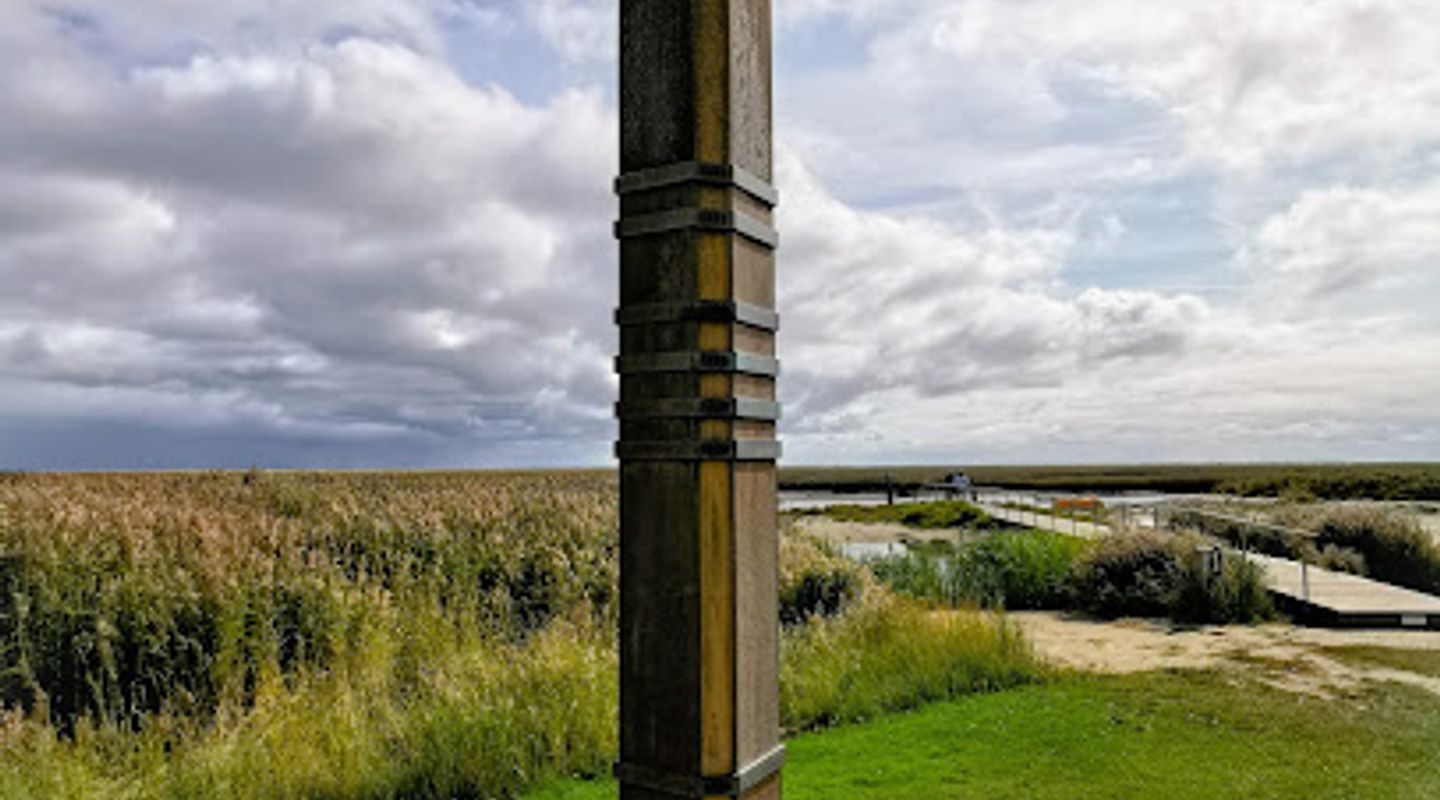
Stormflodssøjlen in Sønderho stands at the harbor edge of Fanø’s southern village, a simple wooden or metal column set against the wide-open Wadden Sea. The surroundings are peaceful: grazing sheep on low dikes, salty air drifting in from the tidal flats, and the outline of historic cottages behind you. At first glance it might look like nothing more than a weathered post, but a closer look reveals a vertical chronicle of storms that have shaped this coastline.Sønderho’s harbor is no longer a busy sailing port, and much of the old basin has silted up, giving the area a calm, almost timeless feel. In this tranquil setting, the pillar acts as a visual interruption, pulling your eye to the sea and encouraging you to imagine it not as a gentle horizon, but as a force capable of climbing many meters above its usual level.
Marks of historic storm surges
Along the shaft of the storm surge column, small plaques or carved lines indicate the dates and heights of notable floods that have struck Sønderho and the wider region. Years from the 19th and 20th centuries appear side by side, some labeled with precise measurements in meters above normal sea level. Local historical research highlights events such as the 1852 flood and later storm surges, including an 1881 water level of over three meters, which are recorded on the pillar as sober reference points.Each mark is a reminder that water has, at times, risen well above the level where you stand. Reading the dates in sequence, you sense how regularly extreme weather has returned to the Wadden Sea, shaping decisions about dike building, harbor protection, and village life. The column condenses decades of meteorological drama into a single, easily understood graphic.
Life with an unpredictable Wadden Sea
Fanø’s communities have always lived in close contact with the shifting sands and tides of the Wadden Sea. In Sønderho, high water could flood low-lying fields, damage homes, and disrupt trade when the harbor was still a lifeline for ships. The storms also influenced where people built, how high they raised their floors, and how they reinforced dikes and embankments.Standing by the pillar, it is easy to picture nights when gale-force winds drove the sea into the estuary, and families watched the water creep closer to their houses. The marks on the column are therefore not just technical data; they are shorthand for stories of anxious hours, emergency repairs, and community resilience in the face of nature’s unpredictability.
A lens onto Fanø’s maritime heritage
The storm surge column is part of a broader maritime landscape in Sønderho. Nearby lie traces of the old trading and fishing harbor that once connected this remote island village to ports across the North Sea. Historical maps and local archives show how shipowners, sailors, and craftsmen depended on reliable channels and safe anchorages, constantly threatened by storms and silting.By linking water levels to specific years, the pillar offers an entry point into that seafaring past. It invites you to imagine how a severe flood might have damaged piers, stranded vessels, or accelerated the decline of the harbor. The structure itself, likely erected in the late 20th century, is a contemporary monument to a much older relationship between people, ships, and sea.
A contemplative stop in the Wadden Sea landscape
Today, Stormflodssøjlen is an open-access outdoor site, best experienced at calm low tide when the mudflats stretch out and birds feed along the water’s edge. The setting encourages unhurried reflection rather than spectacle: there are no large installations, just the column, the harbor edge, and the ever-changing sky.Visitors often pause here for a short while, combining the stop with a stroll through Sønderho’s narrow lanes and traditional houses. The pillar complements the protected Wadden Sea National Park around it, adding a human, historical layer to the natural scenery. It is an understated, yet thought-provoking marker that turns a pretty coastal viewpoint into a reflection on risk, memory, and adaptation.
Reading the landscape with new eyes
After studying the storm surge marks, the surrounding features look different. The low dikes become visible as defenses, the flat marshes as areas once vulnerable to inundation, and the gentle tidal channels as potential pathways for surging water. The column helps decode these elements, making it easier to understand why the coastline appears as it does.In this way, Stormflodssøjlen functions as an outdoor classroom as much as a memorial. It adds depth to a walk along the harbor by making invisible stories visible, turning abstract concepts like storm statistics and water levels into something you can see, compare, and remember long after you leave Fanø.
Evendo Review Centre
 Google
Guest reviews
Best time to go
Quietest: Jan, Feb & Mar · before 8am or at 8pm
Busy times are Evendo estimates for a typical year, to help you plan. Actual crowds vary with events, school holidays and the weather.
Explore Stormflodssøjlen, Sønderho on the map
A handpicked selection of must-see spots near Stormflodssøjlen, Sønderho, mapped for you.
Get your free copy of our complete guide to Stormflodssøjlen, Sønderho, delivered straight to you.
Everything on this page, from opening hours and how to get there to Eve’s tips and the best time to go, in one PDF you can read offline, print or share.
Already have an account? Sign in
Your Stormflodssøjlen, Sønderho guide is ready.
We'll send it to · Not you? Sign out

Getting your guide ready…
We are putting together a fresh copy of the Stormflodssøjlen, Sønderho guide. This can take up to a minute.
This can take a few moments. If your browser asks, choose Allow so the download can start. You'll find the guide in your Downloads folder.
Nothing happened? Download it again
Sorry, the guide is taking longer than usual. Please try again in a minute, or get it by email instead.
Other nearby places you may find interesting
The closest places of the same kind, if this one is not quite what you had in mind.
-
Fanø Skibsfarts- & Dragtsamling Maritime museum preserving Fanø's golden age of sailing ships and island traditions.
-
Fanø Museum Step into an 18th-century skipper’s home in Nordby and discover how Fanø’s seafaring families lived, worked and kept island traditions alive by the North Sea.
-
 Detrigonometriskestation
A quiet dune top on Fanø where 19th‑century surveyors fixed their instruments, this modest trigonometrical station now offers big skies, wind, and quiet reflection.
Detrigonometriskestation
A quiet dune top on Fanø where 19th‑century surveyors fixed their instruments, this modest trigonometrical station now offers big skies, wind, and quiet reflection.
-
Strandgut - Strandfischerei Monument A simple dune-side memorial where driftwood, sea wind and open sky recall Fanø’s hard-earned living from beach fishing and the gifts and losses of the North Sea.
-
Fanø Kunstmuseum Intimate island art museum in an old merchant’s house, celebrating Fanø’s luminous Wadden Sea light and a century of coastal-inspired painting.
Swipe for more places
More to explore near Stormflodssøjlen, Sønderho
-
 Best experiences near Stormflodssøjlen, Sønderho
-
 Best hotels near Stormflodssøjlen, Sønderho
-
 Best landmarks near Stormflodssøjlen, Sønderho
-
 Best attractions near Stormflodssøjlen, Sønderho
-
 Best shops near Stormflodssøjlen, Sønderho
-
 Best restaurants near Stormflodssøjlen, Sønderho
-
 Best bars near Stormflodssøjlen, Sønderho







Do you manage this location?
Take control to get all the benefits, like improved information, better appearance, and stronger visibility across AI-powered discovery.
Explore more

Explore more of Fanø
Discover Fanø, Denmark's hidden coastal gem, offering stunning beaches, charming villages, and rich wildlife, perfect for a tranquil getaway and nature adventures.
Explore Fanø
Explore more of Denmark
Discover Denmark: A perfect blend of history, modern design, and the cozy concept of hygge. Explore vibrant cities, serene landscapes, and world-class cuisine.
Explore Denmark