
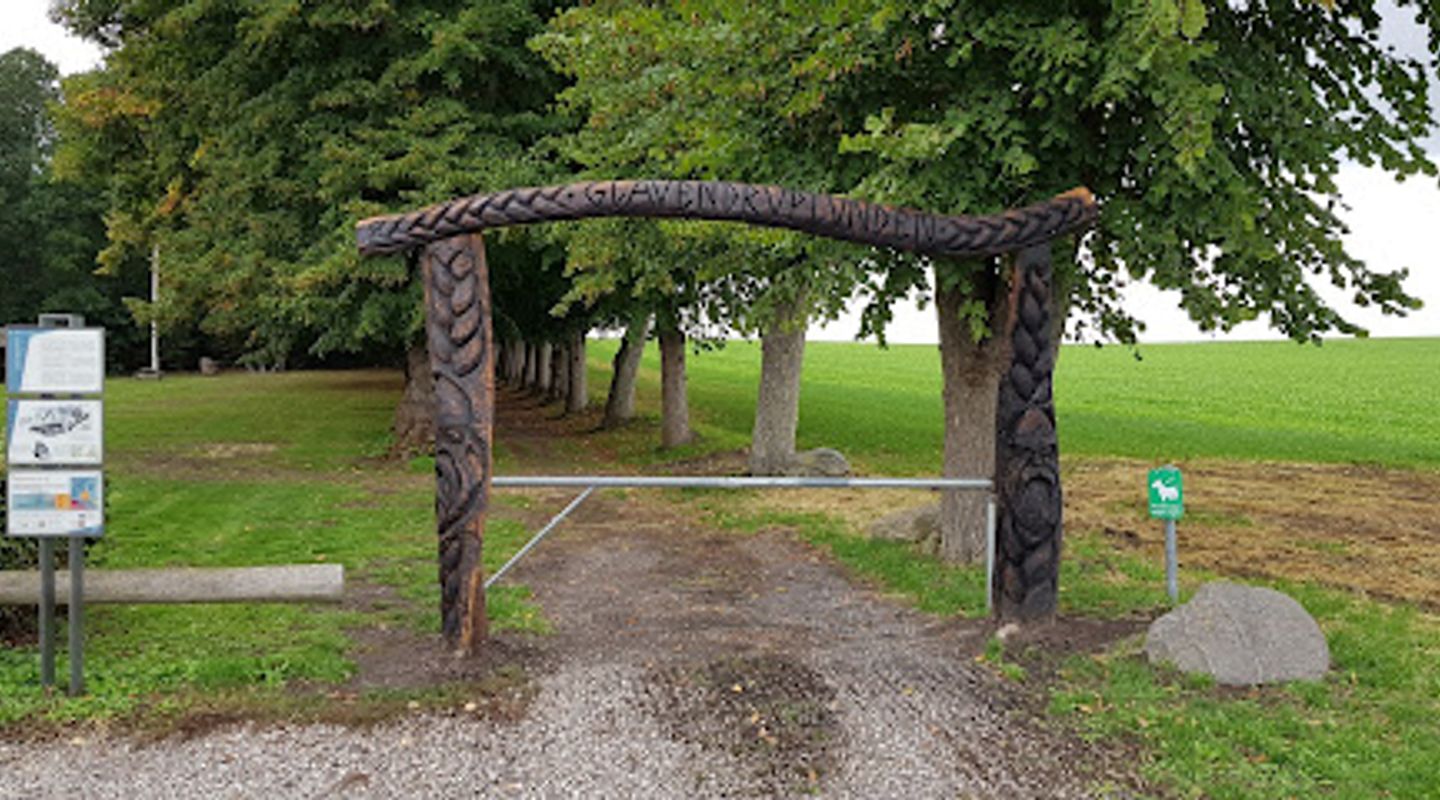
The Glavendrup Stone, Funen Travel Guide
Denmark's longest runic inscription, carved with divine invocation and protective curse.
The Glavendrup Stone is Denmark's most significant runic monument, featuring 210 runes carved into its surface—the longest runic inscription ever found in the country. Dating to the early 10th century, this Viking-era stone was commissioned by Ragnhild to honor her husband Alle, a priest and chieftain. Positioned at the end of a 60-meter stone ship formation with nine burial sites, the stone carries an invocation to Thor and ends with a protective curse. Located in a serene grove near Skamby on Funen island, it stands as a remarkable window into Norse spiritual beliefs and Viking craftsmanship.
A brief summary to The Glavendrup Stone
- Stenager, Skamby, 5485, DK
- Click to display
- Duration: 0.5 to 2 hours
- Free
-
 Outdoor
- Mobile reception: 3 out of 5

Know before you go
Hi, I'm Eve. Here are a few practical things to know before exploring The Glavendrup Stone.
- Visit during clear weather to fully appreciate the carved runes and the atmospheric grove setting. The stone's details are best observed in good natural light.
- Explore the 60-meter stone ship formation surrounding the runestone to understand its sacred context and the nine burial sites within the arrangement.
- Combine your visit with nearby archaeological sites such as Stensby Dolmen (1.9 km away) and Nørre Nærå runestone (7.1 km away) for a deeper exploration of Viking and Neolithic heritage.
- Bring a camera or sketchbook; the stone's intricate runes and the grove's natural beauty make for compelling visual documentation and artistic study.
Do you manage this location?
Take control to get all the benefits, like improved information, better appearance, and stronger visibility across AI-powered discovery. Learn more about listing your business on Evendo
Activate your presenceOther nearby places you may find interesting
The closest places of the same kind, if this one is not quite what you had in mind.

Explore The Glavendrup Stone on the Map
A handpicked selection of must-see spots near The Glavendrup Stone, mapped for you.
Getting There
-
Car
From Odense city center, drive approximately 25 kilometers northwest toward Skamby via Route 165 and local roads, following signs to Stenager. Journey time is approximately 30–40 minutes depending on traffic. Parking is available near the stone site. The location is accessible year-round by vehicle.
-
Bicycle
From Skamby village, cycle approximately 3–4 kilometers along rural roads to reach Glavendrup. The route follows quiet country lanes typical of Funen's cycling infrastructure. Journey time is approximately 20–30 minutes. This option is best during dry weather and mild seasons (April–October).
-
Public Transport and Walking
Take a regional bus service from Odense toward Skamby or nearby villages (journey time approximately 45–60 minutes, fare approximately 50–80 DKK). From the bus stop, walk approximately 2–3 kilometers along country roads to the stone site. The final approach involves walking through rural terrain; allow 30–40 minutes total walking time. Service frequency varies seasonally; check local timetables in advance.
-
Guided Tour
Join organized heritage tours departing from Odense or Nordfyn visitor centers, which typically include transportation, guided interpretation of the runestone and surrounding archaeological sites, and visits to nearby Viking-era monuments. Tours generally run 3–4 hours and cost approximately 200–350 DKK per person. Advance booking is recommended, particularly during summer months.
For the on-the-go comforts that matter to you
-
 Information Boards
Discover more about The Glavendrup Stone
A Monument to Viking Power and Piety
The Glavendrup Stone stands as Denmark's most impressive runic artifact, bearing 210 carved runes that form the longest runic inscription ever discovered in the country. Designated DR 209 by Rundata, this monumental stone dates to the early 10th century and was commissioned by a woman named Ragnhild to commemorate her husband Alle, who served as both a gothi (pagan priest) and a thegn (Norse chieftain and warchief). The inscription reveals a society where spiritual authority and martial power were intertwined, with Alle holding dominion over a sacred sanctuary and leading his clan with honor.Sacred Inscriptions and Divine Protection
The runic text follows the RAK style, characterized by straight text bands without decorative serpent or beast heads—a formal, austere aesthetic befitting a monument of such significance. What sets this stone apart from other Scandinavian runestones is its explicit invocation to Thor, the Norse god of thunder and protection. The inscription appeals to Thor to hallow and safeguard the runes themselves, reflecting a deep belief in divine guardianship over the memorial. This invocation is rare; only two other Danish runestones and three Swedish stones contain similar appeals to Thor, making Glavendrup part of an exclusive group of spiritually charged monuments.A Warning Carved in Stone
The inscription concludes with a curse—a solemn warning against anyone who might damage or move the stone. The exact translation of the curse word remains debated among scholars, with interpretations ranging from "wretch" to "outcast" or "warlock," but its intent is unmistakable: to protect the monument from desecration. Similar curses appear on other Scandinavian runestones, suggesting a widespread practice of using magical language to ensure a memorial's permanence. This blend of spiritual invocation and protective curse reveals how Vikings used stone monuments not merely as memorials but as sacred objects imbued with supernatural power.A Stone Ship and Ancient Graves
The Glavendrup Stone occupies a unique position within a stone ship formation—a 60-meter-long arrangement of stones that evokes the shape of a Viking vessel. Within this formation lie nine burial sites, though archaeological investigation revealed them to be empty, suggesting either that burials were never completed or that the graves were disturbed in antiquity. The stone ship itself is a distinctive feature of Scandinavian prehistory, believed to represent either a symbolic journey to the afterlife or a marker of high status. The Glavendrup stone, positioned at the terminus of this formation, commands the entire sacred landscape.Survival and Restoration
The stone's journey to the present day reflects both the fragility and resilience of cultural heritage. It was discovered in 1794 during sand quarrying operations in the area—a moment when it might have been lost forever. In 1808, archaeologist Vedel Simonssen intervened to save it from stonemasons who sought to purchase it for other purposes. The stone underwent its most recent restoration in 1958, ensuring its legibility for future generations. The mound upon which it now stands is a modern addition, part of ongoing efforts to preserve and present this Viking-era treasure.A Window into Viking Spirituality
The Glavendrup Stone offers invaluable insights into the spiritual and social world of 10th-century Scandinavia. It demonstrates how Vikings commemorated their leaders, how they invoked divine protection, and how they used monumental stone to assert both memory and power across generations. The stone's prominence in the landscape, its elaborate inscription, and its protective curse all speak to a society that understood the permanence of stone and the potency of written runes. Today, standing in the atmospheric Glavendrup grove, visitors encounter not merely a historical artifact but a tangible connection to a distant world where gods were real, curses held power, and stone could speak across a thousand years.












Your all‑in‑one travel companion app
Explore expert travel guides, compare and book tours, experiences, hotels, and more—all from the palm of your hand. Download now for seamless trip planning wherever your wanderlust takes you.


Explore More of Funen
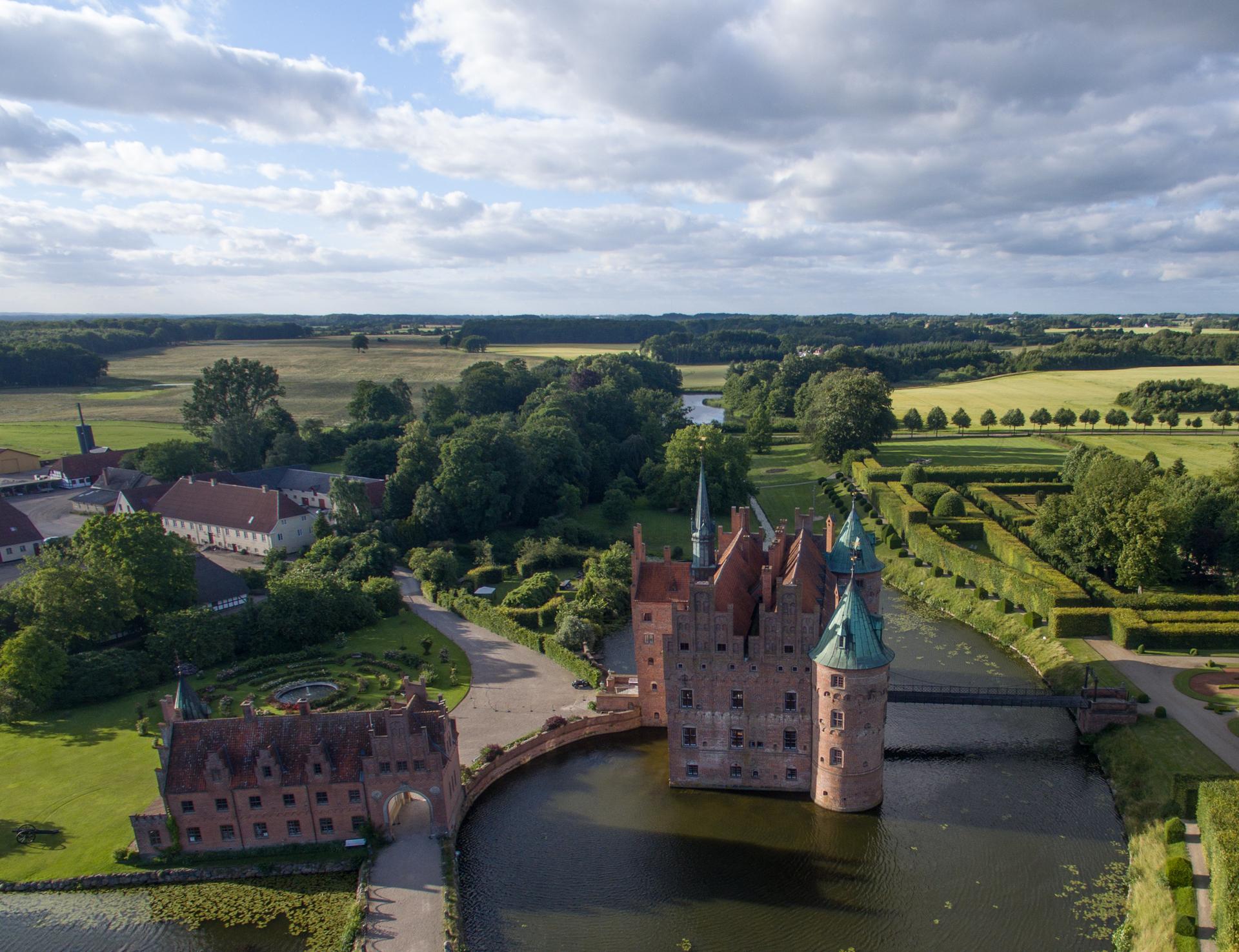
Looking beyond The Glavendrup Stone? Discover Funen for broader travel guides, local hot-spots, and regional highlights.
Explore Funen

