Fredens Kirke, Odense Travel Guide
A luminous 1920 “Church of Peace” in Odense’s Skibhus Quarter, blending Jensen Klint’s thoughtful brick architecture with stained glass, music and local community life.
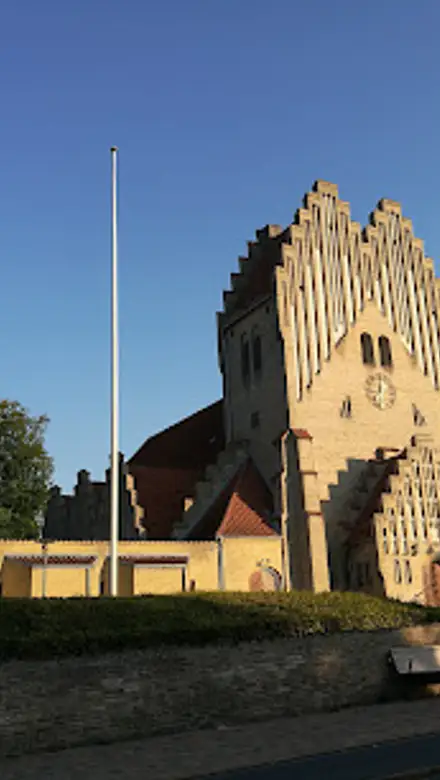
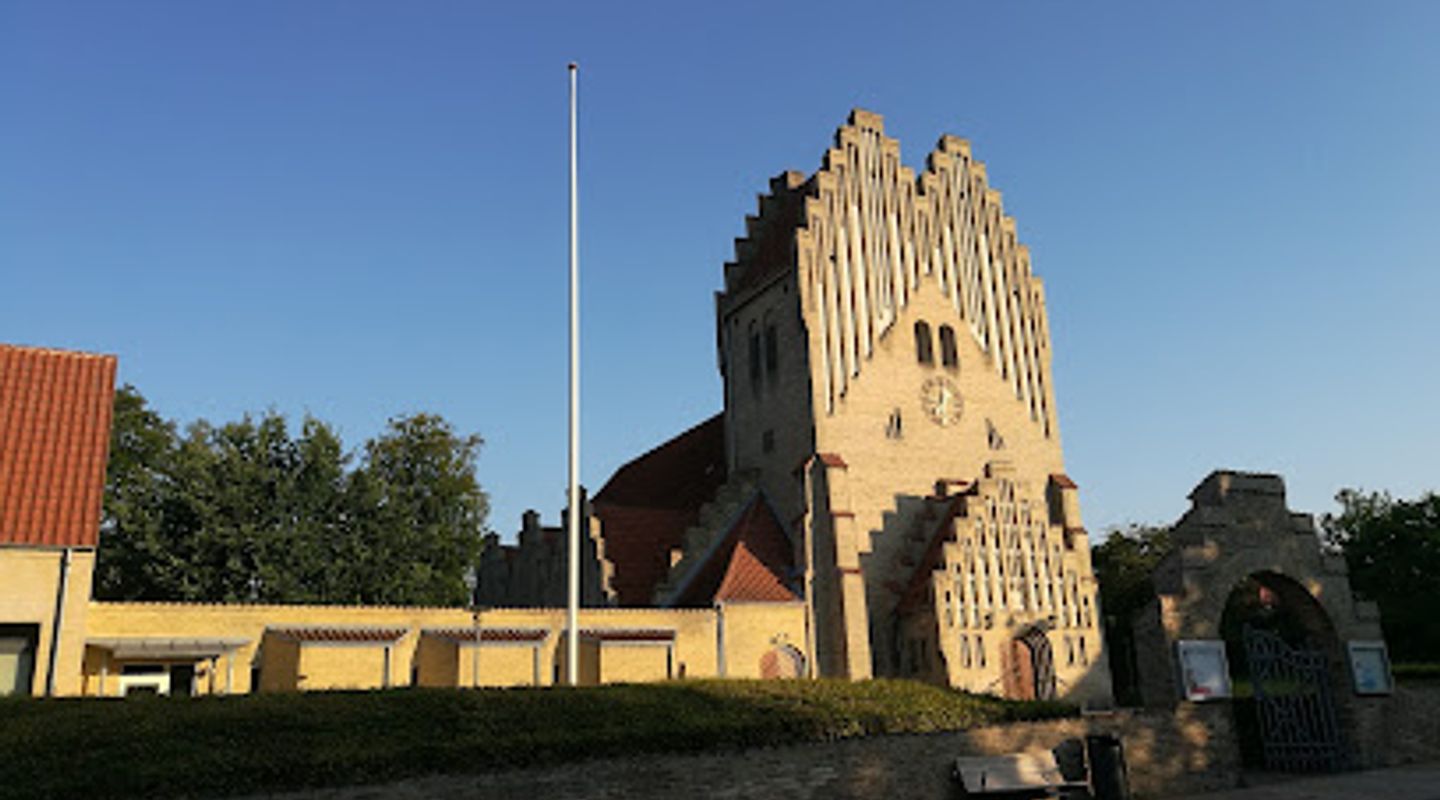
Fredens Kirke rises at the crossroads of Skibhusvej and Døckerslundvej in Odense’s Skibhus Quarter, a luminous Lutheran church steeped in local history and early 20th‑century optimism. Consecrated in 1920 and designed by renowned architect P.V. Jensen Klint, the church combines handcrafted yellow‑white brickwork, stepped gables and Gothic‑inspired windows with a welcoming, bright interior. Inside, vaulted arches, stained‑glass mosaics and a fine Marcussen & Søn organ create a serene space that still anchors community life with services, concerts and events.
A brief summary to Fredens Kirke
- Skibhusvej 162, Odense, Odense C, 5000, DK
- Click to display
- Click to display
- Duration: 0.5 to 1.5 hours
- Free
-
 Mixed
Mixed
- Mobile reception: 5 out of 5
- Monday 9 am-1:30 pm
- Tuesday 9 am-1:30 pm
- Wednesday 9 am-1:30 pm
- Thursday 9 am-1:30 pm
- Friday 9 am-1:30 pm

Know before you go
Hi, I'm Eve. Here are a few practical things to know before exploring Fredens Kirke.
- Step inside during daylight hours if possible; the stained-glass mosaics are at their most striking when sunlight slants through the tall western windows.
- Check the church’s own program for organ concerts or choral events, which make excellent use of the Marcussen & Søn organ and the clear acoustics.
- Take a slow lap around the exterior to notice the handcrafted brickwork, stepped gables and the unusual street-facing entrance that sets the church apart.
- Plan a few extra minutes to wander the churchyard and surrounding paths, a quiet contrast to the traffic along Skibhusvej.
Do you manage this location?
Take control to get all the benefits, like improved information, better appearance, and stronger visibility across AI-powered discovery. Learn more about listing your business on Evendo
Activate your presenceOther nearby places you may find interesting
The closest places of the same kind, if this one is not quite what you had in mind.
Explore Fredens Kirke on the Map
A handpicked selection of must-see spots near Fredens Kirke, mapped for you.
Getting There
-
City bus from central Odense
From central Odense, use a city bus line running along Skibhusvej toward the Skibhus Quarter; typical travel time from the main shopping streets is around 10–15 minutes depending on traffic. Buses usually run several times an hour on weekdays and slightly less often in the evening and on Sundays. A single adult ticket within the city zone generally costs in the range of 20–30 DKK when bought via local ticket apps or machines. The bus stops within a short walk of the church and is a practical option in wet or cold weather.
-
Bicycle from Odense city centre
Odense is well suited to cycling, and reaching Fredens Kirke by bike from the compact city centre typically takes about 10–15 minutes at a relaxed pace. The route uses regular city streets with bicycle lanes on much of the way, but you still need to be comfortable riding in mixed urban traffic. There is no direct cost beyond any bike rental; many rentals in Odense offer daily rates in the range of 80–150 DKK depending on type of bicycle.
-
Taxi within Odense
A taxi ride from the central station area to Skibhusvej near Fredens Kirke usually takes around 10 minutes outside rush hour. Fares within the city are typically in the range of 120–180 DKK, varying with traffic and time of day. Taxis are a convenient option in bad weather or for those with limited mobility, as they can drop passengers very close to the church entrance, but there is no dedicated taxi stand at the site itself.
For the on-the-go comforts that matter to you
-
 Restrooms
-
 Seating Areas
-
 Trash Bins
-
 Information Boards
Discover more about Fredens Kirke
A neighborhood church born from hope after war
Fredens Kirke stands in the heart of Odense’s Skibhus Quarter, where compact city streets open onto a small rise crowned by pale brick and red tiles. Conceived in the years around the First World War, the parish decided in 1913 that this fast‑growing district needed its own church, but fundraising and wartime austerity delayed construction. Foundation stones were finally laid in 1918, and on 26 September 1920 the church was consecrated, deliberately timed to coincide with King Christian X’s 50th birthday.Its name, literally “The Church of Peace”, reflects gratitude for the end of the war and a desire to root the quarter in stability and community. From the beginning, it was more than a place for Sunday worship; it became a gathering point where the new urban workers’ district could mark life’s milestones, from christenings to farewells.Distinctive architecture by P.V. Jensen Klint
Fredens Kirke was designed by Peder Vilhelm Jensen Klint, the visionary architect later known for Grundtvig’s Church in Copenhagen. Here, he experimented on a more intimate scale, mixing references to medieval Danish churches with bold, almost sculptural forms. The church is built of handcrafted white‑yellow bricks resting on a base of rough‑split fieldstones, all unified by whitewashed surfaces and a roof of earthy red clay tiles.Look closely at the gables and you see gently curved, double‑ and triple‑stepped outlines that soften the otherwise robust massing. Tall, pointed windows recall Gothic cathedrals, yet the proportions feel deliberately modest, tailored to the surrounding streets. Unusually, the building turns its main entrance directly toward Skibhusvej, so the altar faces west instead of east – a practical choice for the corner plot that quietly breaks with a centuries‑old tradition.A luminous interior of arches, glass and chandeliers
Stepping inside, you move from busy traffic into a calm, pale space framed by Gothic‑style arches that carry the eye down the nave. Five large brass chandeliers, designed by Esben Klint, the architect’s grandson, hang in a gentle rhythm and lend the interior a warm, golden light when lit. The walls remain largely undecorated, allowing the architecture, woodwork and glass to speak for themselves.Behind the altar, three stained‑glass mosaics by artist Johs. Kragh filter daylight into rich jewel tones that shift with the weather. Additional mosaic windows to the north and east add depth and color, particularly noticeable on bright days when colored shafts of light reach across the pews. The combination of white surfaces, brick details and dark timber gives the church a restrained, almost Scandinavian simplicity that feels both historic and contemporary.Music and craftsmanship in the organ loft
High on the west end stands the church’s organ, built in 1958 by the esteemed firm Marcussen & Søn. With 29 stops over three manuals and pedals, it is a substantial instrument for a parish church, capable of everything from delicate, transparent chorales to full, resonant festival music. Esben Klint also drew the organ façade, echoing the stepped rhythms and vertical lines found elsewhere in the building.Organ recitals, seasonal concerts and choral performances make the most of the generous acoustics, where brick and plaster reflect sound with clarity. Even when silent, the instrument forms a visual anchor above the entrance, its pipes and carpentry reinforcing the church’s focus on crafted detail and durable materials.Churchyard, parish hall and everyday life
Outside, a low wall of light brick and red tiles gently encloses the churchyard, separating it from the surrounding streets without shutting them out. The grounds, laid out by landscape architect P. Wad, combine paths, plantings and simple greenery that invite quiet pauses. To one side, a parish hall added in 1981 by noted church architects Inge and Johannes Exner introduces modern lines while respecting the original scale and materials.On weekdays, office hours, meetings, choir rehearsals and community activities animate the complex, while Sundays draw people into the nave for worship. Over a century after its consecration, Fredens Kirke still fulfills the role it was built for: a local landmark where architecture, faith and neighborhood life meet under a single red‑tiled roof.












Your all‑in‑one travel companion app
Explore expert travel guides, compare and book tours, experiences, hotels, and more—all from the palm of your hand. Download now for seamless trip planning wherever your wanderlust takes you.


Explore More of Odense
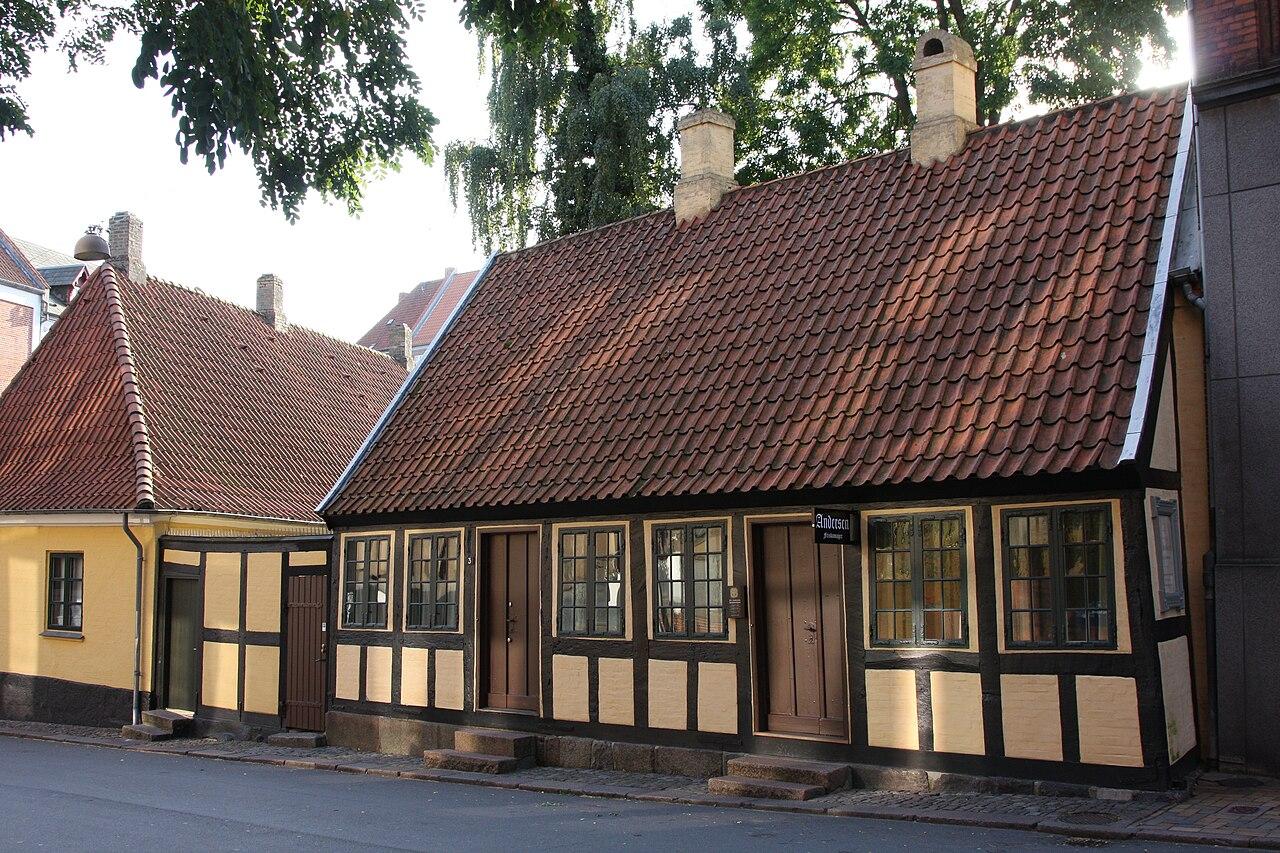
Looking beyond Fredens Kirke? Discover Odense for broader travel guides, local hot-spots, and regional highlights.
Explore Odense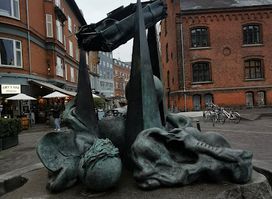
A bronze suitcase poised for takeoff above a shimmering fountain, this H.C. Andersen–inspired sculpture turns a small Odense square into a quiet fairytale scene.

A compact urban nook in central Odense where a sculptural storytelling swing and stepped seating invite you to pause, daydream and weave your own city tales.