

EM-statue-1992 (Richard Møller Nielsen), Odense Travel Guide
Free Guide: Small in size but huge in symbolism, this Odense statue honours the local coach who led Denmark to its unforgettable Euro 1992 triumph.


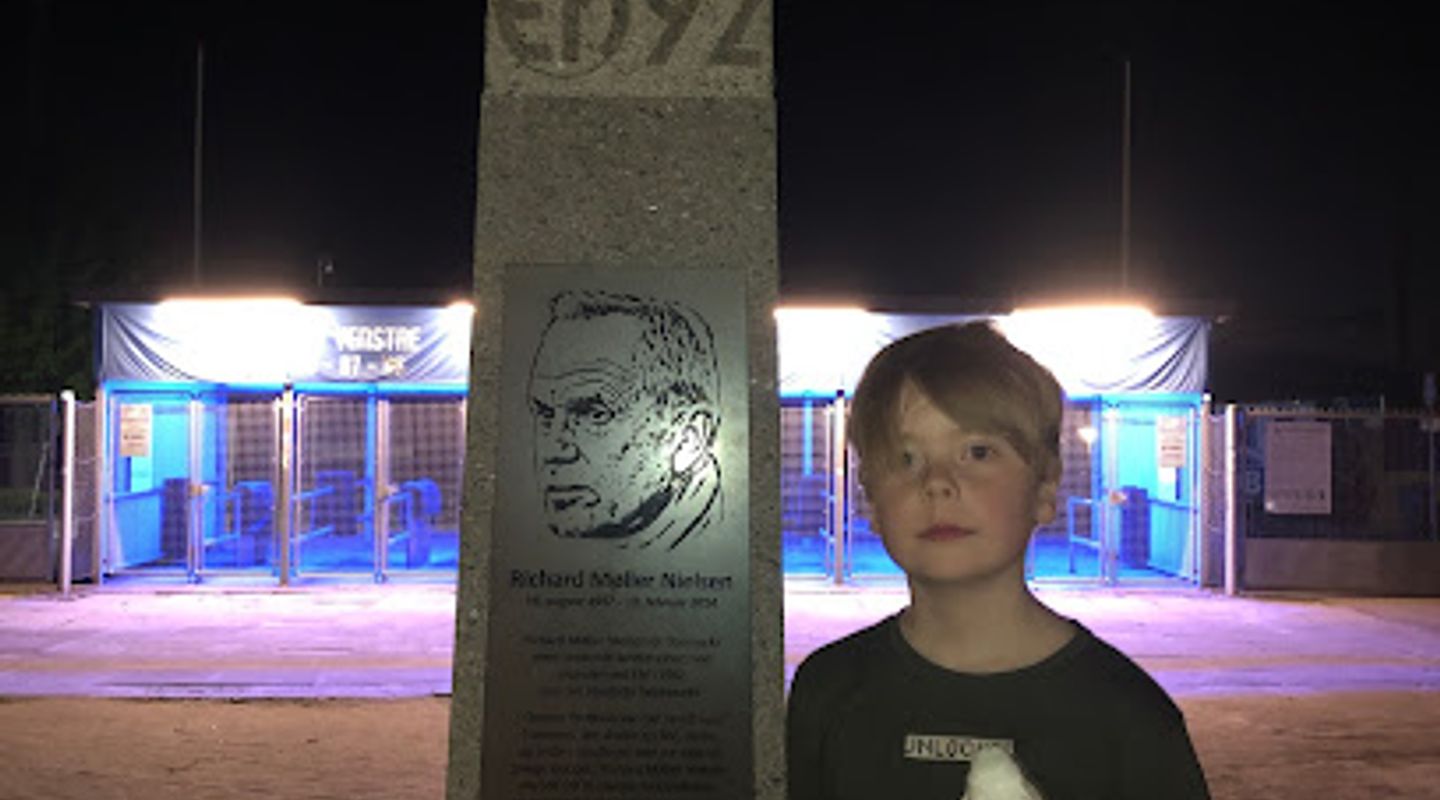
A brief summary of EM-statue-1992 (Richard Møller Nielsen)
Small in size but huge in symbolism, this Odense statue honours the local coach who led Denmark to its unforgettable Euro 1992 triumph.
Tucked beside Odense Stadion, the EM 1992 statue of legendary Danish coach Richard Møller Nielsen is a compact yet powerful tribute to Denmark’s greatest football fairy tale. Here, bronze and brick mark the spot where Odense honours the local coach who led the national team to an against‑all‑odds victory at Euro 1992. It is an easy, open-air stop: a small square, a lifelike figure, and plaques that quietly tell the story of an ordinary Odense man who changed Danish sporting history.
On-site amenities
 Restrooms
 Seating areas
 Trash bins
 Information boards
Opening hours
- Every dayOpen 24 hours
Opening hours as listed on the venue’s Google Business Profile. Hours can change for services and special events, so check with the venue before you go.
- Address
- 5200 Odense
- Website
Getting there
City bus from central Odense
Bicycle from Odense city centre
Taxi within Odense
On foot from nearby neighbourhoods
Discover more about EM-statue-1992 (Richard Møller Nielsen)
A modest square for a football fairy tale
Richard Møller Nielsens Plads is a small, open square next to Odense Stadion dedicated to the man who coached Denmark to its sensational Euro 1992 title. The focal point is the EM‑statue, a bronze likeness of the coach captured in his characteristic tracksuit, hands lightly raised as if in mid‑instruction. Around him, low brick and paving define a calm pocket of space between the stadium structures and surrounding streets.Though compact, the square feels like a tiny shrine to Danish football. The statue is set so you can walk all the way around it, taking in the details of his expression and stance. Discreet plaques and inscriptions give context, linking this modest piece of public art to one of the country’s greatest sporting stories.
Odense roots and national glory
Richard Møller Nielsen was born on Funen and spent much of his life in and around Odense, playing and later coaching at Odense Boldklub before taking over the national team. The choice of this location is deliberate: the statue stands by the home ground of the club where he built his reputation and honed the disciplined, collective style that later stunned Europe.The Euro 1992 triumph, achieved after Denmark were called in at the last moment to replace Yugoslavia, turned him from local coach into national symbol. The statue and square acknowledge both sides of that story: the hometown trainer deeply rooted in OB culture, and the national hero who brought a European Championship back to Denmark.
Details in bronze and stone
The sculpture is life‑size rather than monumental, reflecting the coach’s down‑to‑earth personality. You see creases in the jacket, the tilt of his head, and a slightly forward lean that suggests focus more than celebration. The base is low, making the figure feel approachable rather than distant.Surrounding paving stones and low walls provide a subtle frame and a few informal places to perch. On match days, scarves and flowers sometimes appear at the base, small personal tributes that briefly turn the work into a living memorial. On quiet weekdays, it becomes more of an urban sculpture, blending sporting history with everyday city life.
Part of the Odense Stadion ensemble
The statue is closely tied to Odense Stadion, where a stand already bears Richard Møller Nielsen’s name. Seen from the square, you can glimpse the stadium’s structure and imagine the roar of crowds on game days. The setting underlines the connection between club and country: this is where a local defender and later coach helped shape teams that would go on to shock far larger football nations.Even if you are not a football fan, the juxtaposition of contemporary stadium architecture and a solitary bronze figure is striking. The square opens outward, with clear sightlines that make the statue easy to find and photograph from multiple angles without obstructions.
A reflective pause for visitors and fans
For many, a visit here is a brief but meaningful pause before or after a match, or a quick detour on a walk through the area. The lack of barriers invites you to step close, compare your own height to the coach’s, or simply stand beside him for a quiet moment.The atmosphere shifts with the day: tranquil and almost contemplative in the morning, more energetic when OB are playing and scarves and jerseys fill the approaches. At any hour, this little square offers a tangible reminder that one of European football’s greatest underdog victories began with a determined coach from Odense and a belief that a team could be stronger than the sum of its stars.
Evendo Review Centre
 Google
Guest reviews
Best time to go
Quietest: Jan, Feb & Mar · before 8am
Busy times are Evendo estimates for a typical year, to help you plan. Actual crowds vary with events, school holidays and the weather.
Explore EM-statue-1992 (Richard Møller Nielsen) on the map
A handpicked selection of must-see spots near EM-statue-1992 (Richard Møller Nielsen), mapped for you.
Get your free copy of our complete guide to EM-statue-1992 (Richard Møller Nielsen), delivered straight to you.
Everything on this page, from opening hours and how to get there to Eve’s tips and the best time to go, in one PDF you can read offline, print or share.
Already have an account? Sign in
Your EM-statue-1992 (Richard Møller Nielsen) guide is ready.
We'll send it to · Not you? Sign out

Getting your guide ready…
We are putting together a fresh copy of the EM-statue-1992 (Richard Møller Nielsen) guide. This can take up to a minute.
This can take a few moments. If your browser asks, choose Allow so the download can start. You'll find the guide in your Downloads folder.
Nothing happened? Download it again
Sorry, the guide is taking longer than usual. Please try again in a minute, or get it by email instead.
Other nearby places you may find interesting
The closest places of the same kind, if this one is not quite what you had in mind.
-
Odense Castle A quietly elegant former royal residence anchoring Odense’s King’s Garden, offering calm park views, restrained classical architecture and a glimpse of civic history.
-
Odense Noble Virgin Convent Five centuries of Danish power, privilege and everyday life layered into one remarkable brick convent in the very heart of historic Odense.
-
Andersen on the bench A life-sized bronze Hans Christian Andersen sharing a city bench in Odense, inviting you to sit, linger and step briefly into the storyteller’s world.
-
The maiden jump A single worn paving stone in Odense’s old town preserves a stark local legend of shame, faith and a fatal leap from the cathedral tower.
-
Odense Cathedral - St. Canute's Church A luminous Brick Gothic cathedral in central Odense, where Denmark’s last Viking king, royal tombs and a masterpiece altarpiece share a serene, living sacred space.
Swipe for more places
More to explore near EM-statue-1992 (Richard Møller Nielsen)
-
 Best experiences near EM-statue-1992 (Richard Møller Nielsen)
-
 Best hotels near EM-statue-1992 (Richard Møller Nielsen)
-
 Best landmarks near EM-statue-1992 (Richard Møller Nielsen)
-
 Best attractions near EM-statue-1992 (Richard Møller Nielsen)
-
 Best shops near EM-statue-1992 (Richard Møller Nielsen)
-
 Best restaurants near EM-statue-1992 (Richard Møller Nielsen)
-
 Best bars near EM-statue-1992 (Richard Møller Nielsen)







Do you manage this location?
Take control to get all the benefits, like improved information, better appearance, and stronger visibility across AI-powered discovery.
Explore more

Explore more of Odense
Discover Odense, Denmark's enchanting city where fairy tales come to life amidst historic streets, vibrant culture, and scenic beauty.
Explore Odense
Explore more of Denmark
Discover Denmark: A perfect blend of history, modern design, and the cozy concept of hygge. Explore vibrant cities, serene landscapes, and world-class cuisine.
Explore Denmark
