Background

Christianshavn

Canal-threaded Christianshavn blends 17th‑century harbour heritage, cobbled lanes and creative enclaves into one of Copenhagen’s most atmospheric waterside neighbourhoods.

Maritime Christianshavn is one of Copenhagen’s most atmospheric neighbourhoods, a canal-laced quarter where 17th‑century merchants’ houses, cobbled streets and former naval buildings blend with cosy cafés, cutting‑edge Nordic restaurants and creative enclaves. Laid out by King Christian IV and inspired by Dutch canal towns, it has evolved from working‑class district to highly sought‑after waterside community, home to freetown Christiania, the Church of Our Saviour’s spiralling tower and a relaxed, village‑like mood right next to the city centre.

A brief summary to Christianshavn

  • Copenhagen, Indre By, DK
  • Duration: 1.5 to 5 hours
  • Free
  • Environment icon Outdoor
  • Mobile reception: 5 out of 5

Local tips

  • Explore on foot or by bike to appreciate the narrow streets and canals; cobblestones can be uneven, so wear comfortable, stable footwear.
  • Plan extra time around Church of Our Saviour and the old ramparts; even if you do not enter, the surrounding streets and views are a highlight.
  • Canal-side cafés fill quickly on sunny days; arrive earlier for waterside seating or look for quieter spots along smaller side canals.
  • If you visit Christiania, respect local guidelines about photography and behaviour, and stay on well-trodden paths, especially after dark.
  • Wind off the harbour can make it feel cooler than central streets; bring an extra layer, even in summer evenings by the water.
widget icon

Getting There

  • Metro from central Copenhagen

    From central Copenhagen, the quickest way to reach Christianshavn is by metro. Lines M1 and M2 stop at Christianshavn Station, a trip of around 3–6 minutes from either Kongens Nytorv or Nørreport. Trains run every few minutes throughout most of the day, and standard single-zone tickets cost roughly 20–30 DKK. Platforms are step-free via elevators, making this an accessible option for most visitors.

  • Bus via inner city

    Several city buses cross the harbour and stop near Christianshavn Torv, taking about 10–20 minutes from the inner city depending on traffic. This option suits travellers staying away from metro lines, with the same ticket system and fares as the metro, around 20–30 DKK for a single journey within the central zone. Buses can be busy at rush hour and are less predictable in heavy traffic, but provide good views of the harbour on the way.

  • Harbour bus by water

    For a scenic approach, use the harbour buses that run along Copenhagen’s inner harbour, stopping near Knippelsbro and other quays close to Christianshavn. Travel time from central harbour stops is typically 10–25 minutes, depending on the route, with regular daytime departures. Tickets cost roughly the same as other public transport, around 20–30 DKK, and boats are equipped for bicycles and strollers, though outdoor decks can be windy in cooler months.

  • Walking from the old town

    If you are already in Copenhagen’s historic centre, Christianshavn is within a pleasant walking distance. A stroll from the main pedestrian streets across one of the harbour bridges usually takes 10–20 minutes at a relaxed pace. The route is flat and mostly paved, suitable for most visitors, though cobblestones and occasional crowds near the bridges can slow progress. This option is free and lets you experience the gradual transition from city centre to canal district.

Christianshavn location weather suitability

  • Weather icon Any Weather
  • Weather icon Clear Skies
  • Weather icon Mild Temperatures
  • Weather icon Cold Weather
  • Weather icon Hot Weather
  • Weather icon Rain / Wet Weather
  • Weather icon Windy Conditions

Unlock the Best of Christianshavn

Buy tickets

    No tickets available

Book tours with entry

    No tours available

Book tours without entry

    No tours available

Discover more about Christianshavn

Canals, Cobblestones and a Royal Vision

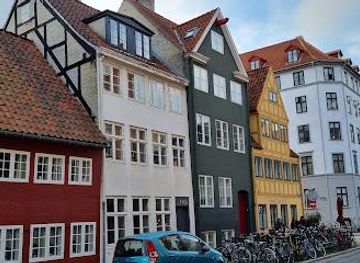
Christianshavn stretches across a low-lying peninsula and islands just east of Copenhagen’s historic core, its grid of canals and streets laid out in the early 1600s under King Christian IV. Inspired by Dutch merchant towns, he created a fortified waterfront quarter where warehouses, townhouses and shipyards all faced the water. Much of that plan is still visible today in the straight canals, stone quaysides and narrow lanes that thread between gabled façades. Walking in from the inner harbour, you move almost immediately into a softer rhythm. Torvegade, the main spine, is lined with 18th- and 19th‑century buildings, while side streets such as Wildersgade and Sankt Annæ Gade reveal colourful townhouses and small courtyards. The mix of brick, plaster and timbered fronts, often in muted blues, ochres and reds, gives the area a distinctly old-European charm.

Life Along the Water’s Edge

Water shapes almost every experience in Christianshavn. The main canal cuts through the district like a slow-moving street, edged with houseboats, moored sailing vessels and café terraces where locals linger over coffee, beer or smørrebrød. On calm days, the surface mirrors pastel façades and church spires; in winter, the low northern light turns the harbour into a silver-grey ribbon. Small bridges knit the neighbourhood together: low stone spans over side canals, and more sculptural crossings that link Christianshavn to the rest of central Copenhagen. From the quays, you can watch kayakers, harbour buses and tour boats weaving between islands, or simply sit on the edge with your feet above the water. Despite its central location, the tempo remains unhurried, with bicycles and pedestrians far outnumbering cars on many streets.

From Sailors’ Quarter to Culinary Hotspot

For centuries Christianshavn was deeply tied to the sea, its shipyards and warehouses serving the Danish navy and merchant fleets. Working-class housing, sailors’ taverns and small workshops filled the backstreets. Reminders of that era survive in robust brick buildings and the former naval area of Holmen to the north, where old dock structures have been repurposed for housing, arts institutions and the national opera house. In recent decades, the district has become one of Copenhagen’s most coveted addresses. That shift is particularly evident in its food scene. Around the canals and across at Holmen you find some of the city’s most ambitious Nordic restaurants alongside informal wine bars, bakeries and street‑food concepts. Yet traces of the old sailors’ character linger in traditional bodegas and unpolished corners that keep the neighbourhood from feeling overly manicured.

Spirals, Ramparts and Alternative Culture

One of Christianshavn’s most distinctive landmarks is the Church of Our Saviour, whose dark, corkscrew spire rises above the rooftops. The church anchors a small square and signals the area’s 17th‑century roots, its baroque details contrasting with the later brick warehouses nearby. Elsewhere, the green earthworks of Christianshavn’s ramparts curve around the water, remnants of Copenhagen’s former defensive ring now transformed into parkland and pathways. On the eastern side lies freetown Christiania, an autonomous community established in the 1970s within former military grounds. Its improvised houses, workshops and art pieces introduce a very different energy, highlighting the district’s role as a home for both established residents and countercultural experiments. The proximity of such diverse spaces is a defining characteristic of the area.

Everyday Atmosphere in a Waterside Village

Beyond its sights, Christianshavn’s appeal lies in everyday details: laundry strung in back courtyards, locals chatting outside corner cafés, and cyclists gliding over cobblestones. The central square around the metro station functions as a small hub, with grocery stores, takeaways and benches where people pause between errands. In summer, windows are flung open and the sound of clinking glasses and conversation drifts across the water. Even on grey, misty days the canals and low skyline create a moody, contemplative backdrop for a stroll. The district’s relatively compact size makes it easy to explore on foot, yet each turn seems to reveal another side street of crooked houses or a quiet dock where the city feels far away. Christianshavn manages to balance its maritime heritage, contemporary culture and residential character in a way that feels both intimate and distinctly Copenhagen.

Busiest months of the year

Busiest hours of the day

Popular Experiences near Christianshavn

Popular Hotels near Christianshavn

Select Currency