Inderhavnsbroen, North Zealand Travel Guide
Copenhagen’s curving “kissing bridge” linking Nyhavn and Christianshavn with harbour panoramas, sliding decks, and a front‑row view of the city’s waterfront life.
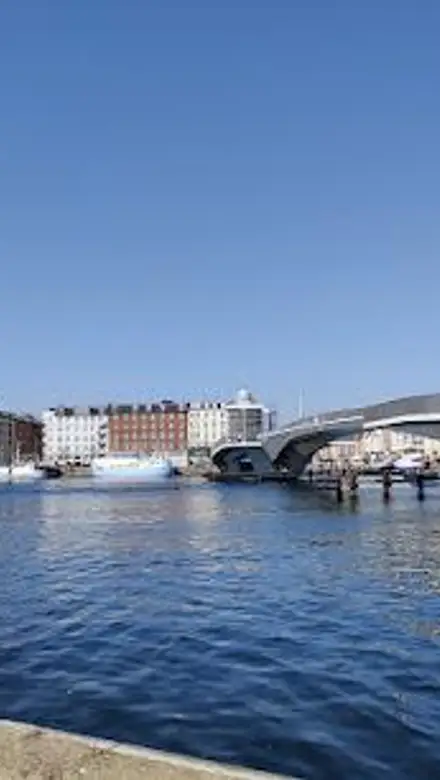
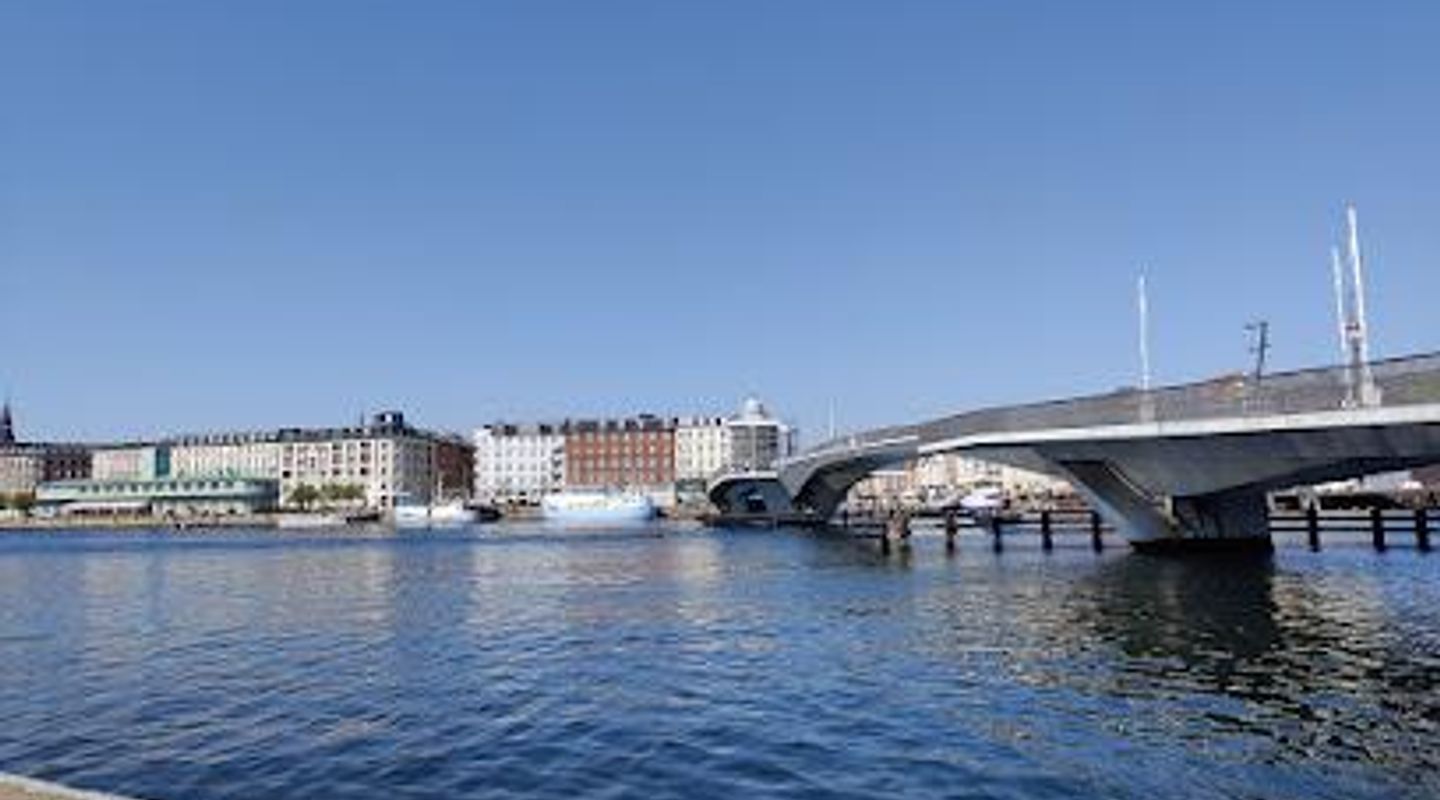
Inderhavnsbroen, Copenhagen’s striking “kissing bridge,” is a 180‑meter pedestrian and cycle link between colorful Nyhavn and laid‑back Christianshavn. Opened in 2016, its curving steel decks slide apart to let ships pass, turning a simple crossing into a small urban spectacle. Beyond its engineering quirks, the bridge offers wide harbour views, easy access to key waterfront sights, and a vivid snapshot of Copenhagen’s bike‑first cityscape.
A brief summary to Inderhavnsbroen
- Inderhavnsbroen, Copenhagen, Indre By, 1401, DK
- Duration: 0.5 to 1.5 hours
- Free
-
 Outdoor
- Mobile reception: 5 out of 5
- Monday 2 pm-9 am
- Tuesday 2 pm-9 am
- Wednesday 2 pm-9 am
- Thursday 2 pm-9 am
- Friday 2 pm-9 am
- Saturday 2 pm-9 am
- Sunday 2 pm-9 am

Know before you go
Hi, I'm Eve. Here are a few practical things to know before exploring Inderhavnsbroen.
- Time your visit for early morning or late evening to enjoy softer light, fewer commuters, and atmospheric harbour views ideal for photography.
- If you are cycling, slow down near the central bulge and glass barrier; the turn is sharper than it appears, especially when riding downhill.
- Pause at the small bays along the railings to watch boats and harbour buses; these balcony‑like spaces offer some of the best vantage points.
- On windy or cold days, dress warmly—exposure across the open water can make temperatures feel lower than in nearby streets.
- Look up local bridge‑opening times if you want to see the sliding mechanism in action as tall‑masted vessels pass through the navigation channel.
Do you manage this location?
Take control to get all the benefits, like improved information, better appearance, and stronger visibility across AI-powered discovery. Learn more about listing your business on Evendo
Activate your presenceOther nearby places you may find interesting
The closest places of the same kind, if this one is not quite what you had in mind.

Explore Inderhavnsbroen on the Map
A handpicked selection of must-see spots near Inderhavnsbroen, mapped for you.
Unlock the Best of Inderhavnsbroen
Buy tickets
-
No tickets available
Book tours with entry


Getting There
-
Metro from central Copenhagen
From central Copenhagen, take the M1 or M2 metro line to Kongens Nytorv Station, a major interchange in the historic center. The ride from Nørreport or Østerport typically takes 3–6 minutes, with frequent departures throughout the day and evening. A standard single zone ticket usually costs around 20–30 DKK. From Kongens Nytorv it is an easy 10–15 minute walk along Nyhavn to reach the western end of Inderhavnsbroen; pavements are level and suitable for most visitors, though surfaces can be cobbled in places.
-
City bike by harbour routes
Copenhagen’s public bike‑share schemes and numerous rental shops make it straightforward to cycle to Inderhavnsbroen. From the City Hall area or Vesterbro, expect a 10–20 minute ride using dedicated cycle lanes that follow main streets and the harbourfront. Bike‑share rentals commonly start around 15–25 DKK for a short ride, while day rentals at shops are higher but offer more flexibility. The approaches to the bridge have smooth ramps on both sides, but be prepared for moderate gradients and brisk local cycling traffic, especially during rush hours.
-
Harbour bus to nearby stops
The electric harbour buses that serve Copenhagen’s inner waterways stop at several quays not far from Inderhavnsbroen. Journey times from Nordhavn or Islands Brygge are typically 15–30 minutes depending on the route and intermediate stops. Fares are generally aligned with standard public transport tickets, around 20–30 DKK for a single trip within the central zones. Services can be less frequent in late evenings and on some winter days, so checking the timetable in advance is advisable. From the nearest harbour bus piers, a short, level walk along the waterfront leads you to the bridge.
For the on-the-go comforts that matter to you
-
 Restrooms
-
 Drink Options
-
 Drinking Water
-
 Food Options
-
 Seating Areas
-
 Trash Bins
-
 Information Boards
Discover more about Inderhavnsbroen
A curving link between two classic Copenhagen waterfronts
Inderhavnsbroen spans Copenhagen’s Inner Harbour, stitching together the pastel facades and busy cafés of Nyhavn on the west with the canals and cobbled streets of Christianshavn on the east. The gently curving deck feels more like an elongated plaza than a mere crossing, with broad lanes for cyclists and pedestrians threading side by side over the water. At around 180 meters in length, it is long enough to feel like a mini‑promenade, yet compact enough that the city remains close on both ends.From the center of the bridge, you can pivot almost 360 degrees and read the city’s history in every direction: traditional gabled townhouses, converted warehouses, and bold contemporary landmarks along the harbour. The bridge turns this busy stretch of water into a shared public room, where walkers, commuters, and sightseers mingle above the slow movement of boats below.The “kissing bridge” and its unusual opening mechanism
Rather than lifting or swinging, the bridge’s two central steel sections slide diagonally back into the fixed approaches, leaving a navigation channel in the middle of the harbour. When they meet in the closed position, the tips of the two decks align in a characteristic “kiss,” a detail that earned the bridge its popular nickname. Watching the mechanism in action, with the decks gliding apart and the harbour suddenly opening for tall‑masted vessels, is one of the quiet pleasures of lingering here.Engineering firms and architects collaborated to achieve this uncommon sliding system, chosen to maintain clear passage for ships while keeping pedestrians and cyclists close to the waterfront action. The complex geometry, with no two cross sections exactly alike, pushed the design beyond conventional drawbridge forms and turned the structure itself into a piece of kinetic urban sculpture.Design details, sharp turns and everyday use
Inderhavnsbroen carries only people on foot and on bikes, reinforcing Copenhagen’s reputation as a city built at human scale. The bridge deck is divided into a smooth cycle track and a generous pedestrian zone, with low railings and glass panels that keep views open to the water. Lighting integrated into the handrails gives the structure a soft glow after dark, outlining its curves against the harbour.One distinctive feature is a pronounced bulge in the plan of the bridge, where cyclists are required to bend sharply around a glass barrier. This curve is visually striking from above and from the quays, but it demands attention from riders, who must moderate their speed at the crest of the bridge. For walkers, the same bulge creates small balcony‑like bays that jut closer to the water, ideal for pausing to watch kayakers, tour boats, and harbour traffic slide past beneath your feet.Harbour panoramas by day and by night
As a vantage point, Inderhavnsbroen rivals many of the city’s more formal viewpoints. To one side, classic wooden ships line Nyhavn’s quay; to another, the broad harbour stretches towards modern residential districts and, further out, the open sea. On clear days the water can seem almost glassy, reflecting the sky and the profile of nearby bridges and towers.At sunrise, the eastern sky bathes Christianshavn in pale light, while in the evening the setting sun often reddens the facades along Nyhavn and the warehouses on the harbourfront. After dark, the bridge’s subtle illumination, together with the lights of restaurants, offices, and passing boats, creates a layered cityscape of reflections and moving points of colour. It is an inviting place to pause with a camera, or simply to lean on the rail and let the city’s rhythms unfold around you.A modern piece in Copenhagen’s bridge ensemble
Although relatively new, Inderhavnsbroen forms part of a broader family of harbour crossings that have transformed movement around central Copenhagen. Together with nearby bicycle bridges and historic road bridges upriver, it shortens everyday journeys between neighbourhoods that once felt separated by the water. The structure’s sinuous shape and mechanical choreography mark it out among these crossings, giving this stretch of the Inner Harbour a distinct identity.The bridge also anchors a sequence of public spaces along both quaysides, encouraging people to wander, stop at waterside benches, and explore side streets and canals. By prioritising slow travel and generous space for people rather than cars, Inderhavnsbroen encapsulates many of the principles that have reshaped the city in recent decades, making it both a practical thoroughfare and a compelling urban landmark.












Your all‑in‑one travel companion app
Explore expert travel guides, compare and book tours, experiences, hotels, and more—all from the palm of your hand. Download now for seamless trip planning wherever your wanderlust takes you.


Explore More of North Zealand
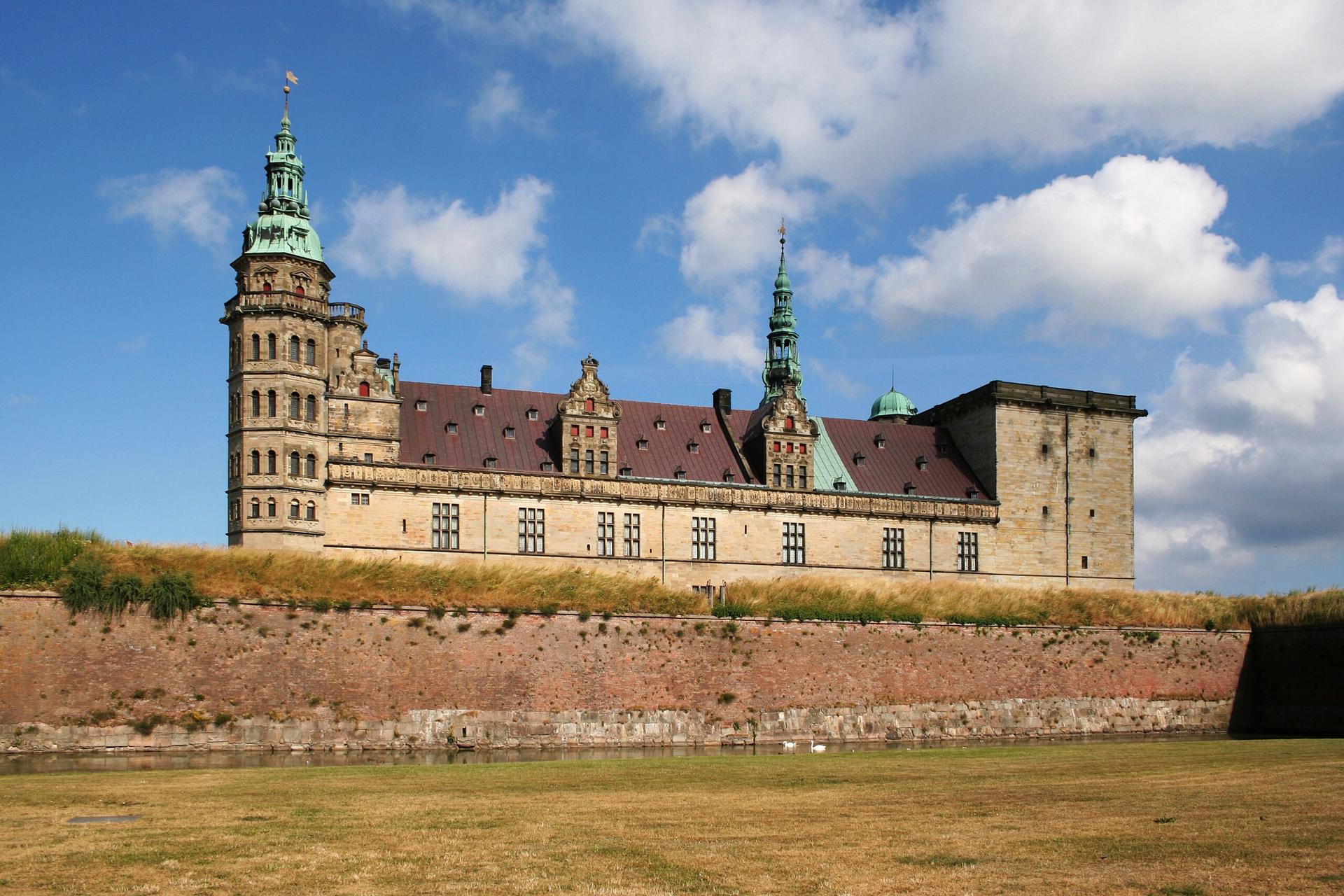
Looking beyond Inderhavnsbroen? Discover North Zealand for broader travel guides, local hot-spots, and regional highlights.
Explore North Zealand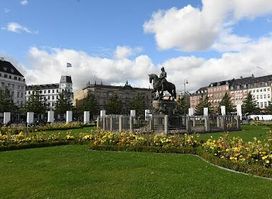
Copenhagen’s regal meeting place, where a 17th‑century royal square, theatre facades and leafy gardens frame everyday city life and seasonal markets.
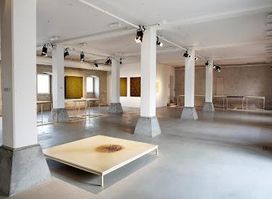
A historic Christianshavn warehouse transformed into Copenhagen’s vibrant gateway to the art, stories, and flavours of Greenland, Iceland, the Faroe Islands and Denmark.