
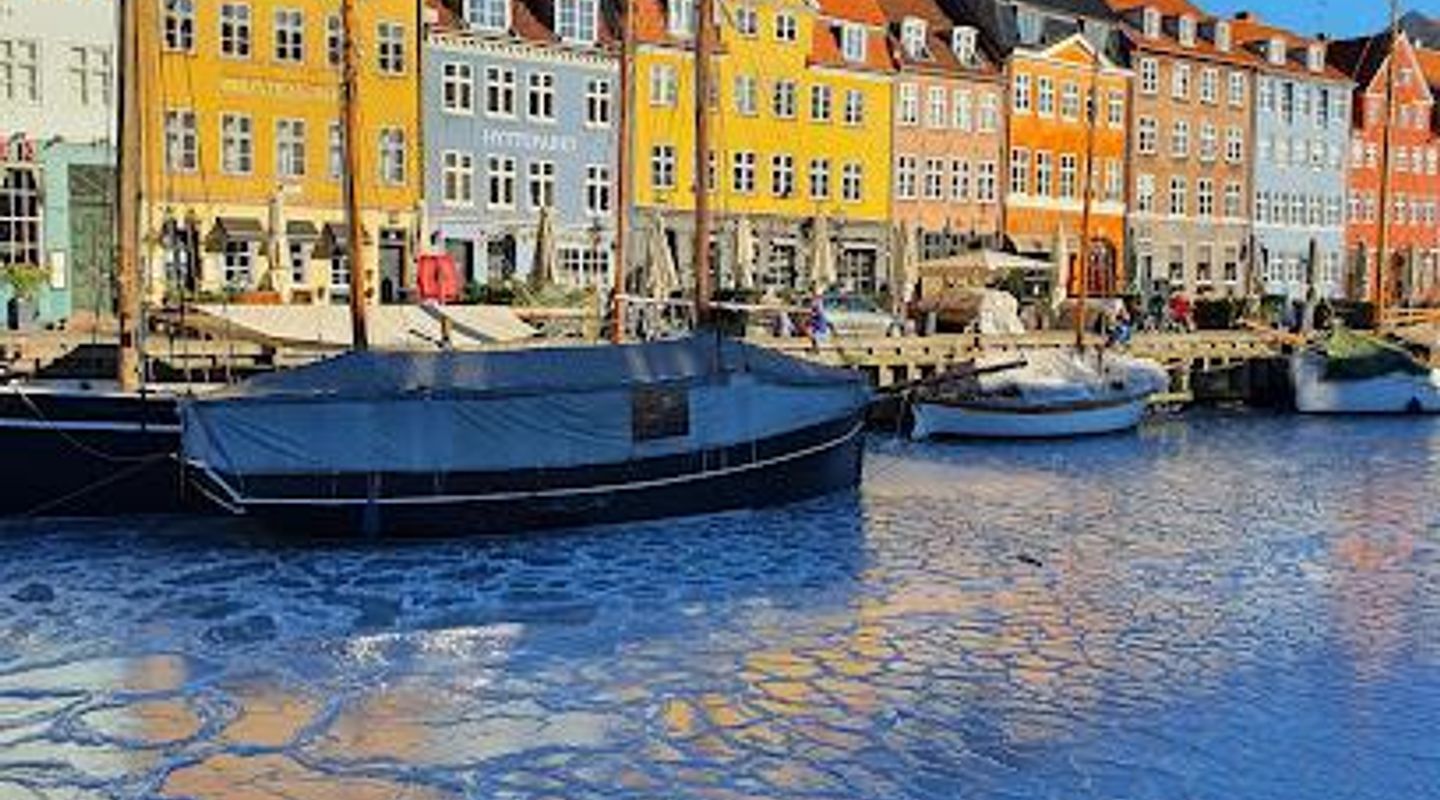
Nyhavn, North Zealand Travel Guide
Copenhagen’s most colourful waterfront, where 17th‑century townhouses, wooden ships and lively cafés bring the city’s maritime history to life along a narrow canal.
Nyhavn is Copenhagen’s iconic 17th‑century waterfront, a narrow canal framed by brightly painted townhouses, historic wooden ships and a ribbon of bustling cafés and restaurants. Once a rough‑and‑ready sailors’ port, it is now a lively promenade where you can linger over smørrebrød and a beer, join a canal tour, trace Hans Christian Andersen’s footsteps, or simply sit on the quayside and watch boats glide in and out of the harbour light.
A brief summary to Nyhavn
- Indre By, Indre By, DK
- Duration: 1 to 3 hours
- Free
-
 Outdoor
- Mobile reception: 5 out of 5

Know before you go
Hi, I'm Eve. Here are a few practical things to know before exploring Nyhavn.
- Visit early in the morning or around sunset to enjoy Nyhavn’s colours and reflections with fewer crowds and softer, more photogenic light.
- Budget‑conscious travellers can skip waterfront restaurant prices by grabbing takeaway snacks or coffee from nearby streets and sitting along the quay.
- Combine your visit with a canal tour departing from Nyhavn to see key Copenhagen landmarks from the water in about an hour.
- In winter, bring warm layers and gloves; the harbour breeze can feel significantly colder than inland streets, especially in the evening.
- Watch your step on cobbles and quayside edges, particularly in wet or icy weather, as surfaces can be slippery near the water.
Do you manage this location?
Take control to get all the benefits, like improved information, better appearance, and stronger visibility across AI-powered discovery. Learn more about listing your business on Evendo
Activate your presenceOther nearby places you may find interesting
The closest places of the same kind, if this one is not quite what you had in mind.


Explore Nyhavn on the Map
A handpicked selection of must-see spots near Nyhavn, mapped for you.
Unlock the Best of Nyhavn
Book tours with entry


Getting There
-
Metro from central Copenhagen
From central areas such as Nørreport or Copenhagen Central Station, take the M1 or M2 metro to Kongens Nytorv, which usually takes 3–8 minutes depending on your starting point. Trains run every few minutes throughout the day and tickets within the city zone typically cost around 20–25 DKK one way. From Kongens Nytorv it is an easy, mostly flat walk of just over 5 minutes through the historic centre to Nyhavn, suitable for most visitors including those with light mobility challenges.
-
City bus to the harbourfront
Several city bus routes serve the streets around Nyhavn from different neighbourhoods, with typical journey times of 10–20 minutes from places like Vesterbro or Østerbro depending on traffic. A standard bus ticket within the central zones costs roughly 20–25 DKK and can be used interchangeably with metro services. Buses stop on main roads near the harbour; from there expect a short, level walk on pavements and cobblestones to reach the canal itself.
-
Bicycle through the city centre
Copenhagen’s dedicated cycle lanes make reaching Nyhavn by bike straightforward from most inner‑city districts in about 10–20 minutes. You can use public bike‑share schemes or standard rentals, typically priced from 80–150 DKK per day, with hourly options available. Expect cobbled sections and busy junctions around the harbour, but cycle traffic is well organised and there are bike racks close to the canal where you can securely leave your bicycle.
-
Harbour boat or canal tour
If you are already near the inner harbour, you can arrive at or depart from Nyhavn on a canal tour or harbour boat, turning transport into a short cruise. Many classic canal tours last about 60 minutes and cost approximately 100–130 DKK per adult, with frequent departures in peak season and reduced schedules in winter. Boats are generally accessible via low steps, operate in most weather except severe wind or ice, and provide a scenic link between Nyhavn and other waterfront sights.
For the on-the-go comforts that matter to you
-
 Restrooms
-
 Drink Options
-
 Drinking Water
-
 Food Options
-
 Seating Areas
-
 Sheltered Areas
-
 Trash Bins
-
 Information Boards
-
 Visitor Center
Discover more about Nyhavn
From sailors’ haven to the city’s colourful calling card
Nyhavn, literally “New Harbour”, was carved out in the late 1600s as Copenhagen’s maritime front door. Dug by hand and lined with sturdy warehouses and townhouses, it once bustled with tall‑masted ships, cargo, taverns and hard‑drinking sailors. For centuries this was a working port and red‑light district, noisy and rough around the edges.Today, the same narrow canal has a very different face. The façades have been carefully restored and painted in bright yellows, reds, blues and greens that sparkle in any light, from pale Nordic sun to the glow of evening lamps. Historic wooden vessels moored along the quay recall Nyhavn’s seafaring past, while the former warehouses now hold restaurants, bars and small hotels that keep the waterfront buzzing from morning to late at night.Storybook houses and Hans Christian Andersen’s addresses
Nyhavn’s townhouses form one of Copenhagen’s most photographed scenes, a row of gabled roofs and pastel walls reflected in the canal. Many of them date back to the 17th and 18th centuries, built in brick and timber when merchants lived directly above their stores. Some façades are still marked with symbols hinting at past trades, like anchors and compasses.Among these buildings are several homes once occupied by Hans Christian Andersen, who moved frequently along the quay. At different times he lived at numbers that are now ordinary addresses, where he wrote and refined fairy tales that travelled far beyond Denmark. Standing here, with the colourful houses on one side and the rigging of old ships on the other, it is easy to imagine how the harbour’s mix of hardship and hope fed his imagination.Cafés, canal tours and life along the quay
Nyhavn is as much about atmosphere as it is about architecture. Restaurant terraces spill out along the north side, their tables packed close together under canopies and heat lamps. Here, smørrebrød piled with herring or shrimp, plates of seafood, and cold Danish beer are standard fare, accompanied in warmer months by jazz, clinking glasses and the murmur of languages from around the world.From the canal’s edge, classic low‑slung boats depart on tours that loop through Copenhagen’s inner harbour and canals. These cruises glide past royal palaces, the opera house and the famous Little Mermaid statue, but they start and end amid the bustle of Nyhavn’s quay. Between departures, the quayside itself becomes seating: many people choose to dangle their feet over the water with an ice cream or coffee in hand, turning the harbour into an open‑air living room.Seasonal moods from long Nordic evenings to winter lights
Nyhavn’s character shifts with the seasons. In summer, the canal is lined with outdoor tables and the light lingers late, giving the houses a golden sheen and filling the air with music from buskers and bar doors left ajar. Cyclists and pedestrians drift past in a steady flow, and boats slide silently through the still water.In the colder months the harbour slows but does not sleep. Lights strung along the façades and masts reflect in the dark canal, and in the run‑up to Christmas the quayside hosts stalls selling warm drinks, snacks and seasonal crafts. Wrapped in scarves, you can walk the length of the canal taking in the contrast between crisp air and the warm glow from restaurant windows, where candlelight and wooden interiors keep the hygge spirit alive.A compact hub between royal squares and the inner harbour
Part of Nyhavn’s appeal is its position right at the hinge of historic Copenhagen. At one end, the canal opens onto the broader inner harbour with views to modern landmarks; at the other, it runs towards a grand square with theatres and historic buildings. Yet the harbour itself remains surprisingly intimate in scale. The canal is narrow, the buildings are low, and the cobbled quays encourage strolling rather than rushing.This compactness makes Nyhavn easy to weave into a broader day in the city. It works equally well as a morning coffee stop, a midday base for a canal tour, or an evening setting for a lingering meal. Whether you pause briefly or stay for hours, the combination of water, colour and layered history makes this short stretch of harbour one of Copenhagen’s most defining scenes.












Your all‑in‑one travel companion app
Explore expert travel guides, compare and book tours, experiences, hotels, and more—all from the palm of your hand. Download now for seamless trip planning wherever your wanderlust takes you.


Explore More of North Zealand
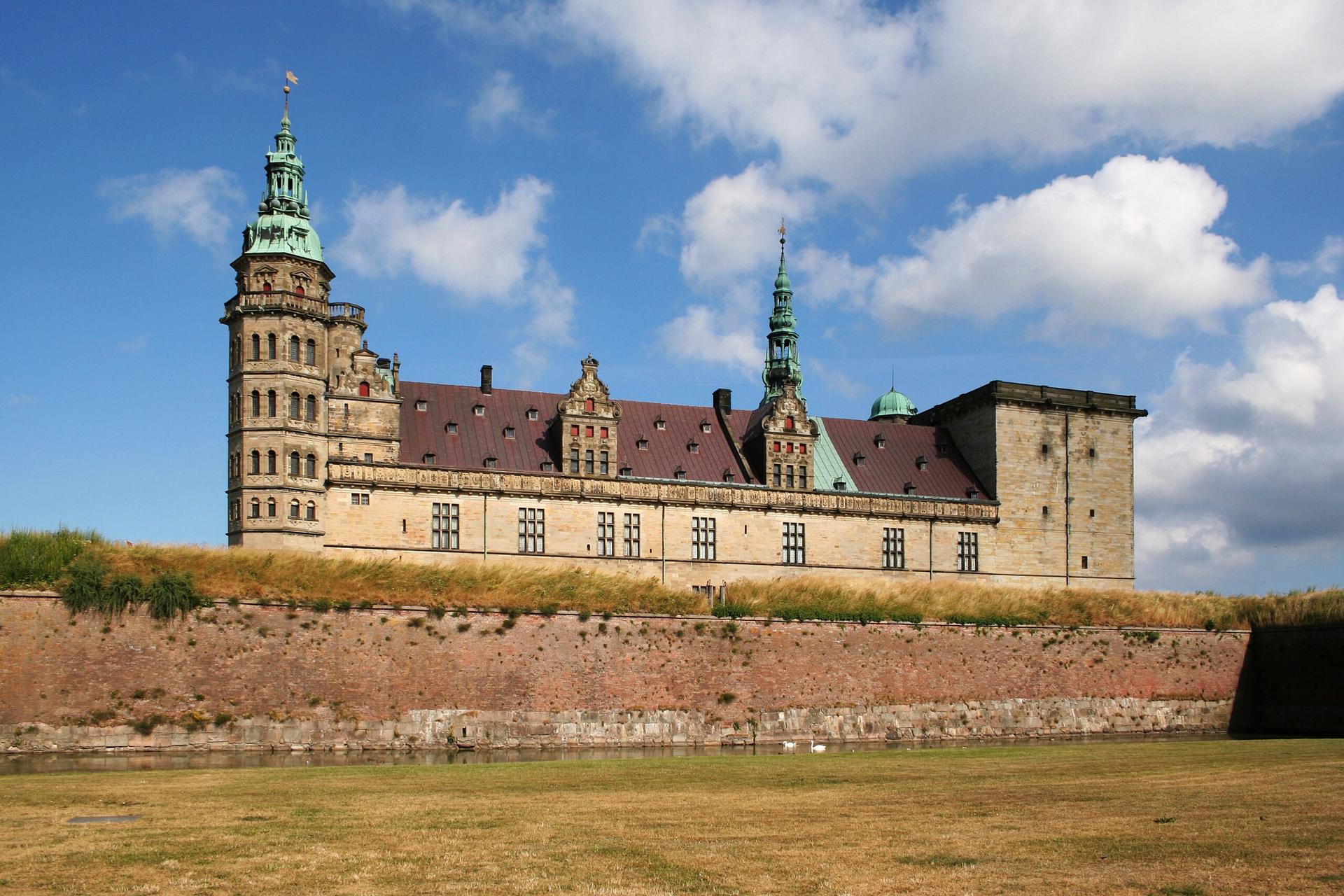
Looking beyond Nyhavn? Discover North Zealand for broader travel guides, local hot-spots, and regional highlights.
Explore North Zealand