St. Anne's Church, Køge Travel Guide
Free Guide: Elegant red-brick Catholic church on Amager, blending early 20th-century Art Nouveau architecture with a calm, light-filled interior and living parish life.


A brief summary of St. Anne's Church
Elegant red-brick Catholic church on Amager, blending early 20th-century Art Nouveau architecture with a calm, light-filled interior and living parish life.
St. Anne’s Church is a striking Catholic landmark in Copenhagen’s Amager district, known for its rich red-brick Art Nouveau architecture and serene, light-filled interior. Consecrated in the early 20th century and designed by architect Emil Jørgensen, it serves as the main Catholic church on Amager. Inside, soft daylight, carved details and devotional artwork create a contemplative atmosphere, offering a peaceful counterpoint to the city’s busy streets just outside.
On-site amenities
 Seating areas
 Sheltered areas
 Trash bins
 Information boards
- Address
- Dronning Elisabeths Allé 3, 2300 København
- Website
Getting there
Metro and short walk
City bus
Bicycle
Taxi or ride-hail
Discover more about St. Anne's Church
A red-brick landmark on Dronning Elisabeths Allé
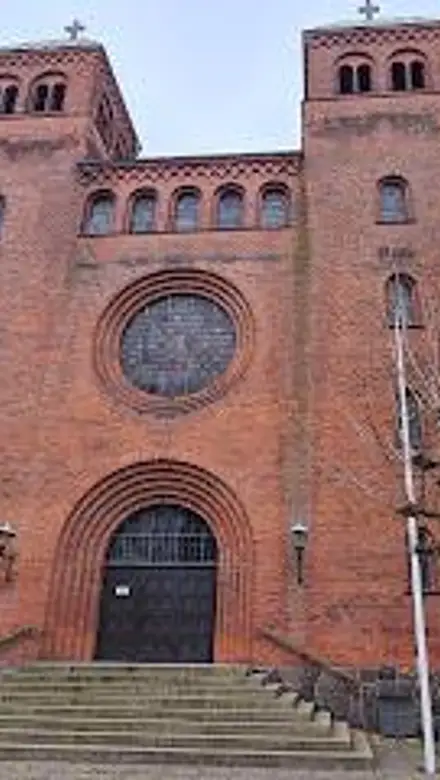
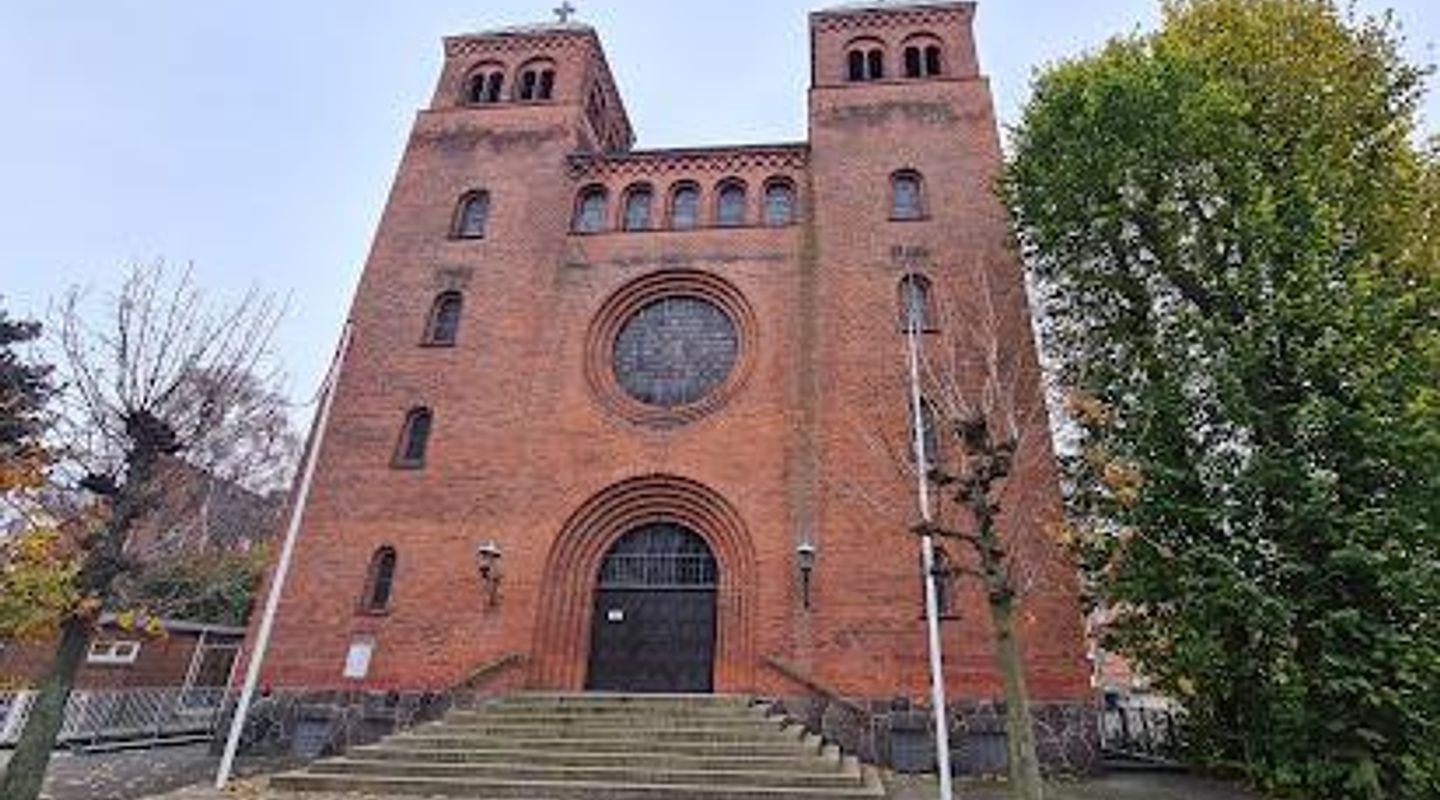
St. Anne’s Church rises above the residential streets of Amager with a tall, square tower, steep roofs and deep red brickwork that immediately set it apart from its surroundings. Built in the early 1900s as the Catholic parish church for this growing part of Copenhagen, it anchors a modest forecourt and small green spaces that soften its solid silhouette. The façade combines vertical emphasis with rounded details and decorative brick patterns that reward a closer look.From a distance, the tower’s tiled spire and narrow belfry openings lead the eye up into the sky, while the lower walls feel almost fortress-like. Yet there is nothing austere about the entrance. Arched portals, stone surrounds and subtle ornamentation signal the more intimate space that awaits inside. This careful balance between mass and detail is part of what makes the church so visually compelling.
Art Nouveau spirit and Emil Jørgensen’s design
St. Anne’s Church is one of Copenhagen’s notable examples of early 20th-century Art Nouveau–inspired church design. Architect Emil Jørgensen, known for his sensitive handling of brick and inventive decorative touches, created a building that feels both rooted in tradition and quietly experimental. The exterior’s flowing lines, gentle curves and stylised motifs nod to the organic forms typical of the era.Step through the doors and the style becomes more apparent. Slender columns, soft arches and restrained ornament guide your gaze along the nave towards the chancel. Decorative details never overwhelm the architecture; instead, they appear in carved capitals, railings and discrete reliefs that catch the light at different times of day. The building’s proportions, sightlines and surfaces are all calibrated to support prayer and reflection rather than spectacle.
A living Catholic parish on Amager
The church’s story begins in the late 19th century, when Copenhagen’s Catholic community on Amager needed a permanent spiritual home. What started as simple mission facilities grew into a full parish complex, with the present church consecrated in the early 1910s and dedicated to Saint Anne, mother of the Virgin Mary. Over time, it has become a focal point for Catholic life on the island, serving a diverse congregation with roots in Denmark and far beyond.Today, mass schedules often include services in multiple languages, reflecting the international character of modern Copenhagen. Beyond regular worship, the parish hosts catechism classes, choirs, community gatherings and seasonal celebrations tied to the liturgical calendar. Even when no services are underway, you sense that this is a building shaped by daily use rather than preserved as a static monument.
Interior calm, stained glass and devotional art
Inside, the church feels surprisingly bright and airy. Rows of wooden pews are aligned on a stone or tiled floor that reinforces the building’s cool, quiet atmosphere. The high, gently vaulted ceiling and pale wall surfaces allow daylight to wash down from clerestory windows, softening the red of the brick and the darker tones of the furnishings.The stained-glass windows provide much of the colour. Many depict scenes from the life of Christ and the Virgin Mary, along with symbolic motifs connected to Saint Anne and the wider Catholic tradition. Altars and statues tucked into side chapels offer additional points of focus for private devotion, from candles flickering at Marian shrines to more contemporary religious artworks introduced over the past century.
Experiencing the church as a visitor
Visitors typically experience St. Anne’s on two levels: as a work of architecture and as a functioning sacred space. You might begin by circling the exterior, noting the buttresses, rooflines and tower from different angles, before stepping inside to sit quietly in a pew and let the ambience sink in. The acoustics are warm and resonant; even simple organ practice can fill the nave with sound.Respectful clothing and discreet behaviour are expected, especially during mass. Photography is usually welcomed outside service times but is best kept low-key. There is no formal museum display, so discovering the church is a matter of looking closely: reading inscriptions, tracing patterns in the brickwork, and noticing how light gradually shifts from morning to afternoon. For many, the greatest pleasure here is simply finding a pocket of stillness in an otherwise energetic city.
Amager context and nearby quiet corners
St. Anne’s stands in a mainly residential corner of Amager, surrounded by apartment blocks, local shops and small parks. This everyday setting heightens the sense of contrast when you cross the threshold from the street into the nave. The church’s modest scale means it fits comfortably into the neighbourhood, acting as a wayfinding point and visual anchor without dominating the skyline.Combined with nearby green spaces and the island’s mix of canals, bike routes and modern developments, a visit here can be easily woven into a broader exploration of Amager. Whether you stay only long enough to light a candle or linger for a full service, St. Anne’s offers a quiet, human-scale counterpoint to Copenhagen’s larger and more formal historic churches.
Evendo Review Centre
 Google
Guest reviews
Best time to go
Quietest: Jan, Feb & Mar · before 7am or from 10pm
Busy times are Evendo estimates for a typical year, to help you plan. Actual crowds vary with events, school holidays and the weather.
Explore St. Anne's Church on the map
A handpicked selection of must-see spots near St. Anne's Church, mapped for you.
Get your free copy of our complete guide to St. Anne's Church, delivered straight to you.
Everything on this page, from opening hours and how to get there to Eve’s tips and the best time to go, in one PDF you can read offline, print or share.
Already have an account? Sign in
Your St. Anne's Church guide is ready.
We'll send it to · Not you? Sign out

Getting your guide ready…
We are putting together a fresh copy of the St. Anne's Church guide. This can take up to a minute.
This can take a few moments. If your browser asks, choose Allow so the download can start. You'll find the guide in your Downloads folder.
Nothing happened? Download it again
Sorry, the guide is taking longer than usual. Please try again in a minute, or get it by email instead.
Unlock the best of St. Anne's Church
Skip-the-line tickets, guided tours with entry, and walking tours of the area, booked in a few clicks.

Other nearby places you may find interesting
The closest places of the same kind, if this one is not quite what you had in mind.
-
-
-
-
-


Swipe for more places
More to explore near St. Anne's Church

 Best experiences near St. Anne's Church
 Best hotels near St. Anne's Church
 Best landmarks near St. Anne's Church
 Best attractions near St. Anne's Church
 Best shops near St. Anne's Church
 Best restaurants near St. Anne's Church
 Best bars near St. Anne's Church
Do you manage this location?
Take control to get all the benefits, like improved information, better appearance, and stronger visibility across AI-powered discovery.
Explore more
Explore more of Køge
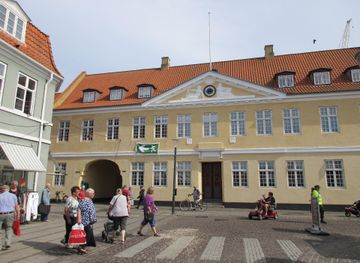
Explore Køge, Denmark's coastal gem, with its medieval charm, beautiful marina, and close proximity to the stunning Stevns Klint UNESCO World Heritage site.
Explore Køge
Explore more of Denmark
Discover Denmark: A perfect blend of history, modern design, and the cozy concept of hygge. Explore vibrant cities, serene landscapes, and world-class cuisine.
Explore Denmark