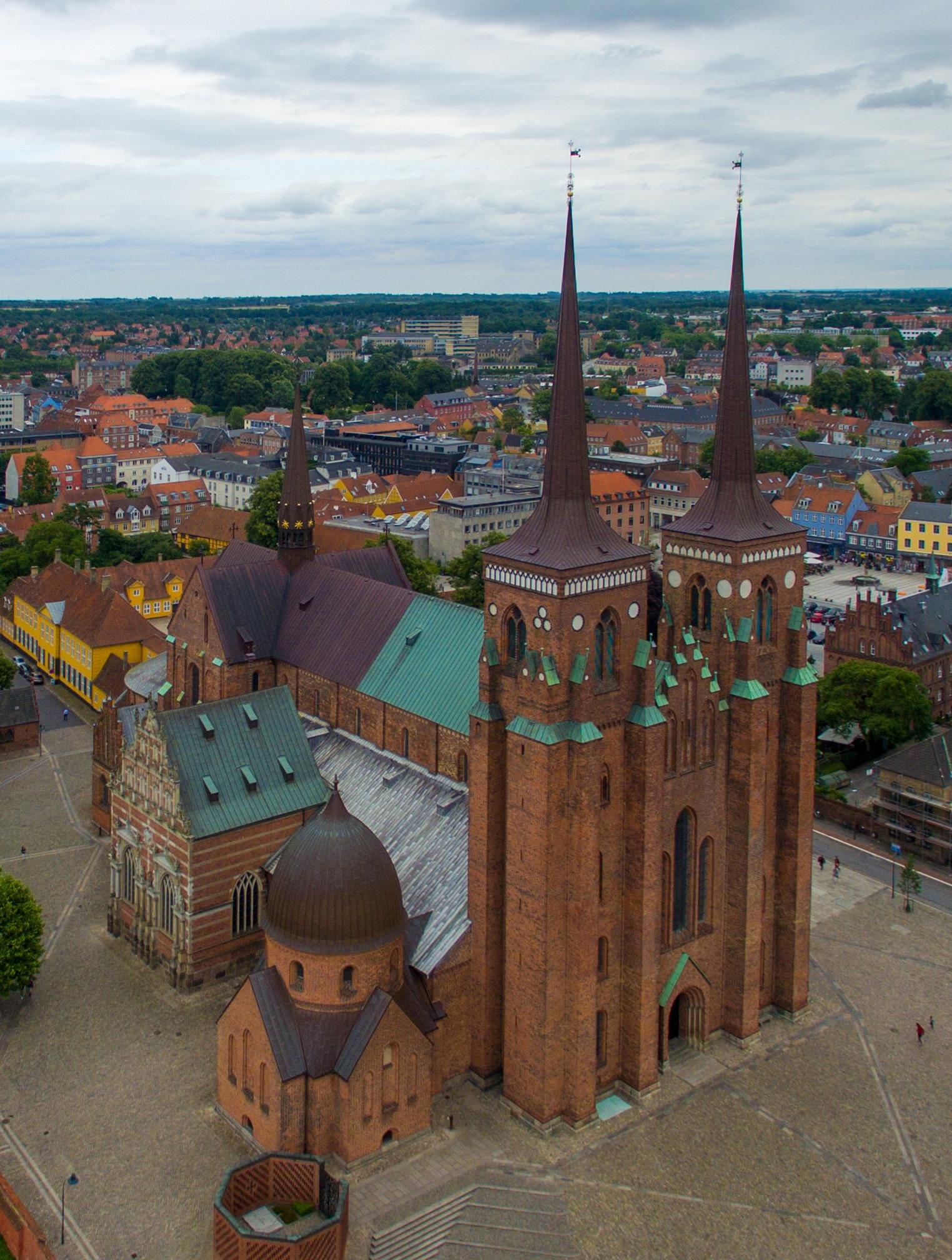
DR Koncerthuset, Copenhagen
Copenhagen’s bold blue concert house, where world-class acoustics, striking Jean Nouvel architecture and Denmark’s national ensembles meet under one dramatic roof.
A modern icon in Copenhagen’s cultural landscape
DR Koncerthuset rises like a sculptural blue cube in Ørestad, instantly recognisable amid the clean lines of this newer part of Copenhagen. Conceived as the home of Denmark’s national broadcasting ensembles, it functions both as a working media hub and as one of the city’s foremost public concert venues. The location by the metro and canals underlines its role as a contemporary gathering point rather than a secluded cultural temple. Inside, the vast foyer feels almost like an indoor plaza. Concrete walls, reflective metal floors and generous glass surfaces play with light and shadow, while the building’s geometric forms frame views towards the city and sky. This is a place made for arrival: you step into an atmosphere where everyday life gives way to performance and anticipation.Architecture shaped around sound
The building was designed by French architect Jean Nouvel, known for dramatic, concept-driven designs that respond to light and context. Here he worked closely with Japanese acoustician Yasuhisa Toyota to create four very different halls, each tuned to its musical purpose. The result is a house where acoustics guided the architecture at every turn. The main Concert Hall, seating around 1,800 people in an arena configuration, wraps the audience around the stage so listeners sit not only in front of but also beside and behind the performers. Warm wood, sculpted balconies and adjustable acoustic elements create a sense of intimate immersion despite the hall’s size. Smaller studios range from a cool, monochrome space ideal for experimental projects to a compact red hall suited to jazz, chamber music or talks.Home of orchestras, choirs and broadcast events
DR Koncerthuset is the heart of Denmark’s national music ensembles. The DR Symfoniorkestret, vocal ensembles and big band regularly perform here, often in productions tailored to the hall’s sophisticated lighting, staging and recording facilities. Classical symphonies, film concerts, choral works and crossover collaborations all find a home under the same roof. Beyond the regular concert season, the complex frequently hosts large-scale televised events and state occasions. Its stages have framed everything from royal jubilees to international ceremonies, underscoring the venue’s importance in Denmark’s public life. For visitors, that means the same hall that hosts a symphony on Friday might transform into the setting for a global TV broadcast a few days later.Experiencing the building beyond the performance
A visit here is about more than the music. The circulation routes, balconies and open foyer levels invite you to wander, pause and look up at the dramatic ceiling structures or out through the glass to Ørestad’s skyline. Before and after performances, the house comes alive with guests queuing at bars, orchestral players slipping between backstage and stage, and technicians fine-tuning light and sound. Guided tours, when offered, reveal how much of the building is designed for flexibility and broadcast. Hidden behind the elegant public spaces lie control rooms, rehearsal areas and service corridors, all supporting the seamless experience in the auditorium. Even without a guide, simply moving between levels, peering into different foyers and noting the shift from concrete to wood to fabric gives a sense of how carefully the visitor journey has been choreographed.Inclusive design and practical comforts
The venue places strong emphasis on accessibility and comfort. Multiple wheelchair spaces are integrated into the seating layouts of the main hall and studios, avoiding a sense of separation from the rest of the audience. Accessible parking bays are located within a short distance of the entrance, and tactile guidance from the nearby metro station supports visitors with visual impairments. Practical facilities such as restrooms on several levels, staffed information points on event days and clear signage help orient first-time visitors in what is otherwise a large and complex building. Combined with reliable public transport links and dedicated parking managed in partnership with a professional operator, these elements make DR Koncerthuset feel approachable even if you are new to classical music or major venues.A year-round hub for culture in Ørestad
Although many people associate the concert hall with evening symphonic performances, the building supports a broad programme throughout the year. Family concerts, film screenings with live orchestra, choral projects and contemporary music share the calendar with guest appearances by international artists. Educational activities and special formats bring new audiences into contact with the space and its possibilities. In the wider context of Ørestad, the concert house acts as both landmark and anchor. Its illuminated exterior stands out against the flat skyline at night, while by day its bold forms contrast with neighbouring offices and campuses. Whether you come for a single performance, a guided exploration or simply to see one of Copenhagen’s most ambitious pieces of modern architecture, DR Koncerthuset offers a layered experience where design, sound and civic life converge.Local tips
- Arrive at least 30–40 minutes before your concert to explore the multi-level foyer, orient yourself between halls and avoid queues at the bar and cloakroom.
- If you use a wheelchair or need companion seating, contact the ticket office in advance to secure one of the designated spaces in your preferred hall.
- Use the nearby metro to avoid prepaid parking; trains run frequently and make late-evening departures simple after concerts finish.
- Check the programme for family-oriented or film-with-orchestra events if you are visiting with children or are new to classical music.
A brief summary to DR Koncerthuset
- Ørestads Blvd. 13, Copenhagen, Amager Vest, 2300, DK
- +4535206262
- Visit website
Getting There
-
Metro
From central Copenhagen, take metro line M1 in the direction of Vestamager and ride to DR Byen station, which typically takes 10–15 minutes from major hubs such as Kongens Nytorv. Trains usually run every few minutes throughout the day and night. A standard two-zone ticket costs roughly 20–30 DKK one way, and the walk from DR Byen station to the concert house entrance is short and straightforward on paved paths, suitable for most mobility levels.
-
City bus
Several city bus lines serve the area around DR Koncerthuset from different parts of Copenhagen, with typical journey times of 15–30 minutes depending on traffic and starting point. Standard bus tickets fall in the same 20–30 DKK range for common city journeys. Buses stop within a few minutes’ walk of the venue on level ground, but service frequency can drop in late evenings and on weekends, so checking the timetable in advance is advisable after night performances.
-
Car or taxi
If you arrive by car, allow 15–25 minutes from inner Copenhagen under normal traffic conditions. Parking by the metro is managed by a private operator on a prepaid basis, with typical evening rates in the range of 15–30 DKK per hour. Payment is usually made at machines or via parking apps, and spaces can fill up around popular events. Taxis from the city centre generally cost 120–220 DKK one way depending on distance and traffic, and can drop you close to the main entrance, which is convenient for those with limited mobility.
-
Bicycle
Copenhagen’s network of cycle paths makes it realistic to bike to DR Koncerthuset from many central districts in about 20–30 minutes. Routes are generally flat and separated from car traffic for most of the way, but can feel exposed in strong wind or heavy rain. There are bicycle stands near the venue; bringing lights and weather-appropriate clothing is important, especially for evening concerts or winter visits.