Stork Fountain, Koge Travel Guide
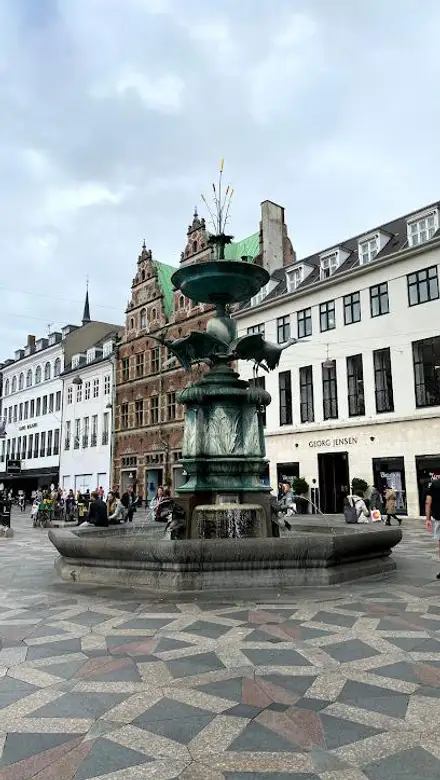
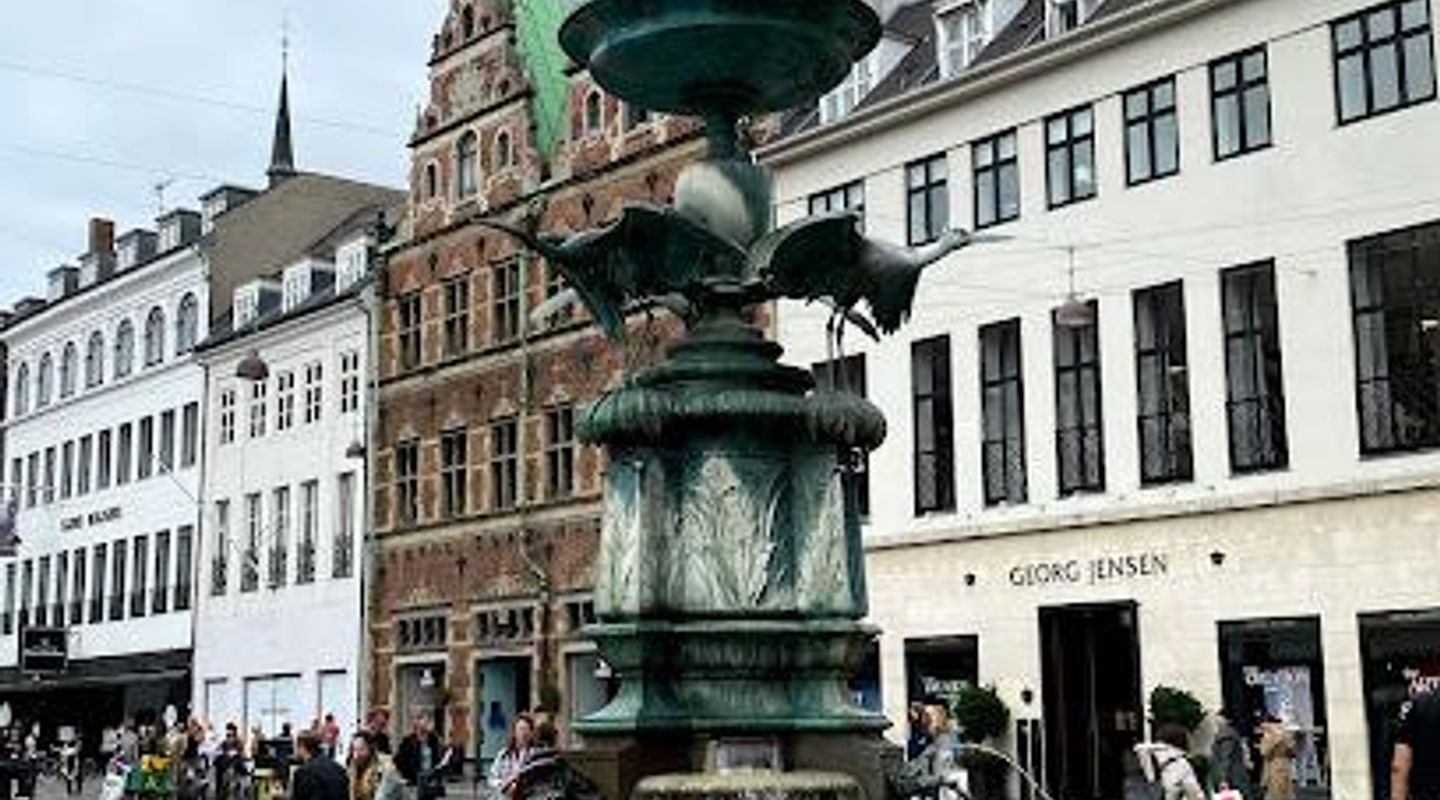
An elegant bronze fountain of three storks poised for flight, Stork Fountain anchors historic Amagertorv as Copenhagen’s classic meeting point on bustling Strøget.
Set at the heart of Copenhagen’s Amagertorv square on Strøget, the Stork Fountain is a delicate bronze landmark where three storks appear ready to take flight above a basin ringed with water-spouting frogs. Inaugurated in 1894 as a gift for the silver wedding of Crown Prince Frederik (later Frederik VIII) and Crown Princess Louise, it has grown from civic ornament into a classic meeting point and open-air living room framed by elegant historic façades and busy shopping streets.
A brief summary to Stork Fountain
- Amagertorv 6, Copenhagen, Indre By, 1160, DK
- Click to display
- Click to display
- Duration: 0.25 to 1.5 hours
- Free
-
 Outdoor
- Mobile reception: 5 out of 5

Know before you go
Hi, I'm Eve. Here are a few practical things to know before exploring Stork Fountain.
- Visit in the early morning or late evening if you want clearer photos of the fountain without dense pedestrian traffic along Strøget.
- Take a moment to walk all around the basin—the best details are the frogs and the fine feather work on the storks, best seen up close.
- Combine a stop at the fountain with browsing nearby Danish design and porcelain stores to appreciate how historic and modern aesthetics meet here.
- If you visit around midwife graduation periods in late spring or early summer, watch for the traditional celebratory dances around the fountain.
Do you manage this location?
Take control to get all the benefits, like improved information, better appearance, and stronger visibility across AI-powered discovery. Learn more about listing your business on Evendo
Activate your presenceOther nearby places you may find interesting
The closest places of the same kind, if this one is not quite what you had in mind.
Explore Stork Fountain on the Map
A handpicked selection of must-see spots near Stork Fountain, mapped for you.
Unlock the Best of Stork Fountain
Buy tickets
-
No tickets available
Book tours with entry


Getting There
-
Metro from central stations
From Copenhagen Central Station, take the M3 or M4 metro one stop to Gammel Strand or two stops to Kongens Nytorv; both journeys take about 3–5 minutes, with trains running every few minutes. A single zone ticket typically costs around 20–25 DKK. From either station, expect a 5–10 minute walk along level pedestrian streets to reach Amagertorv and the Stork Fountain. The metro and the main walking approaches are step‑free, though cobblestones can be uneven for wheelchairs and strollers.
-
Bus within the inner city
Several city bus routes stop within a 5–10 minute walk of Amagertorv, near Rådhuspladsen or along Holmens Kanal. Inner‑city bus journeys usually take 5–15 minutes depending on traffic and cost roughly 20–25 DKK for a single ticket. Services operate frequently throughout the day, but note that the streets around Strøget are pedestrianised, so you will always finish on foot over cobbled surfaces.
-
Bicycle from nearby districts
From nearby central districts such as Vesterbro, Nørrebro or Østerbro, cycling to the Stork Fountain generally takes 10–20 minutes on Copenhagen’s extensive bike lanes. City bikes and shared bicycles can be rented for roughly 15–30 DKK per short ride or via day passes. Bicycles are not allowed on Strøget itself, so you will need to dismount and walk the final few hundred metres. The area is flat, but be prepared to wheel your bike across busy pedestrian flows.
-
Walking within the old town
If you are already staying in the inner city, expect a pleasant 5–20 minute walk to Amagertorv depending on your starting point. Routes typically follow car‑free, level streets but include stretches of historic cobblestones that can be uneven underfoot. The area is well‑lit and lively for most of the day and evening, and there is no admission fee or time restriction for viewing the fountain.
For the on-the-go comforts that matter to you
-
 Restrooms
-
 Drink Options
-
 Drinking Water
-
 Food Options
-
 Seating Areas
-
 Trash Bins
-
 Information Boards
Discover more about Stork Fountain
A graceful bronze centerpiece on Copenhagen’s main promenade
The Stork Fountain stands at the very heart of Amagertorv, the elegant square that forms a natural pause along Strøget, Copenhagen’s celebrated pedestrian shopping street. Here the narrow paving suddenly opens into a broad cobbled space, and in the middle of it all three bronze storks stretch their wings, poised as if they are about to lift into the Danish sky. At their feet, a circle of frogs spits thin arcs of water into the basin, adding a soft splash to the hum of voices and footsteps around you.Designed as a decorative focal point for the square rather than a grand monument, the fountain is modest in scale yet surprisingly intricate up close. The birds’ feathers are carefully textured, their long legs delicately balanced, while the darkened bronze contrasts with the pale stone paving and colourful gabled roofs that frame the square. Whether you encounter it in bright morning light or under the glow of shop windows at dusk, it lends the square a quietly theatrical air.Royal gift and symbol of a changing city
The fountain was inaugurated in 1894 as a tribute to the silver wedding anniversary of Crown Prince Frederik, who would later become King Frederik VIII, and Crown Princess Louise. It emerged from a design competition organised by a civic beautification society keen to add artful details to the rapidly modernising city. The winning design, created by architect Edvard Petersen and sculptor Vilhelm Bissen, captured the judges’ imagination with its sense of graceful motion and the use of storks, long associated in Europe with family life, fidelity and good fortune.Amagertorv itself has deep roots as a trading place, once a bustling market where farmers from the nearby island of Amager brought produce to sell in town. By the late 19th century, Copenhagen was transforming into a modern capital, and the new fountain signalled both civic pride and a desire to soften the urban landscape with decorative public art. Over time, it has become as much a symbol of everyday city life as of royal celebration.Traditions, midwives and local rituals
One of the fountain’s most charming associations is a tradition that began in 1950: newly graduated midwives celebrate by dancing around it. On graduation days, groups in white uniforms may be seen circling the basin, singing, laughing and posing for photographs. The choice of the stork—long linked in popular imagination with the arrival of babies—makes the ritual especially fitting and anchors the sculpture in the city’s living social fabric.Stories and pranks have also formed part of the fountain’s history, from coloured water dye to playful decorations during festivals. While such episodes come and go, they reinforce the fountain’s role as a familiar backdrop to local life, woven into student rituals, street performances and seasonal celebrations that unfold in the square.Amagertorv’s architecture and urban stage
Around the fountain, Amagertorv is lined with some of Copenhagen’s most handsome façades, including richly ornamented townhouses and flagship design stores. Historic buildings such as Højbrohus, along with the premises of renowned Danish brands, create an almost theatrical wall around the open space. Many of these structures were rebuilt or reshaped after catastrophic fires in the 18th century, and they now showcase a mix of historicist detail and restrained Nordic elegance.Because Amagertorv sits roughly midway along Strøget, the fountain naturally acts as a meeting point. People agree to rendezvous “by the storks” before disappearing into nearby boutiques or heading onwards to other landmarks. Street musicians often set up nearby, their music mingling with the sound of the water. In winter, festive decorations thread overhead; in summer, the square fills with outdoor tables and relaxed clusters of people lingering in the long northern light.Experiencing the fountain in different moods
The Stork Fountain rewards more than a quick glance. Early in the day you might find the square gently waking, with delivery bicycles rattling over the stones and a few commuters cutting across the empty space. By midday, the area is at its liveliest, the fountain surrounded by shoppers, guided groups and friends sharing a coffee perched on the low rim. After dark, reflected shopfront lights ripple in the basin, and the bronze figures take on a more dramatic silhouette against the night.Because it is free and always accessible, the fountain invites repeated encounters at different times of year. On a crisp winter afternoon you may see the spray catching in the cold air; in spring and summer, the water offers a momentary coolness on warm days. Whether you simply pass through or pause to study the sculpture details, the Stork Fountain offers a small but distinctive glimpse into Copenhagen’s blend of history, design and everyday life.












Your all‑in‑one travel companion app
Explore expert travel guides, compare and book tours, experiences, hotels, and more—all from the palm of your hand. Download now for seamless trip planning wherever your wanderlust takes you.


Explore More of Koge
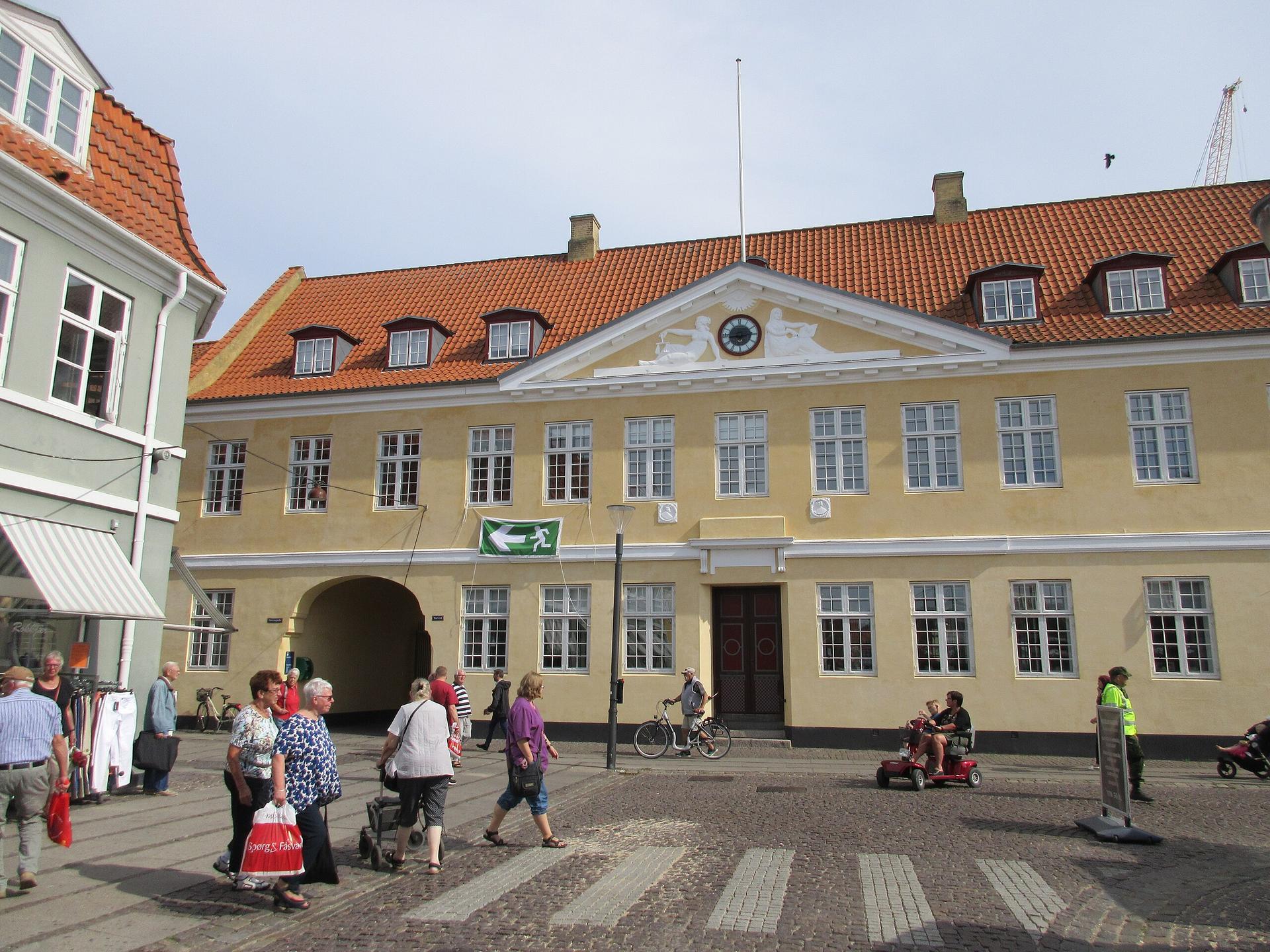
Looking beyond Stork Fountain? Discover Koge for broader travel guides, local hot-spots, and regional highlights.
Explore Koge