ZinkGlobal by Kim Michael, Koge Travel Guide
A three‑meter scrap‑metal thinker on Copenhagen’s harborfront, ZinkGlobal fuses industrial leftovers and big ideas into one striking, waterfront sculpture.
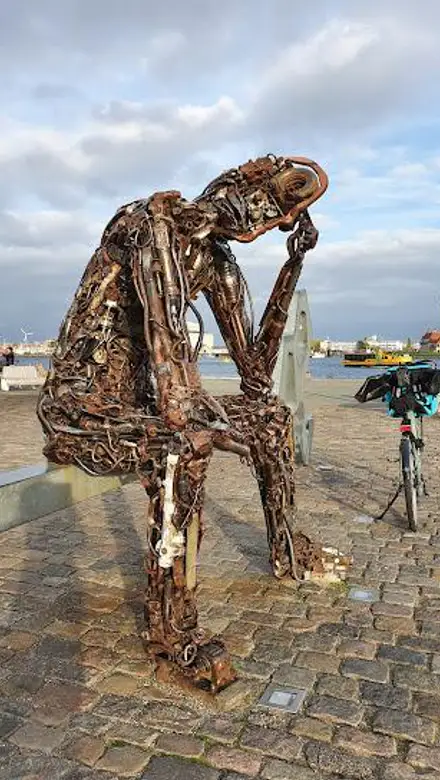
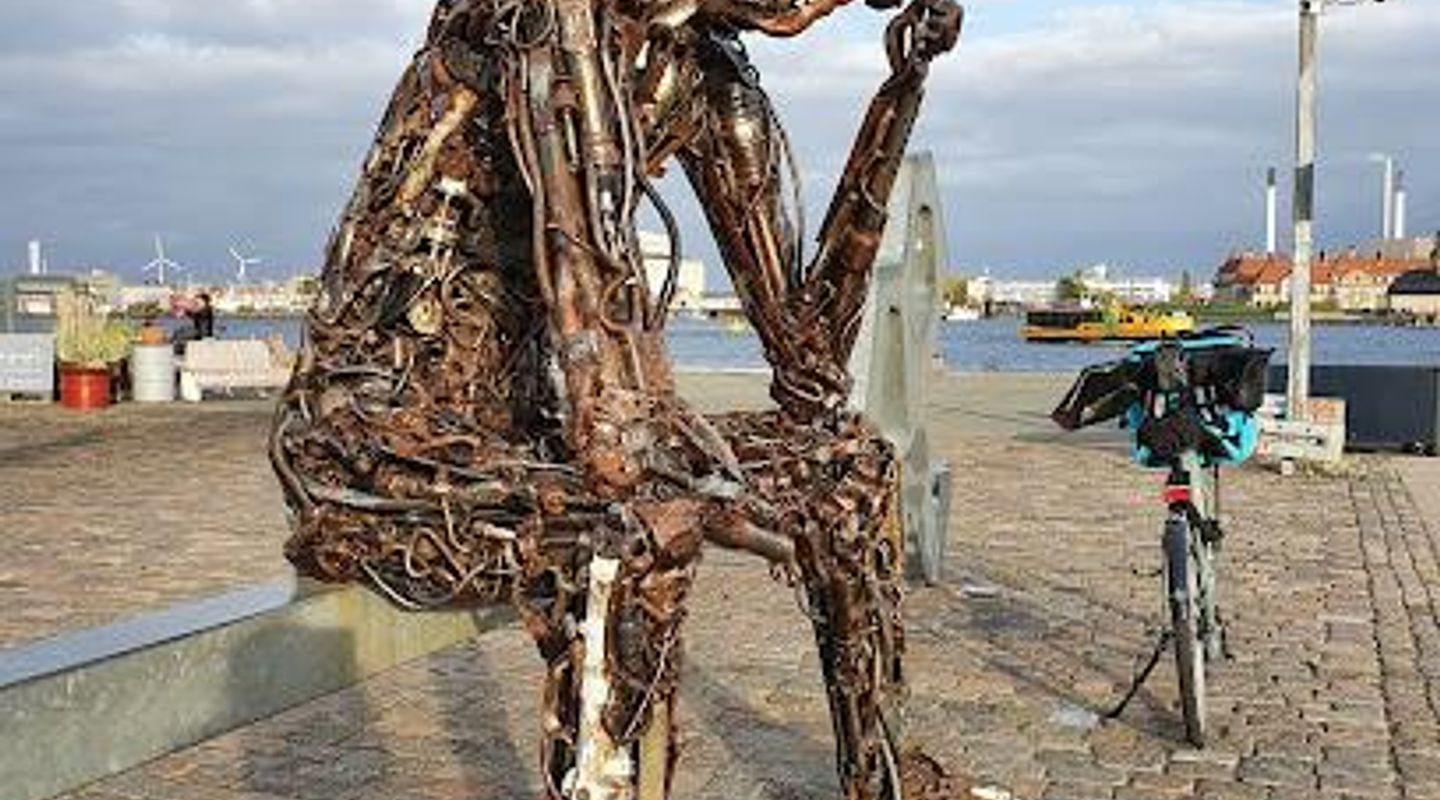
Perched on Copenhagen’s Nordre Toldbod waterfront, **ZinkGlobal** is a striking 3‑meter scrap‑metal figure by Danish artist Kim “The Zinker” Michael. Assembled from old machine and car parts, the contemplative humanoid sits on a giant key, symbolising the “key to the future” and nodding to Rodin’s The Thinker. Since its 2012 debut, this raw, industrial sculpture has sparked debate amid the elegant harbor architecture, becoming a quirky urban landmark, photo stop, and informal meeting point just a short stroll from the Little Mermaid.
A brief summary to ZinkGlobal by Kim Michael
- Nordre Toldbod 12, Copenhagen, Indre By, 1259, DK
- Click to display
- Duration: 0.25 to 1 hours
- Free
-
 Outdoor
- Mobile reception: 5 out of 5

Know before you go
Hi, I'm Eve. Here are a few practical things to know before exploring ZinkGlobal by Kim Michael.
- Plan your visit for early morning or late evening to enjoy softer light on the metal surface and fewer people in your photos.
- Walk a slow circle around the sculpture to spot familiar car and machine parts that have been reimagined into muscles and joints.
- Combine a brief stop here with a longer harborfront stroll taking in nearby monuments and waterfront viewpoints.
- Dress for changeable harbor weather; wind and drizzle can make the exposed quayside feel colder than the rest of the city.
- If you enjoy photography, experiment with low angles that frame the sculpture against the sky or with boats passing behind it.
Do you manage this location?
Take control to get all the benefits, like improved information, better appearance, and stronger visibility across AI-powered discovery. Learn more about listing your business on Evendo
Activate your presenceOther nearby places you may find interesting
The closest places of the same kind, if this one is not quite what you had in mind.
Explore ZinkGlobal by Kim Michael on the Map
A handpicked selection of must-see spots near ZinkGlobal by Kim Michael, mapped for you.
Unlock the Best of ZinkGlobal by Kim Michael
Buy tickets
-
No tickets available
Book tours with entry

Book tours without entry
-
No tours available
Getting There
-
Metro and walking from central Copenhagen
From central Copenhagen, take the M3 or M4 metro line to Marmorkirken Station, a frequent high‑capacity service with trains roughly every 3–6 minutes during the day. The ride from major transfer hubs in the city center usually takes 3–6 minutes, and a standard adult single ticket within the central zones generally costs around 20–30 DKK. From Marmorkirken, allow about 10–15 minutes on foot along mostly flat sidewalks and harbor promenades; the route is suitable for most visitors but can feel exposed in windy or wet weather.
-
Harbor bus (boat) and short walk
Copenhagen’s harbor buses operate like floating city buses along the inner harbor. Services typically run every 15–30 minutes during the day, with slightly reduced frequency in the evening and on some winter days. A single journey normally costs the same as a regular city bus ticket, around 20–30 DKK, and tickets are valid across buses, metro, and harbor boats within the same zones. Depending on your starting point along the waterfront, travel time ranges from about 10 to 25 minutes. Disembark at a stop near Nordre Toldbod and expect a 5–10 minute level walk on paved quayside surfaces; be prepared for strong wind and colder temperatures than inland.
-
Cycling along the harborfront
Copenhagen’s extensive cycle network makes reaching Nordre Toldbod by bike straightforward from most central districts. Riding time from the city center is typically 10–20 minutes at a moderate pace, almost entirely on dedicated cycle lanes or shared harborfront paths. Visitors without a bike can use common city bike schemes or standard rentals, which often cost in the range of 75–150 DKK per day depending on type and season. Surfaces are mostly flat, but be aware of gusty winds along the open water and increased traffic during weekday rush hours. Bicycle parking is informal along nearby railings and bike stands, and the approach is generally manageable for casual cyclists.
For the on-the-go comforts that matter to you
-
 Trash Bins
-
 Seating Areas
-
 Information Boards
Discover more about ZinkGlobal by Kim Michael
A contemplative figure on Copenhagen’s working waterfront
ZinkGlobal sits on the edge of Copenhagen’s inner harbor at Nordre Toldbod, where old quays, ferry terminals, and promenades meet busy shipping lanes. Here, against a backdrop of water, passing boats, and monumental harbor buildings, the three‑meter metal figure perches on a massive key, chin resting on its hand in a pose that immediately recalls Rodin’s The Thinker. Instead of smooth bronze, though, every limb is a lattice of gears, axles, pipes, and welded scraps, catching the light in an intricate patchwork of textures.From a distance, the silhouette looks almost classical; up close, it becomes a tangle of recognizable machine parts, hinting at engines, industry, and urban infrastructure. The setting is deliberately open: no railing, no high plinth, just a low base at promenade level. That makes the sculpture feel approachable, part of everyday harbor life, rather than an untouchable monument.From scrap heap to symbol of a technological age
Created by Danish artist Kim Michael, who also works under the name “The Zinker,” the sculpture was completed and installed in 2012. Rather than casting fresh metal, the artist sourced discarded car and machine components, welding them together into a single, contemplative figure. The choice of material is central to the work’s meaning: it suggests a world built on mechanical progress now pausing to reflect on where that progress is taking us.The key under the figure’s feet is not just a visual prop but a clear part of the narrative. Described as the “key to the future,” it invites readings around responsibility, innovation, and the human role in steering technology. The human form, constructed from industrial leftovers, seems to be both product and master of the machinery it is made of, pondering its own next move.A controversial arrival among dignified neighbors
When ZinkGlobal first appeared on this polished stretch of waterfront, surrounded by classical statuary, royal pavilions, and corporate headquarters, its rough‑hewn look raised eyebrows. The piece did not come through conventional public‑art commissioning channels; instead, it was financed through private support, with the artist arranging to rent the patch of paving where it stands. This independent route sparked debate about who gets to decide what appears in such a prominent public‑private space.Some critics questioned whether a scrap‑metal figure belonged amid historic architecture and carefully curated monuments. Others focused on its unorthodox funding and installation, seeing it as a challenge to traditional art committees. The discussion around the work quickly became part of its identity, reflecting tensions between established cultural institutions and more grassroots, self‑driven artistic projects.Street‑level encounter rather than distant monument
Experiencing ZinkGlobal is less about a formal museum‑style viewing and more about a casual encounter on a harbor walk. The sculpture stands at roughly eye level, encouraging you to wander around it, trace the lines of its improvised anatomy, and spot where a gear becomes a kneecap or a crankshaft forms part of the spine. Because there is no fencing or pedestal separating art from passerby, the piece feels woven into the everyday rhythm of joggers, commuters, and cyclists.The harbor setting adds constant motion: ferries come and go, the light shifts across the water, and the metal surface changes character with sun, cloud, and rain. On bright days, the welded parts gleam; in overcast weather, the figure looks moodier, almost brooding. Photography‑minded visitors find countless angles, from close‑up details of bolts and weld seams to wide shots that frame the thinker‑figure against the harbor skyline.Connections to nearby icons and hidden narratives
Although it occupies its own stretch of quay, ZinkGlobal also sits within a constellation of Copenhagen landmarks. Not far away, the famous Little Mermaid draws crowds, offering a more traditional bronze take on the solitary figure at the water’s edge. Seen together, the two works highlight different eras of public art: one finely cast, mythic, and official; the other improvised from scrap, industrial, and self‑initiated.The sculpture has picked up informal nicknames over time, including comparisons to cinematic cyborgs, which suit its metallic skeleton and reflective gaze. These playful associations soften its harder industrial edges and underline how readily the human mind projects stories onto an anonymous, thinking figure. Whether you read it as a visionary, a warning about over‑mechanization, or simply an eye‑catching piece of harbor art, it rewards a few unhurried minutes of looking.A small stop with big visual impact
In practical terms, ZinkGlobal is a compact, open‑air stop that fits easily into a wider wander along the water. There is no ticket office or formal entrance; you simply step off the promenade and stand alongside it. Many visitors pause here briefly, but those intrigued by contemporary sculpture or urban design may linger, returning at different times of day to see how the metal and harbor light interact.Because it is freely accessible around the clock, the experience shifts with the hour: early mornings feel quiet and reflective, daytime brings a steady stream of foot traffic, and evenings cloak the welded contours in atmospheric shadows from nearby lighting. For anyone exploring Copenhagen’s harborfront beyond its postcard icons, ZinkGlobal offers a compact but memorable encounter with a more experimental side of the city’s public art.More to explore near ZinkGlobal by Kim Michael













Your all‑in‑one travel companion app
Explore expert travel guides, compare and book tours, experiences, hotels, and more—all from the palm of your hand. Download now for seamless trip planning wherever your wanderlust takes you.


Explore More of Koge
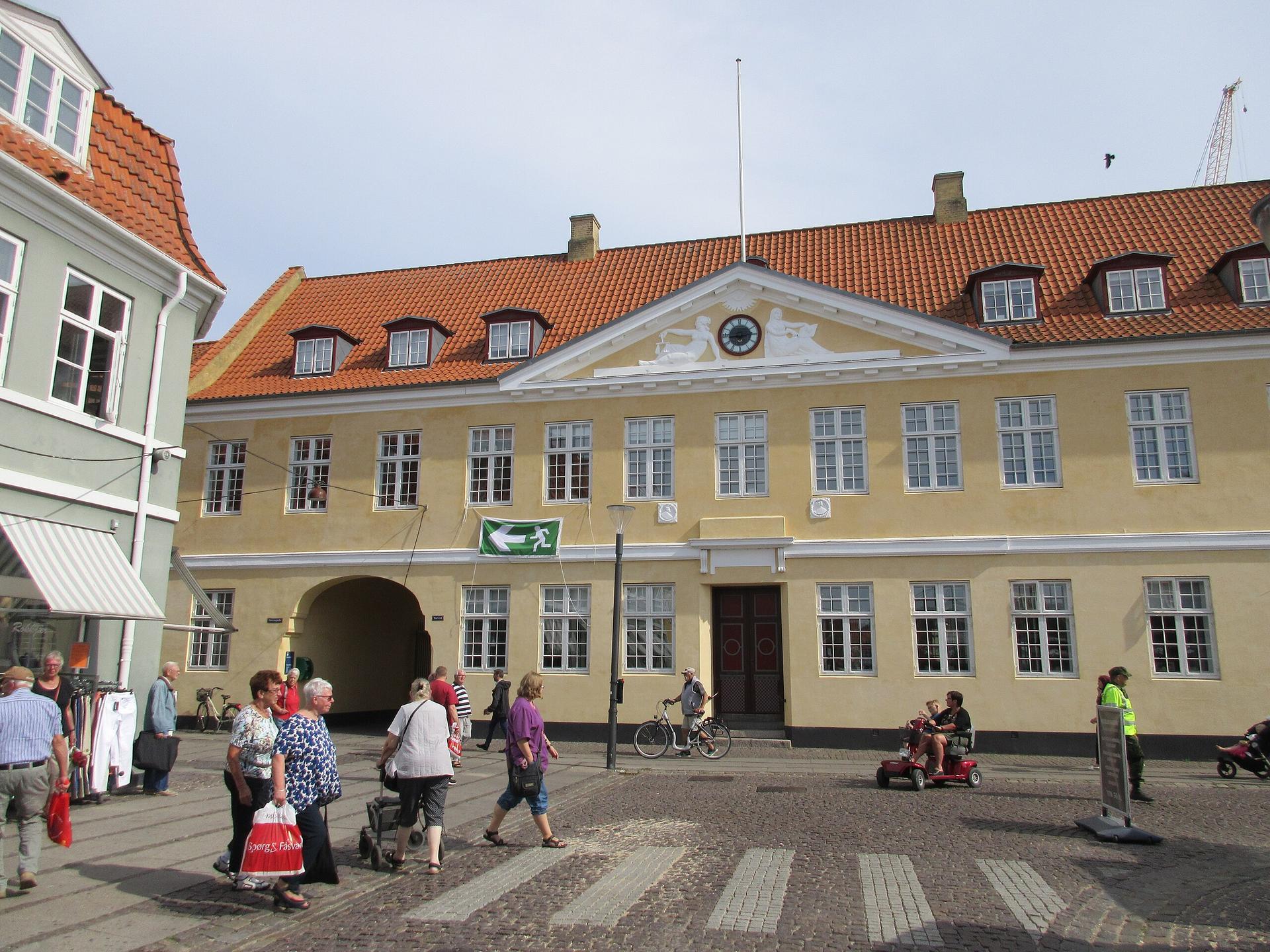
Looking beyond ZinkGlobal by Kim Michael? Discover Koge for broader travel guides, local hot-spots, and regional highlights.
Explore Koge