Anne Hvide's House, Langeland Travel Guide
Svendborg’s oldest townhouse, a vivid ochre‑yellow Renaissance gem where noble life, bustling inn days and modern museum stories all meet under a steep red roof.
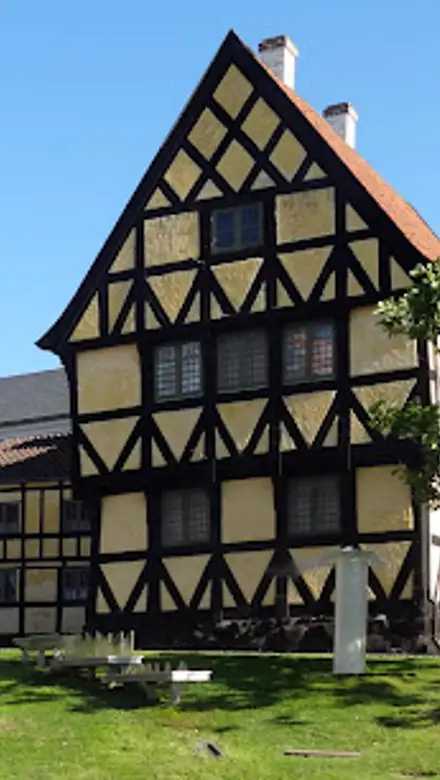
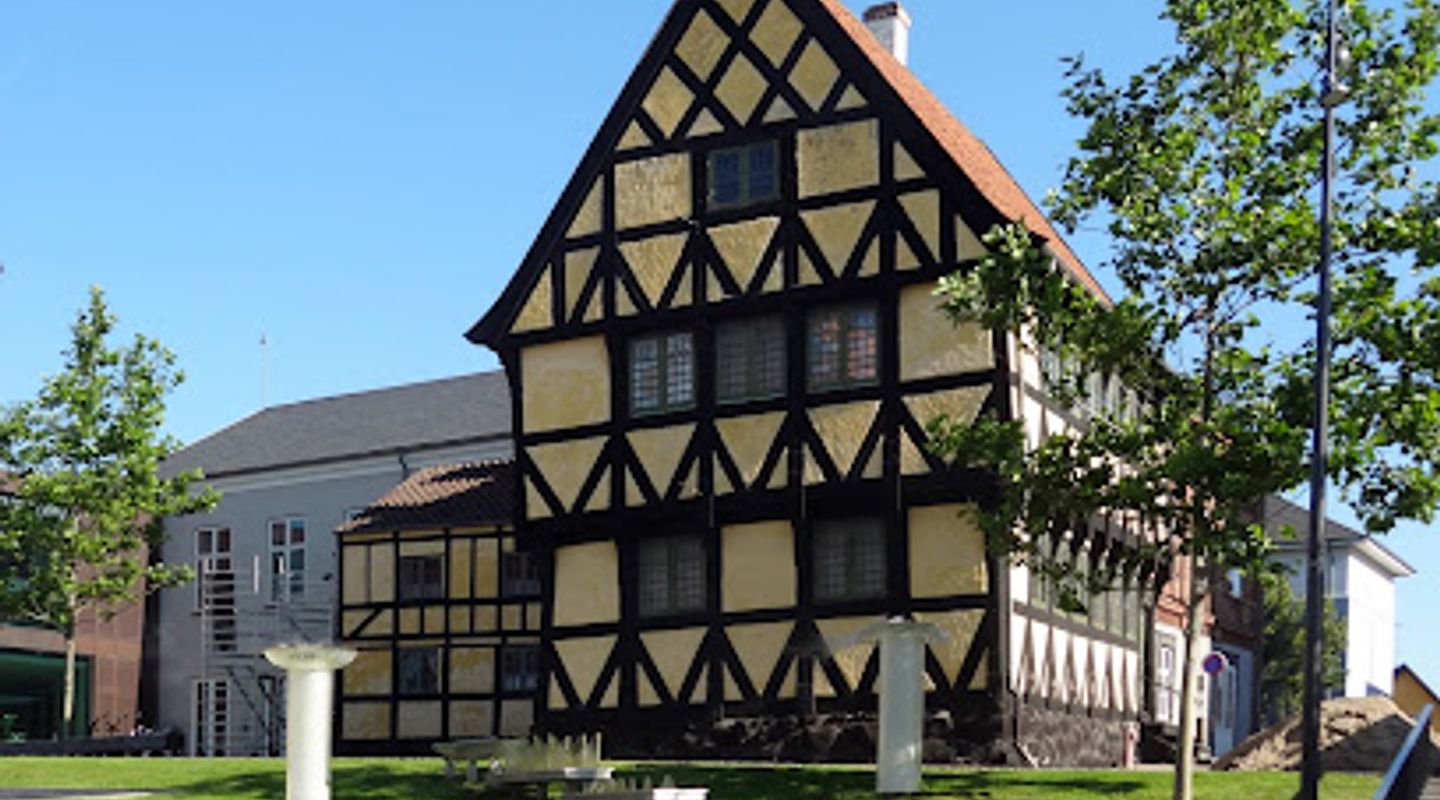
Anne Hvide’s House is Svendborg’s oldest private dwelling, a beautifully preserved 16th‑century half‑timbered townhouse in the heart of the old center. Built in 1560 for noblewoman Anne Hvide, its ochre‑yellow façades, black timber, steep red‑tiled roof and carved doorway offer a textbook example of Danish Renaissance urban architecture. Today it serves as a small historic house museum with seasonal exhibitions on Svendborg’s past, giving a vivid glimpse into noble town life, later innkeeping traditions, and the town’s evolving role on the island of Funen.
A brief summary to Anne Hvide's House
- Fruestræde 3, Svendborg, 5700, DK
- Click to display
- Duration: 0.5 to 1.5 hours
- Budget
-
 Mixed
Mixed
- Mobile reception: 5 out of 5

Know before you go
Hi, I'm Eve. Here are a few practical things to know before exploring Anne Hvide's House.
- Plan to visit in the summer season when the interior rooms are typically open as a historic house museum; outside those months you may only see the exterior.
- Bring a camera or phone – the bumblebee‑coloured façade with black timber and red tiles is especially photogenic in soft morning or late‑afternoon light.
- Combine your stop with a short stroll around Svendborg’s old streets and harborfront to better appreciate the house’s position in the historic townscape.
- Inside, take your time to read the exhibition texts; they add context to the building’s shifts from noble residence to inn, civic office and museum.
Do you manage this location?
Take control to get all the benefits, like improved information, better appearance, and stronger visibility across AI-powered discovery. Learn more about listing your business on Evendo
Activate your presenceOther nearby places you may find interesting
The closest places of the same kind, if this one is not quite what you had in mind.

Explore Anne Hvide's House on the Map
A handpicked selection of must-see spots near Anne Hvide's House, mapped for you.
Getting There
-
Train and walk from Odense
From Odense, take the regional train to Svendborg Station, a journey of about 45–55 minutes with frequent departures through the day. A standard adult single ticket typically costs around 80–120 DKK, with discounts for advance or off‑peak fares. From Svendborg Station it is an easy, mostly level walk of roughly 10–15 minutes through the town center to Anne Hvide’s House. Pavements are generally smooth and suitable for wheelchairs and strollers, though cobblestones near the house can be a little uneven.
-
Bus within Svendborg and short walk
Local buses in Svendborg link residential districts and nearby villages with the central bus stop close to the railway station in about 10–20 minutes depending on the route. A single zone ticket usually costs in the region of 20–30 DKK and can be bought from ticket machines, apps or on board on many services. From the central stop you continue on foot through the compact old town for around 10 minutes. Streets are narrow but well lit, and the final approach includes some cobbled sections that may feel bumpy for prams or mobility scooters.
-
Car from Odense via Funen road network
Driving from Odense to Svendborg uses the main road across Funen and typically takes 35–50 minutes depending on traffic. There are no road tolls on this route. Public parking areas are available around Svendborg’s center, often with a mix of free time‑limited spaces and paid zones costing roughly 10–20 DKK per hour. From the nearest central car parks, expect a walk of 5–10 minutes through the old streets to reach the house. Streets are one‑way in places, and in high summer some central spots can fill up quickly.
For the on-the-go comforts that matter to you
-
 Restrooms
-
 Seating Areas
-
 Information Boards
-
 Trash Bins
Discover more about Anne Hvide's House
A noblewoman’s townhouse at the edge of the harbor
Anne Hvide’s House stands just a short stroll from Svendborg’s harbor, its ochre‑yellow walls and deep‑pitched red roof instantly catching the eye amid the tighter weave of the old streets. Built in 1560 for Anne Hvide, a widow from one of Denmark’s most powerful medieval clans, it was conceived as a refined in‑town residence, a counterpart to the rural manor at Rødkilde where she spent much of her life. Here she could manage affairs, receive visitors and stay close to the trade routes that made Svendborg an important maritime town on Funen.For 16th‑century Svendborg, this two‑storey house was a statement of status. While many neighbors lived in simpler timber structures, Anne’s home combined solid brick panels, carefully worked timbers and an imposing street front. Even now, as you stand before it, the building feels slightly taller and more assured than its surroundings, a reminder of an era when noble influence was woven directly into the townscape.Renaissance timber, patterned brick and a leaning roof
Architecturally, the house is a textbook piece of Danish Renaissance urban design. Eight bays long, with a shallow cellar and an impressively steep roof, it leans just enough to hint at its age yet remains sturdily anchored to the cobbles. The black‑painted half‑timbers frame infill panels of patterned brickwork, giving the façade a rhythm of dark lines and warm masonry. In 1978, conservators returned the exterior to its original yellow hue, so the whole structure now glows like a “bumblebee” against the sky: yellow walls, black beams, red tiles.Details reward a closer look. The carved front door on Fruestræde is reached by a short flight of stone steps, edged with simple iron railings. Window openings are relatively small by modern standards, but the regular spacing creates a pleasing symmetry. Around the rear courtyard the house relaxes into more utilitarian forms, hinting at storerooms, servants’ spaces and everyday work that once underpinned the refined life facing the street.From aristocratic residence to busy town inn
After Anne Hvide’s death in 1577, the property passed through the hands of prominent owners, including high officials and a vice‑admiral, remaining an address associated with influence well into the 18th century. Over time, however, noble families moved to grander estates, and the house gradually shifted from aristocratic backdrop to working town building, mirroring Svendborg’s own evolution.In 1837 a new chapter began when it opened as an inn. For the next three decades, seafarers, traders and travelers climbed the front steps to find meals, ale and a bed for the night. Period accounts describe a capable hostess and a sociable atmosphere, and it is easy to imagine the murmur of conversation spilling into the street, carts rattling past and the smell of horses and cooking mingling in the narrow lane. That inn period left subtle traces in the interior layout and in the stories locals still associate with the house.Rescued, restored and reborn as a town museum
By the late 19th century the building risked slipping into dilapidation, but the municipality stepped in, using the spacious attic as an archive and the upper floor as a library and civic offices. Early 20th‑century preservationists recognized its architectural value, leading to a thorough restoration in the 1910s that aimed to keep as much original fabric as possible while stabilizing the structure for public use.The house then became home to Svendborg’s museum collections, turning its rooms into a narrative of local history. Although the main museum has since moved to larger premises, Anne Hvide’s House still opens in the summer season as a satellite site. Inside, small‑scale exhibitions use domestic rooms to explore themes such as maritime trade, traditional crafts and everyday town life, making the building itself the star exhibit. Even when displays change, the creak of the floorboards and the low ceilings maintain a strong sense of continuity.Experiencing the house in modern Svendborg
Today the building sits amid a pleasantly walkable center of shops, cafés and other historic structures, yet it retains a distinctive atmosphere. The slight lean of the walls, the interplay of sun and shadow on the timberwork and the contrast with more modern neighbors highlight just how long this house has anchored the street. Photographers are drawn to its vivid color and traditional lines, especially in soft morning or late‑afternoon light.A visit is compact but rewarding. Allow time to examine the façade from different angles, then, when open, step inside to explore the intimate rooms, noting details such as exposed beams, period‑style furnishings and glimpses of the street through small‑paned windows. Even a short stop offers a compressed journey through 450 years of Svendborg’s civic life, from noble townhouse to inn, municipal hub and museum, all contained within one remarkably resilient structure.












Your all‑in‑one travel companion app
Explore expert travel guides, compare and book tours, experiences, hotels, and more—all from the palm of your hand. Download now for seamless trip planning wherever your wanderlust takes you.


Explore More of Langeland
Looking beyond Anne Hvide's House? Discover Langeland for broader travel guides, local hot-spots, and regional highlights.
Explore Langeland