

Dovns Klint Travel Guide
Free Guide: Wind-shaped cliffs, big Baltic skies and quiet pebble shores at the southernmost tip of Langeland, where Ice Age geology meets tranquil Danish coastal life.


A brief summary of Dovns Klint
Wind-shaped cliffs, big Baltic skies and quiet pebble shores at the southernmost tip of Langeland, where Ice Age geology meets tranquil Danish coastal life.
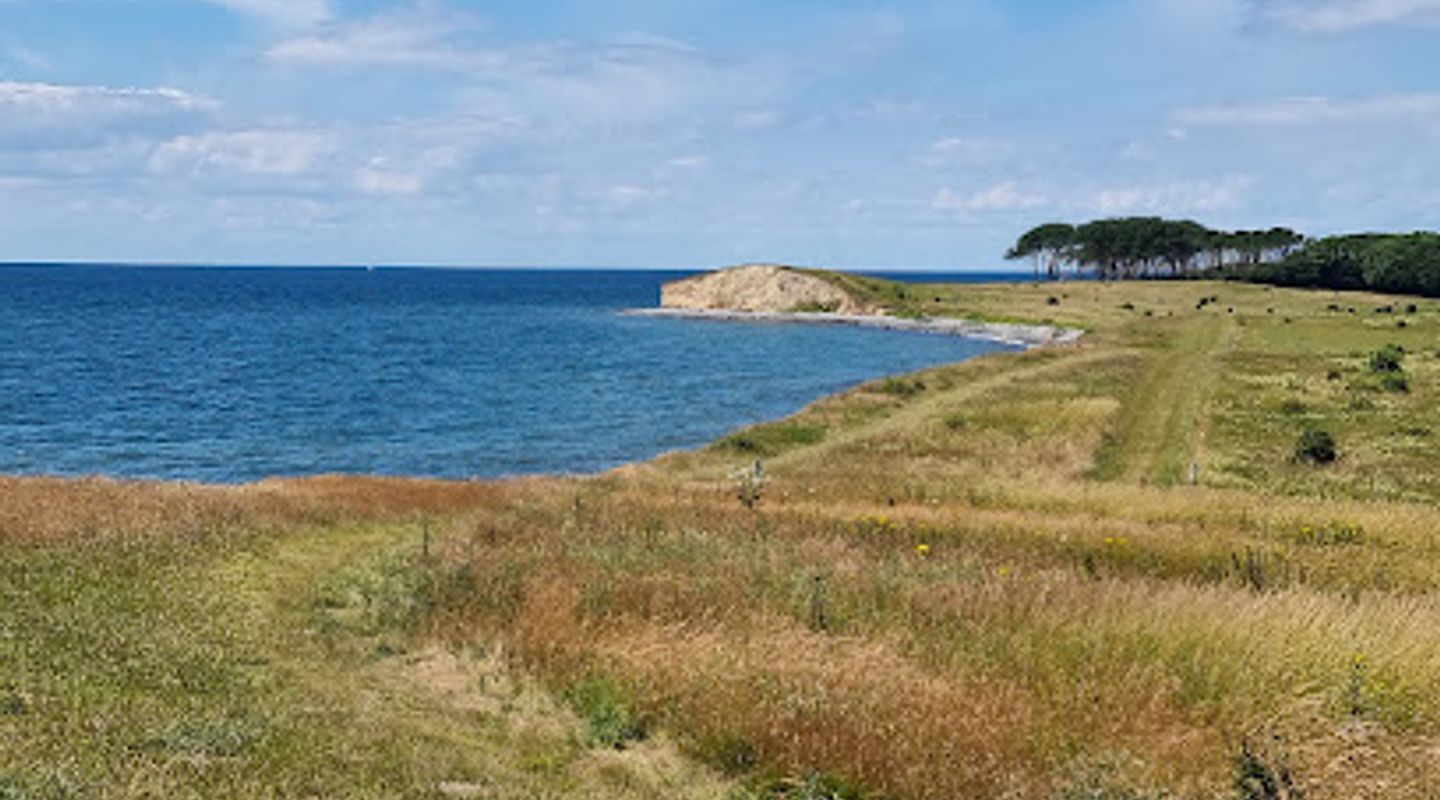
Dovns Klint marks the dramatic southern tip of Langeland, a low white cliff line where the Baltic Sea meets the Langeland Belt. Here, wind-sculpted grasslands drop towards pebble beaches, Ice Age “hat hills” frame sweeping sea views, and coastal paths invite unrushed walks along the edge of Denmark. It is a peaceful, open landscape where migrating birds, wild ponies in nearby grazing areas, and anglers all share the same salt-tinged horizon, especially striking in clear spring and summer light.
On-site amenities
 Restrooms
 Trash bins
 Information boards
 Seating areas
Opening hours
- Every dayOpen 24 hours
Opening hours as listed on the venue’s Google Business Profile. Hours can change for services and special events, so check with the venue before you go.
- Address
- Gulstavvej 24, 5935 Bagenkop
Getting there
Car from Rudkøbing (Langeland)
Car via ferry from Svendborg (Funen)
Bike from Bagenkop
Hiking from Bagenkop
Discover more about Dovns Klint
Where Langeland Ends and the Sea Begins
Dovns Klint is the southernmost point of Langeland, a quiet corner of Denmark where land, light and water seem to merge into one broad horizon. The low chalk and clay cliffs form a gentle arc along the coast, facing an expanse of open sea that stretches all the way towards northern Germany. On clear days the light feels almost luminous: pale cliffs, deep blue water and windswept grasslands create a spacious, uncluttered scene that immediately slows your pace.Despite its sense of remoteness, the landscape is surprisingly accessible. A short stroll from the nearest parking area brings you to the cliff edge, where narrow paths follow the coastline. From here you can watch the waves breaking on the pebble beach below, or simply stand and feel the constant Baltic breeze, listening to the rumble of stones rolling in the surf.
Ice Age Stories Written in the Cliffs
The coastline between Bagenkop and Dovns Klint is a textbook in glacial geology, and the cliffs here reveal layers laid down during the last Ice Age. The distinctive dome-shaped “hat hills” scattered across south Langeland have been partly cut through by the sea, exposing their inner structure. In the cliff faces you can trace compact bands of moraine clay and other deposits formed roughly 17,000–19,000 years ago, when ice sheets still dominated northern Europe.As the sea level rose after the Ice Age, waves began eating into this soft glacial landscape. Over thousands of years, headlands were worn down and bays gradually filled in, creating the gently garland-shaped coastline you see today. Pebble ridges, storm-built beach embankments and rounded stones from across the Baltic region are all reminders that this shore is still changing, shaped by each winter storm that passes.
Wild Coast, Birdlife and Open Skies
Dovns Klint is as much about the surrounding coastal plain as the cliffs themselves. Low grasslands run out towards the sea, occasionally broken by small wetlands and boggy hollows that formed when the ice retreated. Nearby areas such as Gulstav Mose attract waterbirds, and the entire southern tip of Langeland is known as an excellent spot for observing bird migration in spring and autumn. On a good day you may see flocks of geese, raptors using the thermals, or swallows skimming low over the fields.The sense of space is accentuated by the sky. With no tall vegetation or buildings, cloud formations and shifting light become part of the scenery. Even in windy or cool weather the area has a raw appeal: waves push in from the Langeland Belt, seabirds call over the surf, and the breeze carries the smell of salt and seaweed. Whether you are interested in wildlife or simply enjoy big skies, this is a place that rewards lingering.
Walking the Edge Between Cliffs and Pebbles
For many visitors the main experience at Dovns Klint is walking. Simple paths trace the cliff top, occasionally dipping and rising with the contours of the land, and informal tracks lead down to the stony shoreline. It is easy to create your own out-and-back route along the coast or link Dovns Klint with nearby viewpoints such as Gulstav Klint for a longer loop. Underfoot, expect a mix of grass, earth and loose stones that can become slippery when wet, so sturdy shoes are helpful.Down on the beach, the landscape looks different again. Here you can study the rounded pebbles at close range, many of them carried here by ancient glaciers from far-off parts of Scandinavia and the Baltic. Driftwood, seaweed and occasional fossils or interesting stones make slow beachcombing an absorbing way to pass time. The water is generally shallow near shore, but the seabed can drop unevenly, so swimming is best for confident bathers on calm days.
Diving, Angling and Quiet Contemplation
Offshore, the seabed around Dovns Klint mixes chalky patches, sand, gravel and eelgrass beds, creating a varied underwater landscape. When conditions are calm, divers and snorkellers find good visibility and plenty of life in the macro scale: crabs shelter among rocks, flatfish rest on the seabed, and small fish weave through swaying seaweed. Anglers are also drawn to this stretch of coast, especially in spring, when coastal species hunt along the shallows.You do not need special equipment, though, to appreciate the atmosphere here. Dovns Klint lends itself to unhurried contemplation: sitting on the grass above the cliffs with a thermos, watching ships move along the horizon; following the play of light on the water as clouds race past; or simply listening to the constant background of waves. It is a modest landscape in height, but wide in feeling—a classic Danish coastal scene where subtle details reveal themselves the longer you stay.
Evendo Review Centre
 Google
Guest reviews
Best time to go
Quietest: Jan, Feb & Dec · before 6am or from 9pm
Busy times are Evendo estimates for a typical year, to help you plan. Actual crowds vary with events, school holidays and the weather.
Explore Dovns Klint on the map
A handpicked selection of must-see spots near Dovns Klint, mapped for you.
Get your free copy of our complete guide to Dovns Klint, delivered straight to you.
Everything on this page, from opening hours and how to get there to Eve’s tips and the best time to go, in one PDF you can read offline, print or share.
Already have an account? Sign in
Your Dovns Klint guide is ready.
We'll send it to · Not you? Sign out

Getting your guide ready…
We are putting together a fresh copy of the Dovns Klint guide. This can take up to a minute.
This can take a few moments. If your browser asks, choose Allow so the download can start. You'll find the guide in your Downloads folder.
Nothing happened? Download it again
Sorry, the guide is taking longer than usual. Please try again in a minute, or get it by email instead.
Other nearby places you may find interesting
The closest places of the same kind, if this one is not quite what you had in mind.
-
-
-
-
-


Swipe for more places
More to explore near Dovns Klint

 Best experiences near Dovns Klint
 Best hotels near Dovns Klint
 Best landmarks near Dovns Klint
 Best attractions near Dovns Klint
 Best shops near Dovns Klint
 Best restaurants near Dovns Klint
 Best bars near Dovns Klint
Do you manage this location?
Take control to get all the benefits, like improved information, better appearance, and stronger visibility across AI-powered discovery.
Explore more

Explore more of Langeland
Discover Langeland: Denmark's idyllic island retreat with scenic landscapes, rich history, and vibrant culture. Perfect for nature lovers, history buffs, and festival goers.
Explore Langeland
Explore more of Denmark
Discover Denmark: A perfect blend of history, modern design, and the cozy concept of hygge. Explore vibrant cities, serene landscapes, and world-class cuisine.
Explore Denmark
