

Højsande Holtemmen Travel Guide
Free Guide: Protected dune landscape where 24-meter sand dunes, rare plants, and Stone Age cliffs reveal Læsø's wild and ancient character.


A brief summary of Højsande Holtemmen
Protected dune landscape where 24-meter sand dunes, rare plants, and Stone Age cliffs reveal Læsø's wild and ancient character.
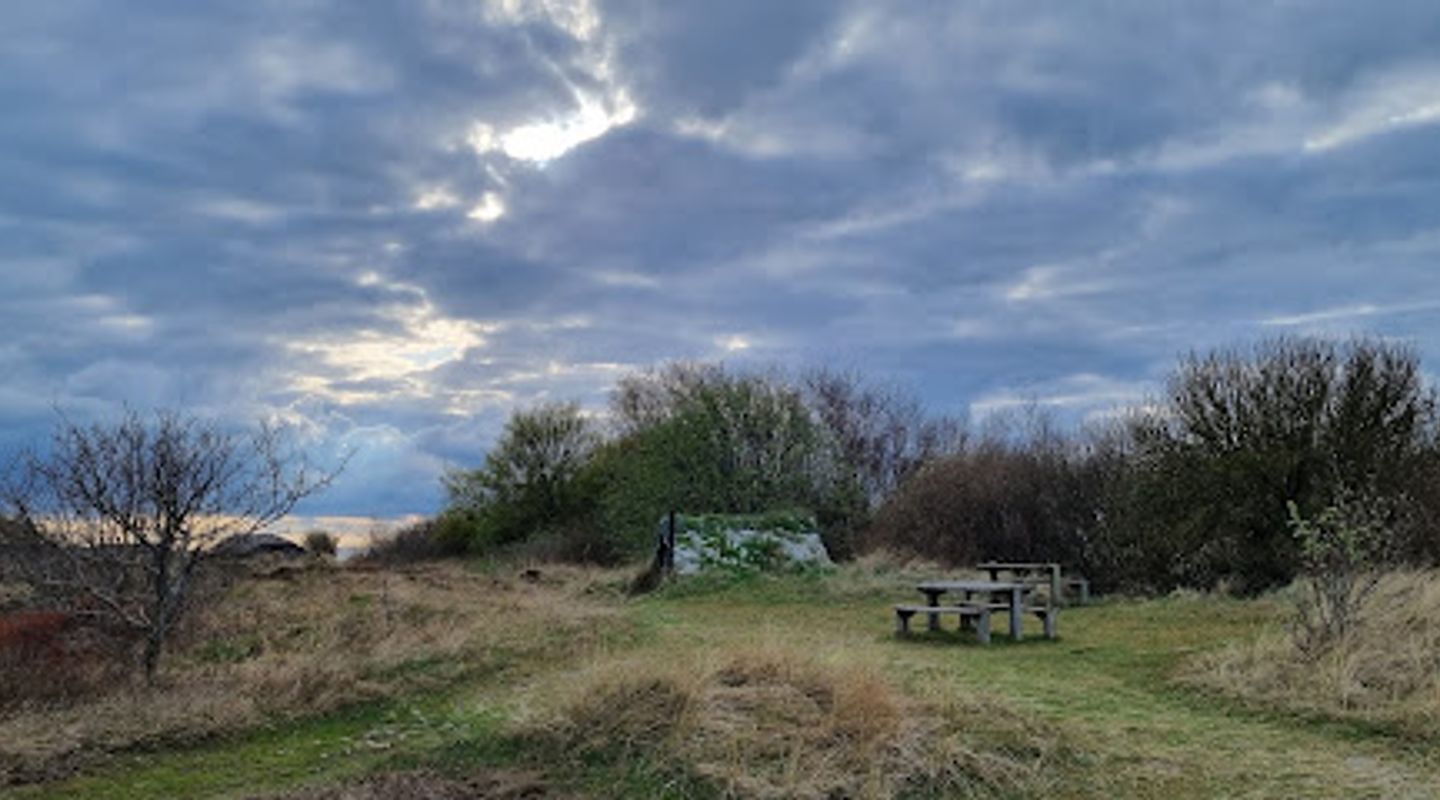
A protected 515-hectare nature reserve on Læsø's northern coast featuring dramatic sand dunes reaching 24 meters, rare botanical habitats, and a coastal lagoon. Højsande showcases windswept heathland with parabolic dune systems, while Holtemmen offers one of Denmark's richest plant communities along a Stone Age cliff. Marked walking trails wind through diverse ecosystems from white dunes to wetland mosaics, with views across the Kattegat.
On-site amenities
 Parking areas
 Information boards
 Seating areas
 Picnic areas
- Address
- 9940 Læsø Municipality
- Website
Getting there
Car from Læsø town center
Bicycle from Læsø town center
Walking from nearby accommodations
Guided tour or naturalist group visit
Discover more about Højsande Holtemmen
A Landscape Shaped by Sand and Time
Højsande and Holtemmen form a protected nature reserve of 515 hectares on Læsø's northern coast, representing one of Denmark's most distinctive and ecologically significant landscapes. The area lies within Læsø Klitplantage, a young man-made forest created in the early 1900s to combat catastrophic sand drift. What began as a utilitarian effort to stabilize dunes has evolved into a landscape of remarkable natural and cultural value, where human intervention and natural processes have created something genuinely extraordinary.The reserve was formally protected in 1961, building on an earlier 1938 protection of Horneks Odde. Today it encompasses multiple interconnected habitats: inland parabolic dunes, coastal lagoons, heathland, wetland mosaics, and recovering forest. The geological foundation is ancient—Læsø itself emerged from the sea only 5,000 years ago during the Neolithic period, and the landscape continues to evolve through natural processes of land uplift and vegetation succession.
Højsande: The Dune Heartland
Højsande occupies the eastern portion of the plantation and represents the island's highest and oldest terrain. The area's defining feature is a pair of massive parabolic dune systems—horseshoe-shaped formations with openings facing the prevailing west-southwest winds. These dunes reach up to 24 meters in height, exceptional for such a low-lying island. The highest point offers panoramic views across the landscape; on clear days, the trees part to reveal the Kattegat stretching to the north.The dunes themselves are utilitarian in origin. In the 17th and 18th centuries, intensive salt production—a major Læsø industry—consumed vast quantities of timber for fuel. When the forests were exhausted, locals harvested heather and peat for salt-making, leaving the landscape exposed to devastating wind erosion. Sand dunes advanced inland, burying fields and settlements. Beginning in the 1880s, systematic tree planting began; by the 1930s, the state had established the formal Læsø Klitplantage. A monument dated 1902 commemorates these early reforestation efforts.Today Højsande presents a striking contrast: open heathland with scattered birch and juniper interspersed with maturing plantation forest. Foldgårdssøen, a small lake nestled in the eastern dune's deflation basin, is slowly transforming into peat bog—a visible example of ecological succession unfolding across decades.
Holtemmen: A Botanical Jewel
Holtemmen, located at the coastal edge where the stony heathland meets the sea, is recognized as one of Denmark's finest botanical localities. The area is defined by a dramatic Stone Age cliff—the remnant shoreline of the post-glacial sea—that rises 8–10 meters above the lower terrain. Below this escarpment lies a strandvoldslagune, a coastal lagoon that has gradually transformed into a complex mosaic of wetlands.The name Holtemmen possibly derives from "hold tømmen" (hold the reins), referring to the difficulty of controlling horses along the perilous cliff edge in earlier centuries. Today, the area supports an extraordinary diversity of plant communities: white dunes and sparse beach vegetation on the seaward side, rich and poor fens in the interior, small lagoon lakes, and elevated beach ridges. Rare plant species including strand-kvan and marsh milk-vetch thrive here. The wetlands are home to breeding cranes and great snipe, while the broader area supports rich and varied birdlife.A marked blue walking route (5 kilometers) circles the entire lagoon, beginning from the parking area at the end of Holtemmenvej. The trail ascends the ancient cliff, offering unparalleled views down into the lagoon and across the coastal landscape. The route allows visitors to experience the full botanical and ecological richness of the site.
Ecological Significance and Plant Communities
The reserve's 515 hectares encompass nearly every plant community found on Læsø: from white dune vegetation and gray dune heathland to heather heath, low-growing heath, and wetland vegetation. Several small lakes and genuine forest biotopes add further diversity. This ecological variety creates an exceptionally rich species list for botanists and naturalists. The area is designated as a Natura 2000 habitat site, reflecting its international conservation importance.A major EU-funded LIFE project has actively restored portions of the original heathland by removing planted and self-seeded trees, recreating the open dune heath landscape that characterized the area before afforestation. This restoration work demonstrates the dynamic management required to maintain the reserve's ecological character.
Cultural Layers and Historical Traces
Beneath the modern forest and dunes lie multiple layers of Læsø's past. Stone Age settlements have left traces—flint tools, amber ornaments, and pottery—evidence of Neolithic hunter-fisher communities who exploited the island's rich marine resources. During the Napoleonic Wars (1807–1814), cannon batteries were positioned on the heath between forest and coast. In World War II, German forces constructed a narrow-gauge railway from Vesterø through Højsande and Nordmarken, with plans for a major fortification at Højsande that were never completed; sporadic rail traces remain visible near Holtemmen.At Horneks Odde, the northeastern point of the reserve, three remaining lobster huts stand as relics of a fishing tradition spanning the early 1900s to mid-20th century. Fishermen occupied these simple structures seasonally, launching small boats directly from the beach to fish for lobster using traditional pots. Originally 8–10 huts clustered here, these survivors offer tangible connection to Læsø's maritime heritage.
Access and Walking Routes
The reserve is accessible via marked walking and cycling routes throughout the plantation. The blue route around Holtemmen (5 kilometers) is the primary formal trail, but numerous forest roads and paths offer alternatives. Parking is available at designated areas, including the Holtemmenvej parking area. The landscape invites exploration at varying intensities—from casual strolls through forest to more demanding hikes across open dunes. The terrain is generally accessible, though the dune landscape and cliff edges require basic fitness and care.
Evendo Review Centre
 Google
Guest reviews
Best time to go
Quietest: Jan, Feb & Nov · before 7am or from 8pm
Busy times are Evendo estimates for a typical year, to help you plan. Actual crowds vary with events, school holidays and the weather.
Explore Højsande Holtemmen on the map
A handpicked selection of must-see spots near Højsande Holtemmen, mapped for you.
Get your free copy of our complete guide to Højsande Holtemmen, delivered straight to you.
Everything on this page, from opening hours and how to get there to Eve’s tips and the best time to go, in one PDF you can read offline, print or share.
Already have an account? Sign in
Your Højsande Holtemmen guide is ready.
We'll send it to · Not you? Sign out

Getting your guide ready…
We are putting together a fresh copy of the Højsande Holtemmen guide. This can take up to a minute.
This can take a few moments. If your browser asks, choose Allow so the download can start. You'll find the guide in your Downloads folder.
Nothing happened? Download it again
Sorry, the guide is taking longer than usual. Please try again in a minute, or get it by email instead.
Other nearby places you may find interesting
The closest places of the same kind, if this one is not quite what you had in mind.
-
-
-
-
-


Swipe for more places
More to explore near Højsande Holtemmen

 Best experiences near Højsande Holtemmen
 Best hotels near Højsande Holtemmen
 Best landmarks near Højsande Holtemmen
 Best attractions near Højsande Holtemmen
 Best shops near Højsande Holtemmen
 Best restaurants near Højsande Holtemmen
 Best bars near Højsande Holtemmen
Do you manage this location?
Take control to get all the benefits, like improved information, better appearance, and stronger visibility across AI-powered discovery.
Explore more
Explore more of Læsø
Læsø: Discover Denmark's serene island escape with its tranquil beaches, rich cultural heritage, unique saltworks, and delicious seafood cuisine.
Explore Læsø
Explore more of Denmark
Discover Denmark: A perfect blend of history, modern design, and the cozy concept of hygge. Explore vibrant cities, serene landscapes, and world-class cuisine.
Explore Denmark
