

Læsø Museum, Hedvigs Hus Travel Guide
Free Guide: A lovingly preserved seaweed-roofed farmhouse where Læsø’s rural past, drained fields and simple island interiors tell the story of life shaped by sea and soil.


A brief summary of Læsø Museum, Hedvigs Hus
A lovingly preserved seaweed-roofed farmhouse where Læsø’s rural past, drained fields and simple island interiors tell the story of life shaped by sea and soil.
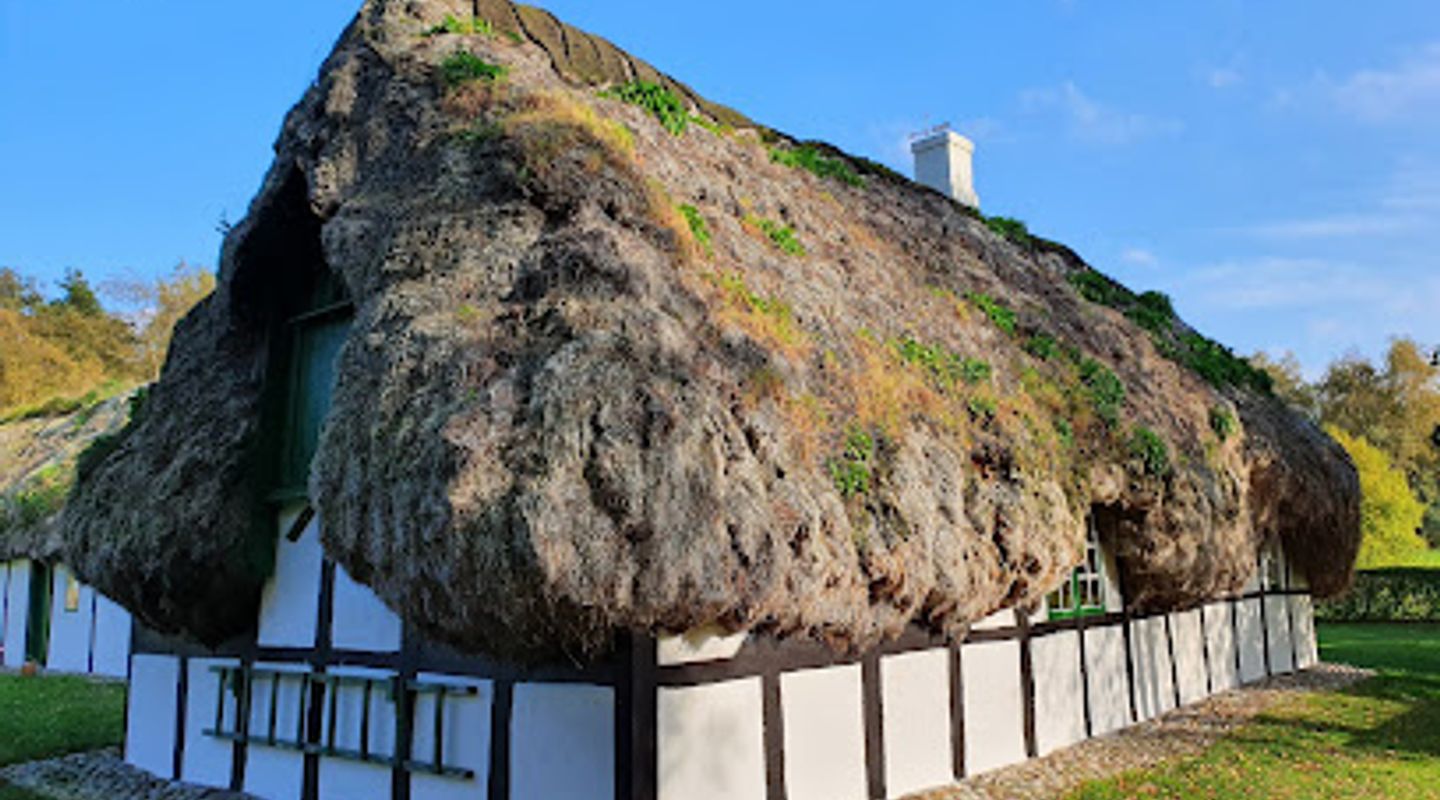
Set among fields just outside Byrum, Læsø Museum’s Hedvigs Hus is a beautifully preserved farmhouse that showcases the island’s signature half-timbered walls and thick seaweed roof. Bought by Læsø Museum in the 1990s to save it from demolition, the long, low building and its surrounding cultivated land recreate everyday rural life when islanders followed their produce from field and sea to table. Inside, simple furnished rooms, a stable and working plots outside offer an intimate glimpse of traditional life on this sunlit Kattegat island.
On-site amenities
 Trash bins
 Information boards
- Address
- Linievejen 36, 9940 Læsø
- Phone
- Website
Getting there
Bus from Vesterø Havn ferry
Taxi from ferry terminal
Bicycle from Byrum
Discover more about Læsø Museum, Hedvigs Hus
A seaweed-roofed farmhouse saved in time
Hedvigs Hus sits quietly on Læsø’s flat landscape, yet it tells one of the island’s most important stories. In the early 1990s the old house was under threat, its timber frame and heavy seaweed roof suffering from age and disuse. Læsø Museum stepped in and bought the property in 1994, determined to preserve a classic example of the island’s vernacular architecture rather than let it vanish under the excavator.From the outside, the building appears as a single long structure aligned with the wind, walls whitewashed between a dark timber grid. Above, the thick, undulating roof of dried seaweed immediately catches the eye. This distinctive roofing, made from eelgrass gathered along the shoreline, once defined Læsø’s skyline and is now a rare sight, making Hedvigs Hus an important survivor.
Living with the rhythms of field and sea
The house was conceived as a place to explain how people on Læsø once lived when daily life was shaped by hard work, careful use of resources and close ties to the surrounding landscape. Exhibits and interpretation focus on a time when families followed raw materials from field and sea all the way to the table or the workshop bench, leaving little to waste.Rooms are arranged to show practical routines rather than grand gestures: tools by the door, work clothes by the hearth, containers ready for fish, grain and vegetables. The narrative running through the buildings and adjoining land highlights how islanders balanced farming with fishing, salt production and household crafts, creating a self-reliant community on an exposed Danish outpost.
One long building of home and stable
Stepping inside, you move along a linear floor plan that reflects the house’s dual purpose. At one end, the stable still anchors the building, reminding you that animals were once sheltered under the same sweeping roof as the family. Timber details, stone floors and simple partitions keep the structure’s origins visible, even as it now functions as a museum setting.Towards the opposite end, the living quarters unfold as modest, low-ceilinged rooms. Here, a central hearth, wooden furniture and small-paned windows create a sense of intimacy. The layout encourages you to imagine the house in full use—children darting between rooms, adults tending the fire, and the constant movement between indoor tasks and outdoor chores.
Drained land and cultivated plots
Hedvigs Hus is not only the building itself; it belongs to a parcel of land of roughly six hectares, shaped by human hands over time. Ditches were dug across this formerly wet ground to drain and reclaim it, allowing crops and pasture to take root. These channels still structure the landscape around the house, tracing the effort needed to wrest productivity from marshy soil.Today, the grounds are tended by a volunteer group associated with the museum. Their work keeps traditional plant varieties and cultivation methods visible, turning the fields into a living appendix to the indoor displays. Walking around the property, you sense how the house, stable, drainage ditches and plots form a single coherent unit of historic rural life.
Seasonal openings and island context
Hedvigs Hus usually opens on selected days in the summer season and during autumn holidays, often on specific weekdays and limited daytime hours. This seasonal rhythm fits its role as an outlying historic site within the wider Læsø Museum network, complementing the main museum house in nearby Byrum with an open-air glimpse of the countryside.Combining a visit here with other island highlights—such as the salt works or additional seaweed-roofed farmsteads—creates a fuller picture of Læsø’s cultural heritage. Hedvigs Hus stands as a tangible reminder that the island’s beauty is not only found in beaches and light, but also in the quiet persistence of buildings and landscapes that once underpinned everyday survival.
Evendo Review Centre
 Google
Guest reviews
Best time to go
Quietest: Jan, Feb & Nov · before 8am or at 7pm
Busy times are Evendo estimates for a typical year, to help you plan. Actual crowds vary with events, school holidays and the weather.
Explore Læsø Museum, Hedvigs Hus on the map
A handpicked selection of must-see spots near Læsø Museum, Hedvigs Hus, mapped for you.
Get your free copy of our complete guide to Læsø Museum, Hedvigs Hus, delivered straight to you.
Everything on this page, from opening hours and how to get there to Eve’s tips and the best time to go, in one PDF you can read offline, print or share.
Already have an account? Sign in
Your Læsø Museum, Hedvigs Hus guide is ready.
We'll send it to · Not you? Sign out

Getting your guide ready…
We are putting together a fresh copy of the Læsø Museum, Hedvigs Hus guide. This can take up to a minute.
This can take a few moments. If your browser asks, choose Allow so the download can start. You'll find the guide in your Downloads folder.
Nothing happened? Download it again
Sorry, the guide is taking longer than usual. Please try again in a minute, or get it by email instead.
Other nearby places you may find interesting
The closest places of the same kind, if this one is not quite what you had in mind.
-
-
-
-
-


Swipe for more places
More to explore near Læsø Museum, Hedvigs Hus
-
 Best experiences near Læsø Museum, Hedvigs Hus
-
 Best hotels near Læsø Museum, Hedvigs Hus
-
 Best landmarks near Læsø Museum, Hedvigs Hus
-
 Best attractions near Læsø Museum, Hedvigs Hus
-
 Best shops near Læsø Museum, Hedvigs Hus
-
 Best restaurants near Læsø Museum, Hedvigs Hus
-
 Best bars near Læsø Museum, Hedvigs Hus


Do you manage this location?
Take control to get all the benefits, like improved information, better appearance, and stronger visibility across AI-powered discovery.
Explore more
Explore more of Læsø
Læsø: Discover Denmark's serene island escape with its tranquil beaches, rich cultural heritage, unique saltworks, and delicious seafood cuisine.
Explore Læsø
Explore more of Denmark
Discover Denmark: A perfect blend of history, modern design, and the cozy concept of hygge. Explore vibrant cities, serene landscapes, and world-class cuisine.
Explore Denmark
